Bollettino valanghe

Northwest Mountains

Crested Butte Avalanche Center
Vedi sulla mappa

Pericolo valanghe

Mon
Alta quota
2 · Moderato
Limite del bosco
2 · Moderato
Sotto il limite
2 · Moderato
Non aggiornato — questo bollettino è scaduto 5 years ago. Stai vedendo condizioni passate, non il bollettino in corso.

In sintesi

Enjoy another spring-like day managing for mostly small surface instabilities while staying alert for the isolated potential for larger avalanches in wind drifted terrain.  Small and predictable wet sluffs will develop on steep, sunbaked slopes.  Wind slabs can be found localized to high elevation, leeward terrain.  And larger persistent slabs lurk on a few high elevation north to east-facing slopes.  We observed this trifecta of avalanche problems yesterday and expect more of the same today.  Carefully assess the snowpack and terrain consequences before riding in steep terrain.  

Problemi valanghivi

  • Persistent Slabs

    • Alta quota
    • Limite del bosco
    • Sotto il limite del bosco
    Probabilità
    Possible
    Dimensione
    1–2

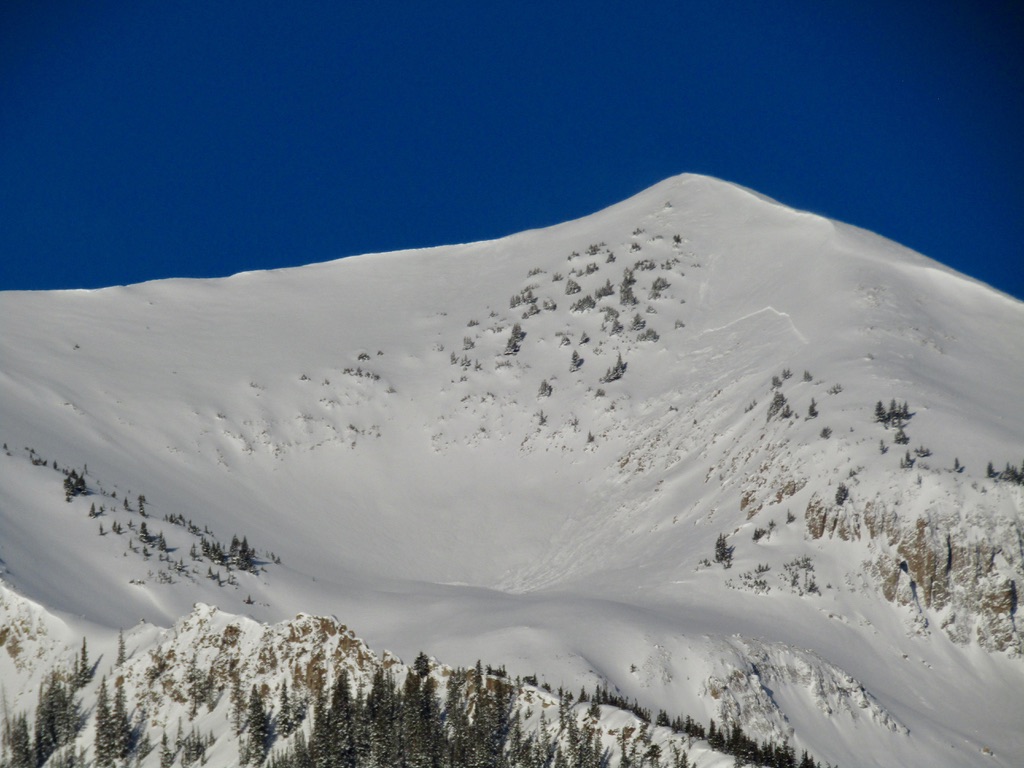
    Incremental snowfall and windloading in the past month have formed a spotty distribution of slabs over persistent weak layers several feet deep.  Although avalanche activity has been infrequent, use extra caution on previously drifted, shady aspects where the snowpack is shallower than normal.  That's the type of terrain that most avalanches breaking into older snow have released on.   Yesterday, a natural persistent slab released on Whetstone from wind drifting.   This afternoon's warm temperatures could make the problem a bit more reactive.   In the past week, other persistent slab activity has been triggered on drifted slopes, in extreme terrain, and on old bedsurfaces.  Some avalanche paths that ran in February are especially suspect because they held shallower, weaker snowpacks that are now getting refilled. 

    3/27: A natural persistent slab on Mt. Whetstone, triggered by wind loading.

  • Wind Slabs

    • Alta quota
    • Limite del bosco
    • Sotto il limite del bosco
    Probabilità
    Possible
    Dimensione
    1–2

    Moderate northwest winds yesterday transported the recent snow into thicker drifts below alpine ridgelines and leeward terrain features.  Observers yesterday triggered wind slabs up to two feet thick and noted a number of natural releases.   Recently formed wind slabs may become more sensitive as the snow surface warms up on sunny aspects.  Steer around lenses of drifted snow, especially in consequential terrain.   

    3/27: A skier triggered wind slab in the Anthracite Range. The crown was 6" to 24" thick.

  • Loose Wet

    • Alta quota
    • Limite del bosco
    • Sotto il limite del bosco
    Probabilità
    Likely
    Dimensione
    1

    In steep, sunbaked terrain, shallow sluffs entraining the recent snow will release naturally or can be easily triggered as the snow surface becomes wet, similar to yesterday's wet activity.  Most wet loose avalanches will generally be harmless unless they push you over cliffs, into trees,  gather volume in a gulley, or trigger a slab avalanche.  You can easily identify unstable snow if you see the snow surface producing rollerballs and small sluffs.  Move to colder snow or less consequential terrain when the snow gets hot and mushy.  

    3/27: Wet avalanche debris below a steep, sunbaked slope.

Avalanche Discussion

Wet loose activity started up yesterday, but the full wrath of activity was tempered by some cloud cover, strong winds, and cooler temps.  Today, we'll see temperatures rising almost 10 degrees warmer without cloud cover, so surface warming will surpass yesterday's benchmark.  In terrain holding 6" or more of soft, unconsolidated snow over older crusts, expect the snow to sluff easily once the snow surface gets wet.  That setup is most common at higher elevations, and we may also see some shadier aspects getting moist today below treeline.     

Northwest winds were cranking yesterday morning, with peak speeds reaching 35 mph, gusting to 60.  This spurred a handful of natural wind slabs in the alpine, and our field team intentionally triggered a wind slab up to two feet thick.  While most wind slabs today will be on the small side and less reactive than yesterday, leeward terrain with large fetches, particularly in the snow favored Northwest Mountains, could have thicker and more dangerous wind slabs now.  

And last but not least, we also observed a fresh persistent slab that released on older layers on a drifted, shallow slope on Mt. Whetstone.  That fits the pattern of persistent slab activity this month: the slides have all been breaking on north to east facing, near and above treeline slopes with recent drifting and relatively thin snowpacks.   Many of these have been repeat offenders on bed surfaces from our February cycles.  During the strong warmup about a week ago, we observed a few natural persistent slabs.  (Example A, Example B).  I won't be surprised if we see more activity with today's warmup.  In wind-sheltered terrain, the slow and small accumulations of snow this past week appear to be playing nice with buried weak layers: we haven't seen evidence of the problem below treeline this month.   

Regioni coperte