Bollettino valanghe

Southeast Mountains

Crested Butte Avalanche Center
Vedi sulla mappa

Pericolo valanghe

Tue
Alta quota
3 · Marcato
Limite del bosco
3 · Marcato
Sotto il limite
2 · Moderato
Non aggiornato — questo bollettino è scaduto 4 years ago. Stai vedendo condizioni passate, non il bollettino in corso.

In sintesi

A potent storm featuring moderate snowfall and strong winds will increase the avalanche danger throughout the day.  Human-triggered avalanches breaking in the new and recent snow are likely, especially where winds are drifting the snow.  Slabs are larger and natural avalanches are possible on wind-loaded slopes at higher elevations.  There is increasing potential for a larger avalanche to break on deeply buried weak layers today.  Dial back your terrain choices during this final, hard-hitting pulse of the storm.   Seek out wind-sheltered terrain less than about 35 degrees without overhead hazards for lower-risk riding.  

Problemi valanghivi

  • Storm Slabs

    • Alta quota
    • Limite del bosco
    • Sotto il limite del bosco
    Probabilità
    Likely
    Dimensione
    1–2

    Moderate snowfall and strong winds will make it easy to trigger slab avalanches breaking in the new and recent snow.  Slabs could break in today's drifted snow, or on the faceted interface at the base of this week's storm about a foot or two thick.   Slabs are largest and are more likely to fail naturally on leeward terrain at higher elevations.  This week's storm instabilities have been releasing on slopes steeper than about 35 degrees at all elevations.  Choose mellower slope angles and smaller terrain features away from wind loading to manage the hazard.  

    An example of a storm instability triggered earlier this week.  Slabs have grown significantly thicker since then.

  • Persistent Slabs

    • Alta quota
    • Limite del bosco
    • Sotto il limite del bosco
    Probabilità
    Possible
    Dimensione
    2–3

    In the Southeast Mountains, faceted weak layers are buried 2 to 6 feet deep and are becoming more difficult to trigger.  Slabs are most easily triggered where they are thinner, which is most common in shallow areas near Crested Butte and CB South, or in wind-affected terrain.   Be cautious of windward terrain features with variable depths, rock bands, and slopes where slabs are only a few feet thick.   The safest riding is where the snowpack is uniform and consistently deeper than about 5 feet (150 cm).  Intense wind loading and the heightened threat of cornice falls today are increasing concerns for a natural persistent slab failure.  

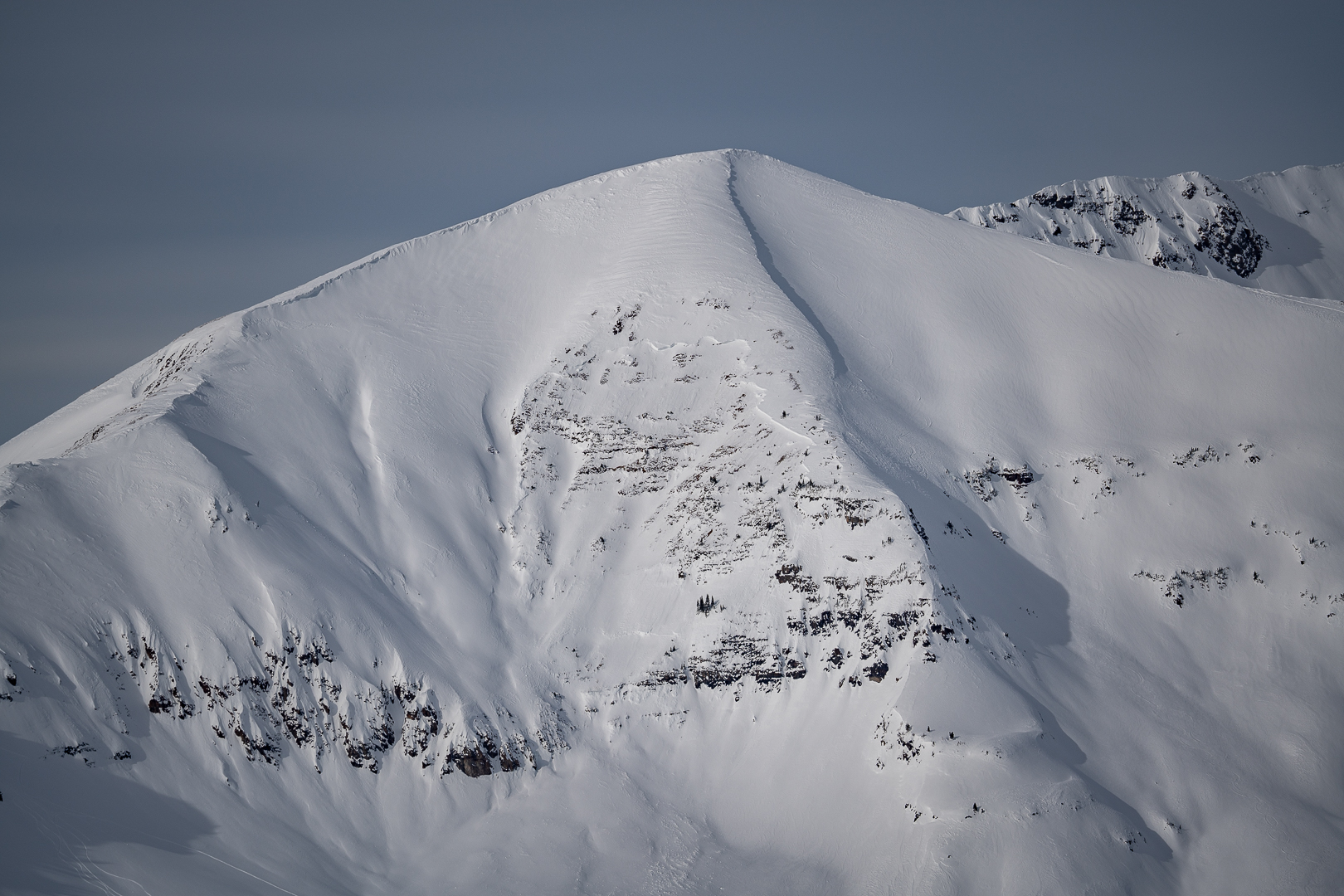
    This large persistent avalanche was explosively triggered on Mt. Crested Butte on 1/17.  It exemplifies the destructive size, and one example of the type of terrain that is troublesome.

Avalanche Discussion

The final pulse of this multi-day system slams into the Elk Mountains today, with avalanche danger expected to peak later this afternoon or evening.   The storm is coming in behind schedule and snowfall has trended down a bit, thus a few adjustments compared to yesterday's outlook. Don't be fooled, conditions will become increasingly dangerous throughout the day.  See the weather tab for details on the storm.  

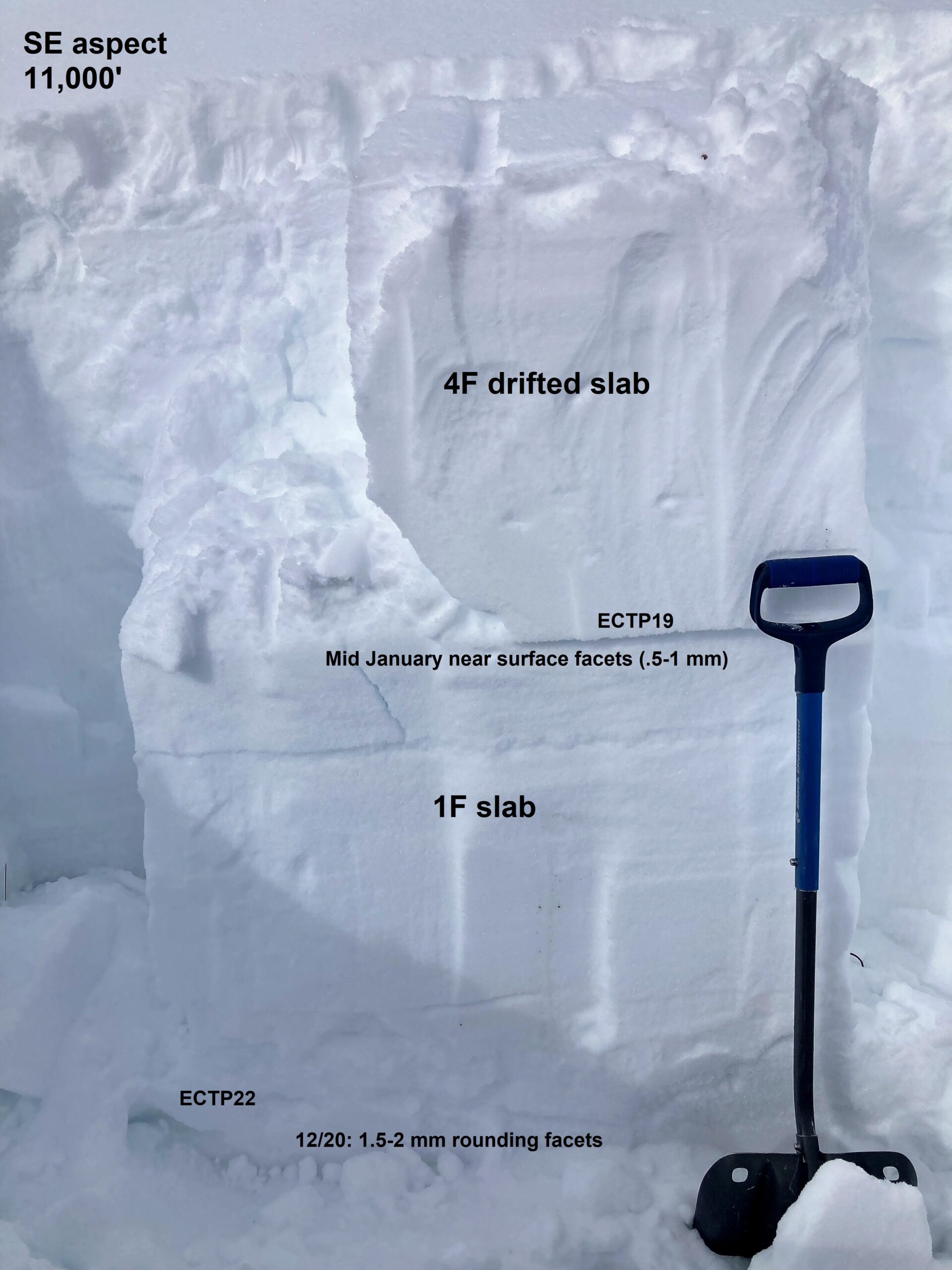
We saw a wave of triggered storm slab avalanches with the first major pulse of this stormy period on Friday and Saturday (see video).  Now, our storm slab problem is growing thicker and harder to manage in the Northwest Mountains and on wind-loaded slopes in the Southeast Mountains. You can expect avalanches to break within today's new and drifted snow, but they could also fail on the layer of small-grained facets that was buried at the start of the storm a few days ago.   This snow pit yesterday demonstrates what that structure looks like on a drifted slope before adding today's additional snow and wind.  Storm slabs are just starting to develop below treeline in the Southeast Mountains and could become active with today's additional snow.  

During each of the major loading events in January, we've seen a few avalanches release on deeply buried weak layers.  Though the chances of triggering a deeper layer are relatively low,  they pose a high consequence threat that is most concerning where the snowpack is relatively shallow and variable in snow depths.  The snowpack structure tends to be thinner and more susceptible to human triggers in parts of the Southeast Mountains.  Here are a few examples of avalanches this month that failed on early-season weak layers from the Northwest Mountains (Ruby Peak, Robinson Basin)  and the Southeast Mountains (CBMR, Walrod).    

Regioni coperte