Bollettino valanghe

Northwest Mountains

Crested Butte Avalanche Center
Vedi sulla mappa

Pericolo valanghe

Thu
Alta quota
3 · Marcato
Limite del bosco
3 · Marcato
Sotto il limite
3 · Marcato
Non aggiornato — questo bollettino è scaduto 4 years ago. Stai vedendo condizioni passate, non il bollettino in corso.

In sintesi

We are just emerging from a week-long storm that delivered 3 to 6 feet of snow to the backcountry on top of several persistent weak layers.  Destructive natural avalanches are a serious threat in and below leeward terrain where increasing winds continue to drift snow today.  Large and dangerous avalanches are sensitive to human triggers on all aspects and elevations, and they can be remotely triggered from near or below steep slopes.    Bring a conservative mindset to the backcountry and give the snowpack time to adjust.  Our media gallery below demonstrates the type of avalanche that you can easily trigger today.  

Problemi valanghivi

  • Persistent Slabs

    • Alta quota
    • Limite del bosco
    • Sotto il limite del bosco
    Probabilità
    Likely
    Dimensione
    2–3.5

    Persistent weak layers in the middle and bottom of the snowpack were overloaded by 3 to 6 feet of new snow in the past week. Destructive avalanches have released around the compass and at all elevations over the past few days, and plenty of other slopes are hanging in the balance waiting for a human trigger.  Persistent slab avalanches can propagate widely through the terrain, or be remotely triggered from low-angle slopes connected to steeper slopes. Leeward start zones at higher elevations could release naturally today with additional wind loading, with the potential for very large natural avalanches (up to D3+).  At lower elevations, persistent slabs are sensitive to triggers on some slopes and are more commonly large (D2) in size.   You can avoid the problem by traveling on slope angles that are consistently less than 30 degrees without overhead hazards. Give yourself a wide margin for error given how consequential the problem is right now.  

    1/3:  This large persistent slab was remotely triggered from where this skier is standing, almost 300 feet away.  Persistent slabs can be triggered from adjacent to steep slopes or propagate widely across terrain features.    

  • Wind Slabs

    • Alta quota
    • Limite del bosco
    • Sotto il limite del bosco
    Probabilità
    Likely
    Dimensione
    1.5–2

    Up to 20 inches of new snow and increasing west to northwest winds are forming sensitive drifts on leeward slopes at higher elevations.  These drifts could pose a hazard themselves or step down and trigger a much larger persistent slab.  Avoid travel on or below recently drifted slopes.  Though less likely, the new snow could also be reactive as a storm slab on steep, wind-sheltered terrain.  

    1/3:  A pair of soft slabs involving the new snow, skier triggered on a drifted rollover.  

Avalanche Discussion

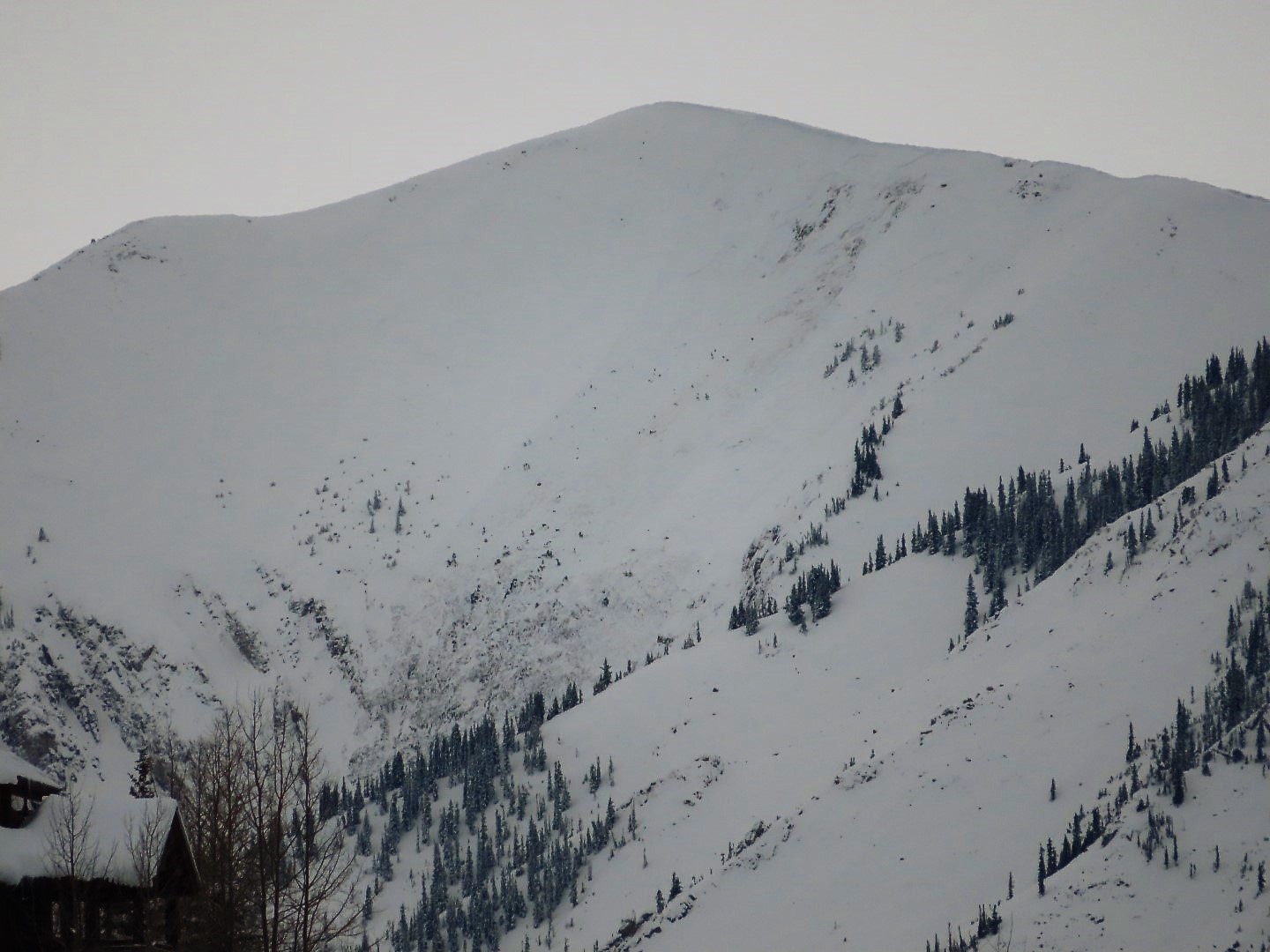
36-hour snow totals are as much as 20" in the Northwest Mountains and 10" in the Southeast Mountains.  This last pulse brought very low-density snow which is easily transportable by the increased west winds overnight.  Alpine stations are showing strong gusts early this morning, which should continue through the day.  With continued wind loading this morning, we are straddling the fence for danger ratings at higher elevations (Level 3 or Level 4).  There is a serious threat of very large naturals today if this final kick from the wind overloads weak layers near the ground,  like this recent avalanche on Whetstone.   We have yet to get good visibility of the alpine this week, so our confidence is low on how reactive alpine start zones are.  I would caution against traveling in the runouts of leeward paths until the winds die down later this evening. 

At lower elevations or windward aspects at higher elevations, human triggering is our primary concern today.  Slabs over buried facets, depth hoar, and surface hoar span the entire compass, several feet thick.  A number of large remotely triggered avalanches yesterday (Snodgrass, Cement Creek) highlight how tender the snowpack is right now.  Slabs are most sensitive to triggers in the shallower parts of our forecast area near and east of town: they are the ideal thickness for triggering and buried facet and depth hoar layers are more fragile, in general.  In deeper parts of the forecast area, persistent slabs are becoming more stubborn to human triggers, though the consequences are more serious.  Regardless of where you are traveling, bring a very conservative mindset and carefully assess the snowpack before considering slopes steeper than about 30 degrees.  Most avalanche accidents happen after the storm has ended when the danger starts to decline.  The snowpack will be adjusting to this major loading event eventually - now is not the time to poke the dragon.  

Regioni coperte