

Bollettino valanghe

Gunnison

Crested Butte Avalanche Center
Vedi sulla mappa

Pericolo valanghe

Sat
Alta quota
1 · Debole
Limite del bosco
1 · Debole
Sotto il limite
1 · Debole
Non aggiornato — questo bollettino è scaduto 5 years ago. Stai vedendo condizioni passate, non il bollettino in corso.

In sintesi

The snowpack is generally safe from triggering a large and dangerous avalanche.  However, small sluffs involving loose surface snow are easy to trigger on shady aspects.  You can still get into serious trouble today if a small avalanche pushes you into trees, into a gulley,  or over cliffs.

Problemi valanghivi

  • Loose Dry

    • Alta quota
    • Limite del bosco
    • Sotto il limite del bosco
    Probabilità
    Possible
    Dimensione
    1–1.5

    Dry loose avalanches (sluffs) are the most problematic on the north half of the compass, especially in wind-sheltered terrain near and below treeline.   Where the upper snowpack is weak and cohesionless, you can easily trigger small sluffs on slopes steeper than about 38 degrees. Ski cuts, moving across the fall-line while descending, or choosing lower-angled slopes are effective techniques to manage this problem. These point release avalanches will continue to fan out and accumulate mass in big terrain with sustained steep slope angles. Use caution above gullies where an avalanche can pile more deeply and above trees and cliffs where the consequences of a small sluff will be exacerbated. 

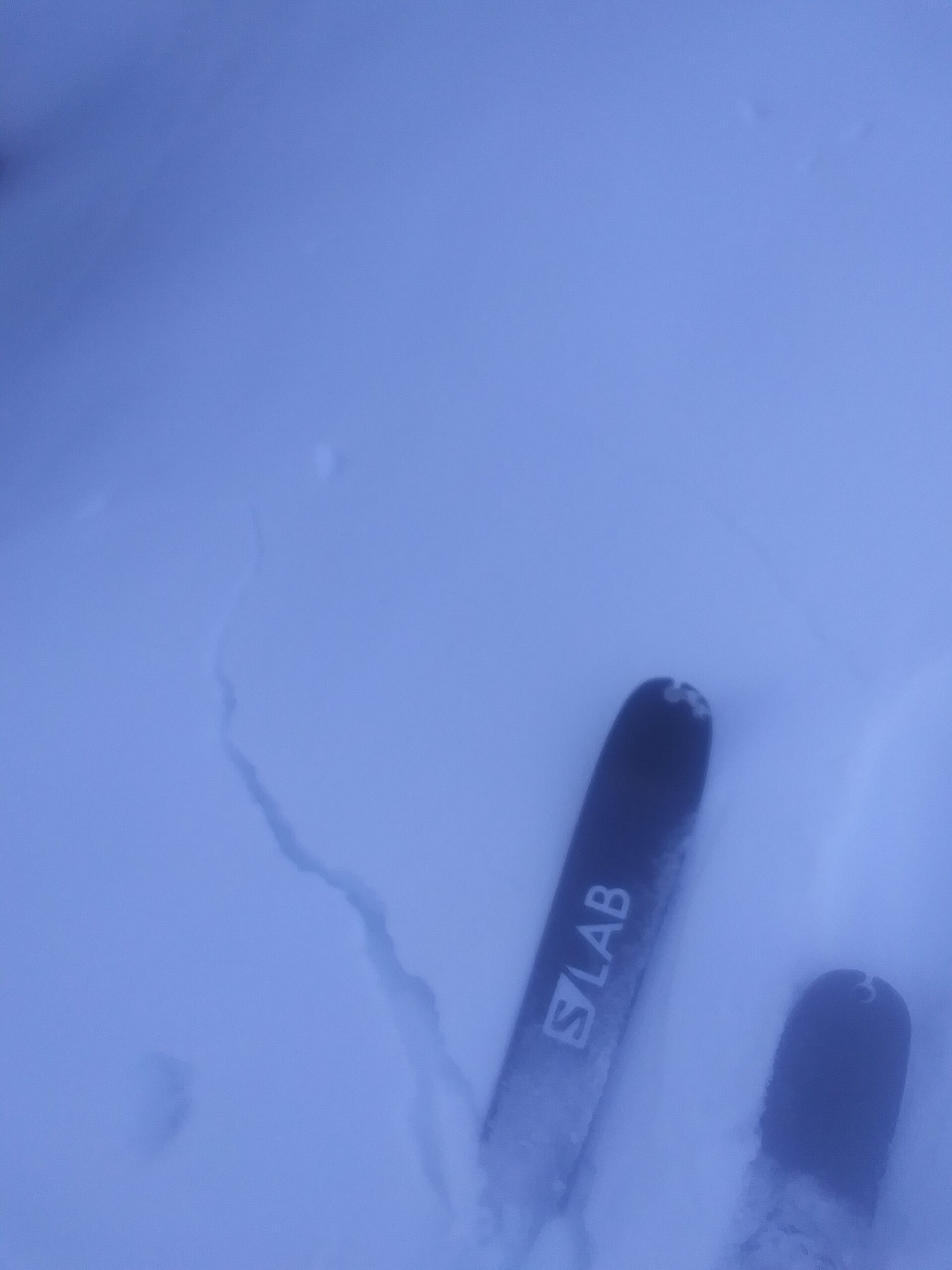
    A great example of sluff management in terrain where a loose dry avalanche could be more problematic because it gets funneled down a gulley.  
Avalanche Discussion

Today's primary hazard continues to be loose dry avalanches.  With small doses of snow and ongoing faceting in the upper snowpack, the danger posed by loose dry avalanches has been slowly increasing over the past two weeks. There is more loose snow available for entrainment at lower elevations or in terrain with a very shallow snowpack.  Slopes need to be about 38 degrees or steeper to maintain the momentum of a loose snow avalanche.  Many skiers and riders have been venturing into this type of very steep terrain in recent weeks, and we continue to see a steady string of small triggered avalanches.  The avalanche danger is on a sliding scale and sometimes conditions don't fit perfectly into the five pre-defined levels.  The likelihood of triggering a noteworthy avalanche fits better with MODERATE danger today, while the size fits better with LOW.  Our travel advice falls somewhere between the two, we'll call it  LOWDERATE.  The problem is very well defined and easy to recognize by observing and testing the snow surface.  Scan through our media gallery below or our observations page for examples of what you can expect to encounter if you are riding very steep terrain on the northern half of the compass.  If you are not practiced and comfortable with sluff management, reconsider terrain that funnels steeply into trees, rocks, cliffs, or gullies. Rather, choose open slopes with clean runouts or moderate slope angles.    

Alpine winds gusted into the 30's yesterday evening out of the northeast.  With a couple of inches of recent snow to blow around, you can expect a few thin soft slabs have formed in the alpine.  Look for signs of fresh drifting or cracking in the snow.   There are also a few thin and hard slabs lingering from stronger west-southwest winds earlier this week.  These isolated issues can pose a hazard in high consequence terrain.  The most recent northerly winds will have stirred the snow surface up enough to reduce the number of slopes where you can trigger a loose snow avalanche above treeline, a change which is reflected in the loose dry distribution rose above.  Above treeline, you can still trigger small sluffs in extreme, rocky terrain, or if you find a very wind-sheltered slope.   

Regioni coperte