Bollettino valanghe

Southeast Mountains

Crested Butte Avalanche Center
Vedi sulla mappa

Pericolo valanghe

Sat
Alta quota
2 · Moderato
Limite del bosco
1 · Debole
Sotto il limite
1 · Debole
Non aggiornato — questo bollettino è scaduto 3 years ago. Stai vedendo condizioni passate, non il bollettino in corso.

In sintesi

Heightened avalanche conditions are driven by the threat of warming-related cornice falls, some of which could produce destructive avalanches.  Limit your time on slopes below large, overhanging cornices.   In areas with unusually shallow snow depths, there's still a small chance you can trigger a large avalanche that breaks on old weak layers.    The safest riding is in terrain with a deep snowpack and without cornices above.  

Problemi valanghivi

  • Cornices

    • Alta quota
    • Limite del bosco
    • Sotto il limite del bosco
    Probabilità
    Possible
    Dimensione
    1.5–3

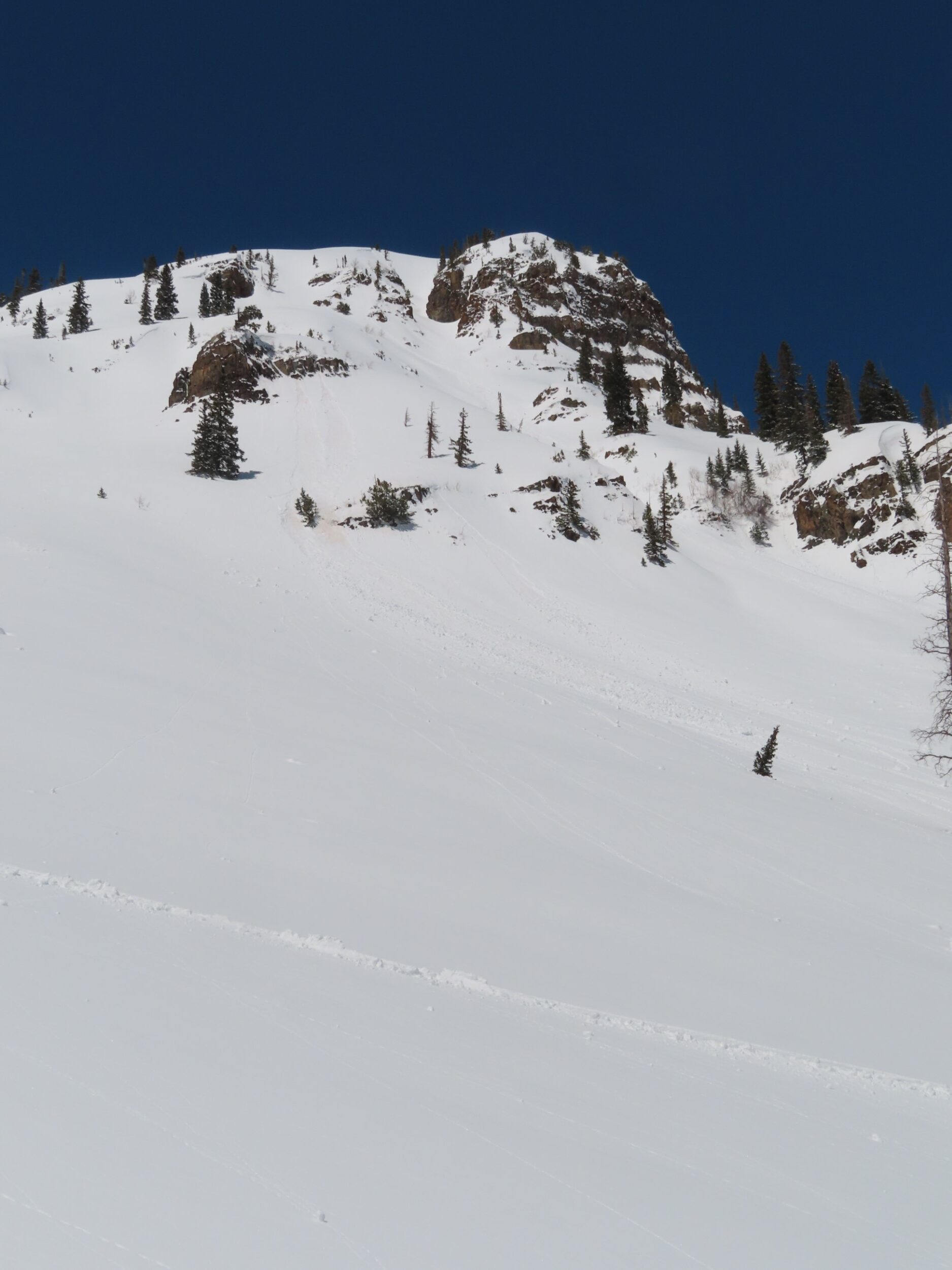
    Large, overhanging cornices continue to fall on a daily basis; this pattern is expected to continue under the current warming trend. Some are capable of triggering destructive slab avalanches, while others are trundling down slope entraining large amounts of snow with car-sized chunks of cornice debris.  Limit your exposure on slopes with large cornices above, and give them a wide berth if you are traveling along corniced ridgelines.  

    A recent cornice fall in Redwell Basin.  Minimize your exposure to terrain like this.  

  • Persistent Slabs

    • Alta quota
    • Limite del bosco
    • Sotto il limite del bosco
    Probabilità
    Unlikely
    Dimensione
    2–3

      Large, stubborn slabs several feet thick or more exist over faceted weak layers in the snowpack.  Avalanches failing on deeply buried weak layers have become infrequent in recent weeks.  The most concerning slopes are shallow and rocky or where large cornice falls could act as triggers. The greatest number of avalanches have occurred on easterly-facing slopes where wind loading this month has overlapped with faceted crusts.  Early warning signs for this avalanche problem are rare and feedback is infrequent.  Safer riding is where the snowpack is deep and without cornices above.  

    Very large persistent slab on the east face of Gothic Mountain. 3/31. This avalanche was likely triggered by a cornice falling onto the slope. 

Avalanche Discussion

Wind slabs from the Monday/Tuesday storm are expected to be generally healed up now.  The primary concern today is the threat of natural cornice falls driven by warming temperatures.  After a nearly-record-breaking winter, those backcountry bombs are huge right now and we continue to observe a few cornice falls each day.   Some of them have triggered persistent slab avalanches on slopes below, such as this long-running avalanche off of Gothic.   It's tricky to predict when and which cornices will fall, but easy to identify and avoid the looming hazard.  

Persistent slabs are gradually becoming increasingly stubborn and isolated with each day of dry weather.  Apart from cornice-triggered persistent slabs, our greatest concerns for human triggering are in areas that have unusually shallow snow depths (less than about 5 feet or 150 cm), more commonly in the Southeast Mountains.   This remotely triggered slide near Independence Pass yesterday highlights the issue.

Yesterday we observed a few small wet loose avalanches at lower elevations as the recent snow got wet and slid on the underlying dusty crust layer.   With warmer temperatures today, I expect we'll see the issue expanding to higher elevations in terrain that saw more than about 6" of snow earlier this week.  That's more common in the Northwest Mountains.  Shallow dry sluffs are also a minor concern on northerly aspects.  

Party for the People! Join us this Friday, April 7 at the Talk of the Town from 5-9 p.m. so we can thank everyone for their support this season with free beer and music from Atmospheric Whiskey River.

Regioni coperte