Bollettino valanghe

Southeast Mountains

Crested Butte Avalanche Center
Vedi sulla mappa

Pericolo valanghe

Sun
Alta quota
3 · Marcato
Limite del bosco
3 · Marcato
Sotto il limite
2 · Moderato
Non aggiornato — questo bollettino è scaduto 3 years ago. Stai vedendo condizioni passate, non il bollettino in corso.

In sintesi

Westerly winds are continuing to load lee terrain at near and above treeline elevations where dangerous avalanche conditions remain. In wind-sheltered terrain, slab avalanches are becoming more stubborn to human triggers, however, avalanches can still be remotely triggered and propagate widely through the terrain. Yesterday there were reports of two remotely triggered avalanches (1 & 2), and observers continue to find more notable avalanches from last week's natural avalanche cycle. It may be late March, but avalanche conditions are complicated and more similar to mid-winter. Natural and human-triggered avalanches are propagating widely across terrain features while becoming large and destructive in size.

Problemi valanghivi

  • Wind Slabs

    • Alta quota
    • Limite del bosco
    • Sotto il limite del bosco
    Probabilità
    Likely
    Dimensione
    1–2

    Westerly winds are building fresh wind slabs and further loading persistent weak layers at near and above treeline elevations. A triggered slab avalanche could release in the upper 10 to 20 inches of snow, or step down into more deeply buried weak layers. Complicated avalanche conditions exist in these locations. You can avoid the wind slab avalanche problem by sticking to sheltered terrain and/or avoiding the lee sides of ridgelines and cross-loaded terrain features. 

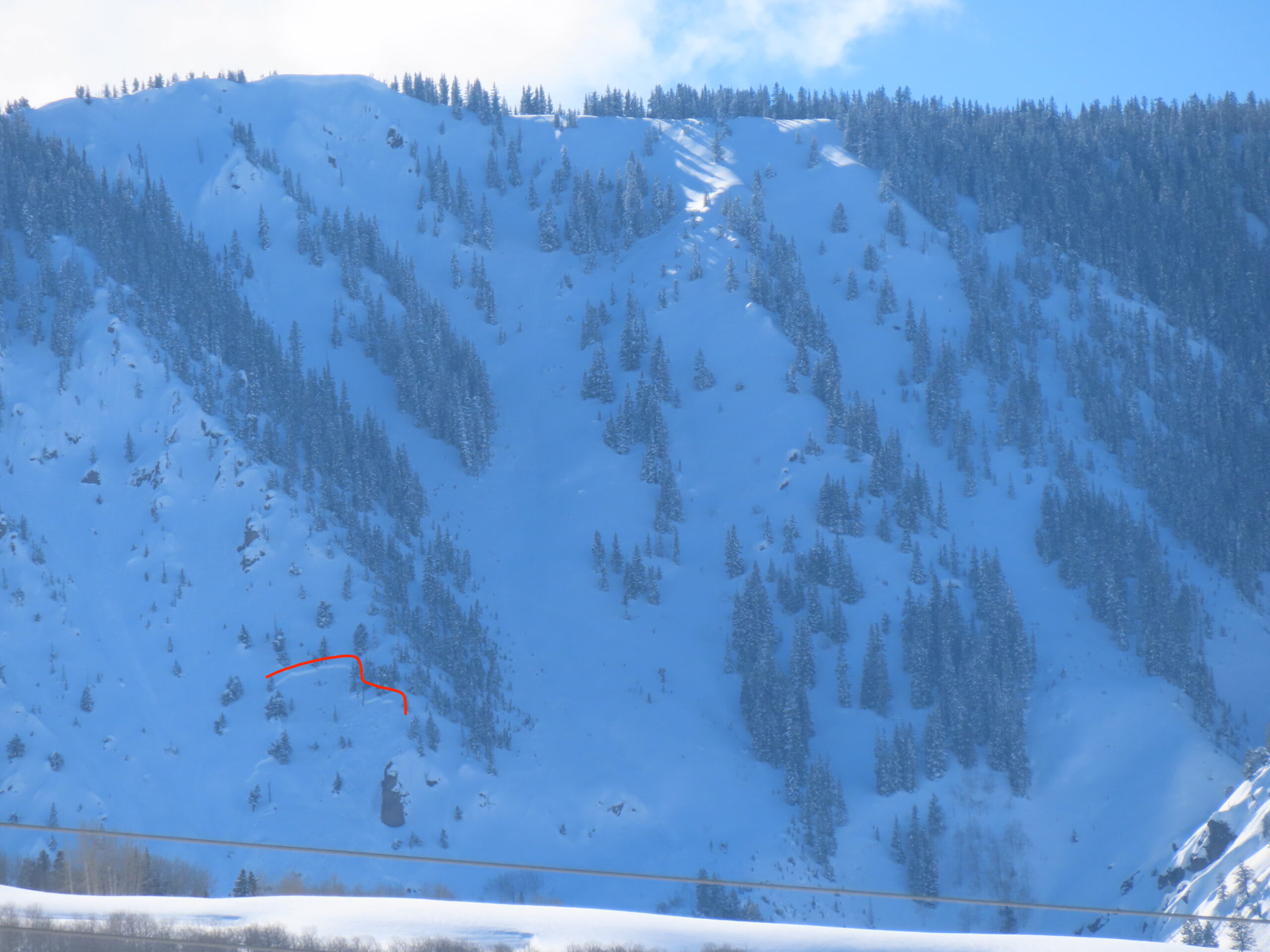
    A human-triggered avalanche on 3/18, that propagated into a wind-loaded terrain feature, with a triple overhead crown and an unsurvivable avalanche. 

  • Persistent Slabs

    • Alta quota
    • Limite del bosco
    • Sotto il limite del bosco
    Probabilità
    Possible
    Dimensione
    2–3.5

    There are several faceted weak layers in the snowpack that remain a concern in some terrain. The most concerning slopes include those that held an unusually shallow and weak snowpack prior to our March storms (like Round Mountain), where snow depths are currently less than about 5 feet (150cm) deep, or in wind-effected terrain with variable snow depths (like Teo or Carbonate Hill).  There are also recently buried faceted crusts in the upper snowpack on easterly and westerly-facing slopes that are just developing an issue (like Whetstone). A natural or human-triggered avalanche in the recent storm snow could further step down to these deeper weak layers and produce an unsurvivable avalanche. 

    Early warning signs for this avalanche problem are rare. So don't expect much for direct feedback. You can reduce your chance of triggering this avalanche problem by avoiding wind-loaded terrain and limiting slope angles to 35 degrees or less. 


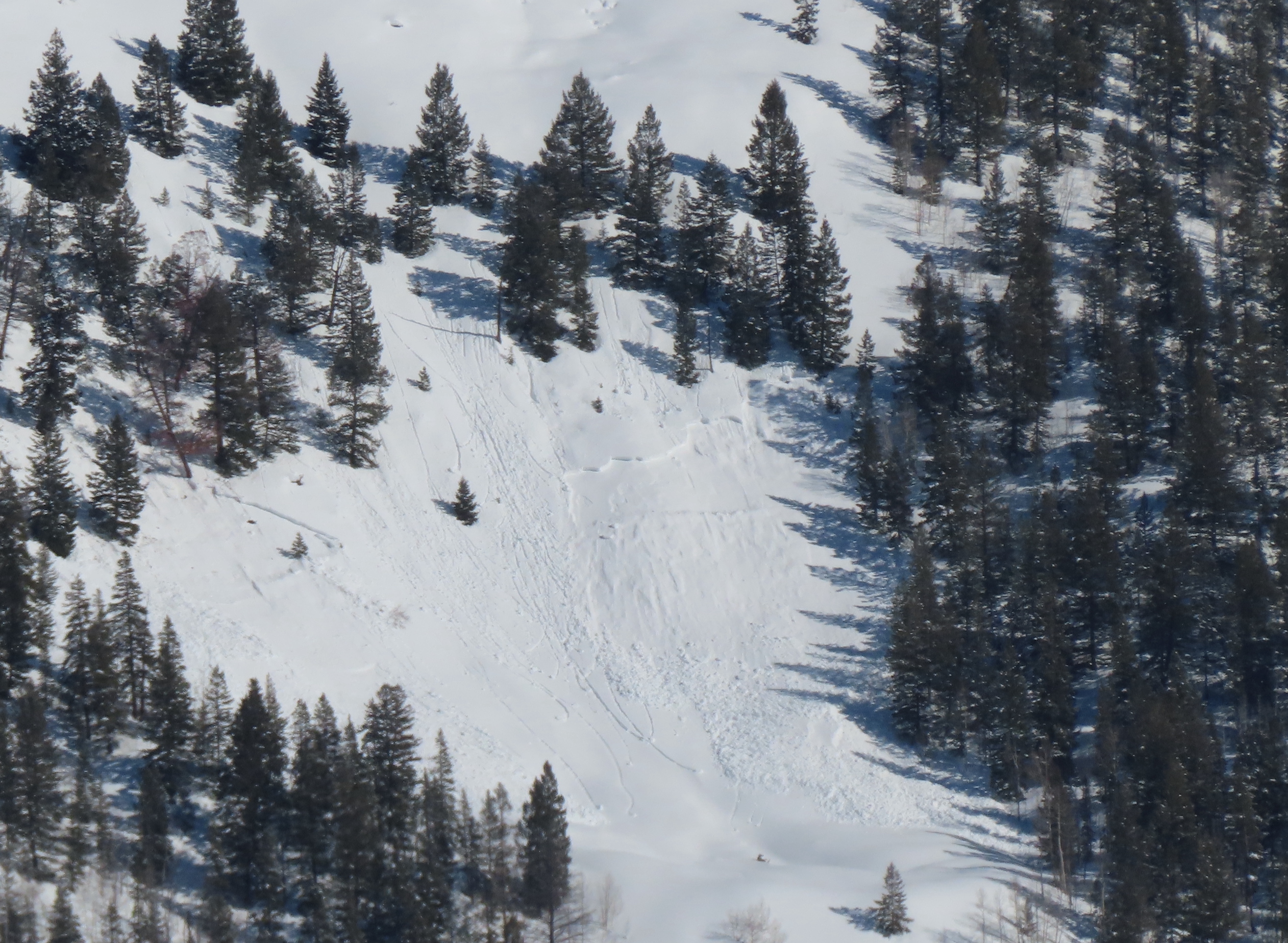
    3/23:  The deep and wide avalanche that ran Wednesday night.  Northerly aspect of Mount Whetstone.  You would not survive an avalanche of this size.

Avalanche Discussion

The recent storm from Monday, 3/20 through Wednesday, 3/22 deposited a slab that is 1 to 3 feet thick in sheltered terrain and much deeper on drifted slopes. Visibility has been somewhat limited in recent days, but observers have still noted a fairly widespread natural avalanche cycle that occurred during this time. The current wind loading that is now occurring is keeping continued natural avalanche activity possible this weekend.

Widespread storm slab instability in the new snow has mostly settled out, however, concerns remain for continued avalanche activity on the persistent weak layers that are buried under the snow that has accumulated this week. The storm slab avalanche problem has now been changed to a persistent slab avalanche problem. The likelihood of human triggering has thankfully decreased in the big picture, but persistent slab characteristics have developed with wide propagating avalanches and remote triggering. 

A triggered persistent slab could further step down to weak layers buried even earlier this winter. This is most common in the SE Mountain forecast area, but concerns still exist in the NW Mountain forecast area. Avalanches releasing on those deeply buried weak layers have been very large in size, destructive, and unsurvivable. 

Since the middle of March, we have been in a steeping back mindset as avalanche conditions have become complicated, and more unsurvivable avalanches are being documented. We are now entrenched in these conditions. Even though it is late March, this isn't a great time for big spring lines and aggressive terrain choices. 

Regioni coperte