
Quick report
- Cracking
- specific
- Collapsing
- specific
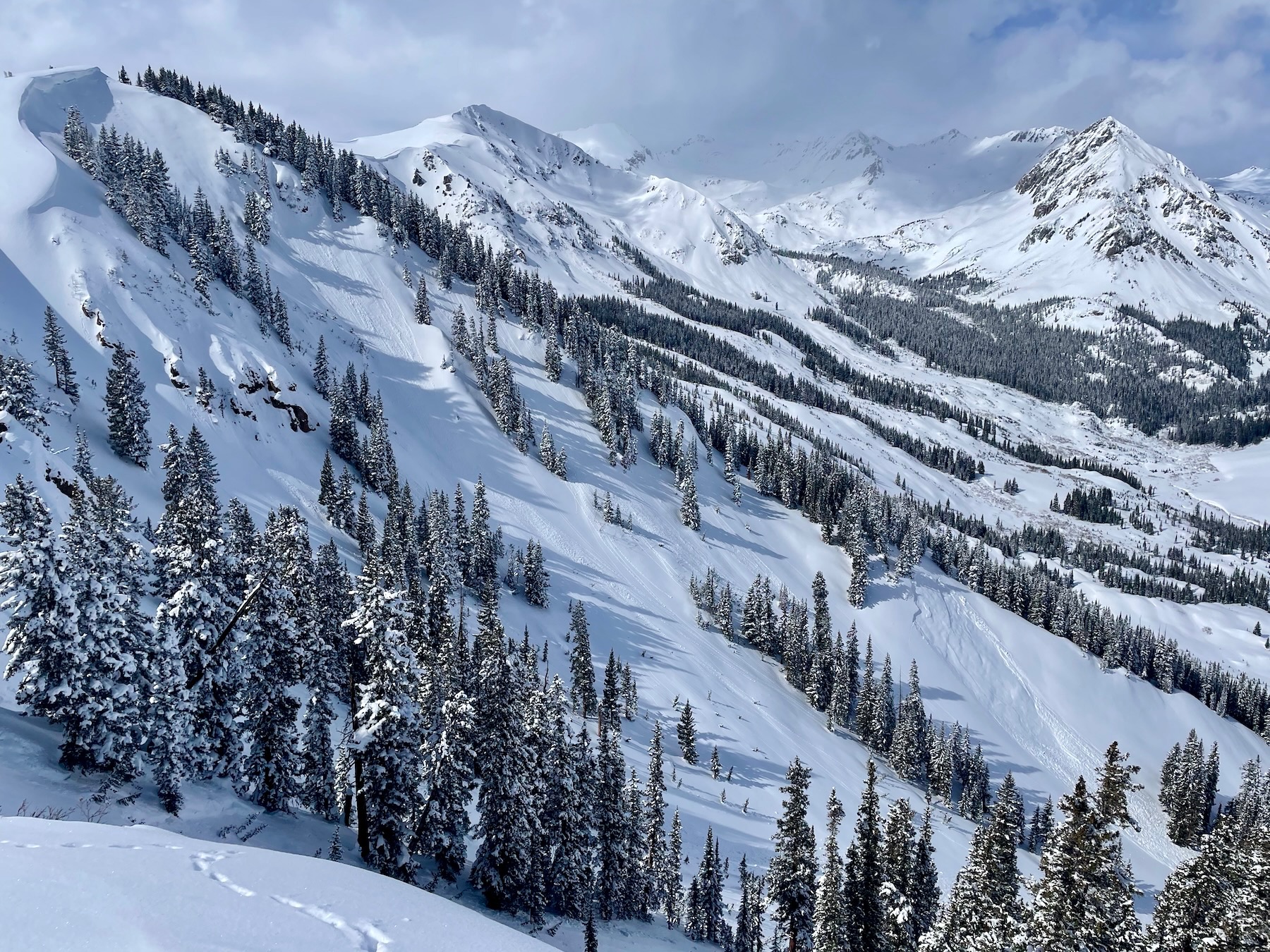
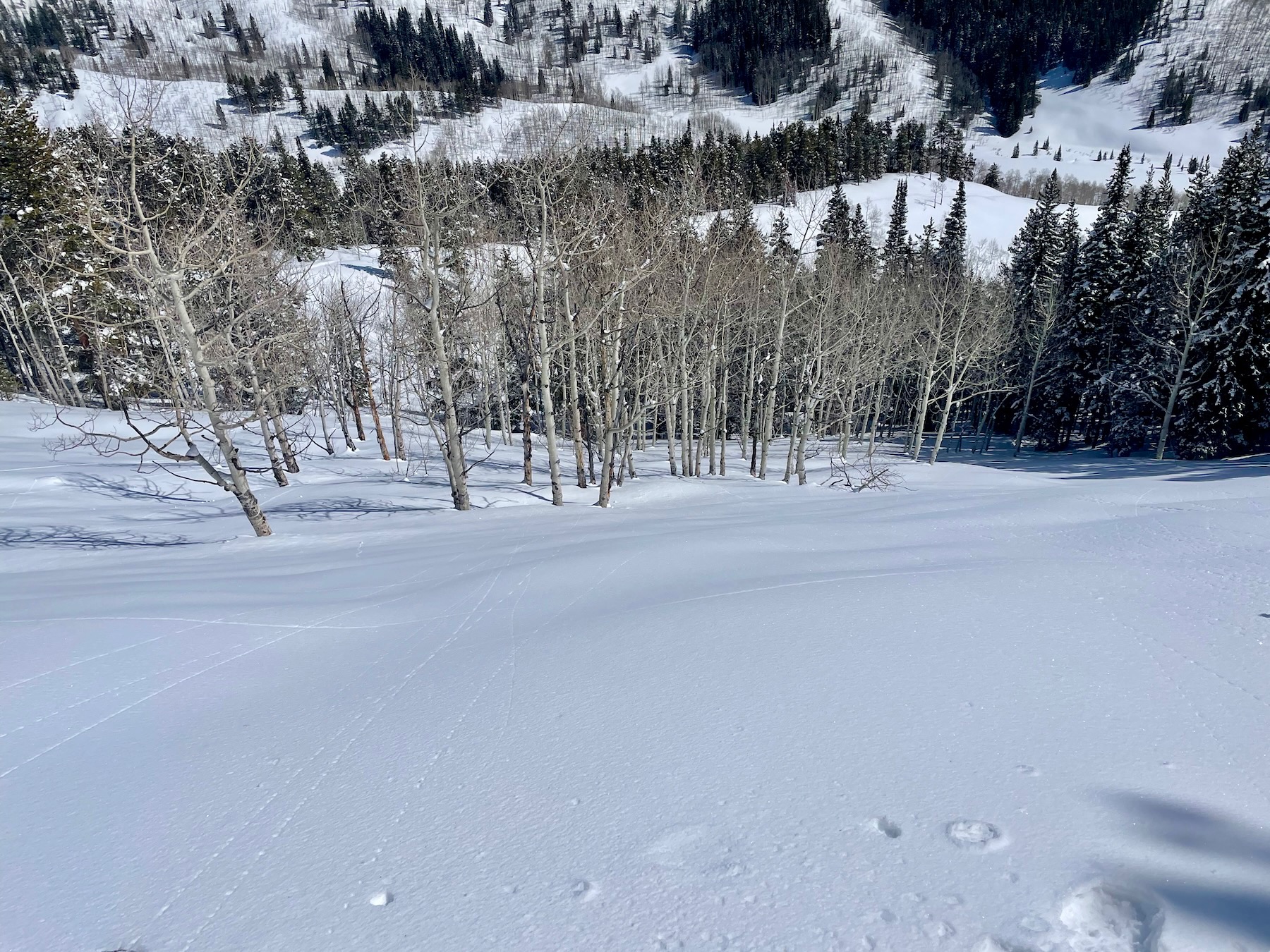
The shallow snowpack areas in lower Brush Creek and Deer Creek were reactive with shooting cracks and a collapsing snowpack thanks to a rapidly settling and moist upper snowpack.
Weather
- Cloud Cover
- scattered
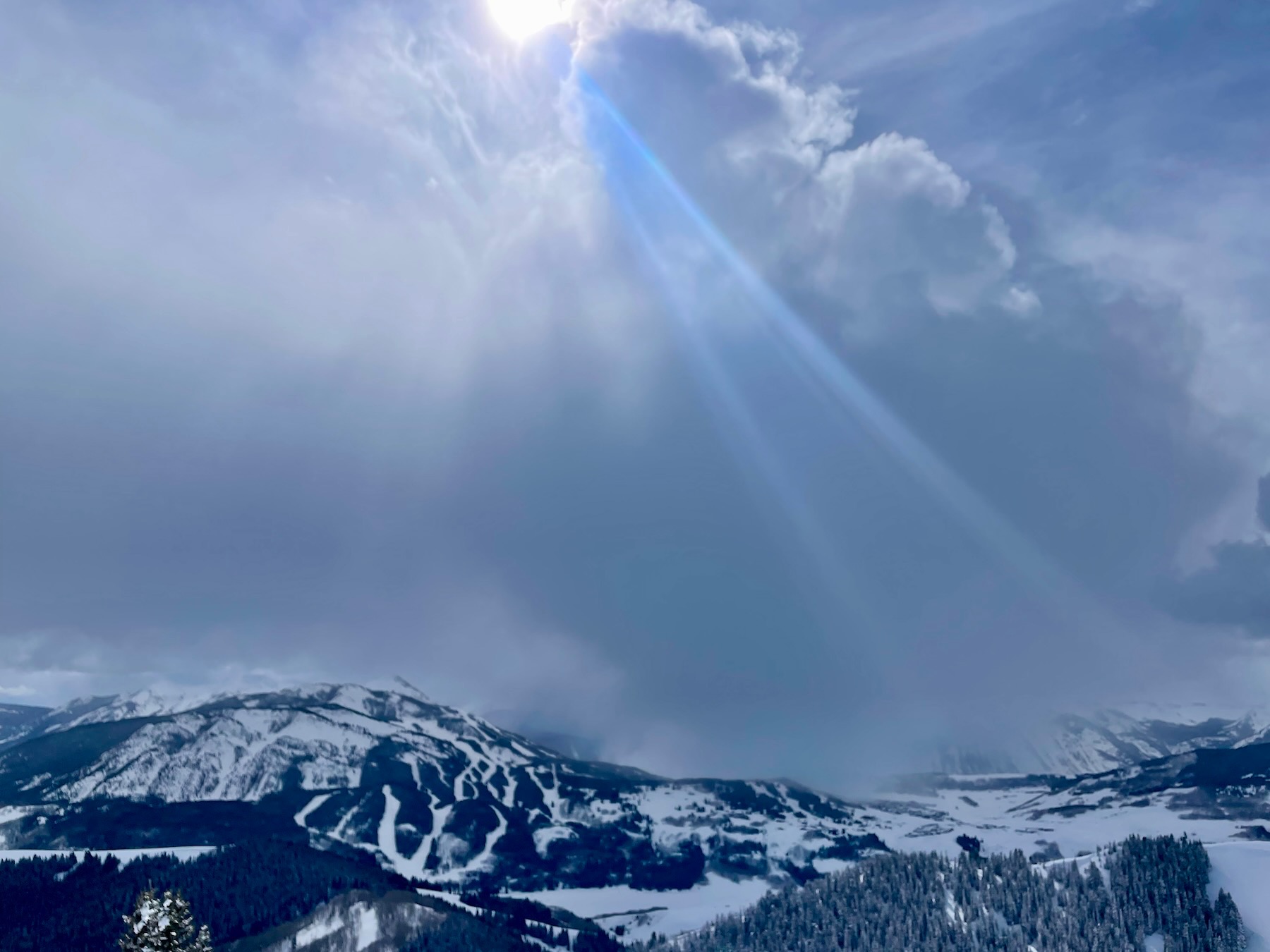
A partly cloudy sky for the first half of the day with warm temps and some green housing. Cloud cover increased in the later afternoon with light snowfall.
Snowpack
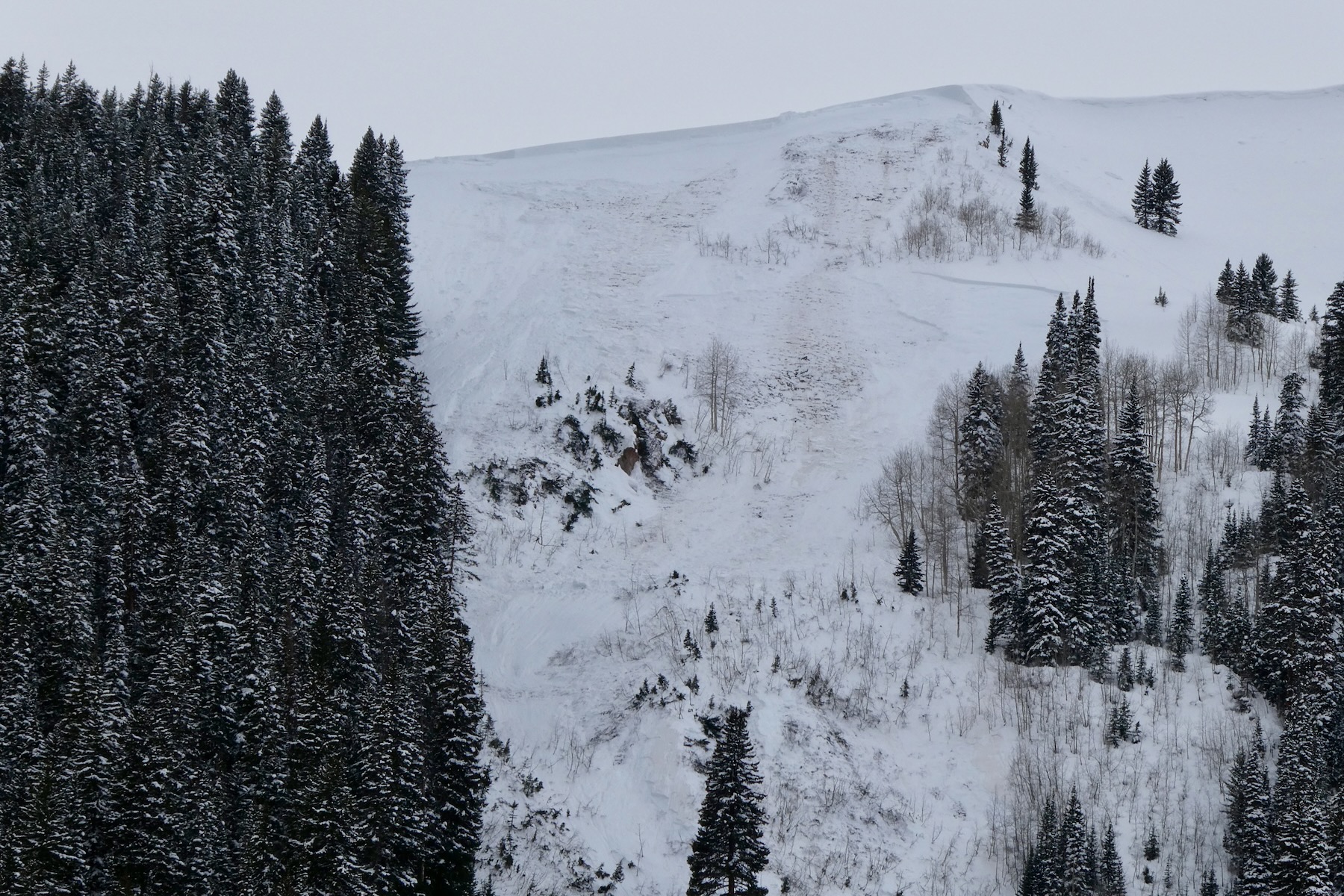
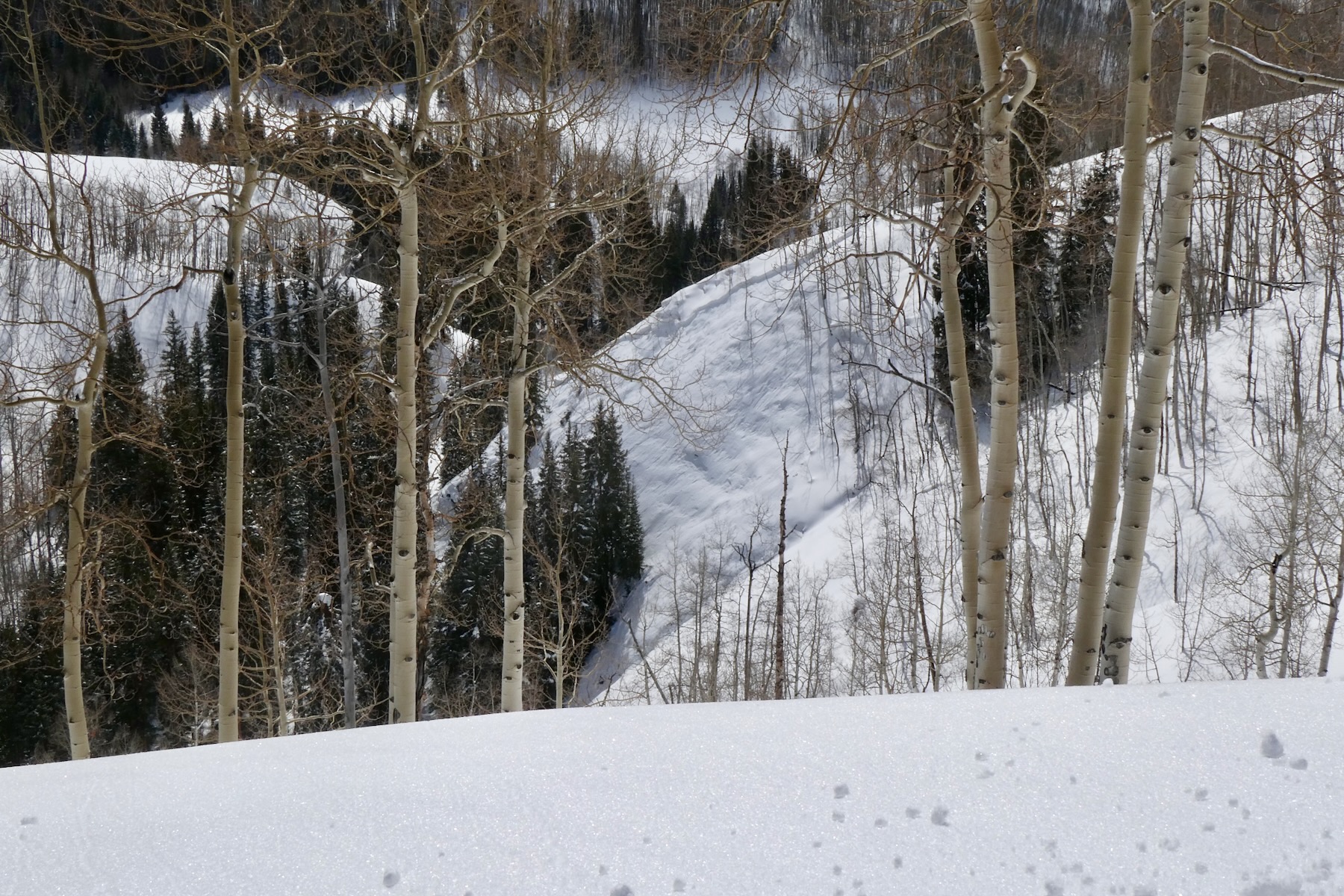
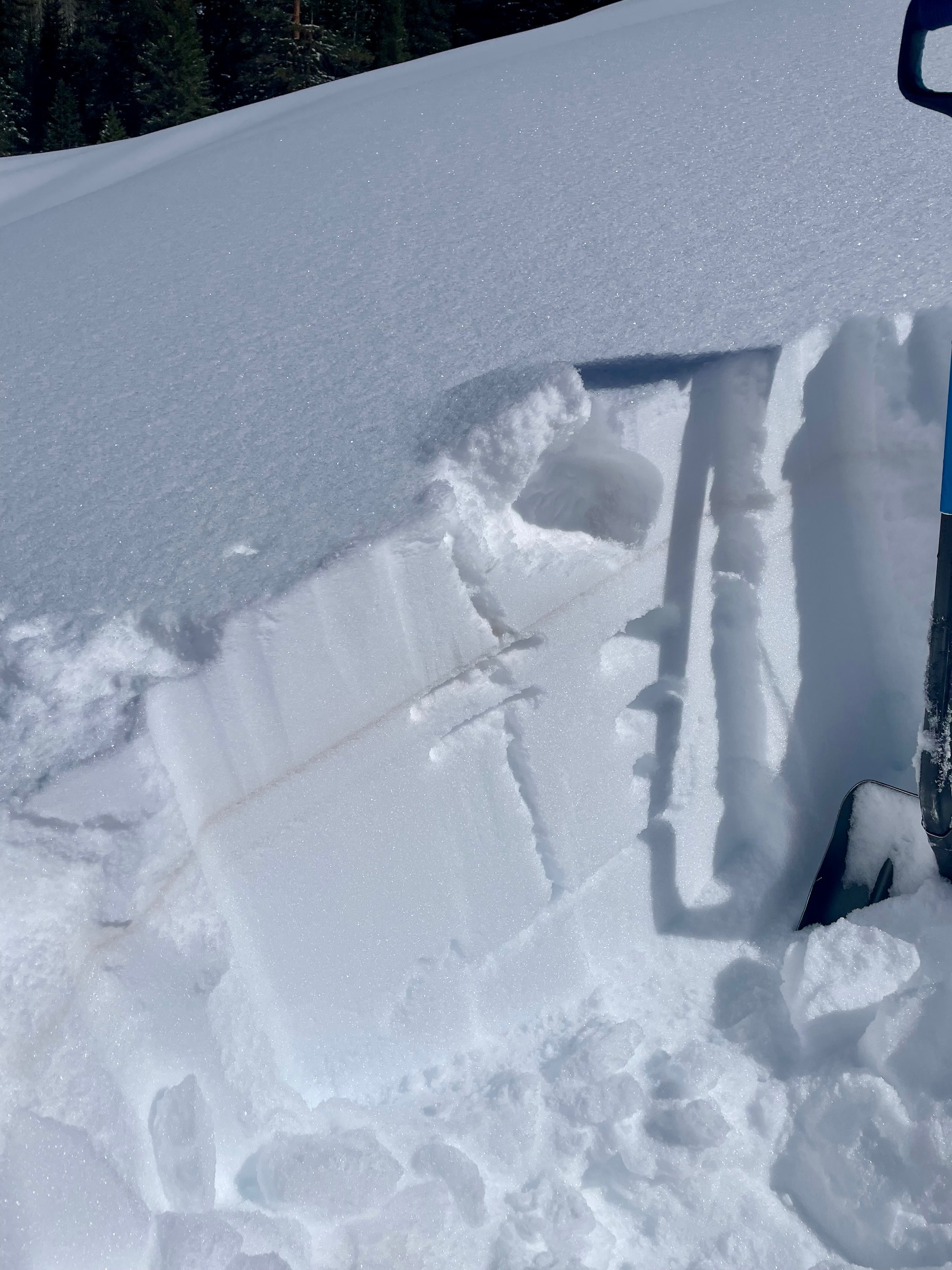
The warm temperatures and almost greenhouse weather, have rapidly settled thin/moist slabs over a shallow/weak snowpack in lower Brush Creek and Dear Creek. The recent changes in the upper snowpack had made the persistent slab avalanche problem reactive in these areas during the middle of the day. Lots of shooting cracks and some remotely triggered avalanches. The shooting cracks primarily occurred on East and West aspects, while the remotely triggered avalanches occurred on NE to E-facing slopes. The only steep slopes I traveled near were from NE to E and that is partly why they were the only areas with resulting avalanches. In the later afternoon cloud cover had built up and the snow surface started to freeze, resulting in a less reactive snowpack.
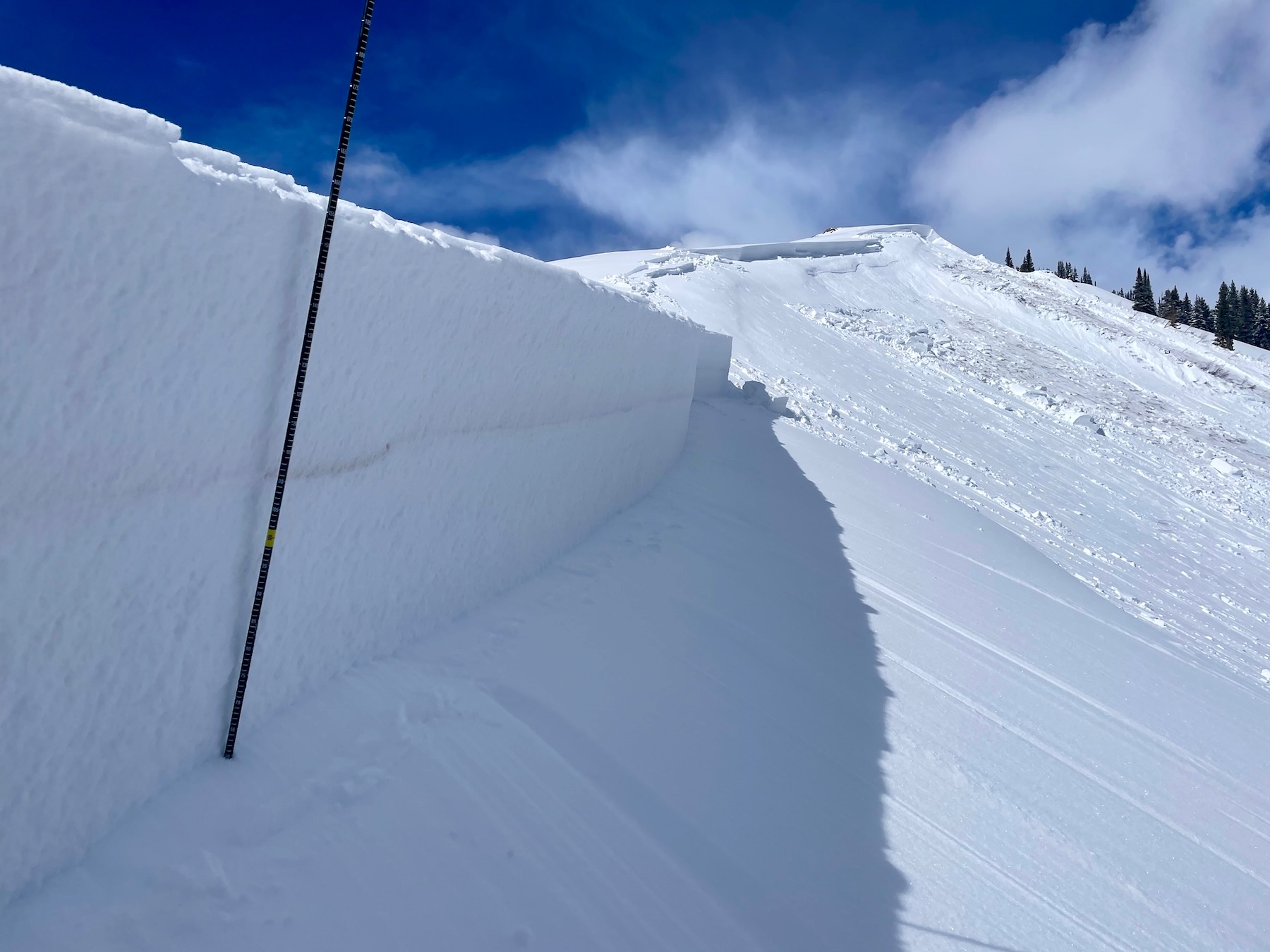
Below 10,500ft the snowpack ranged from 80cm to 150 cm on average. This was the most reactive snowpack I encountered before the snow surface started to refreeze in the afternoon.
The primary weak layer of concern remained the 2/2 interface. Consisting of 1.5 to 2mm facets and/or SH up to 15mm in size.
Avalanche
- Size
- D2
- Count
- 3
- Aspect
- NE
- Trigger
- AM
- Elevation
- 9300 ft
Remotely triggered several avalanches. 2 of those avalanches had previous wind loading with big open fetches, and 1 avalanche was in a more wind-protected area at valley bottom. See each avalanche for more information.