
Quick report
- Cracking
- widespread
- Collapsing
- widespread
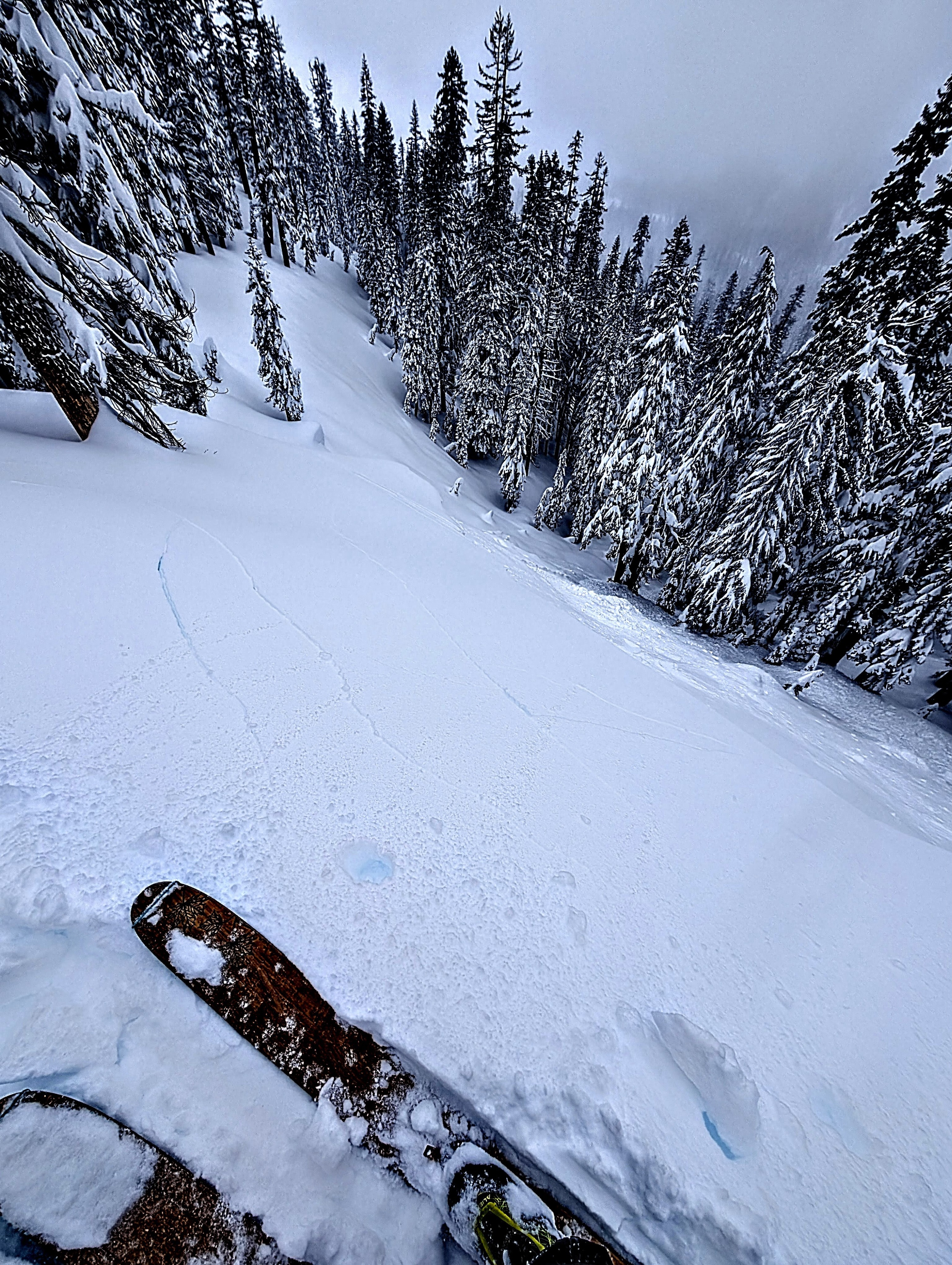
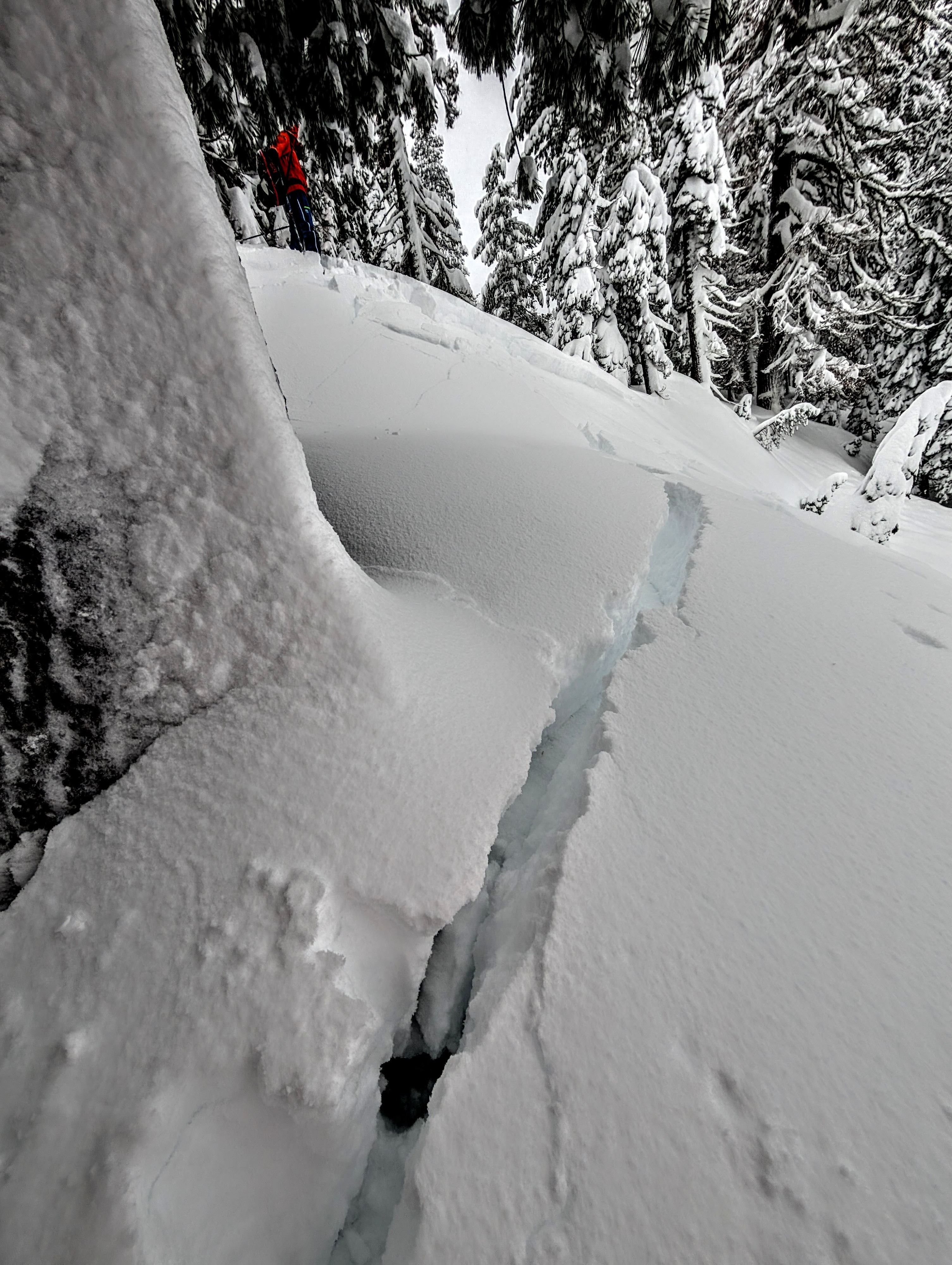
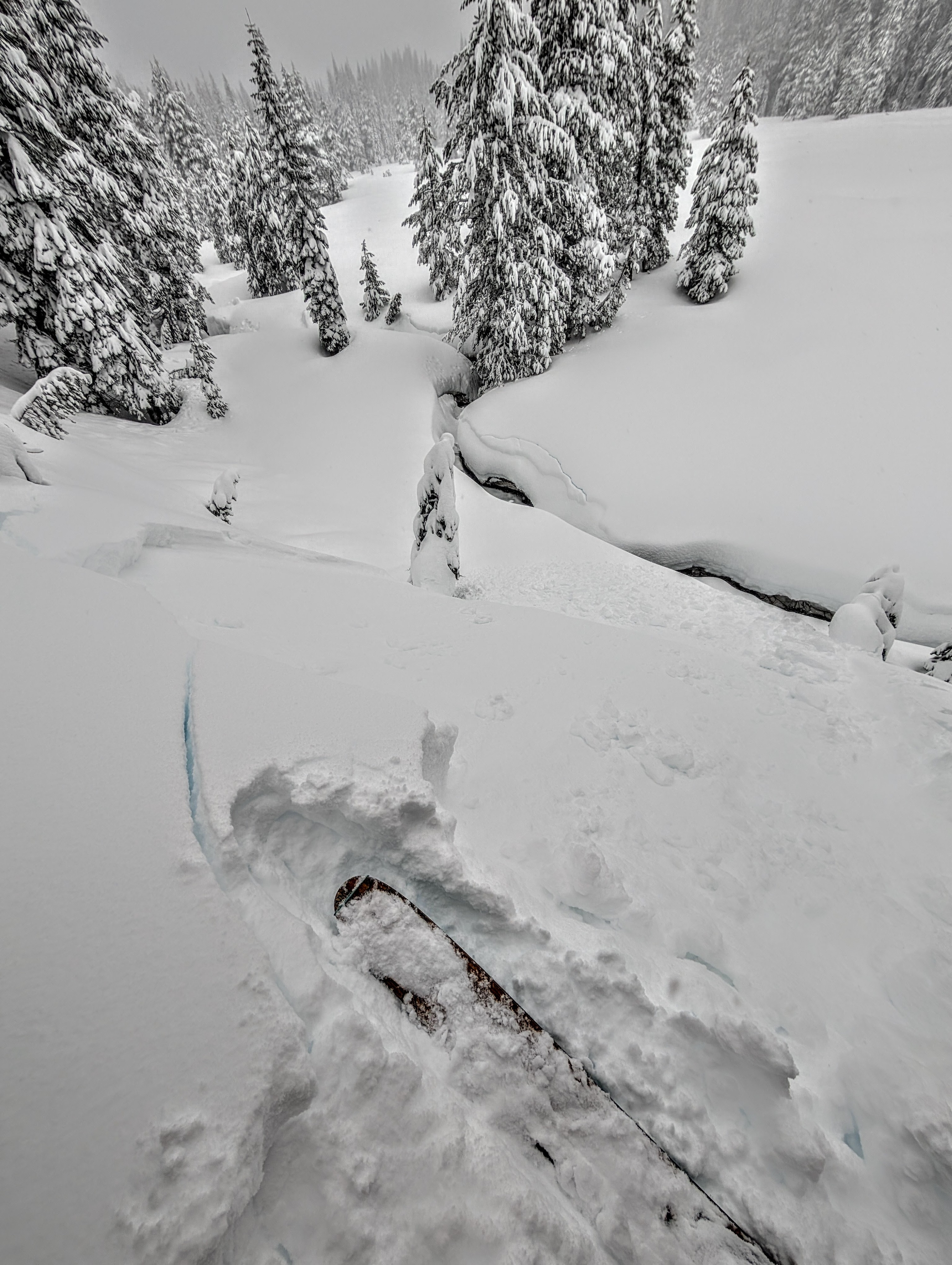
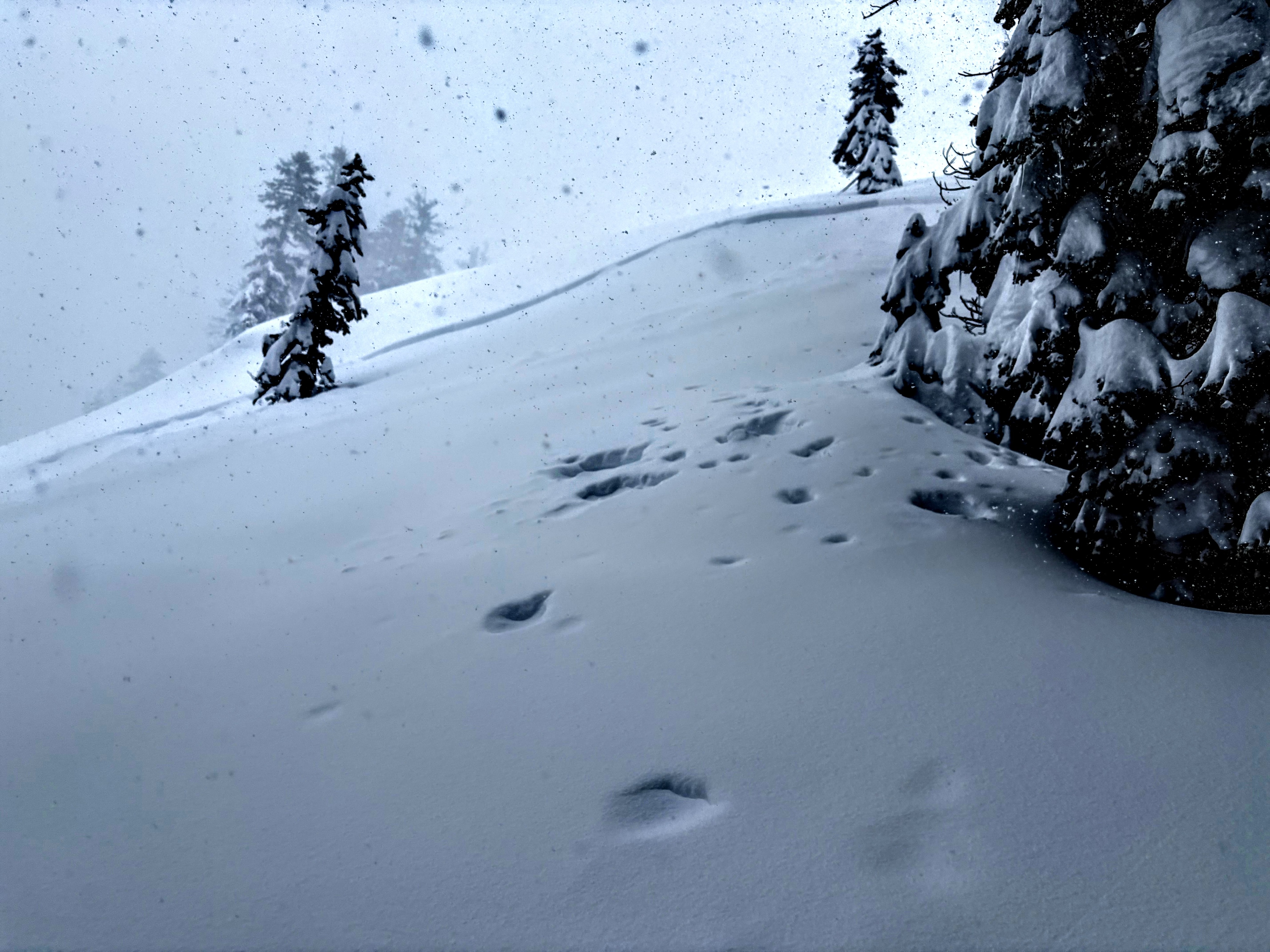
Today, we saw widespread signs of instability and avalanche activity. We saw our first natural avalanche driving up to Donner Pass. As soon as we started skinning we started triggering cracks and test slope failures on small slopes next to the skin track. We could feel density changes and weakness within the storm snow, but most cracks and failures occurred between the storm snow and the old snow surface.
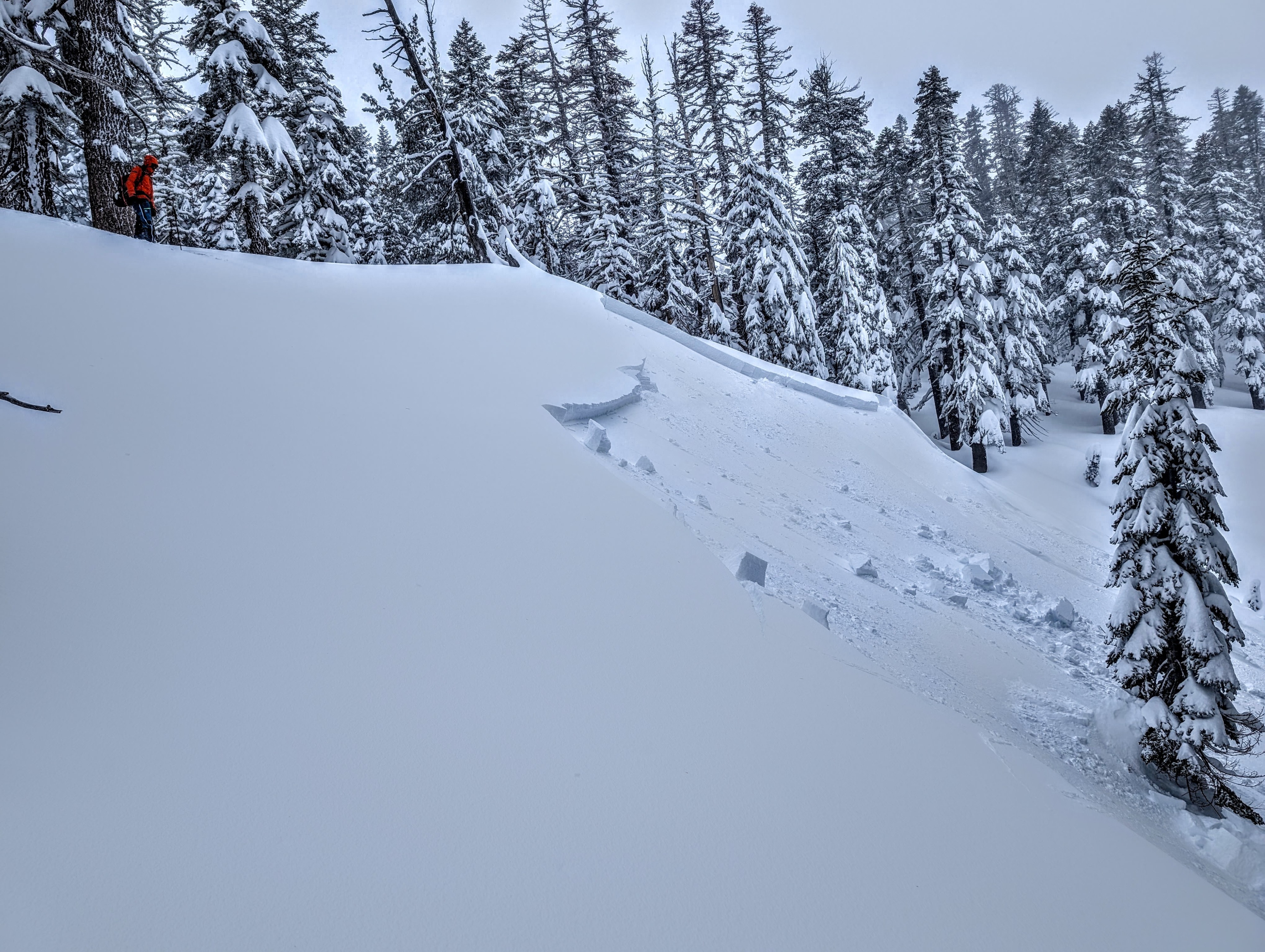
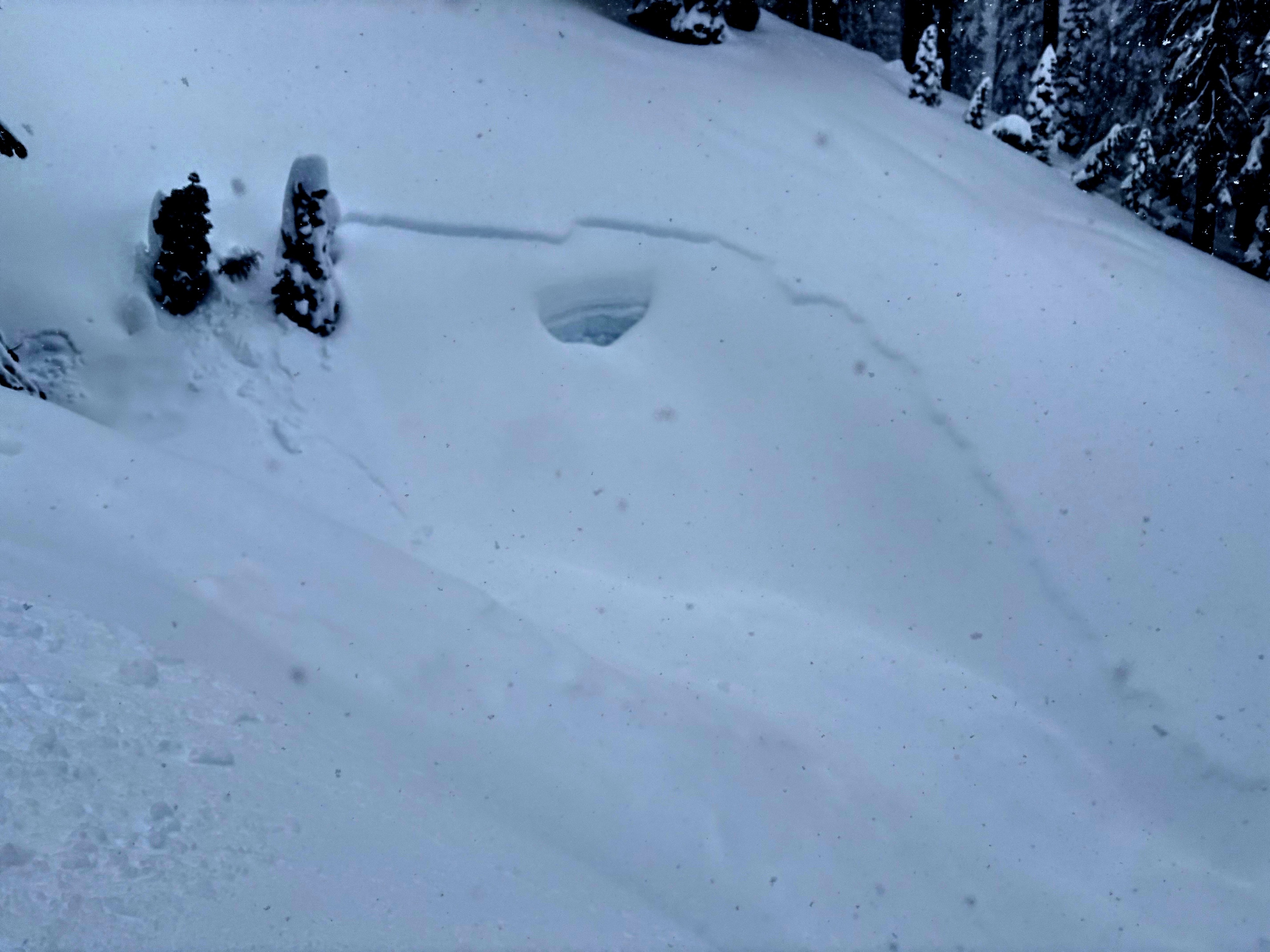
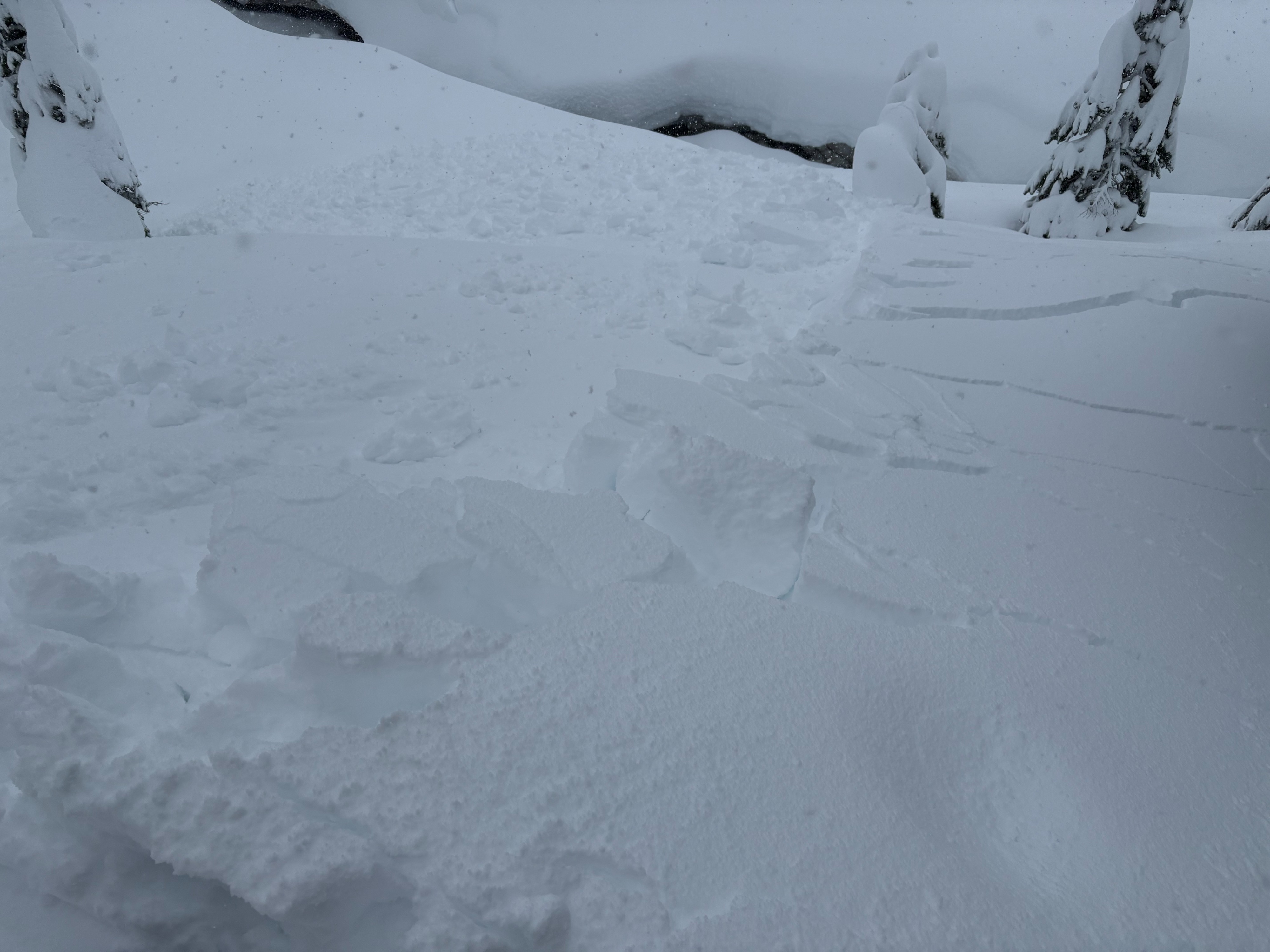
We triggered our first avalanche from a flat area near the top of a small slope above a creek. Shooting cracks spiderwebbed out across the slope from the flat place we were standing, and an 18-inch deep slab slid downhill where the hill got steeper. The slope next door had avalanched naturally earlier.
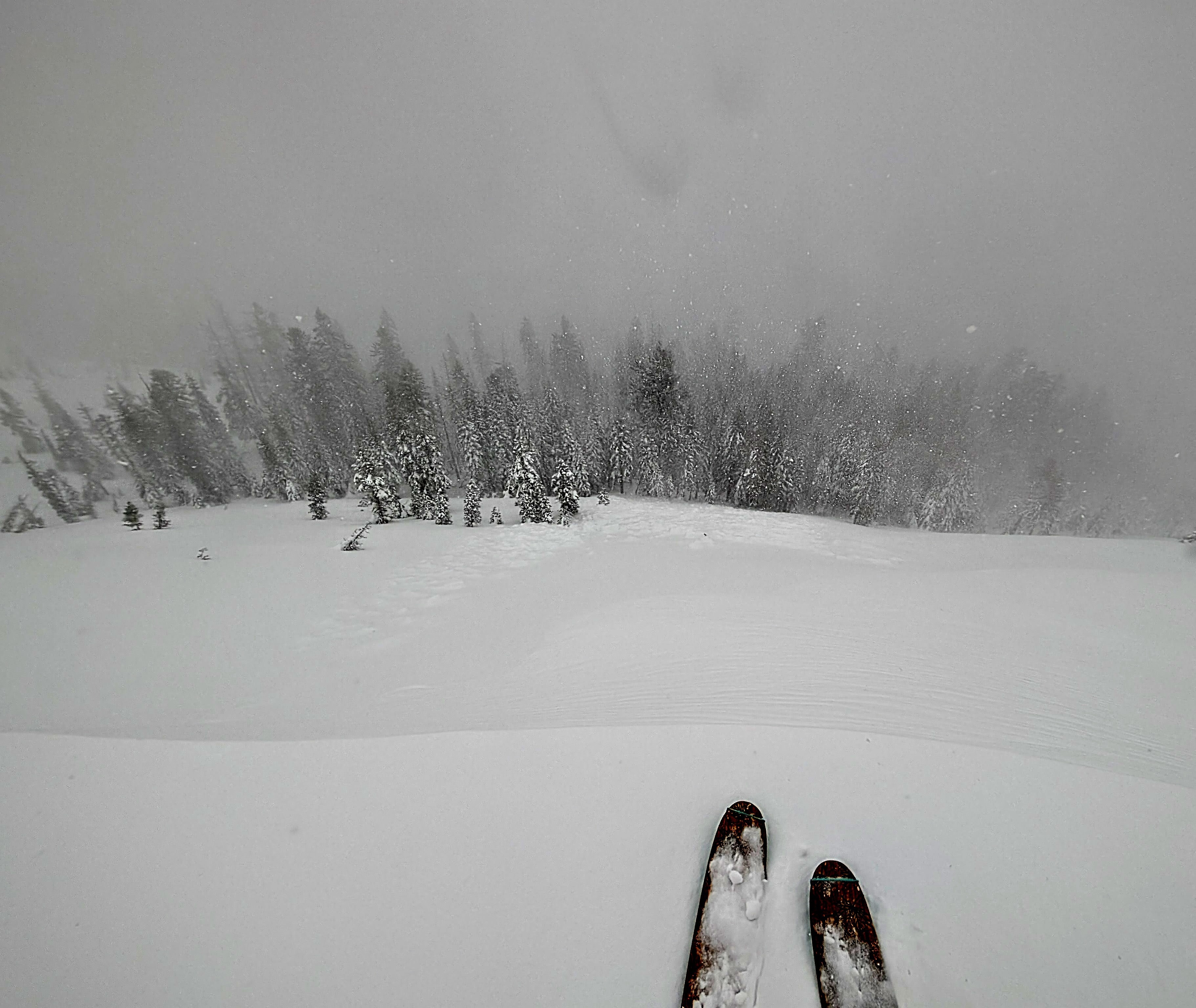
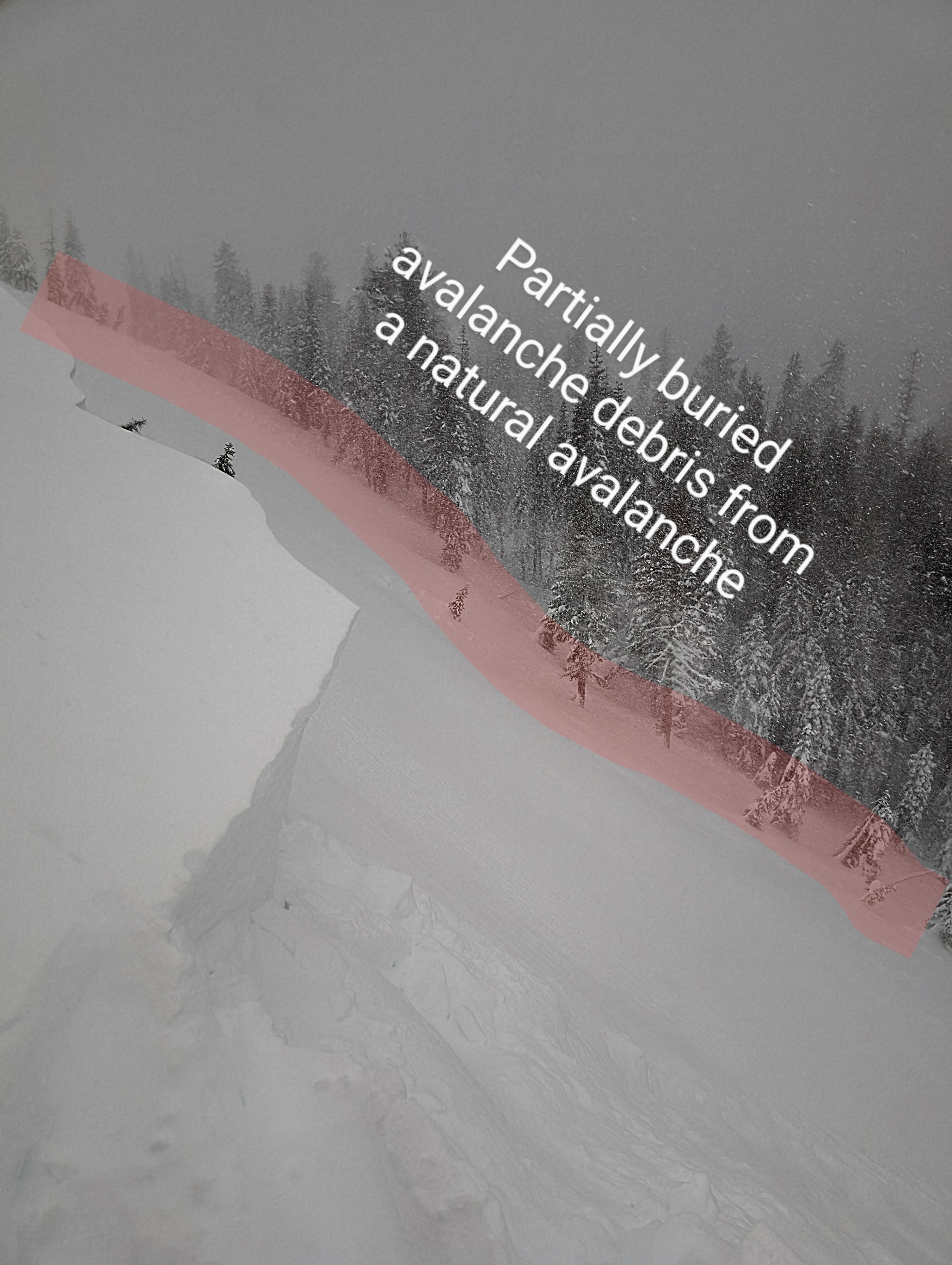
We continued up the road and used low-angle terrain to ascend. We triggered several whumpfs and collapses in open areas. We triggered the second avalanche while moving across a flat bench midway up Andesite. It released on a steeper slope about 50-100 ft from us. This avalanche propagated across the slope until it reached a part of the slope that had already slid naturally. This slab was about 2 ft deep.
We carefully made our way up to the upper part of Andesite and found more natural avalanches. The avalanches had propagated across slopes. These paths were already refilling with new and wind-blown snow. When we kicked some of the refilled test slopes, we triggered a smaller, more typical wind slab failure within the storm snow.
We dug into the snowpack several times on our tour looking for surface hoar, but heavy snow, wind, and flat light made it hard to identify any buried surface hoar. Still, the wide avalanches, remote triggering, whumpfs, cracks, and collapses pointed to a buried surface hoar layer.
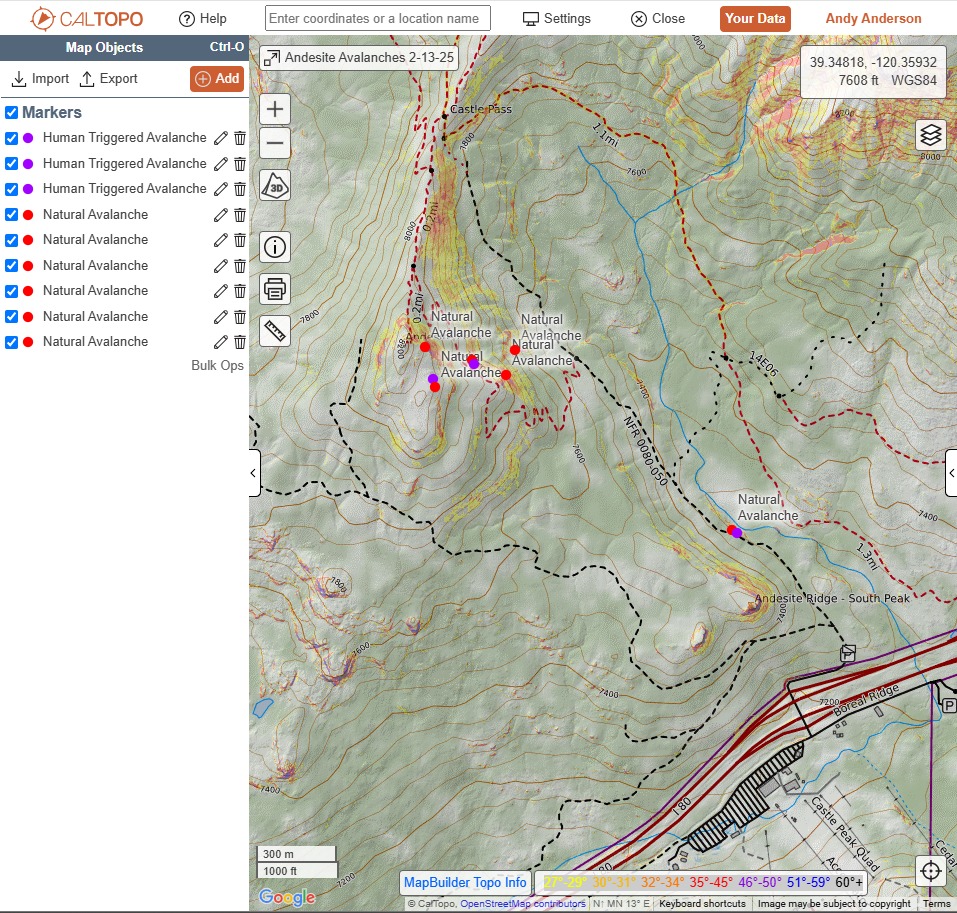
We saw 7 natural avalanches and 3 human-triggered avalanches, widespread cracking on test slopes, and whumpfing/collapsing in open areas.Weather
- Air Temp
- 30 °F
- Cloud Cover
- overcast
- Wind Loading
- intense
- Recent Snowfall
- 50 cm
- Snow Avail For Transport
- large amounts
16 to 18 inches of new snow had accumulated by the time we started. Snowfall rates averaged S2-S3 during our tour, and an additional 3-4 inches of new snow accumulated. Strong SW winds were blowing snow along the summit ridge.
Avalanche
- Size
- D2
- Type
- SS
- Count
- 2
- Aspect
- NE
- Trigger
- AS
- Elevation
- 7900 ft
7 natural avalanches and 3 human-triggered avalanches. Most of these failed at the interface between the new snow and the old snow surface. We suspect that a buried surface hoar layer exists there. Avalanches ranged from 16 inches deep to 2 feet deep and propagated widely. 2 of the the human-triggered avalanches were remotely triggered. They occurred across all elevation zones on NE-E aspects.