
Upper Big Bowl
Quick report
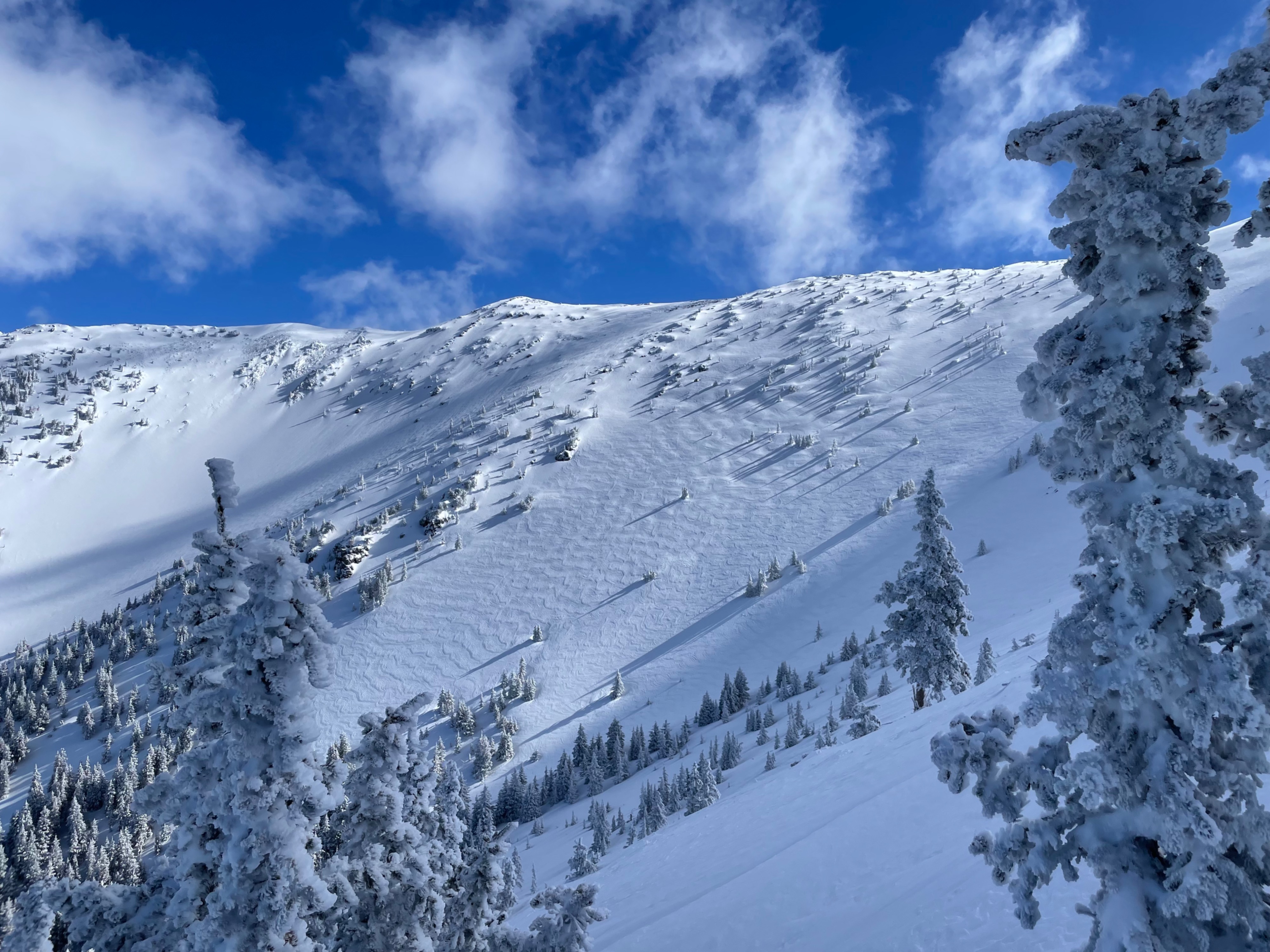
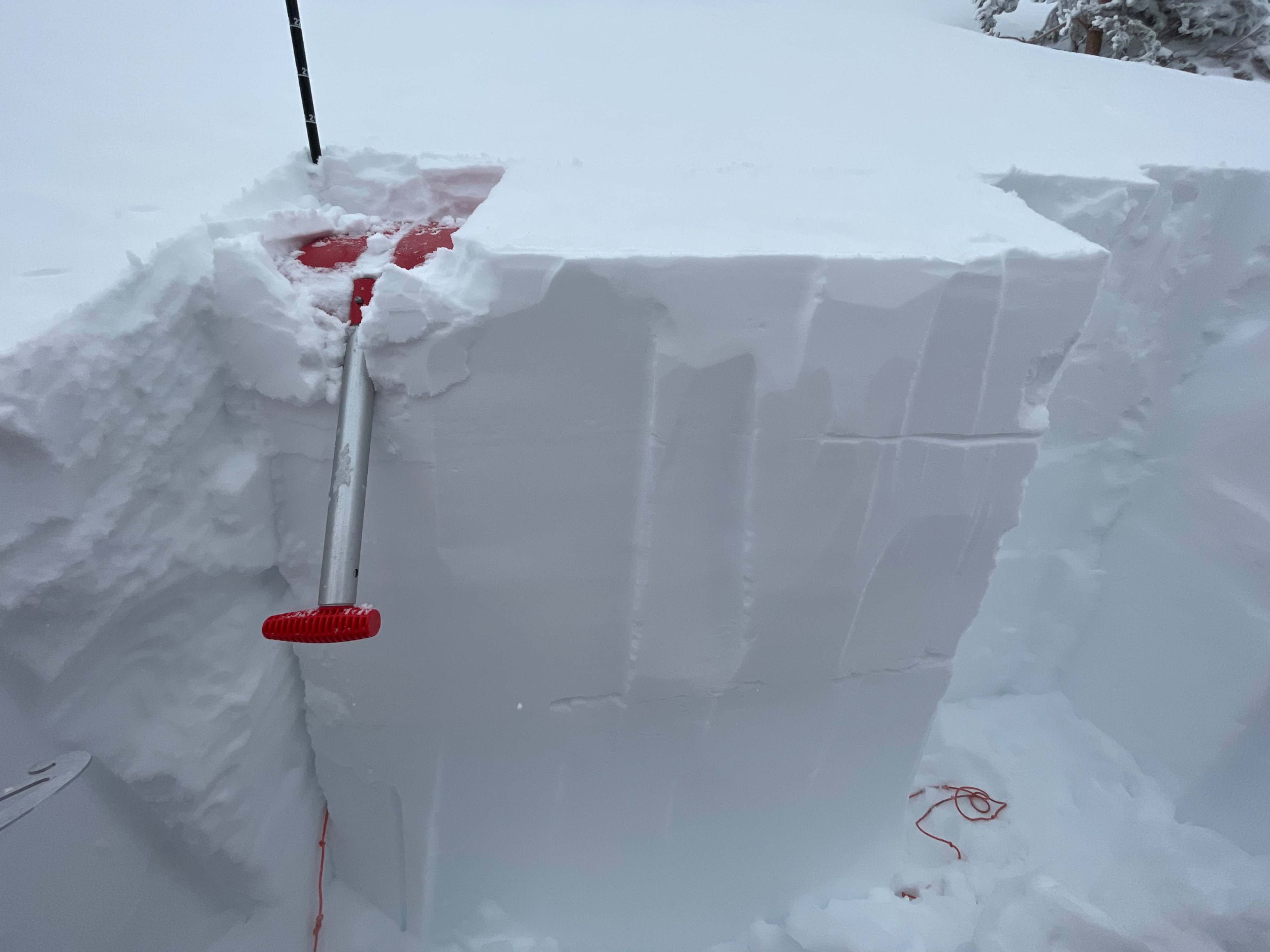
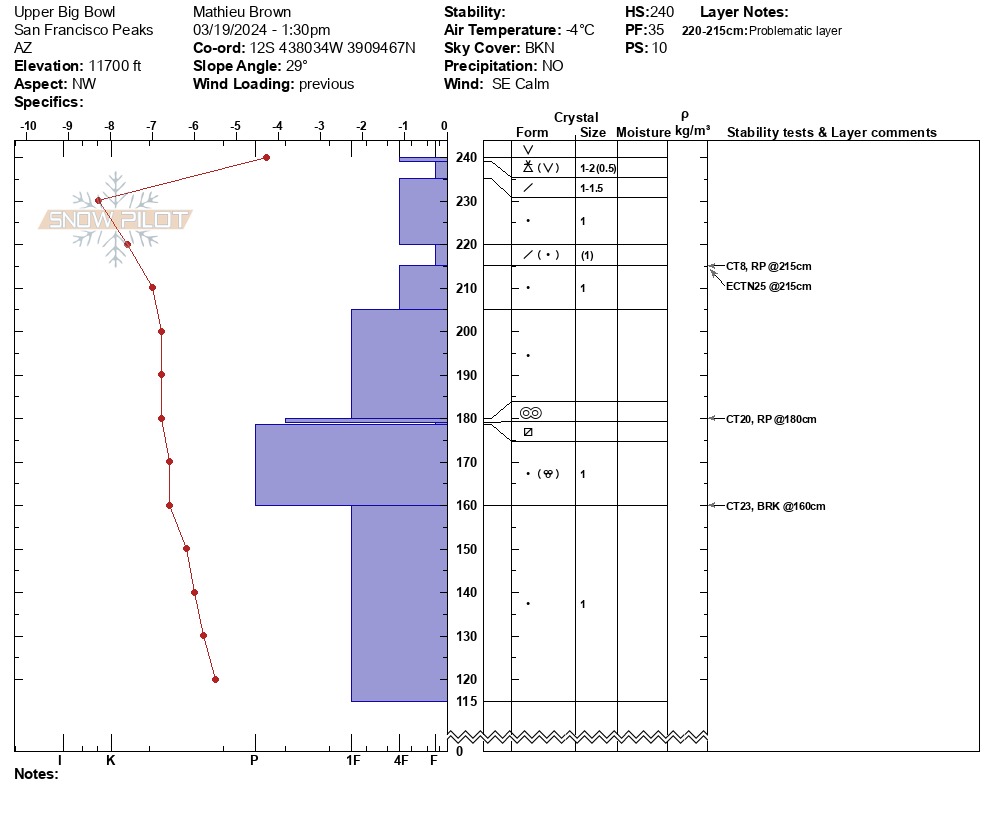
In general, snowpack stability was good, despite wind loading and wind texturing. Surface conditions varied from 4F to pencil (on direct ridge tops). Most of the surface was 4F. Fracture planes were typically broken in full column tests. The new snow/old snow interface was well bonded but did fracture at high strength (CT 20) in CTs. The fracture character was broken. The most significant finding was resistant planner fracture planes on preserved partially decomposed fragments at 25 cms below the snow surface. This layer lacked propagation propensity in the pit tests but is representative of the wind slab layers that were more reactive on Sunday, 3/19. ECT results were ECTN25@25cms from the top. In general, the snowpack showed moderate to high strength, low propagation propensity, and moderate structure.
No significant signs of instability were observed. There was minor cracking of 1'-2' upon travel assessments, such as switchback assessments and traveling just above (2') an established skin track. No activity when jumping on roll overs or when ski cutting.Weather
- Air Temp
- 25
- Cloud Cover
- broken
- Wind Loading
- moderate
- Recent Snowfall
- 23 cms
- Snow Avail For Transport
- small smounts
Sky was a mix between few and broken. Winds were calm out of the SE. Solar impact was high.
Snowpack
Conditions varied significantly from 9:00 AM to 1:00 PM. Wind slab sensitivity changed from stubborn to unreactive. Wind slab layers seemed to bond with the morning insolation. Larry's line was stripped by about 1' of snow. Snow surfaces were wind-textured, and some hollow but very stiff wind slabs were found. Skiing and riding conditions were on soft wind buff with ski penetration at just 10-20 cm. Snowpack strength in the pit location was high, the structure was moderate, and propagation propensity was low.