
Quick report
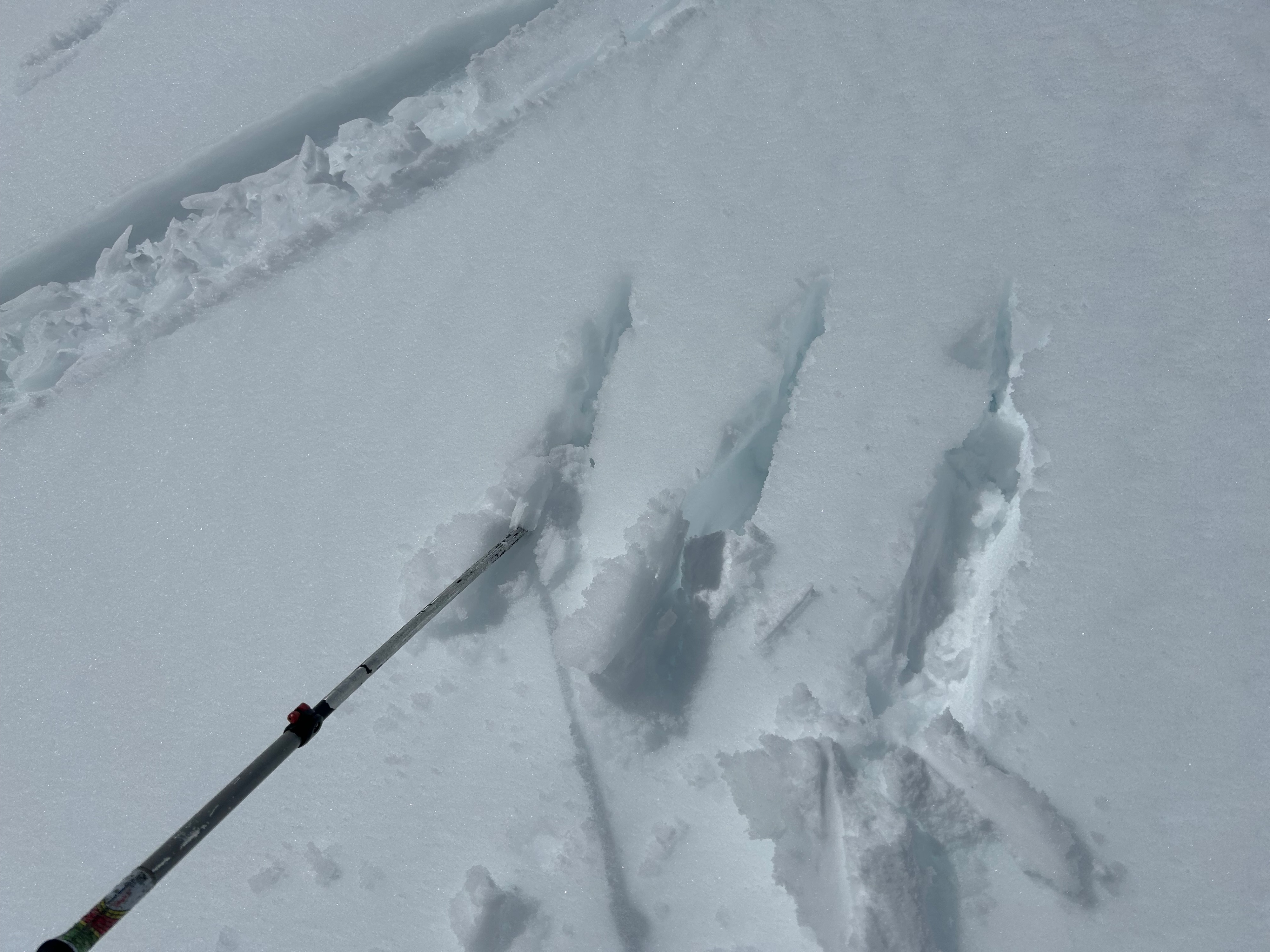
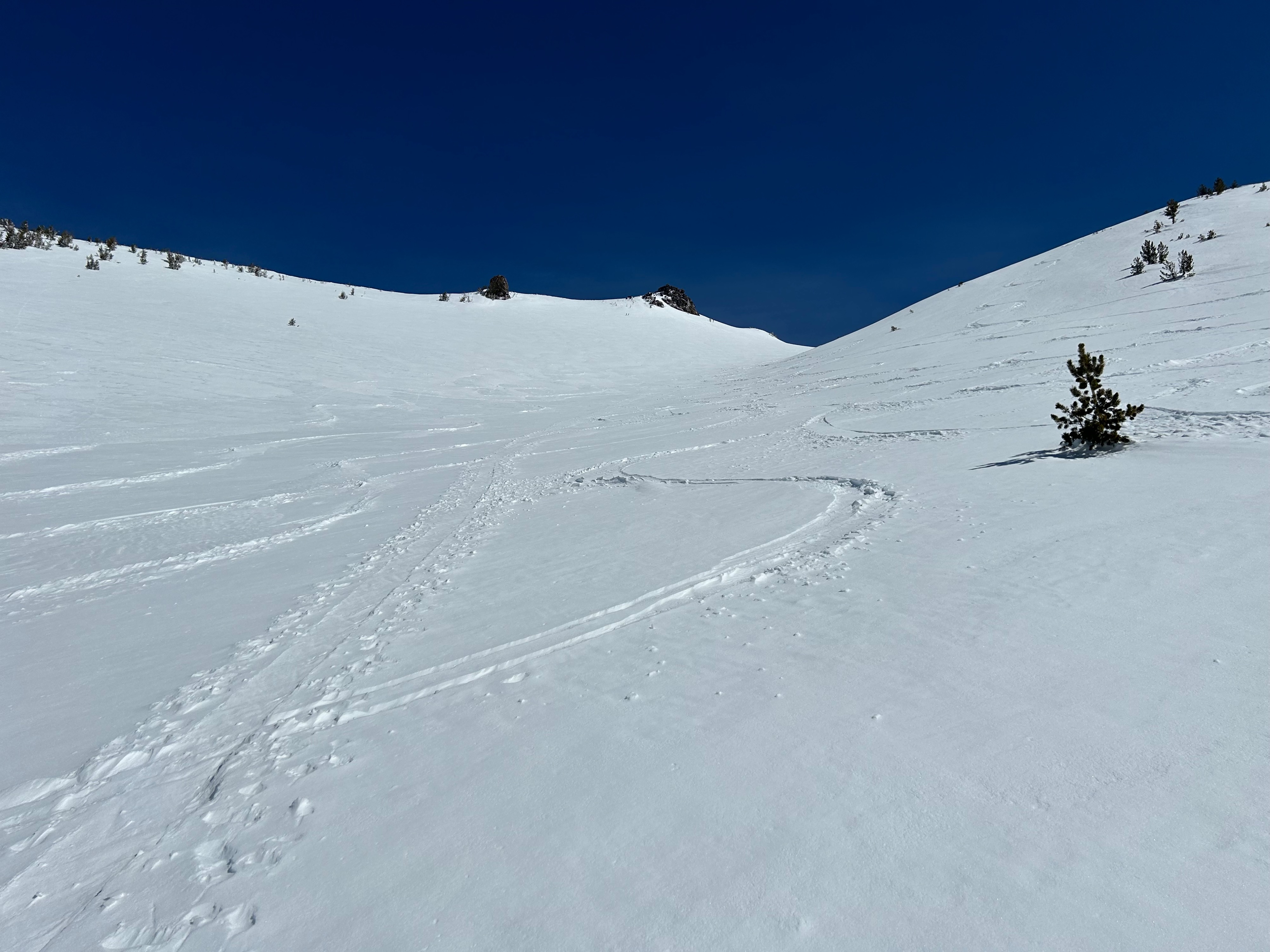
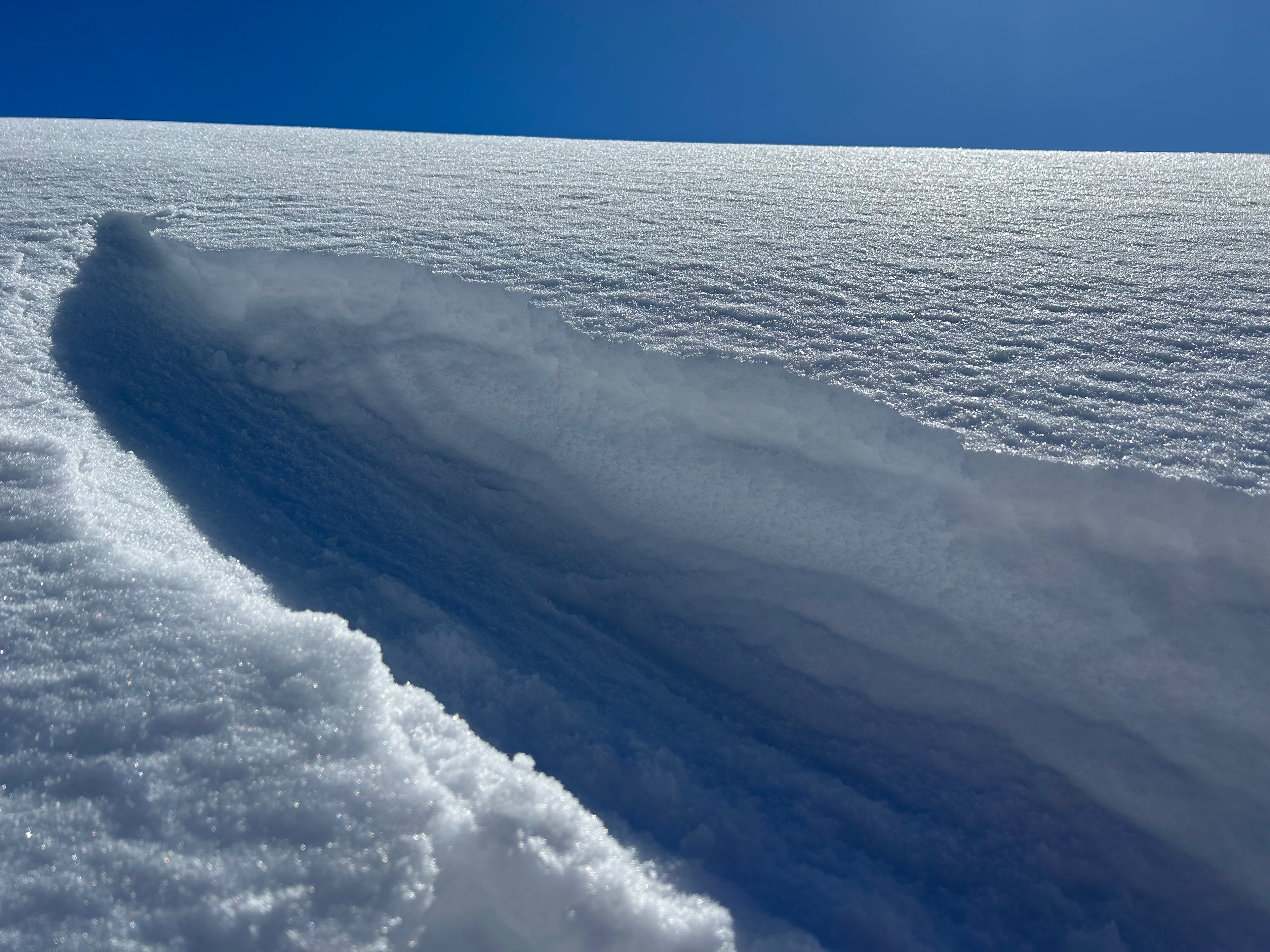
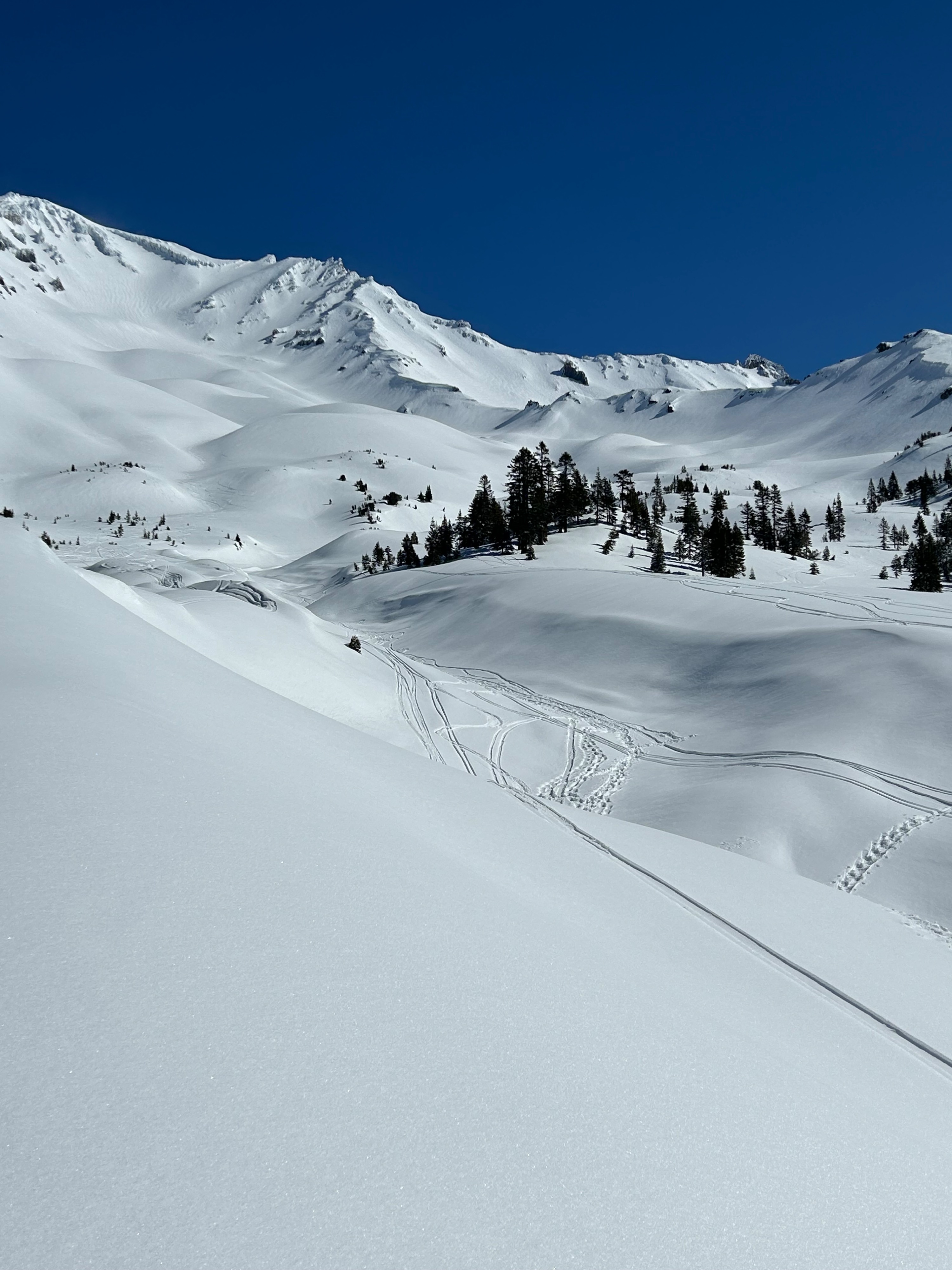
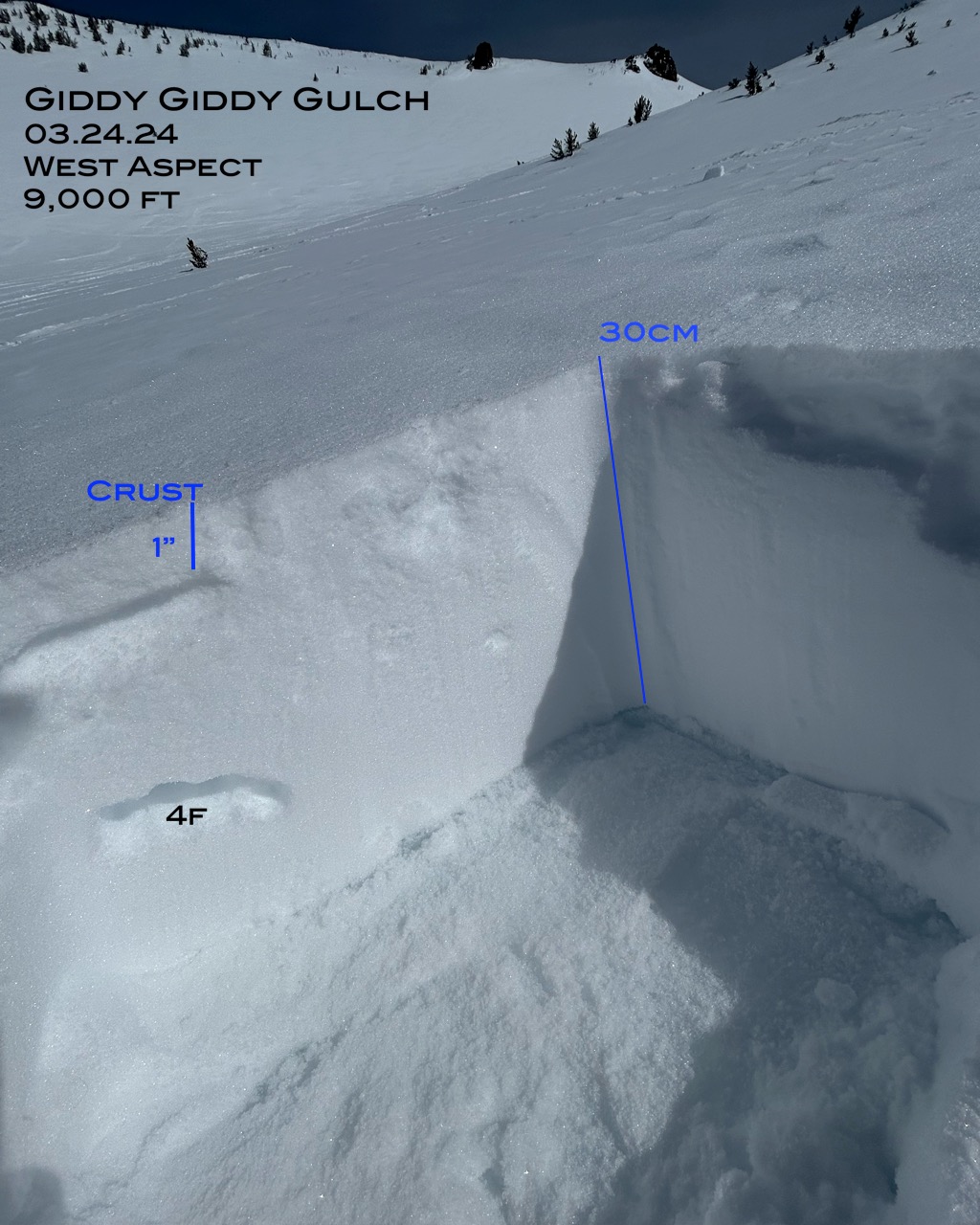
Today was spent visiting Giddy, Giddy, Gulch. Crusty surfaces were encountered on southwest and west aspects all the way to 9,000 feet. This crust had different thicknesses in relation to its spatial distribution. Thicknesses ranged from centimeters to inches. Under the crust, is roughly 10 inches of dry soft snow atop another firm crust. This unstable snowpack structure holds the recipe for an avalanche, and areas where the crust is more fragile may not support the weight of a new load. Surfaces on south and east aspects were the quickest to rebound and continued to soften throughout the day. Roller balls were easy to initiate on steep, solar-lit slopes near and below treeline. No other signs of instabilities were observed.
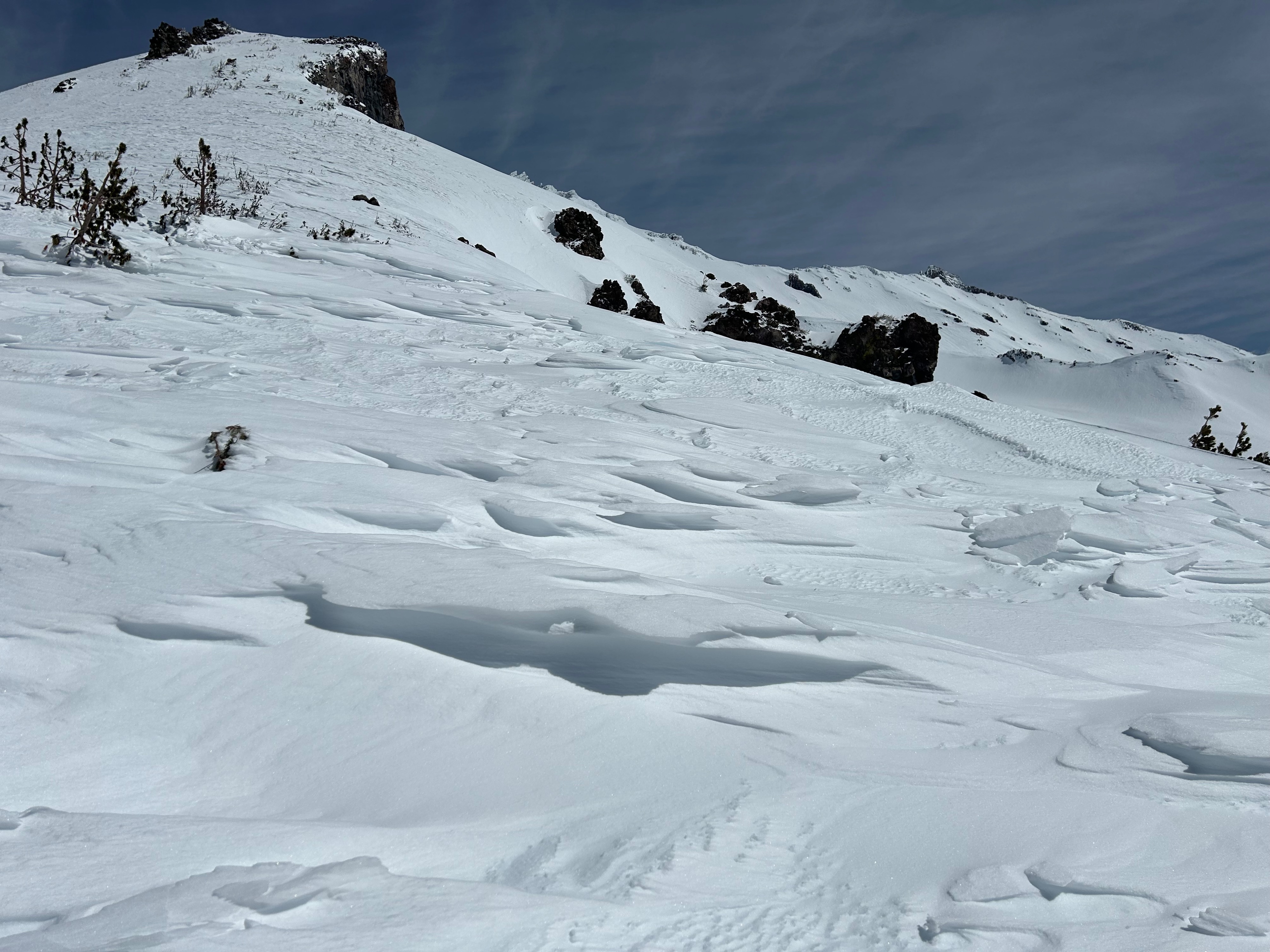
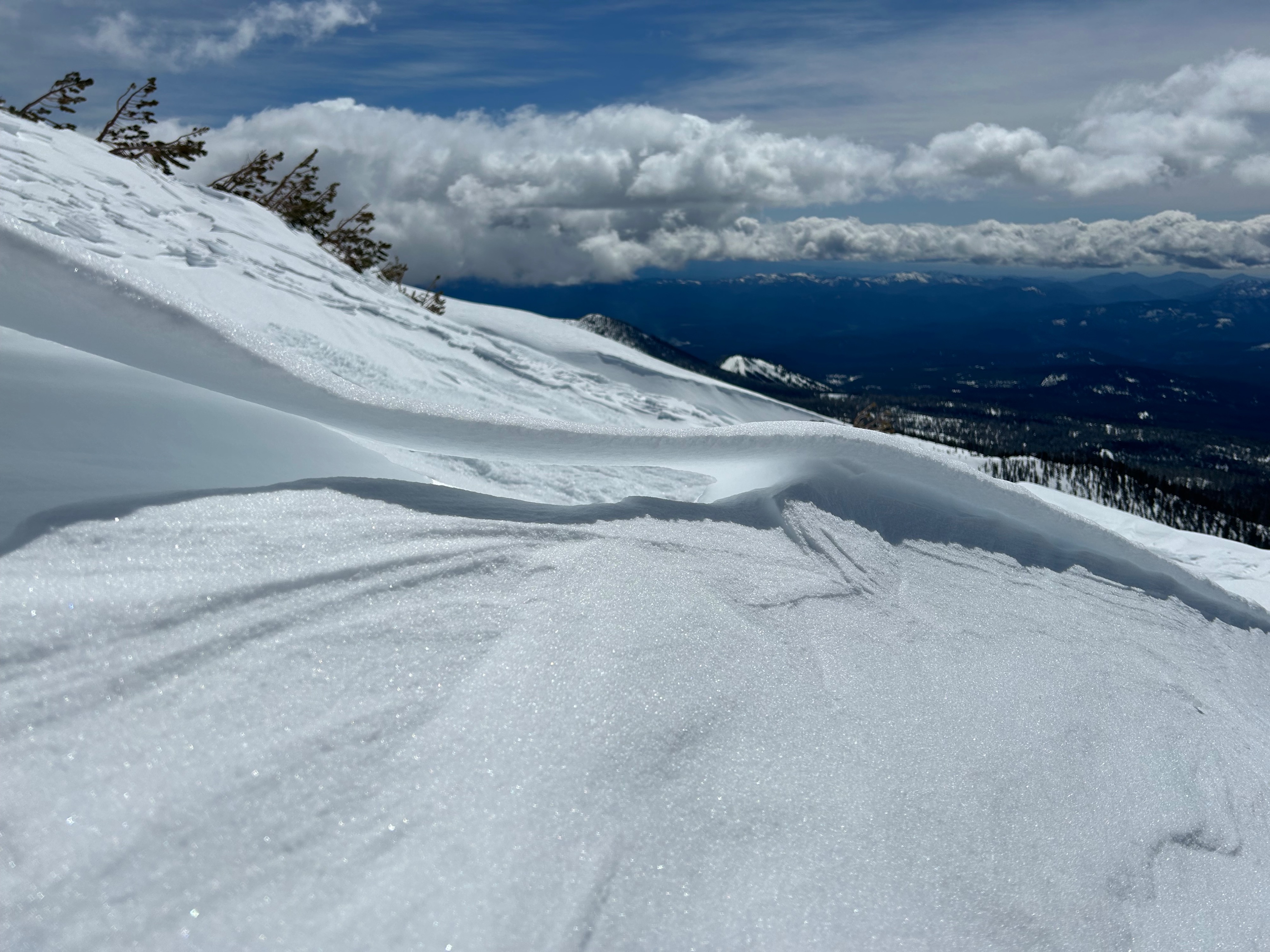
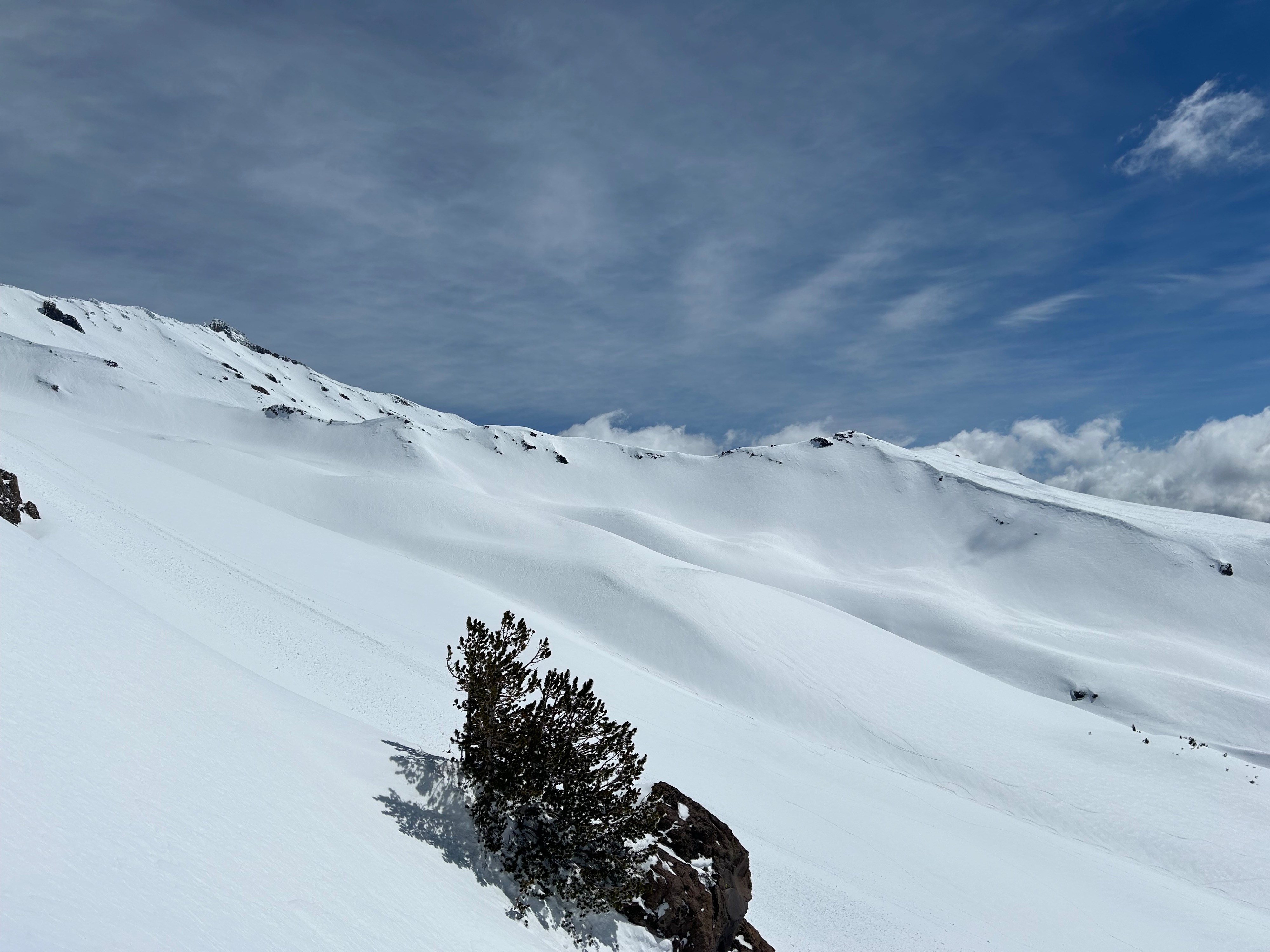
Surface conditions are a mix bag of breakable crusts, supportable crusts, thawing snow, firm snow, and dry snow. Each of which has a different spatial distribution. Ridgelines held the firmest and most weather-haggard snow conditions, being mostly wind-packed and scoured. Overall, many firm bed surfaces will welcome the incoming snow, and bonding capabilities may be challenging in certain areas.
Weather
- Air Temp
- 36
- Cloud Cover
- scattered
- Wind Loading
- none
- Recent Snowfall
- 0
- Snow Avail For Transport
- small smounts
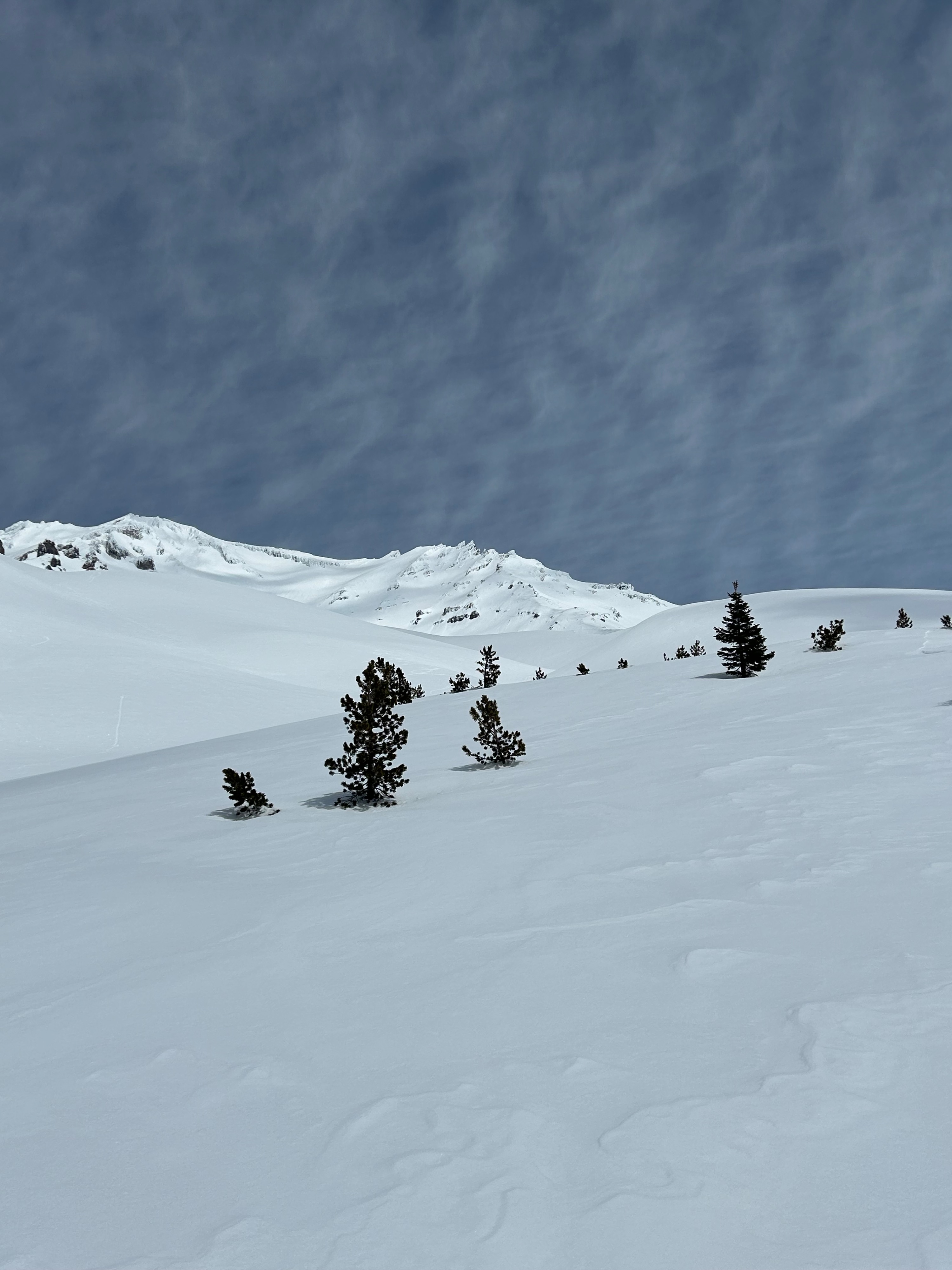
The day started off clear with a strong northwest wind aloft stripping snow off the upper flanks of Mount Shasta, gradually loosing steam as the wind transitions to the west. The Skies were overtaken by high cirrus clouds sweeping overhead, with cumulus clouds building below. Temperatures rose into the mid-30s at 13:00 hours, and moderate to strong westerly winds blew near treeline.
Snowpack
Near and below treeline holds variable surface conditions, the majority of which are capped with a minor or major crust. Melt-Freeze surfaces exist on steep east and south aspects, Ridgelines and open exposed slopes have been scoured down to old, firmer surfaces. Gullies and depressions hold sections of wind buff.