

Bulletin d’avalanche

Southeast Mountains

Crested Butte Avalanche Center
Voir sur la carte

Danger d’avalanche

Thu
Alpin
2 · Modéré
Limite forestière
2 · Modéré
Sous la limite
1 · Faible
Périmé — ce bulletin a expiré 3 years ago. Vous consultez des conditions passées, pas le bulletin en cours.

Points saillants

You can find the best conditions and safer terrain options by seeking out soft snow on slopes protected from the wind.  The most dangerous slopes are leeward locations with signs of previous wind-loading.  The likelihood of triggering an avalanche is trending down but the consequences if you do remain high.  You can reduce your risk by choosing wind-sheltered terrain, avoiding high-elevation leeward slopes, or selecting aspects not highlighted on the distribution rose.

Problèmes avalancheux

  • Persistent Slabs

    • Alpin
    • Limite forestière
    • Sous la limite forestière
    Probabilité
    Possible
    Taille
    2–2.5

    Over the past few weeks, we have observed a relatively infrequent but continuous pattern of large avalanches or collapses failing on weak, faceted layers deeper in the snowpack.  Persistent slab activity has been most problematic on wind-loaded terrain at higher elevations, though isolated instabilities exist below treeline.  Carefully assess the snowpack structure and give yourself a margin for error in handling this problem because there is a high degree of variability across the region and on different aspects.  Some examples of recent persistent slab activity include a large natural in Conundrum Creek on 3/4, a very large skier-triggered avalanche near Aspen Highlands on 3/2, a remotely triggered avalanche near Friends Hut on 3/1, and a natural step-down avalanche near Coffee Pot Pass around 3/1. 
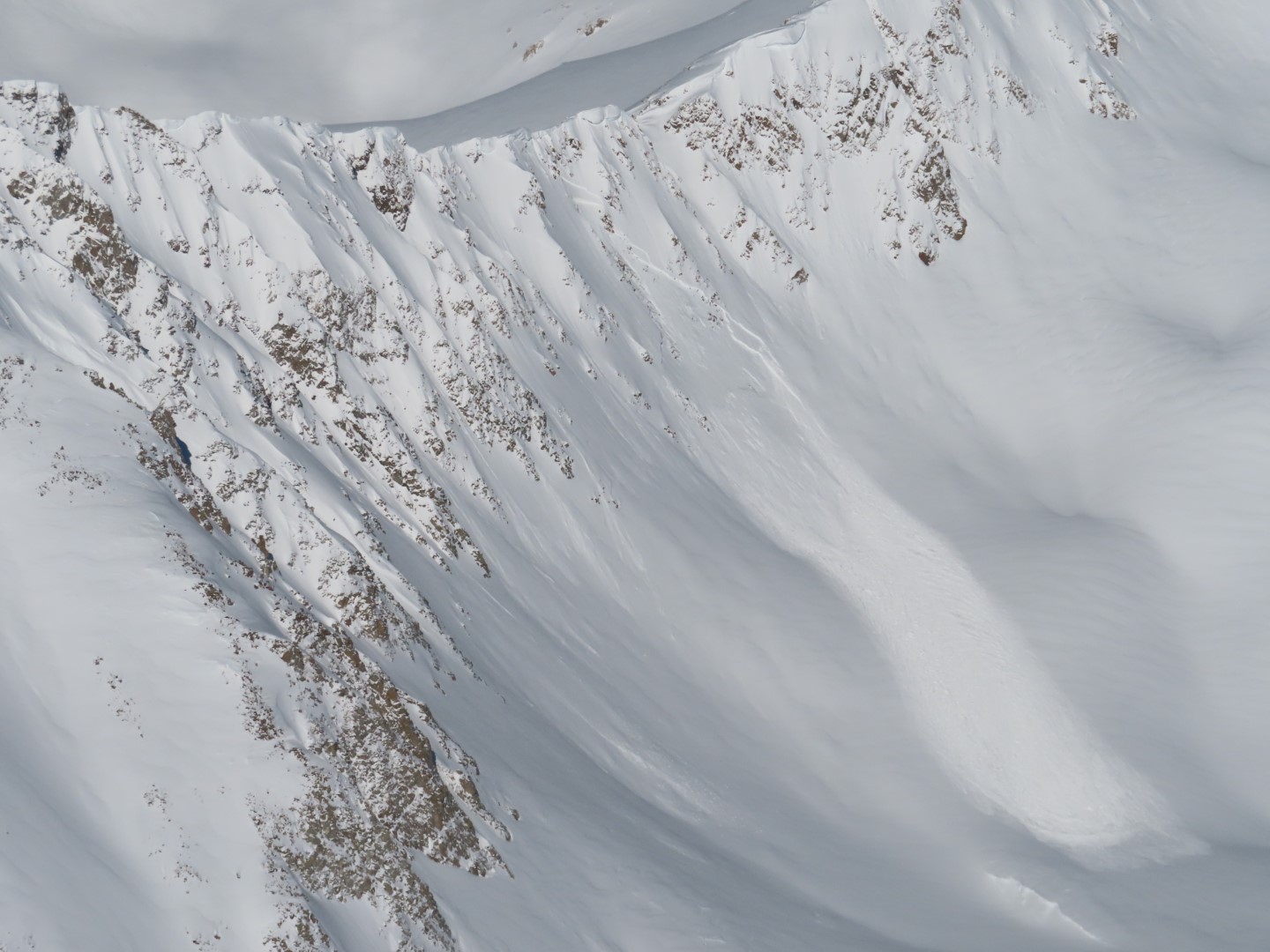
    A large persistent slab that ran over the weekend (3/4-3-5) near Ashcroft.

Avalanche Discussion

Northwest Mountains:  You could encounter several unlikely avalanche problems.  In isolated places, you could find an old drift that remains reactive to the weight of a person or snowmobile.  Well-drifted terrain features that are unsupported from below like rocky or cliffy areas or extreme terrain are examples of places where this unlikely event could occur.  Cornices underwent a significant growth period last weekend.  This growth led to several cornice failures that released large slab avalanches upon impact (see the image gallery below).  Natural cornice fall is unlikely, but cornices may still be sensitive to the additional weight of a person walking too close; simply stay well back from large cornices to reduce the risk.  Finally, mild temperatures and some sunshine may wet sunny slopes but warming factors will likely be offset by strong southwest winds.  A few wind-protected sunny slopes may become wet enough for small Wet Loose avalanche activity, but this would be the exception, not the norm given the cooling effect of the wind.

Southeast Mountains:  The intense wind-loading period this past weekend did not produce any documented Persistent Slab avalanches in the Southeast Mountains, however just over the crest of the Elk Mountains, near the Aspen valley ski areas, there was a rash of large to very large avalanches.  It appears the snowpack on the Crested Butte side of the Elk Mountains was better suited to tolerate the loading event but avalanche activity on the Aspen side suggests thoughtful decision-making is wise.  Triggering an avalanche that breaks in older weak layers remains possible, particularly in terrain with highly variable snow depths due to rockiness or slopes that received a tremendous amount of wind-loading this past weekend.  The most dangerous slopes are previously drifted, leeward slopes at upper elevations.  Sheltered below treeline slopes offer a lower likelihood of avalanche but slabs and weak layers exist here as well.  This observation from below treeline in lower Brush Creek produced propagating long column test results on basal weak layers.  The current Persistent Slab problem is trending towards a lower-likelihood yet high-consequence event.

Régions couvertes