Bulletin d’avalanche

Bulletin d’avalanche

Payette Avalanche Center
Voir sur la carte

Danger d’avalanche

Alpin
2 · Modéré
Limite forestière
2 · Modéré
Sous la limite
1 · Faible
Périmé — ce bulletin a expiré 4 years ago. Vous consultez des conditions passées, pas le bulletin en cours.

Points saillants

Dense slabs of wind-deposited snow one foot thick are still lingering above 7000 feet. Human-triggered wind slab avalanches remain possible in wind-exposed terrain at middle and upper elevation. Triggering an avalanche on a weak layer of facets and buried surface hoar 2 feet below the surface has become unlikely. 

Problèmes avalancheux

  • Wind Slabs

    • Alpin
    • Limite forestière
    • Sous la limite forestière
    Probabilité
    Possible
    Taille
    1–1.5

    The recent storm from Wednesday night/Thursday morning brought 4-7" of snow with strong winds out of the north. Dense slabs of wind-deposited snow one foot thick are still lingering at elevations above 7000 feet. Due to the haphazard nature of this wind event, wind slabs may be found on multiple aspects around the compass. 

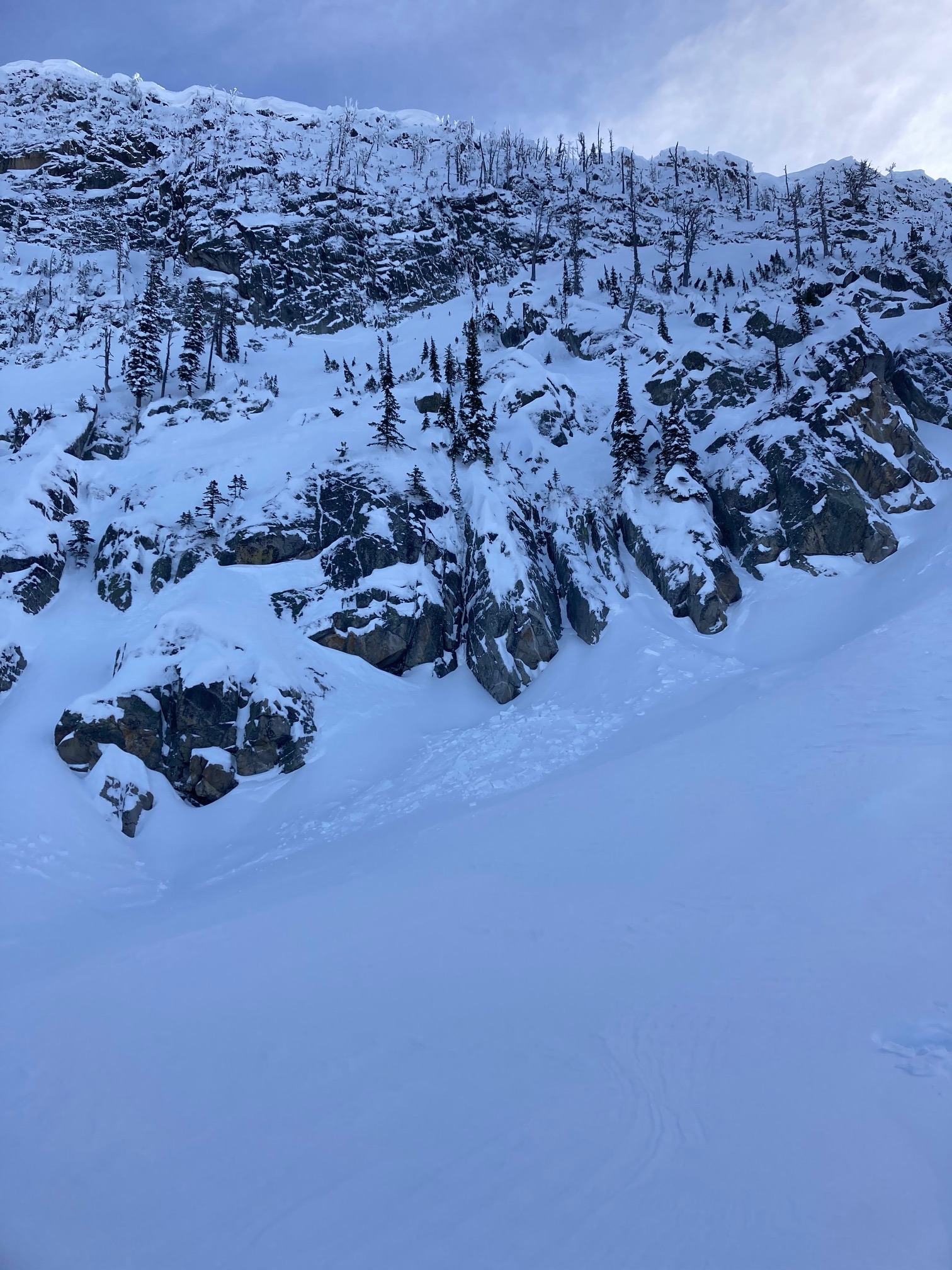
    Yesterday, in the eastern portion of our advisory area, we experienced significant wind-affected snow on east through north aspects between 7200 and 8200 feet. We also saw evidence of small, natural wind slab avalanches that likely ran Thursday (see photo here). The photo pictured to the right highlights cross-loaded wind ripples along with a small, wind slab avalanche just below the cliffband (center right). 

    If you experience a hollow (or drum-like) feeling in the snow, you've found a strong over weak setup that indicates wind slabs may be present. Look for clues like pillows and drifts that indicate the wind direction. If you experience cracking in the snow, change your aspect to another side of the compass.

    (1/20/2023)

    Wind ripples and small, wind slab avalanche below cliffband.

    Photo: Studley

  • Persistent Slabs

    • Alpin
    • Limite forestière
    • Sous la limite forestière
    Probabilité
    Unlikely
    Taille
    2

    A persistent weak layer (PWL) of facets and surface hoar buried 50-60 cm (20-24") beneath the surface has become stubborn to unreactive in most of our advisory area. The spatial distribution and destructive potential have remained the same. What has changed is the likelihood. Triggering an avalanche on this PWL has become unlikely. You are most likely to encounter this PWL on the northern half of the compass between 7000 and 8000 feet. This PWL was most reactive last week particularly in the southern portion of our advisory area (West Mountain).

Avalanche Discussion

Today's avalanche forecast is sponsored by Mile High Powersports of McCall. Thanks for supporting the Payette Avalanche Center.

The song remains the same today. Two avalanche problems we should all be familiar with by now: persistent slab and wind slabWe have been graced (or plagued) with these two problems for the majority of the season thus far. Since the post-Christmas rain event, we've seen consistent, light snowfall interspersed with a few dry periods here and there. Those dry periods created weak layers on the snow surface, which were subsequently buried. Our current persistent slab problem peaked at the end of last week and we have not had reports of human-triggered avalanches on this PWL since Sunday (01/15).

Unfortuntely, the best tools for dealing with persistent slab problems are avoidance of terrain that we think is suspect. If folks begin to step out into suspect terrain, safe travel protocols are your best strategy to minimize exposure.

Some examples of safe travel practices include:

  • Only exposing one person at a time on steep slopes
  • Utilizing safe spots (away from runout zones and terrain traps) to stop and watch your partners 
  • A solid travel plan with your partners to discuss avalanche problems and how to avoid them before going into the mountains