Dashboard Regions Weather Stations Radar Alerts Glossary
Contact About
Log In

Register for an account and never miss a forecast again!

Register

Avalanche Forecast

Archived

Mar 31st, 2024–Apr 1st, 2024

Alpine
Natural avalanches possible, human triggered probable.
Treeline
Natural avalanches possible, human triggered probable.
Below Treeline
Natural avalanches unlikely, human triggered possible.
Alpine
Natural avalanches unlikely, human triggered possible.
Treeline
Natural avalanches unlikely, human triggered possible.
Below Treeline
Natural avalanches unlikely, human triggered possible.
Alpine
Natural avalanches possible, human triggered probable.
Treeline
Natural avalanches possible, human triggered probable.
Below Treeline
Natural avalanches unlikely, human triggered possible.

Regions

Sea To Sky, Brandywine, Garibaldi, Homathko, Powell River, Spearhead, Tantalus, Sky Pilot.

Back off steep sun exposed slopes as the surface becomes moist or wet.

The search for dry snow may draw you to high, north-facing slopes - watch for reactivity in leeward features.

Confidence

Moderate

Avalanche Summary

Natural and rider triggered wind slabs were reported in alpine and treeline features primarily near ridges (see photos below), and wet avalanches were observed on sun affected slopes and low elevations.

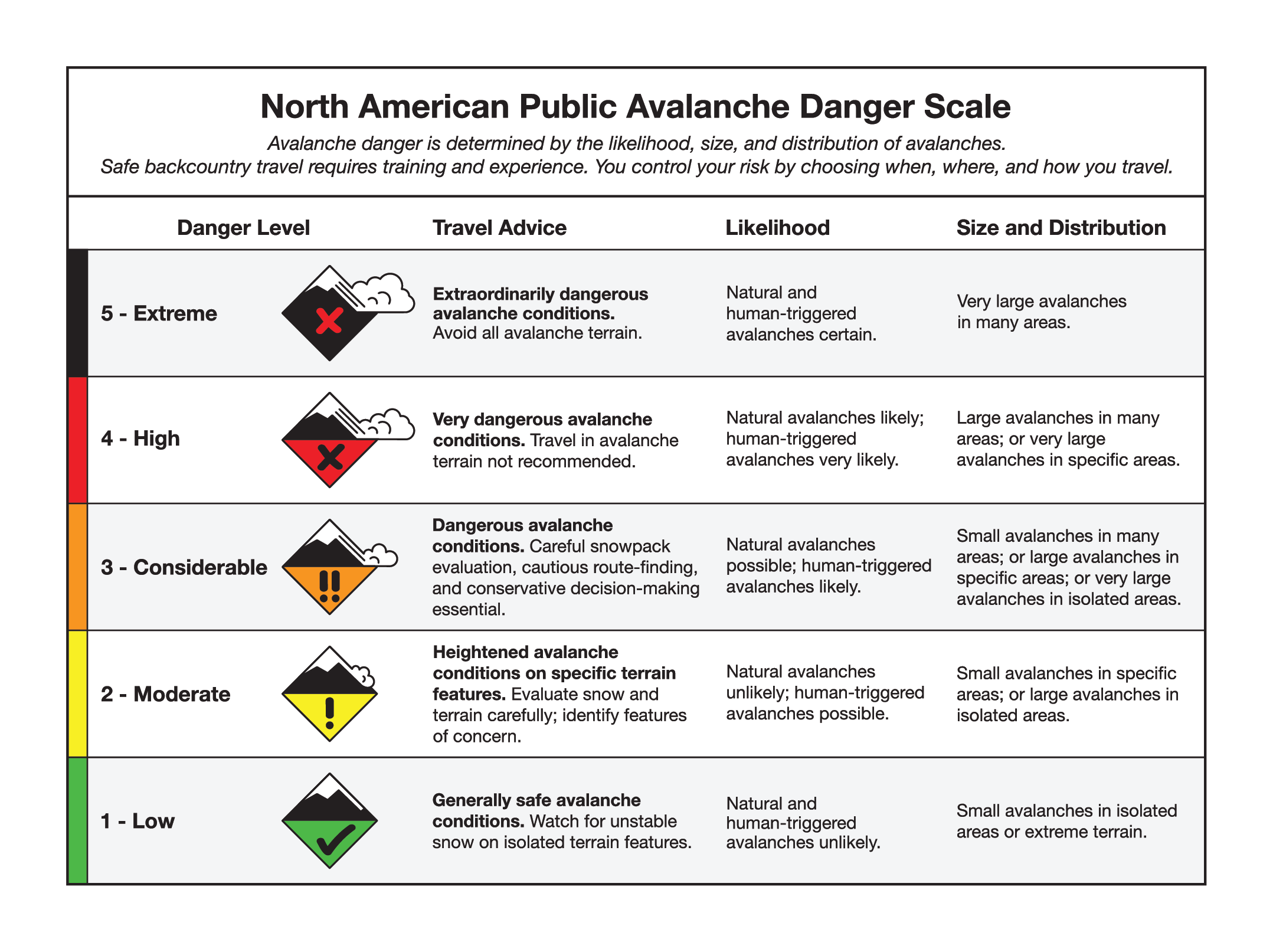
We expect activity to increase on these specific features, as higher temperatures and strong sun weaken the snowpack. Natural avalanches are possible and human triggered are likely. Check out the full definitions of moderate and considerable danger here.

Snowpack Summary

Around 30 cm of dry snow can likely still be found on high north facing slopes with deeper deposits near ridgelines. All other aspects and elevations have likely become moist or wet with warm temperatures and sunshine. Below the recent snow, a widespread crust exists in all terrain below 2000 m.

The facet/crust layer that produced large avalanches during early March is buried 150-250 cm deep, and is now considered unreactive.

Weather Summary

Sunday night

Partly cloudy. 40 to 60 km/h northwest ridgetop wind. Treeline temperatures to +3 °C. Freezing level 3000 m.

Monday

A mix of sun and cloud. 30 to 40 km/h northwest ridgetop wind. Treeline temperatures around +6 °C. Freezing level 2500 m.

Tuesday

Mostly cloudy with snowfall starting in afternoon, 10 to 20 cm. 50 to 70 km/h southwest ridgetop wind. Treeline temperatures around +4 °C. Freezing level 2000 m.

Wednesday

10 to 20 cm of new snow overnight, then flurries bringing another 5 cm through the day. 30 to 40 km/h southwest ridgetop wind. Treeline temperatures around -5 °C. Freezing level 1200 m.

More details can be found in the Mountain Weather Forecast.

Terrain and Travel Advice

  • Avoid sun exposed slopes, especially if snow surface is moist or wet.
  • A moist or wet snow surface, pinwheeling and natural avalanches are all indicators of a weakening snowpack.
  • Be careful with wind slabs, especially in steep, unsupported and/or convex terrain features.
  • Wind slabs may be poorly bonded to the underlying crust.
  • Pay attention to cornices and give them a wide berth when traveling on or below ridges.

Problems

Loose Wet

Loose Wet avalanches are the release of wet unconsolidated snow or slush. These avalanches typically occur within layers of wet snow near the surface of the snowpack, but they may quickly gouge into lower snowpack layers. Like Loose Dry Avalanches, they start at a point and entrain snow as they move downhill, forming a fan-shaped avalanche. Other names for loose-wet avalanches include point-release avalanches or sluffs. Loose Wet avalanches can trigger slab avalanches that break into deeper snow layers.

Wind Slabs

Wind Slab avalanches are the release of a cohesive layer of snow (a slab) formed by the wind. Wind typically transports snow from the upwind sides of terrain features and deposits snow on the downwind side. Wind slabs are often smooth and rounded and sometimes sound hollow, and can range from soft to hard. Wind slabs that form over a persistent weak layer (surface hoar, depth hoar, or near-surface facets) may be termed Persistent Slabs or may develop into Persistent Slabs.