Avalanche forecast

Northwest Mountains

Crested Butte Avalanche Center
View on map

Avalanche danger

Mon
Alpine
3 · Considerable
Treeline
3 · Considerable
Below
2 · Moderate
Out of date — this forecast expired 4 years ago. You’re viewing past conditions, not the current bulletin.

Highlights

There were numerous natural and skier-triggered avalanches involving storm instabilities yesterday.  Expect more of the same today, especially at higher elevations where winds are drifting the new snow into larger and more dangerous slabs.  Avoid slopes with fresh wind loading and use extra caution in sheltered terrain where storm snow is cracking or exceptionally deep.   Shallow or rocky slopes with variable depths have lingering concerns for avalanches breaking on deeply buried weak layers.  

Avalanche problems

  • Storm Slabs

    • Alpine
    • Treeline
    • Below treeline
    Likelihood
    Likely
    Size
    1–2

    Storm totals since Friday are 15 to 20 inches in the Northwest Mountains.  Skiers and riders triggered numerous soft slabs breaking in the storm snow at all elevations yesterday.   Leeward slopes are most dangerous because westerly winds are forming thicker slabs that could fail naturally today.  In wind-sheltered terrain, slabs are softer and smaller, but could entrain dangerously large amounts of snow. Be extra vigilant above terrain traps or in larger terrain features.  Stay on slopes less than about 35 degrees to avoid triggering a storm slab.  

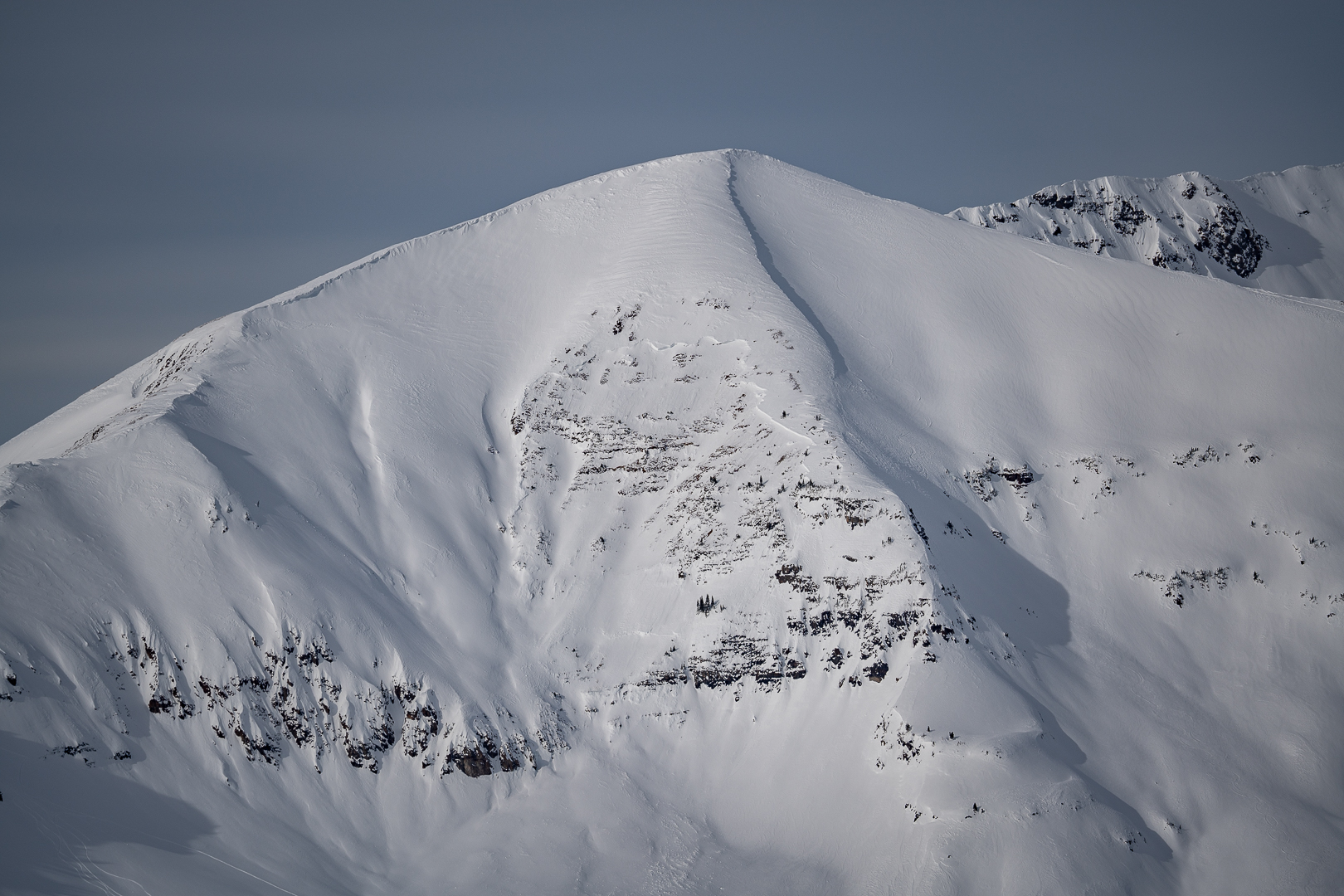
    An example of a storm instability triggered earlier this week.  Slabs are growing larger than this avalanche in drifted terrain now.  

  • Deep Persistent Slabs

    • Alpine
    • Treeline
    • Below treeline
    Likelihood
    Unlikely
    Size
    2.5–3

    On most slopes in the Northwest Mountains, faceted weak layers are buried deeply and unreactive to human triggers.  Some slopes have unusually shallow or variable snow depths where riders may be able to trigger a hard slab several feet thick or more.  Be cautious of windward terrain features with variable depths, rock bands, and slopes that previously avalanched in early December where you are most likely to find a thin trigger point.   The safest riding is where the snowpack is uniform and consistently deeper than about 5 feet (150 cm).  


    This avalanche was triggered by explosive work in the Irwin Cat-Ski tenure on Thursday, 1/26.  It is representative of the type of terrain (shallower than normal, full of trigger points, and unsupported from below) where an unlikely chance remains for you to trigger a deep avalanche.

Avalanche Discussion

Observations yesterday were limited to near and below treeline slopes due to stormy weather and poor visibility.  The focus of storm slab activity was in or near the border of the Northwest Mountains, where favored storm totals are reaching 18".  I suspect there has been ongoing avalanche activity at higher elevations across the entire forecast area, because alpine winds have been blowing 20 mph, gusting to 40's and 50's since midday yesterday.  All of these concerns continue today. With a downturn in snowfall today, storm slab instabilities in sheltered terrain are expected to be a bit quieter.  Regardless, be suspicious and defensive below treeline.  Use small, steep test slopes to gather information about how the storm snow is behaving before considering avalanche terrain in sheltered terrain.  

During and in the wake of our last few storm cycles, avalanche activity on weak layers near the ground has significantly decreased, but not entirely gone away.  In the Northwest Mountains, the last few deep slabs failed on near and above treeline slopes with shallow and variable snow depths (Ruby Peak, Robinson Basin).    In the Southeast Mountains, the last few persistent slab avalanches were triggered from rocky terrain with variable snow depths, or in shallower parts of the zone where the snowpack is thinner (CBMR, Walrod).    Though the chances of triggering a deeper layer are relatively low, there appears to be more problematic slopes in Southeast Mountains because the snowpack has remained thinner and weaker there throughout this season.  Because the consequences are so serious, grab a black Sharpie and write the words "shallow, rocky, and variable" on your partner's forehead so you don't forget the most worrisome terrain.

Regions covered