

Avalanche forecast

Gunnison

Crested Butte Avalanche Center
View on map

Avalanche danger

Wed
Alpine
1 · Low
Treeline
2 · Moderate
Below
2 · Moderate
Out of date — this forecast expired 5 years ago. You’re viewing past conditions, not the current bulletin.

Highlights

Use extra caution on steep, wind-sheltered terrain that faces the north half of the compass.  That's where you can easily trigger small loose snow avalanches that could be dangerous in consequential terrain.   Use defensive sluff management techniques or opt for mellower slope angles if you're riding above cliffs, trees, or gullies.  

Avalanche problems

  • Loose Dry

    • Alpine
    • Treeline
    • Below treeline
    Likelihood
    Likely
    Size
    1–1.5

    Dry loose avalanches (sluffs) are problematic on the north half of the compass, especially in wind-sheltered terrain near and below treeline.   Where the snow surface is weak and cohesionless, you can easily trigger sluffs that entrain the top 6" to 10" of loose snow on slopes steeper than 35 degrees. Ski cuts, moving across the fall-line while descending, or choosing lower-angled slopes are effective techniques to manage this problem. These point-release avalanches will accumulate more mass in long-running, steep terrain. Use caution above gullies where an avalanche can pile more deeply and above trees and cliffs where the consequences of getting caught in small sluff will be magnified. 

    A great example of sluff management in terrain where a loose dry avalanche could be more problematic because it gets funneled down a gulley.  
Avalanche Discussion

If you're tired of hearing us warn about small sluffs and thin, isolated wind slabs, just remember that normally by this time of year, we've been beating the persistent slab drum for several months and you all literally hate us by now.   

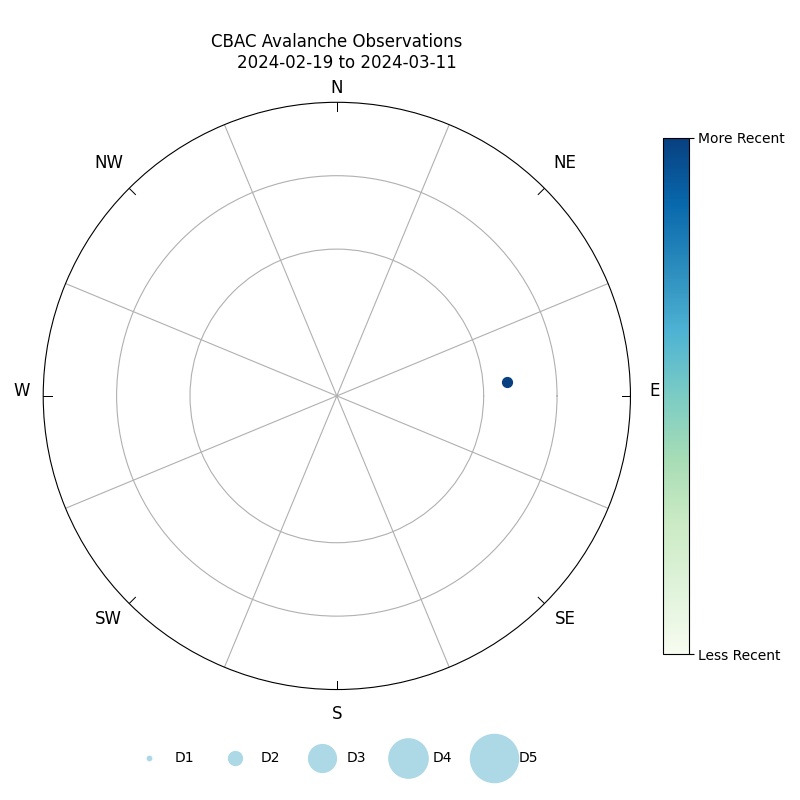
Our avalanche problems are relatively small and manageable compared to what we are used to seeing mid-winter in Crested Butte. If you are comfortable managing for loose dry avalanches, it is an appropriate time to ride in more complex avalanche terrain.  However, we've also seen a steady stream of small avalanches in the past month (95 D1s and 18 D1.5s by our count).   The pattern over the past few weeks has consistently been shallow loose snow avalanches on the shadier aspects (anything with a northerly tilt) and occasional thin pockets of drifted slabs at higher elevations from northwesterly winds.  While none of these avalanches were large enough to bury you in a clean runout, many of them could have injured you or worse in a terrain trap.  With the upper snowpack continuing to facet and lose strength, the hazard posed by loose snow avalanches is gradually increasing.    It's not a time to become complacent.  There have been several skiers or riders carried in small avalanches around the state this week.  On Sunday, a snowmobiler in Montana was tragically killed by an 8" soft slab that pushed and buried him into trees during a Low danger day.    And here's a great near-miss account from a skier that had a close call with a sluff in Utah last week.  

Our gallery below highlights the types of instabilities you can expect to encounter today.  Be prepared to manage for active sluffing in the upper 6" to 10" of the snowpack on steep, shady aspects (see this video), and look for signs of isolated drifts (example A, example B) if you are riding in consequential terrain at higher elevations.  If you don't want any business with shallow surface instabilities, choose slope angles less than 35 degrees.  

Regions covered