Avalanche forecast

Seward and Lost Lake

Chugach National Forest Avalanche Center
View on map

Avalanche danger

Tue
Alpine
3 · Considerable
Treeline
3 · Considerable
Below
2 · Moderate
Out of date — this forecast expired last year. You’re viewing past conditions, not the current bulletin.

Highlights

The biggest concern today in the Seward/Lost Lake area is that a person could trigger a large avalanche 2 to 3’ deep on a layer of buried surface hoar above 1,500'. The human-triggered avalanches that are occurring  on this layer in Turnagain Pass often have many tracks already on the slope and are being triggered from below, above, or from the side. The best way to stay clear of this problem and have a safe day is to avoid travelling on or below steep slopes.

__________________________________

SPECIAL ANNOUNCEMENTS:

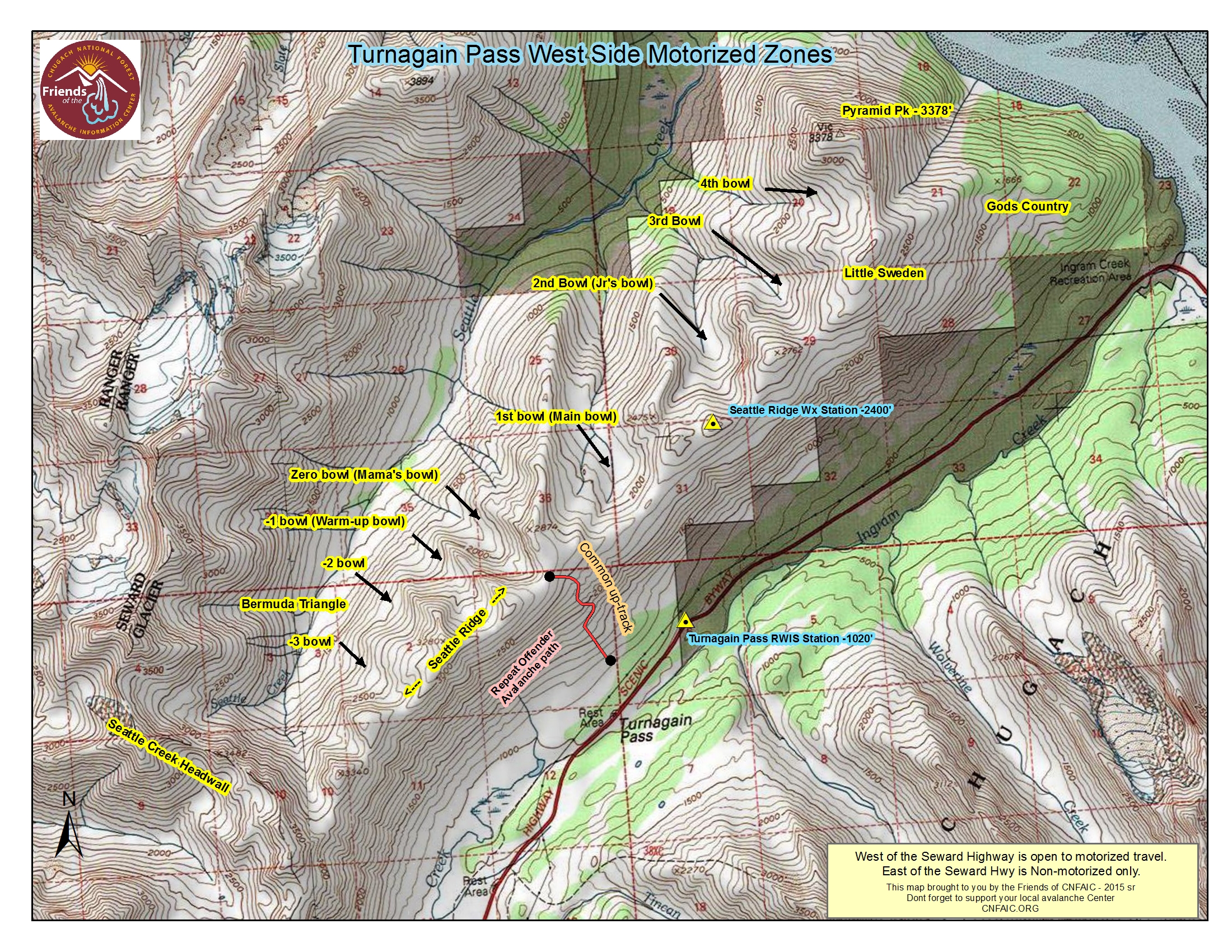
Avalanche Accident: We are deeply saddened to report that a snowmachiner passed away in an avalanche on the backside of Seattle Ridge Saturday at Turnagain Pass. This occurred in Warmup Bowl, also known as -1 Bowl.  Our preliminary report can be found here and we will provide a full report as soon as we are able. A media report can be found HERE.Our thoughts are with the family, friends, and all those involved at this incredibly difficult time.

Avalanche problems

  • Persistent Slabs

    • Alpine
    • Treeline
    • Below treeline
    Likelihood
    Possible
    Size
    2–3

    Recent Avalanches: Yesterday there were many wet loose avalanches occurring below 3,000' in the Seward area. This included a wet loose avalanche that ran almost to sea level just outside the forecast zone on a south facing slope south of Lowell Point. Earlier last week on Tuesday or Wednesday there was an avalanche on the south side of Mt. Marathon that put 10' of debris in Lowell Canyon. 

    These recent avalanches we are aware of are not the type we are most worried about right now. Our biggest concern is that someone could trigger a large avalanche on a layer of buried surface hoar 2 to 3’ deep that has been responsible for many human-triggered avalanches in Turnagain Pass, including the fatal avalanche that occurred Saturday (see video to the right for a description). There is less avalanche activity in the Seward zone than Turnagain Pass (as far as we know), which could be due to less traffic or it could be that the weak layer isn't as widespread in Seward. Either way we don't trust the snowpack in Seward/Lost Lake yet and we can enjoy the snow on low angle terrain to have a safe day.

    The other thing we have learned about this particular weak layer is that it is unusually difficult to assess. In Turnagain Pass we got stable snowpit results 50 to 100' from where a large avalanche was triggered by a person 2 days later. This means we don't trust our snowpit results and we are relying on the knowledge that this layer exists and has produced large human-triggered avalanches to inform our conservative terrain choices. 

     

  • Wind Slabs

    • Alpine
    • Treeline
    • Below treeline
    Likelihood
    Unlikely
    Size
    1–2

    Winds were strong enough on Saturday evening to make some wind slabs in the upper elevations. Although unlikely, there may be a stubborn one out there that could be triggered in steep terrain. Wind slabs can feel hollow and if you poke them you will find stiff snow over softer snow. An old wind slab may let a person get way out onto a slope before releasing so watch for hazards below and be ready with an escape plan. East wind today is forecast to pick up later this afternoon and will likely create some fresh wind slabs that will become a problem tomorrow. 

    Other hazards today include cornices, which will continue to fail as we head into warm springtime conditions. Give cornices space on the ridgeline and watch for them from below. The glide crack on Mt. Marathon is getting bigger and wrinkling below. Glide avalanches are completely unpredictable and if this glide crack releases the debris would hit the Bench Trail. If you find yourself passing underneath this glide crack make a plan to pass quickly and one at a time or better yet move into the large trees to the east of the trail to avoid this hazard.

    (3/21/2025)

    The glide crack on the east side of Mt. Marathon is getting wider and starting to wrinkle beneath. It is completely unpredictable and would reach the Bench Trail if it avalanches.

    Photo: Mik Dalpes

Regions covered