

Avalanche forecast

Avalanche forecast

Payette Avalanche Center
View on map

Avalanche danger

Alpine
2 · Moderate
Treeline
2 · Moderate
Below
2 · Moderate
Out of date — this forecast expired 4 years ago. You’re viewing past conditions, not the current bulletin.

Highlights

Human-triggered avalanches are possible today with two different avalanche problems. Surface hoar buried 35-45 cm (14-18") deep has been reactive and producing skier and snowbike-triggered avalanches since Tuesday. New snow and southwest winds will create fresh wind slabs above 7000 feet today.

Avalanche problems

  • Wind Slabs

    • Alpine
    • Treeline
    • Below treeline
    Likelihood
    Possible
    Size
    1–2

    2-4 inches of new snowfall overnight, an additional 2-4 inches throughout the day, and moderate (20+ MPH) winds, will increase the likelihood of wind slab avalanches today. With prevailing south/southwest winds, you're most likely to encounter wind slabs at elevations above 7000 feet and on terrain features that face north and east. Evaluate snow conditions in the upper elevations first before committing into consequential terrain. Freshly built wind slabs could be resting atop buried weak layers (see problem above), adding complexity and uncertainty to the avalanche conditions today.

  • Persistent Slabs

    • Alpine
    • Treeline
    • Below treeline
    Likelihood
    Possible
    Size
    1–2

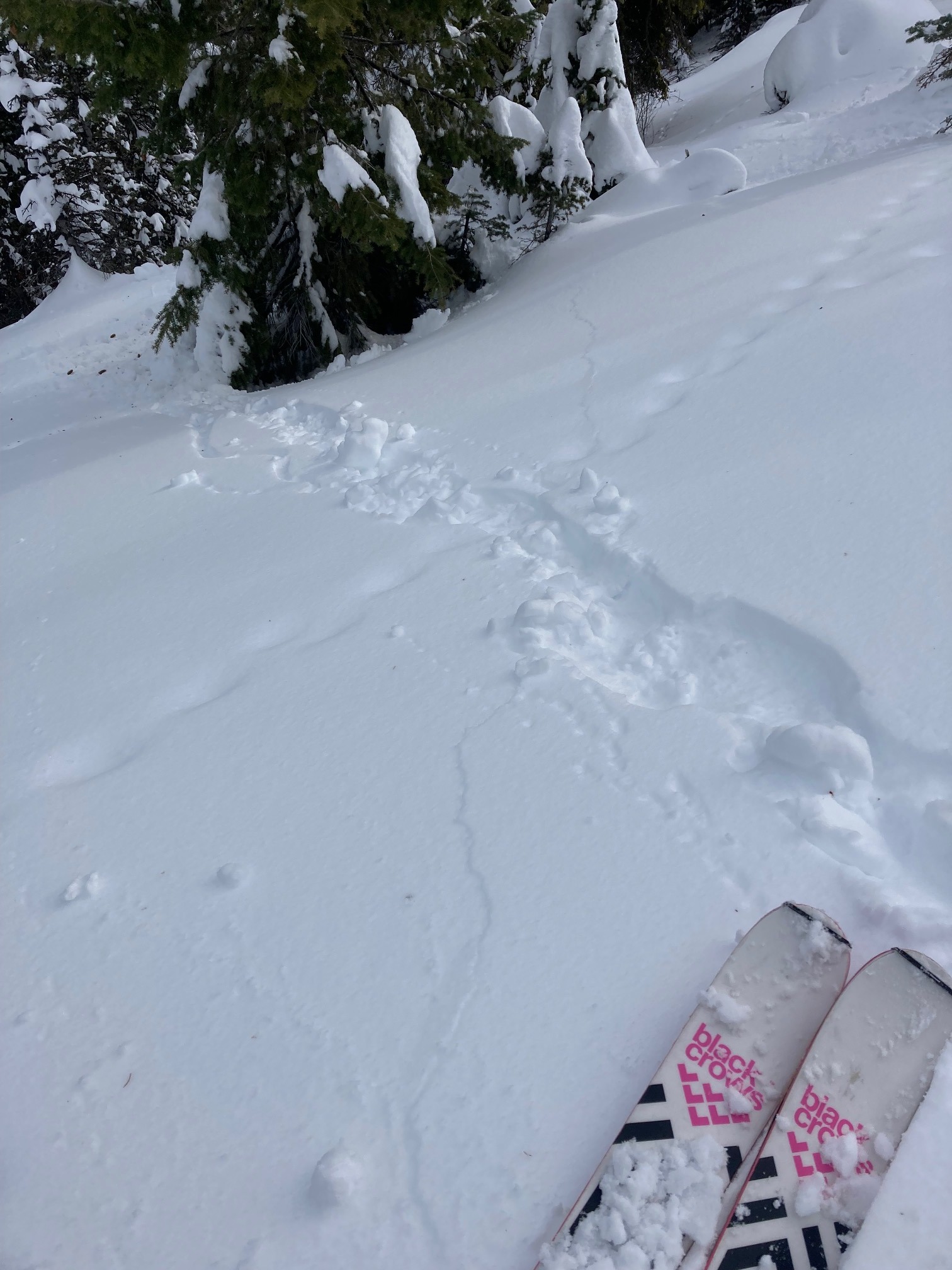
    A persistent weak layer of buried surface and small-grained facets has been responsible for at least five known human-triggered avalanches this week. This persistent weak layer (PWL) is buried around 35-45 cm (14-18") beneath the snow surface. We've had reports of avalanche activity on this PWL at elevations ranging from 6900-8000 feet and on multiple aspects of the compass. This PWL has been consistently reactive since Tuesday throughout different zones in our advisory area, especially in the West Mountain/Council Mountain zone. 

    The warm temperatures yesterday may cause the snow above this PWL to become more cohesive and slab-like. With several inches of new snow and wind, this weak layer may continue to be reactive through the weekend. Since humans are not equipped with x-ray vision that penetrates snow, there is no sure-fire way to avoid this avalanche problem. Your best options for mitigating this problem are to avoid terrain steeper than 30 degrees where buried surface hoar is suspect. If you are experiencing collapsing of this PWL (whumpfing) or shooting cracks (like we did yesterday), then it's time to find a different aspect or lower angle terrain.

Avalanche Discussion

Today's avalanche forecast is sponsored by Mile High Powersports of McCall. Thanks for supporting the Payette Avalanche Center.

We remained entrenched in a spooky MODERATE avalanche danger. What the heck does that mean? One of our avalanche problems is manageable (freshly wind slabs). The other avalanche problem is much more difficult to manage. Buried persistent weak layers are reliable only in their uncertainty. We don't know for certain where this PWL is and where it isn't. Some steep slopes that don't have this problem may be fine, others could easily produce avalanches large enough to bury, injure, or kill a person. We don't know for certain which slopes are safe and which could produce avalanches. The safest way to manage this persistent slab problem is to avoid terrain steeper than 30 degrees. If you're looking to push your luck (not me!), then you really need to tune into the snowpack. What is the feedback you're receiving from the snow? Are you experiencing collapsing of a weak layer (or whumphfing)? Are you seeing shooting cracks from your skis, sleds, or boards? If you are experiencing these red flags, these are signs from mother nature telling you avalanches are more likely.

Since Tuesday, we've had several reports of skier triggered avalanches on this PWL in the northern and southern portions of our advisory area. Additionally, we've received at least three different incidents of snowbike triggered avalanches in the West Mountain zone. If you're taking your snowmobile or snowbike to West Mountain today, be aware this persistent avalanche problem has been most sensitive in that particular zone this week. Check out recent observations here