

Avalanche forecast

Northwest Mountains

Crested Butte Avalanche Center
View on map

Avalanche danger

Thu
Alpine
2 · Moderate
Treeline
2 · Moderate
Below
1 · Low
Out of date — this forecast expired 5 years ago. You’re viewing past conditions, not the current bulletin.

Highlights

The likelihood of triggering an avalanche that breaks near the ground continues to gradually diminish, but the consequences remain severe.  Be cautious of steep terrain that faces the northern half of the compass, especially where snow depths are less than about 4  or 5 feet with sugary snow near the ground.   The safest riding is on southerly aspects or slopes with deep, uniform snow coverage.  An explosive triggered avalanche that broke at the ground on Monday highlights these lingering concerns.  

Avalanche problems

  • Deep Persistent Slabs

    • Alpine
    • Treeline
    • Below treeline
    Likelihood
    Unlikely
    Size
    2.5–3.5

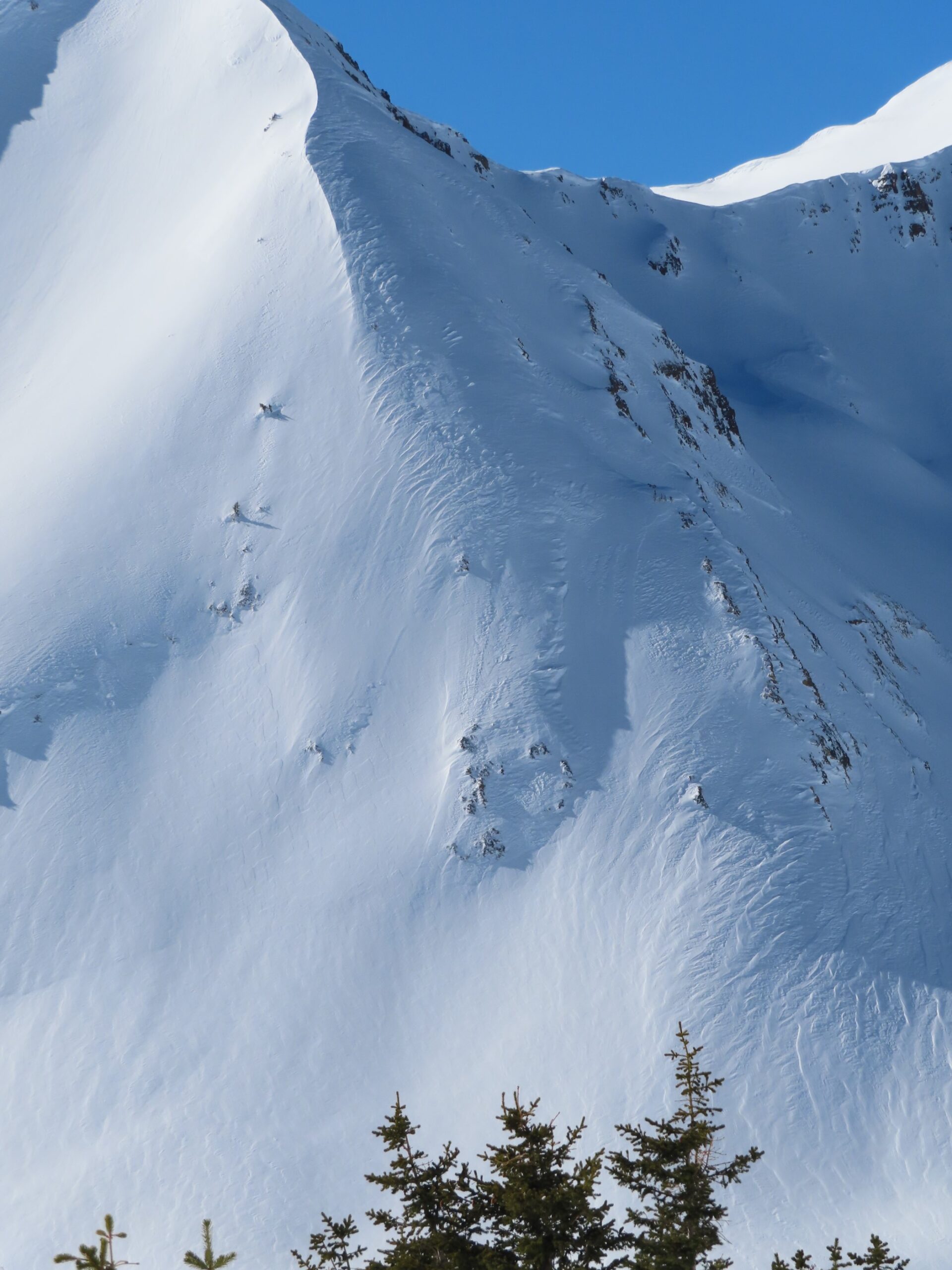
    Deep slabs are a low likelihood but high consequence concern on the northern half of the compass, where faceted weak layers lurk near the ground.   You are most likely to impact these layers and trigger a monster avalanche where slabs are thinner.  Choose terrain with a deep, uniform snowpack to reduce your risk.  Be cautious near rock bands and in alpine terrain where winds have created variable snow depths.  Slopes that avalanched early in the holiday cycle also have thinner slabs that could be easier to trigger.  

    A deep persistent slab avalanche near Yule Pass that released around 12/31.  
Avalanche Discussion

Northwesterly winds gusting into the 30's over the past two days may have formed small, shallow wind slabs above treeline in isolated areas.  Look for evidence of recent drifting like this if you are riding in steep chutes or extreme terrain.  

That's a minor distraction compared to the more serious problem at hand: the rare but deadly potential for an avalanche breaking on weak layers near the ground.   Targeted stability tests (video) and explosive results continue to show that the depth hoar, facets, and faceted crusts near the ground are slow to heal on west to north to east aspects.  With each passing day of dry weather, more of those slopes are adjusting to the weight of thick and dense overlying slabs. However, it's very challenging to safely and reliably assess specific slopes, so our travel advice remains the same for now.  Seek out the deep and uniform slopes where it's nearly impossible to impact weak layers near the ground.  Shy away from rocky terrain, wind swept terrain with variable snow depths, or slopes where snow depths are less than about 4 or 5 feet deep.  We have much higher confidence that you can completely avoid the problem on southerly aspects, where early-season weak layers did not exist.  Check out these observations (Northwest Mountains, Southeast Mountains)  from early December mapping basal weak layers for more details.  


Regions covered