Natural avalanches possible, human triggered probable.
Treeline
Natural avalanches unlikely, human triggered possible.
Below Treeline
Natural avalanches unlikely.
Alpine
Natural avalanches possible, human triggered probable.
Treeline
Natural avalanches unlikely, human triggered possible.
Below Treeline
Natural avalanches unlikely.
Regions
Stevens Pass.
The Bottom Line: The avalanche danger changes drastically with elevation. The higher the elevation, the higher the risk of triggering an avalanche because there is more new snow, and more wind up there.
Snow and Avalanche Discussion:
The storm ended on the 4th with over 2.5” of water equivalent. Unfortunately much of the precipitation fell as rain up to at least 5,900ft. About 6” of new snow was observed on Friday over a wet snow layer. A handful of loose wet avalanches were observed to have run recently off the Southeast side of Lichtenburg Mountain. Some of these gauged into older snow with debris piles fanning out widely.
Regional Synopsis
20191204 Regional Synopsis The first few days of 2019 were active here in the Northwest. A strong weather system impacted the region bringing warm temperatures, heavy precipitation, and strong winds. This weather system did not impact the forecast areas equally. Even within the same forecast zone we can see wide discrepancies in precipitation numbers. The snowpack you encounter this weekend will be largely dependent on where you go and the elevation at which you travel
Storm Precipitation Totals as of Friday Afternoon
Hurricane Ridge: 2.41”
Mt Baker: 6.52”
Stevens Pass: 2.58”
Snoqualmie Pass: 2.27”
Crystal Mountain: 0.52”
Paradise: 2.23”
White Pass: 0.55”
Washington Pass: 1.05”
Mission Ridge: 0.31”
Mt Hood Meadows: 0.51”
A few big stories stand out in the current snowpack: recent avalanche warnings in the northern zones, persistent slabs in the western areas, and a complex and weak snowpack in the eastern zones.
The northern zone experienced the brunt of this latest weather system. This led to two days of avalanche warnings and at least one large natural avalanche cycle. It's tough to say what the snowpack looks like in areas near and above treeline, but we know those areas received substantial new snow.
Photo: Large natural avalanche at Mt Baker Ski Area during the recent storm. -Mt Baker Ski Patrol
Earlier in the week we began forecasting a new persistent slab in our west-slope zones. A layer of buried surface hoar produced avalanches last Saturday, Sunday, and Monday. How did that layer fair after this recent round of weather? In locations like Mt Baker and Paradise, it was well tested with heavy precipitation. In other locations, less water may not have adequately stressed the weak layer. As visibility improves and more observation come-in the picture may become more clear.
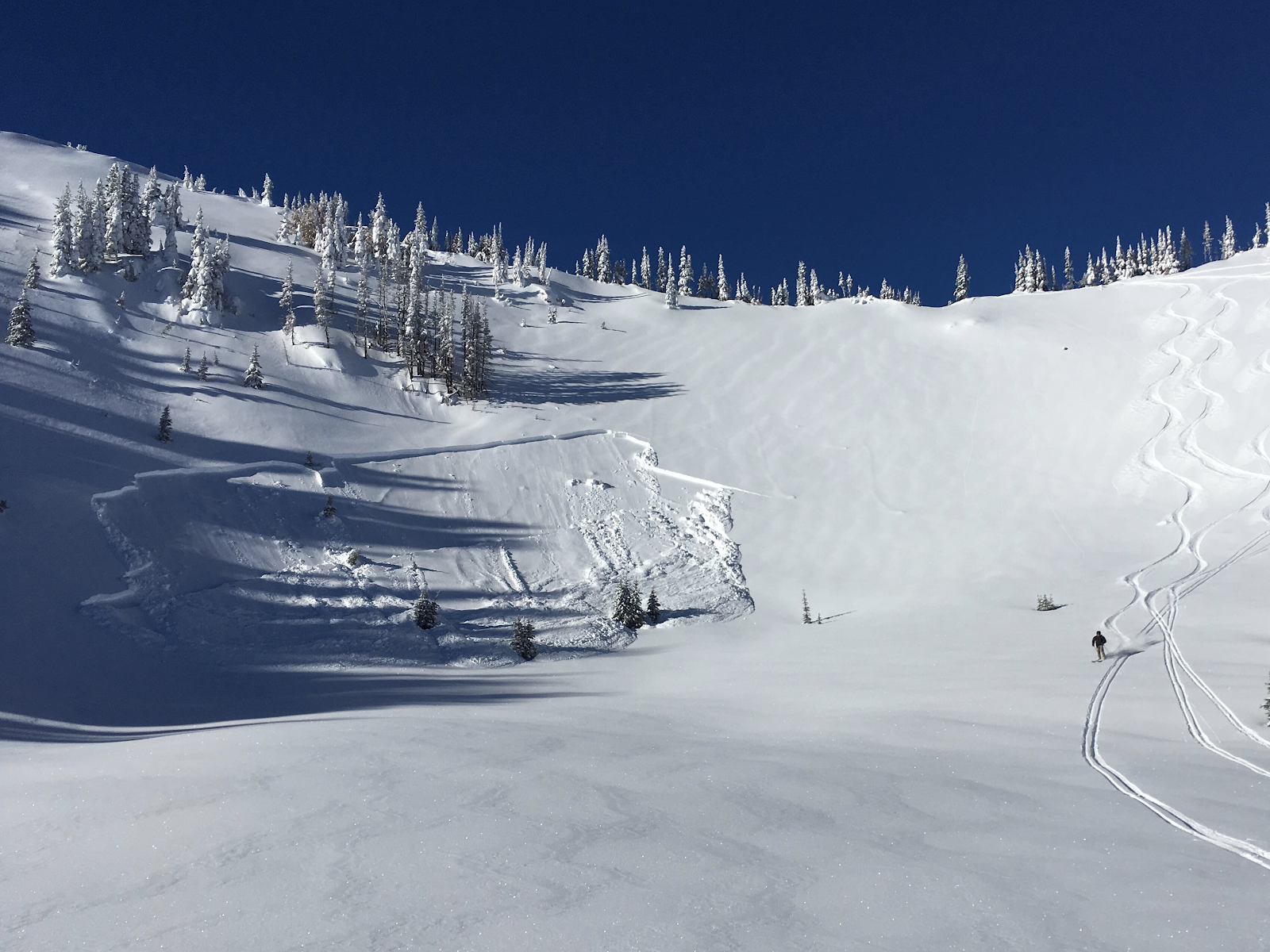
Photo: Large remotely triggered persistent slab avalanche in the Crystal backcountry: Jeremy Allyn
In the eastern zones a complicated and weak snowpack exists. Several persistent weaklayers have plagued these regions most of the winter. Don’t expect this to change anytime soon. Snow profiles and snowpack test can give you a glimpse into the persistent layer. Remember, snow profiles cannot prove the absence of a weak layer or that a layer has “healed.”
Photo: Large remotely triggered slide on buried surface hoar from Christmas above Leavenworth on 12/31: Matt Primomo
Problems
Wind Slabs
Wind Slab avalanches are the release of a cohesive layer of snow (a slab) formed by the wind. Wind typically transports snow from the upwind sides of terrain features and deposits snow on the downwind side. Wind slabs are often smooth and rounded and sometimes sound hollow, and can range from soft to hard. Wind slabs that form over a persistent weak layer (surface hoar, depth hoar, or near-surface facets) may be termed Persistent Slabs or may develop into Persistent Slabs.