Avalanche Forecast
Jan 17th, 2019–Jan 18th, 2019
Alpine
Natural avalanches possible, human triggered probable.
Treeline
Natural avalanches possible, human triggered probable.
Below Treeline
Natural avalanches unlikely, human triggered possible.
Alpine
Natural and human triggered avalanches likely.
Treeline
Natural and human triggered avalanches likely.
Below Treeline
Natural avalanches possible, human triggered probable.
Regions
.
The Bottom Line: The snowpack is complicated in the East Central Cascades. As more snow accumulates and the wind creates fresh drifts avalanche danger will rise. This is a good time to step back, and focus on finding terrain to recreate in that isn't steep enough to avalanche.
Snow and Avalanche Discussion
Up to 7” of snow fell in the zone on the 17th with light winds. The Wenatchee Mountains east of Highway 97 were the winner. This likely preserved the old snow surface that consisted of a mix of facets, crusts, and old wind packed snow. On Thursday an observer reported collapses on a crust/facet sandwich layer down about 12" on an East aspect at 5800ft near Blewett Pass, a sign that a previous persistent weak layer is beginning to groan under its new heavy blanket.
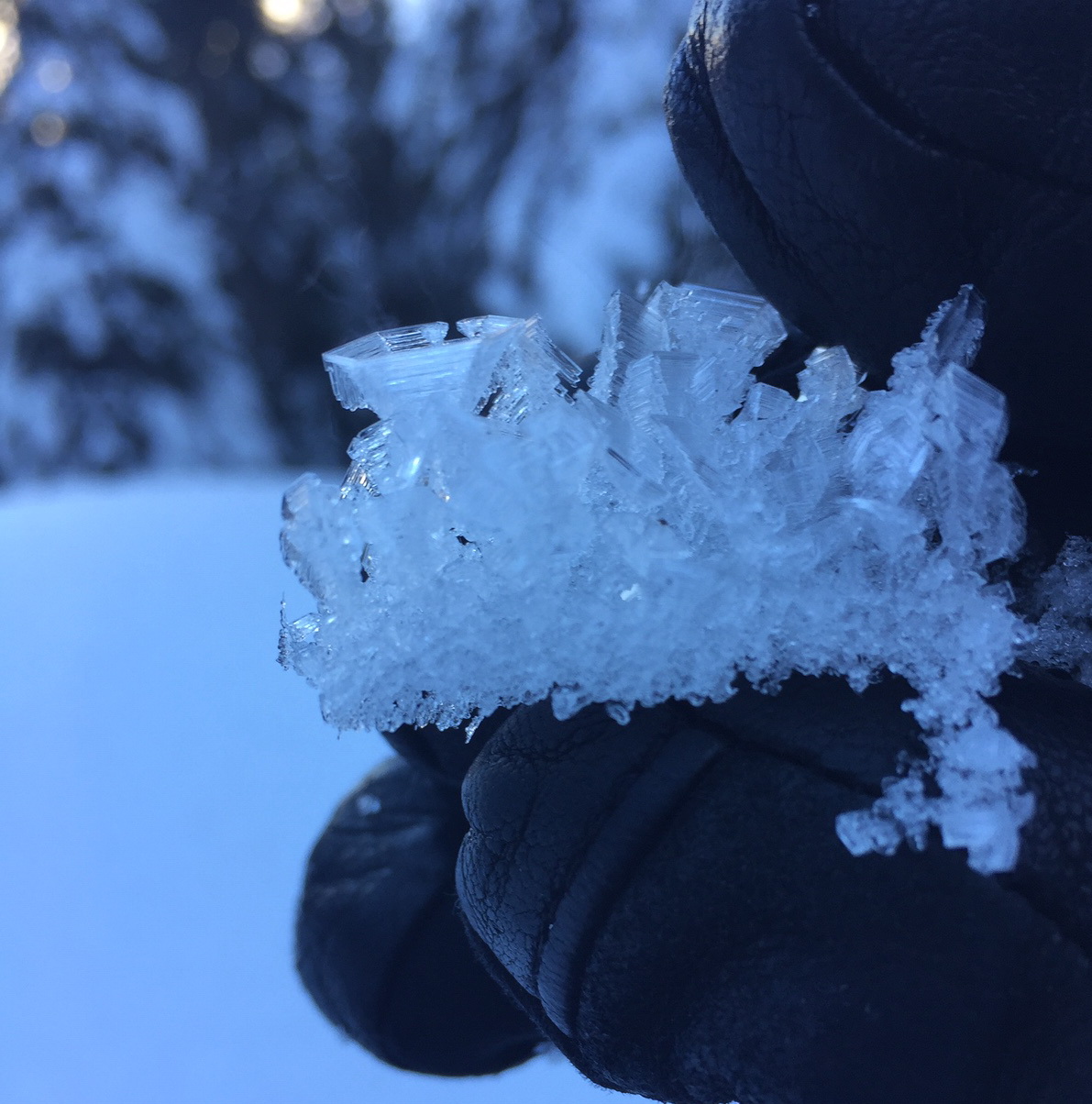
Prior to the recent storm cycle, observes reported 'dramatic faceting' near and below treeline on shaded aspects. Another speaks of skiing on a ‘glass carpet’ of surface hoar between 4,000 and 5,500ft. Folks spoke of facet sluffs, a sure sign of very weak snow. We anticipate that the new snow won’t bond well with this old surface. The Salmon la Sac and Teanaway, and upper Icicle Creek stand to do better from this next storm rolling through into Friday. As the winds pick up and the snow accumulates, this will set the stage for our next round of avalanche activity. Avalanche danger will likely reach High by Saturday with a strong storm coming in Friday night.
Problems
Wind Slabs
Wind Slab avalanches are the release of a cohesive layer of snow (a slab) formed by the wind. Wind typically transports snow from the upwind sides of terrain features and deposits snow on the downwind side. Wind slabs are often smooth and rounded and sometimes sound hollow, and can range from soft to hard. Wind slabs that form over a persistent weak layer (surface hoar, depth hoar, or near-surface facets) may be termed Persistent Slabs or may develop into Persistent Slabs.
Persistent Slabs
Persistent Slab avalanches are the release of a cohesive layer of snow (a slab) in the middle to upper snowpack, when the bond to an underlying persistent weak layer breaks. Persistent layers include: surface hoar, depth hoar, near-surface facets, or faceted snow. Persistent weak layers can continue to produce avalanches for days, weeks or even months, making them especially dangerous and tricky. As additional snow and wind events build a thicker slab on top of the persistent weak layer, this avalanche problem may develop into a Deep Persistent Slab.