Avalanche forecast

Northwest Mountains

Crested Butte Avalanche Center
View on map

Avalanche danger

Mon
Alpine
3 · Considerable
Treeline
2 · Moderate
Below
2 · Moderate
Out of date — this forecast expired 5 years ago. You’re viewing past conditions, not the current bulletin.

Highlights

Clearing skies yesterday revealed numerous very destructive, full track avalanches from the historic snowpocalyptic storm.  Avalanches are significantly harder to trigger now that the loading event is over and layers are buried deeply.  The consequences are still catastrophic.  You are most likely to trigger a deadly avalanche breaking on weak layers near the ground where the snowpack is shallower; especially on the northern half of the compass. Recently drifted slopes also demand caution.  Choose routes where the snowpack is wind sheltered, deep, and uniform or opt for simpler terrain when in doubt.  

Avalanche problems

  • Persistent Slabs

    • Alpine
    • Treeline
    • Below treeline
    Likelihood
    Possible
    Size
    3–4

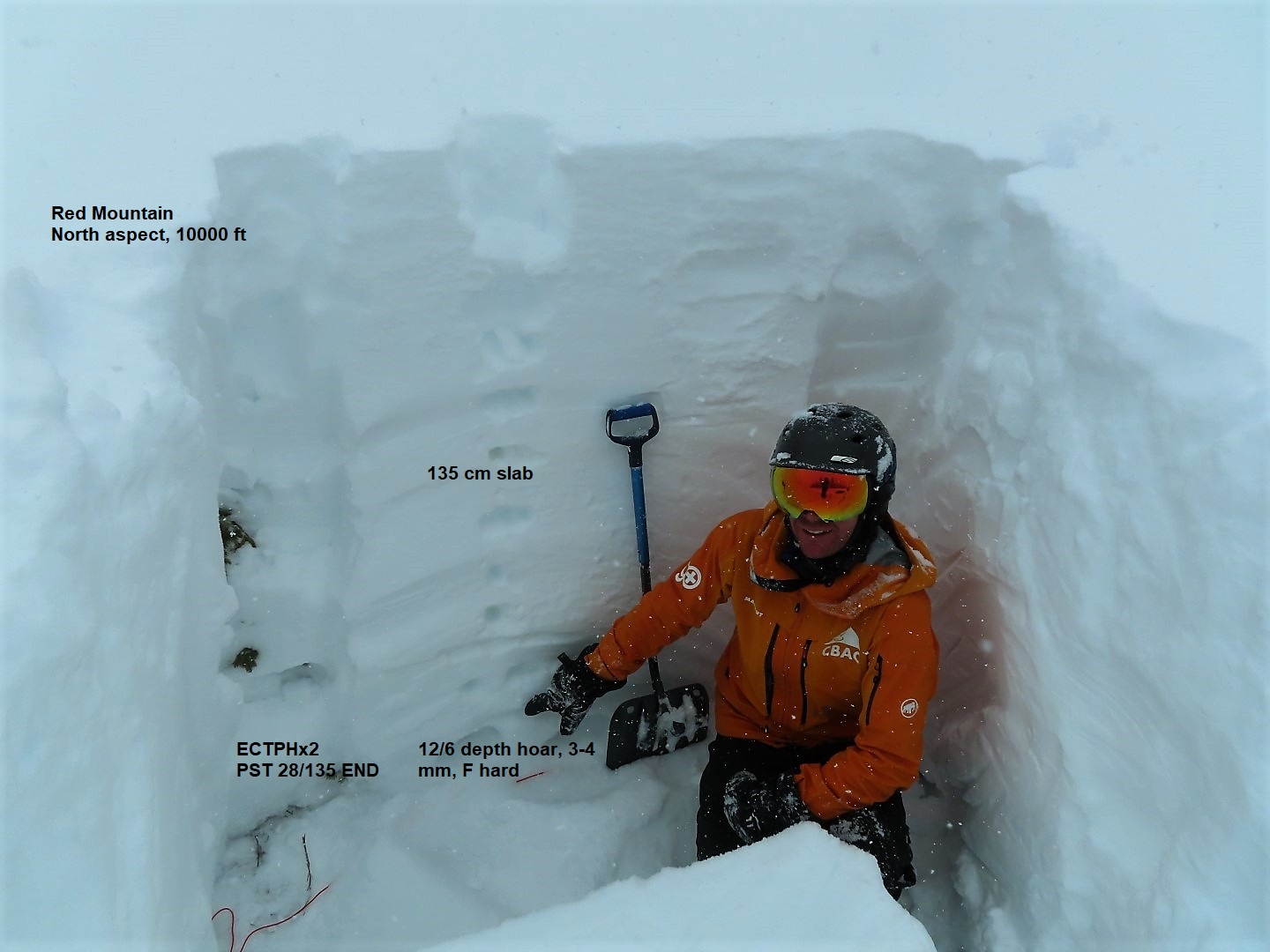
    It is possible to trigger a very large and destructive avalanche today in steep terrain or from flatter terrain where the snowpack connects to a start zone.  These widely propagating and long-running avalanches will break 5 to 9 feet thick or more on weak layers near the bottom of the snowpack.    Persistent slabs are most likely to be trigged on northerly and east aspects, where buried layers are most fragile.  The distribution rose also includes southerly and west aspects where there is a smaller potential for faceted crusts near the bottom of the snowpack to fail.  Slabs have grown stubborn to human triggers because of how thick they are.  You are most likely to trigger a monster avalanche where slabs are thinner.  Thin areas are more common in terrain that has seen less snow, or at higher elevations in terrain where the wind has redistributed snow into thicker and thinner slabs.   Triggered avalanches today have the potential to run full track and will be unsurvivable.  

    Several very wide and lung running persistent slab avalanches on Schuykill Ridge.  These slides failed naturally on December 31st.  

  • Wind Slabs

    • Alpine
    • Treeline
    • Below treeline
    Likelihood
    Likely
    Size
    1–2

    Northerly winds over the past 24 hours have been strong enough to drift the snow into senstive slabs in leeward terrain.  Look for blowing snow or thicker looking dunes to identify the problem.  They'll be most common below alpine ridgelines or in crossloaded terrain features.  There is lingering potential for a small slide in the upper snowpack to step down and trigger a much larger persistent slab.  

    An example of an avalanche earlier this season, that broke below a wind-loaded ridgeline.  

Avalanche Discussion

Yesterday, we enjoyed our first views of the mountains in almost a week and started documenting some impressive natural avalanche activity.  Avalanches propagated across multiple start zones, crowns connected multiple aspects, and ran full track.  The slide(s) on Schuylkill Ridge ran across Slate River Road and up the opposing hillside, snapping trees like toothpicks.  Check out our observations page or the gallery below for photos.  These slides ran so far, not only because the slabs are quite thick, but because there was an unprecedented amount of loose and unconsolidated snow in the tracks and runouts - more snow available for entrainment.   We may trim the expected size down a bit in the coming week once the snowpack in the tracks and runouts consolidates more.  That's a trivial point if you get caught in one.  

Looking ahead, the snowpack is moving into recovery mode.  That's a good thing.  Northerly winds were a bit stronger and are lasting longer than anticipated. We are keeping the danger at Considerable above treeline to account for fresh wind slab formation and the lingering threat for naturals.  Our observations across our forecast area, and targeting the "shallow" parts of our forecast zone over the last few days show that the persistent slab problem has become stubborn to human triggers.  Many of the smaller-grained weak layers (our 12/23 interface) are gaining strength quickly now that they are buried underneath a deep and rounding snowpack.  We'll start trimming the distribution rose for persistent slabs once this process has sufficiently reduced the threat on the aspects harboring just those small grained facets.  On the northern half of the compass, the weak layers are larger (12/6 depth hoar layer) and will take longer to adjust to the massive storm we just got.  Triggering an avalanche on those shadier aspects is still difficult given the slab thickness, but more of a concern. There is potential to collapse a weak layer and trigger a very large avalanche where slabs are thinner.  That could be in a below treeline area where the snowpack is less than about 4 feet deep, or in alpine terrain where wind drifting patterns have caused slabs to thin out near rock bands or ribs.  If you are riding in steep terrain, reduce your risk by choosing slopes with deep uniform coverage.   This new video that we put together during the last few field days demonstrates some of these concepts.  

Regions covered