
Quick report
Our tour today confirmed low avalanche hazard. We passed through a variety of snowpacks and snow surfaces. Up to about 7800 feet there was a crust on all aspects, although it was thin and breakable on north aspects at this elevation. Surface hoar remained on the crust in most places not exposed to the wind.
In most treeline and alpine locations the snowpack was dictated by the wind. We probed snow depths of over ten feet on wind-loaded north through northeast aspects. Many southerly and westerly aspects at similar elevations were blown down to the rock. Wind-loaded areas had a variety of surface textures, from large wind ripples to occasional smooth wind slabs.
We dug a pit in a wind-loaded area and found hard snow with no concerning weak layers in the upper snowpack. However, in sheltered and shaded areas at lower elevations, the snowpack was shallow and weak top to bottom.
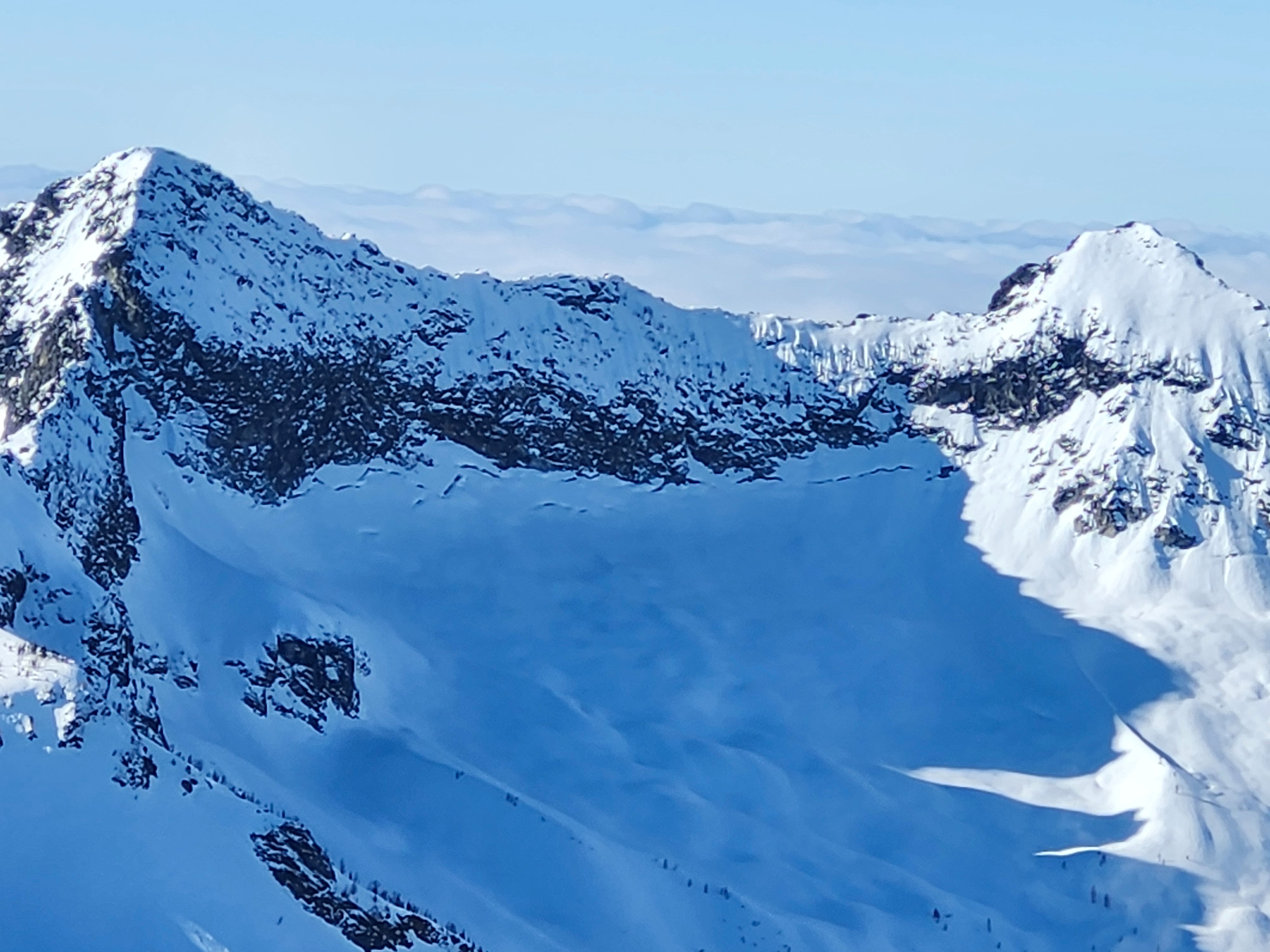
We saw one old size one wind slab avalanche that was likely from our avalanche cycle and storm two weeks ago. We also saw glide cracks on a steep north face. These likely opened during our last warm-up.
Variety is the name of the game! It will be interesting to see how all of these different snowpacks respond to our next snowfall.
Weather
- Air Temp
- 2
- Cloud Cover
- few
- Wind Loading
- previous
- Rain Elevation
- N/A
- Recent Snowfall
- 0
- Snow Avail For Transport
- none
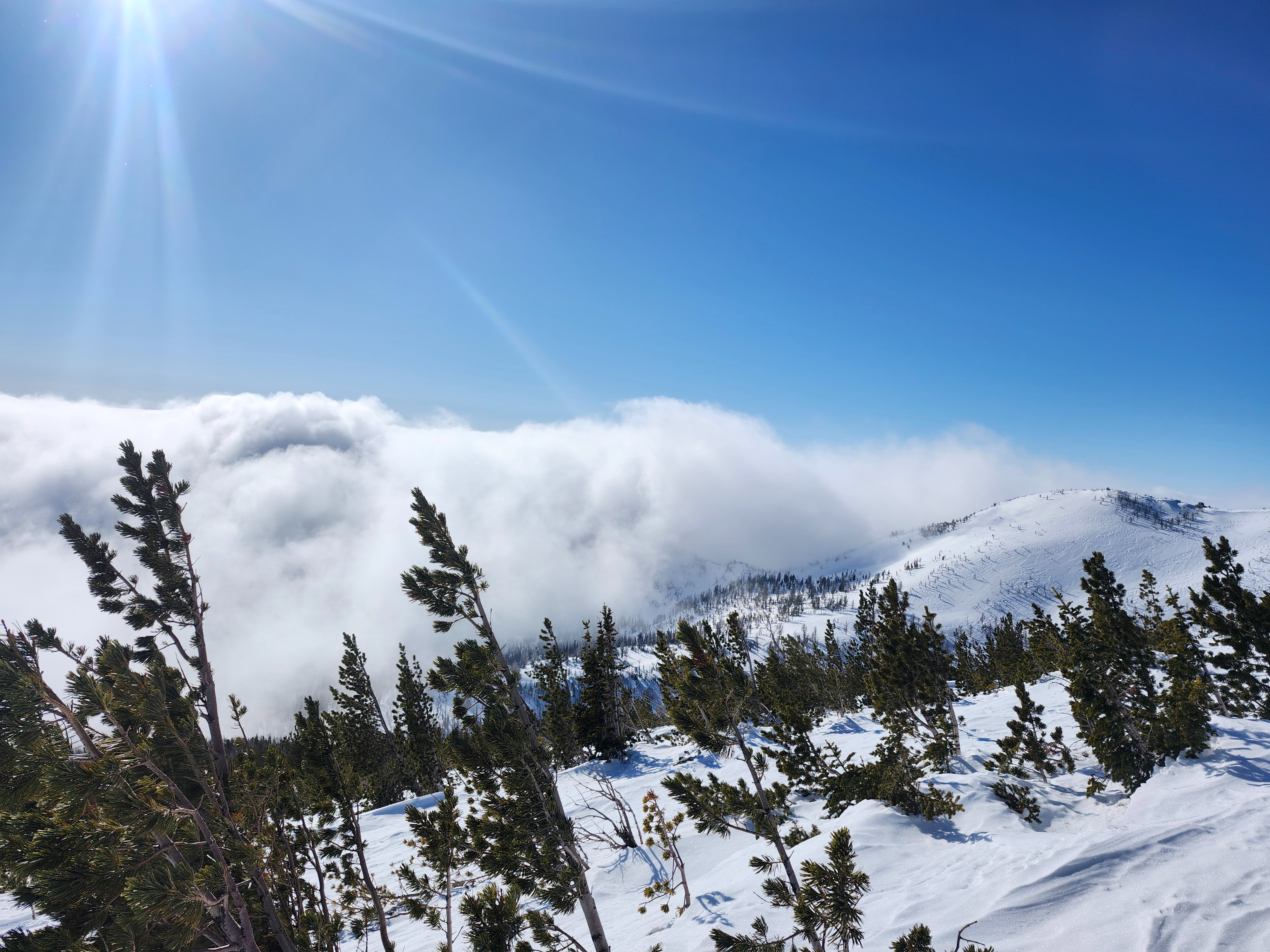
A cloud layer was present from about 6800 to 7900 feet. Below this was overcast, above was mostly clear. Throughout the day, the cloud layer almost completely burned off. Very light snow fell for the first hour of our tour, followed by no precipitation. The temperature was 14F at 5400 ft where we parked, and 0F at 9300 feet, though cooling did not occur linearly as we ascended.
Snowpack
The snowpack varied as we covered different elevations and aspects.
South aspects had a surface crust up to at least 8000 feet. In some locations this was topped with surface hoar. In other locations it was not. Above 74000 feet, most aspects were either wind scoured (sometimes to rock) or wind loaded, and the surface hoar had blown away.
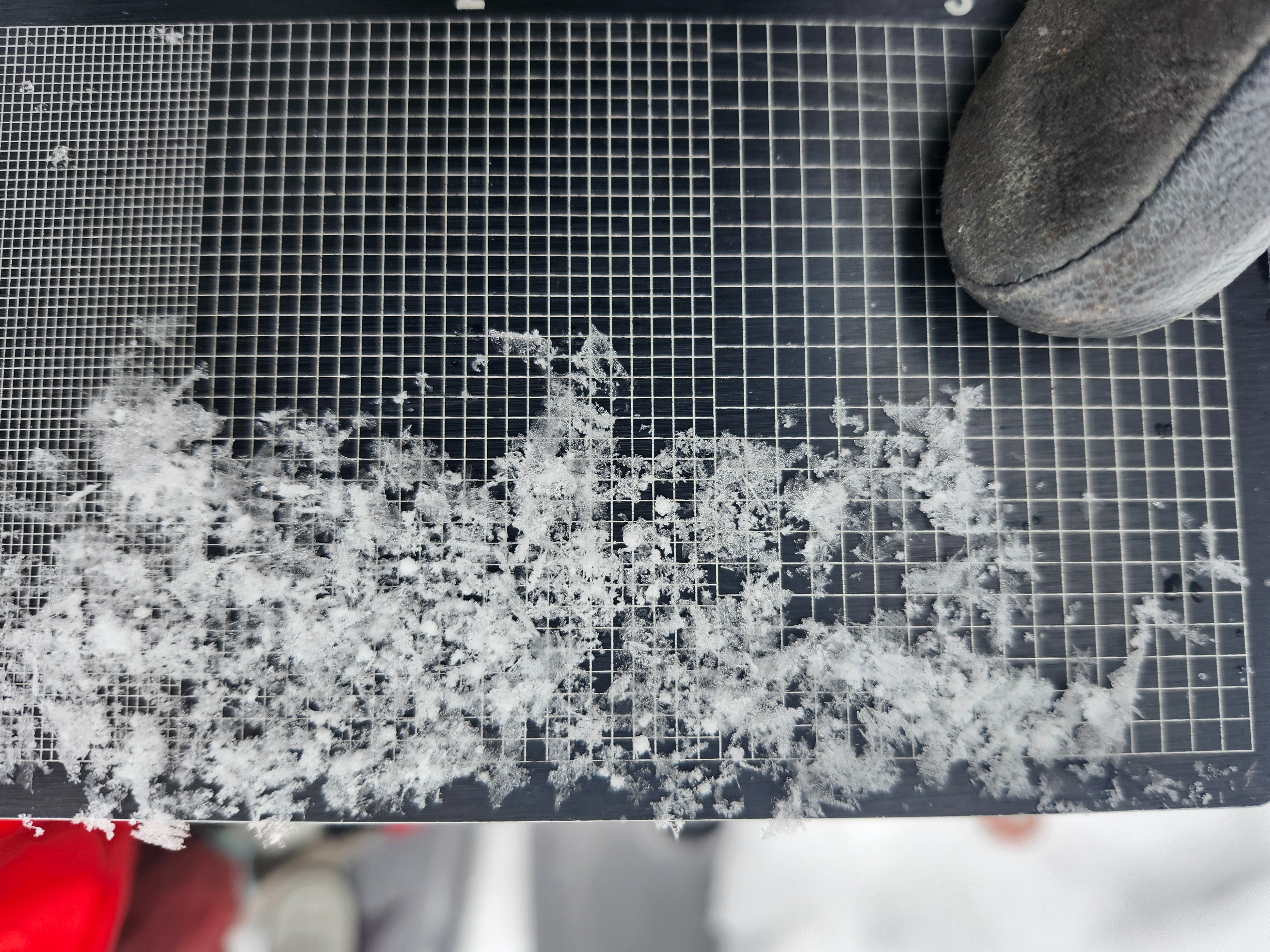
On a sheltered NW aspect around 7800 feet, the snowpack was three feet (1m) deep, composed almost entirely of soft rounding facets (four-finger hardness). On the surface was a very thin breakable crust.
We dug on a NE aspect at 8570 feet. The snow surface was sastrugi (wind-sculpted ripples). The snowpack was just over ten feet (3m) deep. We did not dig to the bottom. We dug down about 5 feet (1.5m) and found layered hard (one-finger to pencil) wind slabs. There were no obvious weak layers in the upper half of the snow surface. We did get three sudden planar hard tap results in a column test in the top foot of the snowpack. However, none of these layers were horizontally continuous more than a few feet, so they were not concerning from an avalanche perspective.
Avalanche
- Size
- D1
- Type
- SS
- Aspect
- E
- Trigger
- N
- Elevation
- 8350 ft
One old size 1 wind slab, most likely about two weeks old from our last avalanche cycle.