
Quick report
- Cracking
- specific
- Collapsing
- specific
I experienced small collapses, shooting cracks, and triggered a few small pockets, all involving the recent snow. I did not trigger collapses deeper in the snowpack.
Weather
- Snow Avail For Transport
- moderate amounts
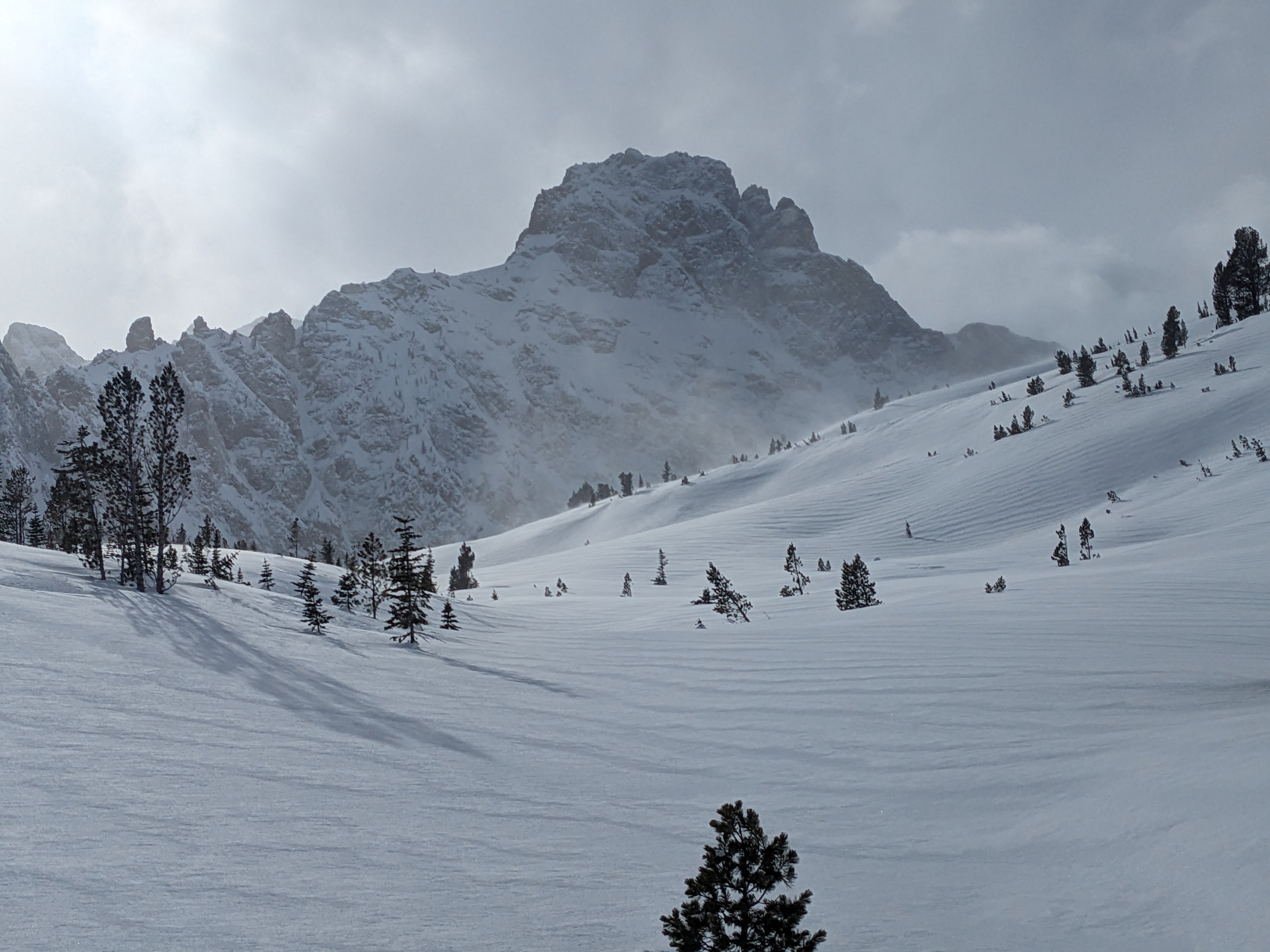
Classic spring weather in the Sawtooths...sunshine, big fat flakes, dippin dot graupel...sometimes all three at the same time! Significant wind transport going on thanks to moderate SWerly winds with occasional stronger gusts. This seemed to be the first notable wind in the area since the strong Serly winds that accompanied snowfall around V-day. Several hour long window of direct sun from about 1230-1430.
Snowpack
This was an off duty day, but I did do a little digging and plenty of looking at and thinking about the snow.
Found 15-20cm of recent snow sitting on one of several crusts in the upper snowpack (on solars). These formed in brief sunny periods between storms the last two weeks. At lower and middle elevation solars this took a crust today (RadRx and more generic MFcr). At upper elevations it seemed like the combination of wind and periods of clouds kept the snow surface largely dry.
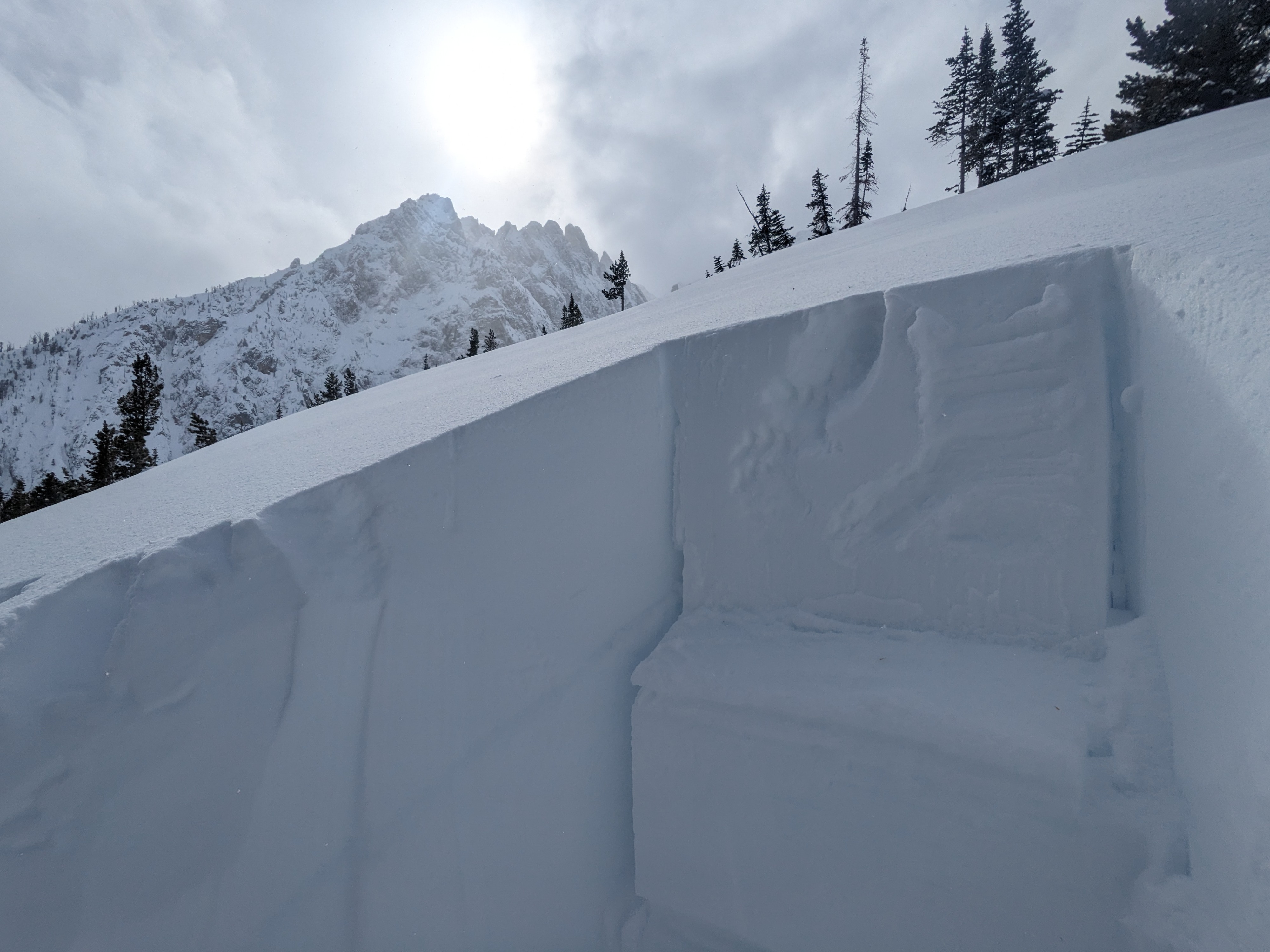
2/1 interface is down 65-75cm, under a slab that grades from F- to 4F+/1F-. I received propagating snowpack test scores in all tests performed (ECTP 26, ECTP28 x 2). It took some force to get down to this, but part of that was due to the soft, fluffy snow on top of the slab. This persistent slab problem has budded and is now blooming here. It is unusual to have upper elevation rain crusts in our area, there is a lot of terrain that this layer is keeping me out of that I might otherwise be playing in.
There is a lot of dry snow hanging around in the mountains! I'm anticipating a widespread shedding of this snow in the coming sunny days. We will probably see several rounds of wet loose activity, thanks to the crusts that have built in the upper snowpack (like peeling cards off the top of the deck). The upcoming weather will also promote slab consolidation in the upper snowpack. This snow has remained largely dry and loose up to this point, but that will change. Also anticipating that we will be pushing meltwater down to the stacks of thin crusts on solars, and eventually to the 2/1.
1/6 (down 110-120cm) interface is showing signs of improvement, with an increase in hardness and visible rounding on the margins of the faceted grains here. However, the hardness difference between the overlying slab and this strengthening weak layer is concerning. I'm treating this like a deep slab in this area, but anticipating that this layer will likely rear its ugly head again during major loading events, and as wet slabs when we really start melting snow.
Avalanche
- Size
- D2
- Aspect
- E
- Trigger
- N
- Elevation
- 9700 ft
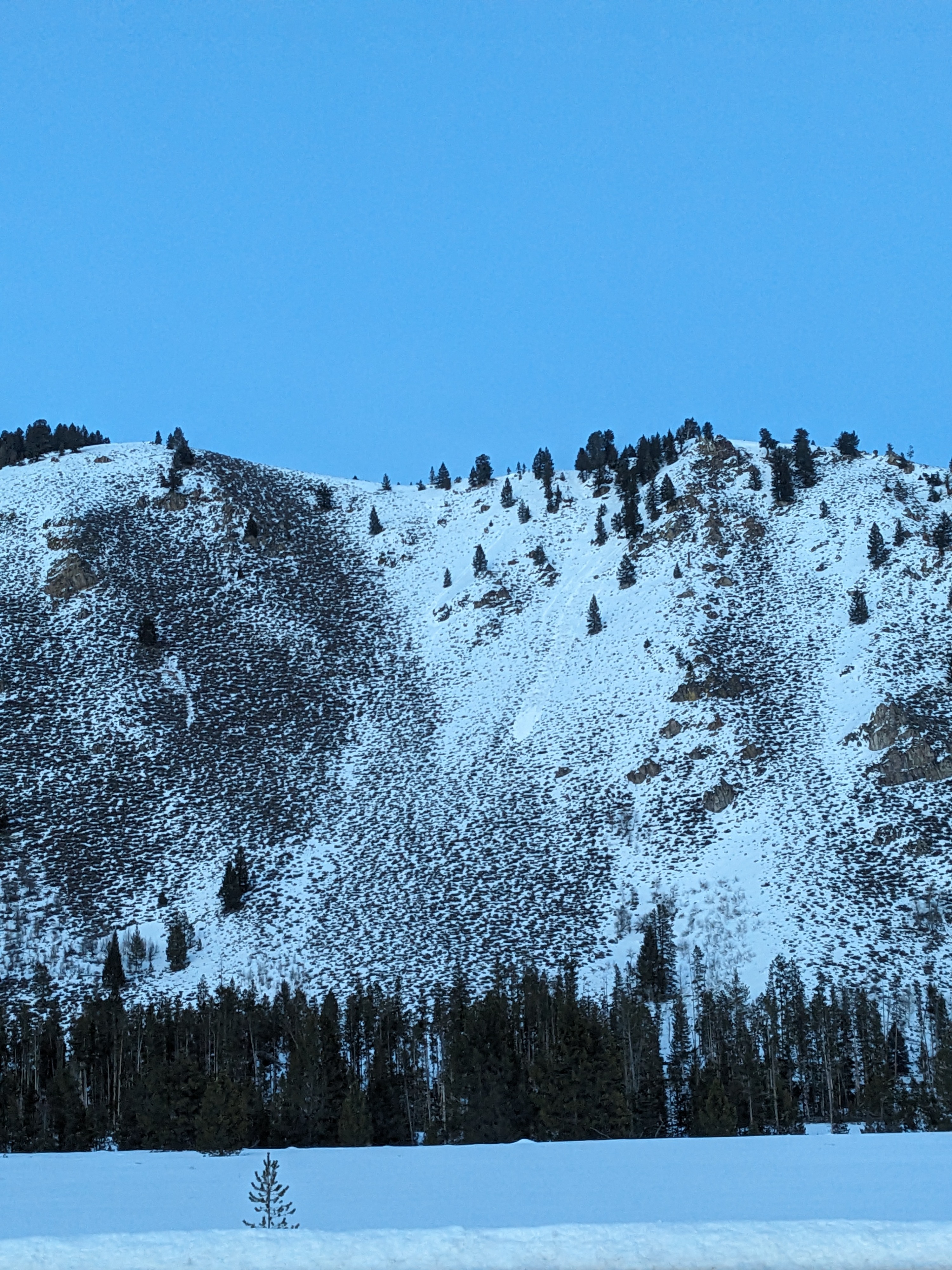
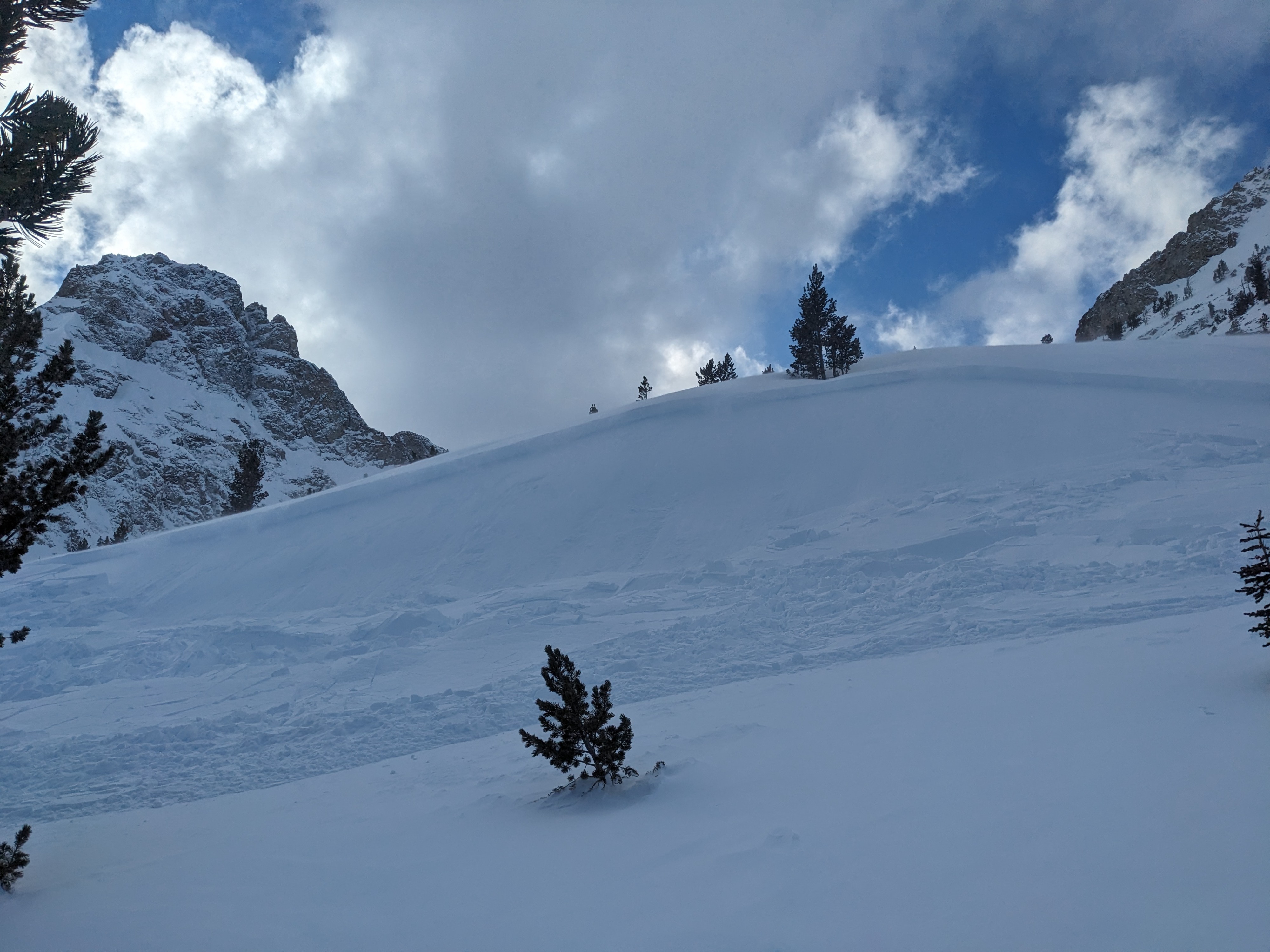
I intentionally triggered several small slabs in recently wind-loaded terrain. These were D1s (thanks to the terrain), but could have become much larger in more favorable terrain. Several triggered pockets broke 100+ feet wide, some failed remotely (10-20 feet away from slab that released). One pulled back into <25 degree terrain. These properties indicate a persistent weak layer involvement, likely a layer of facets that formed during brief periods between storms in the past few days. I did not have my lens with me, so I'm not certain on grain type, the grains here were quite small with lots of PP/DF mixed in. I observed a small, D1 wet loose avalanche that may have run today on the hill across from the Stanley Ranger Station. I haven't been up there in the daylight recently so I'm not positive when it ran, but it looked fairly fresh.