
Quick report
- Cracking
- isolated
- Collapsing
- isolated
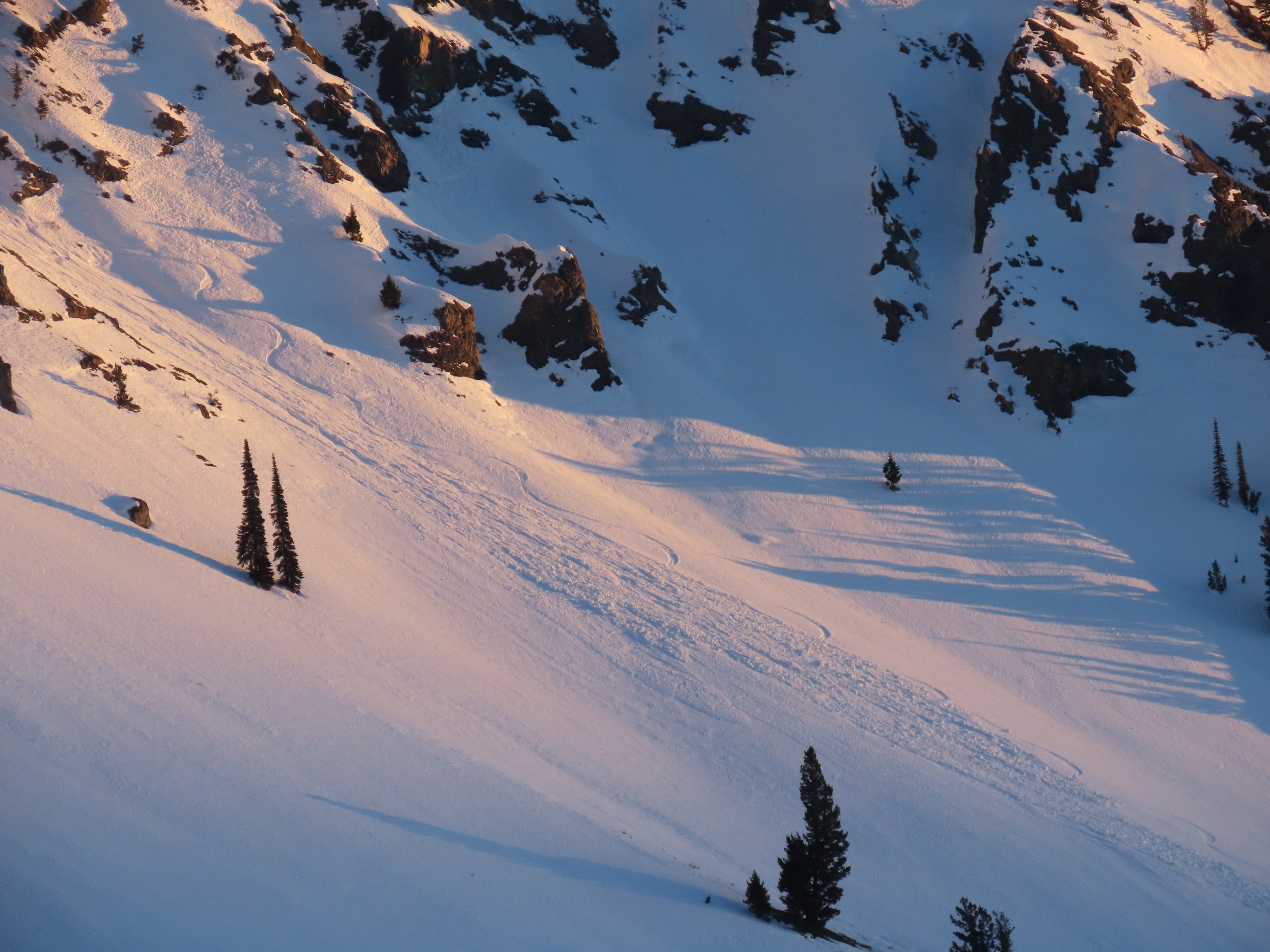
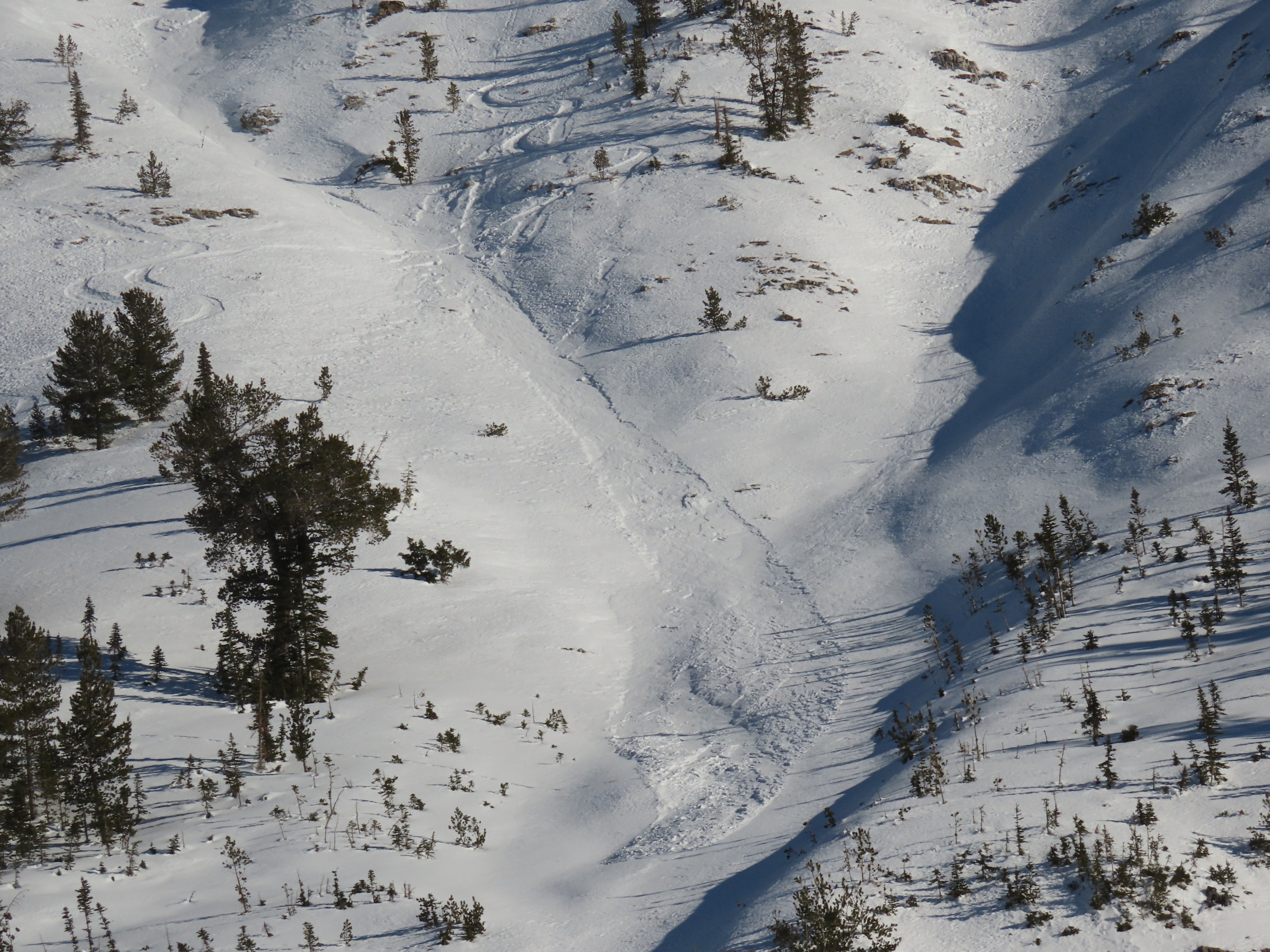
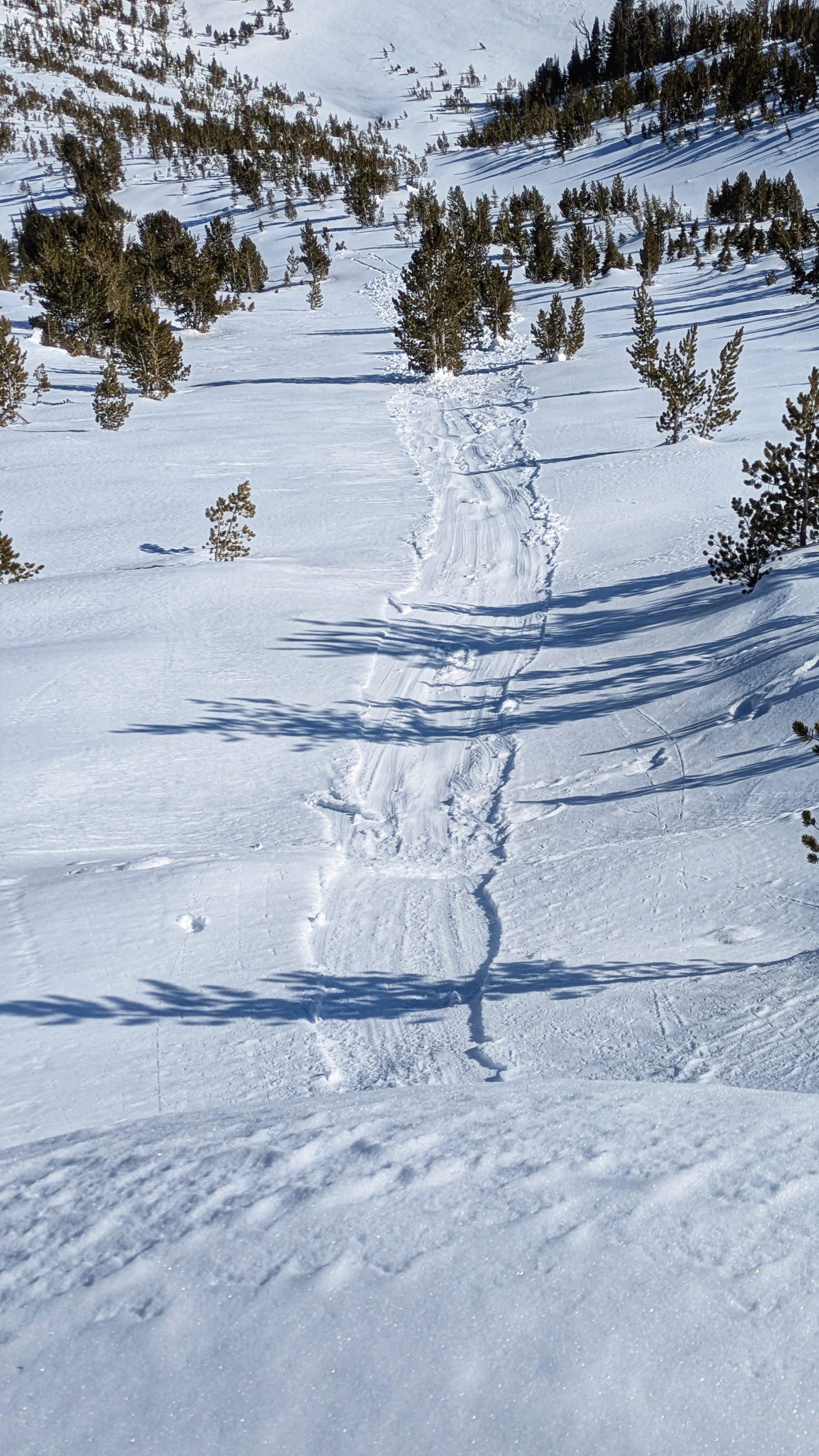
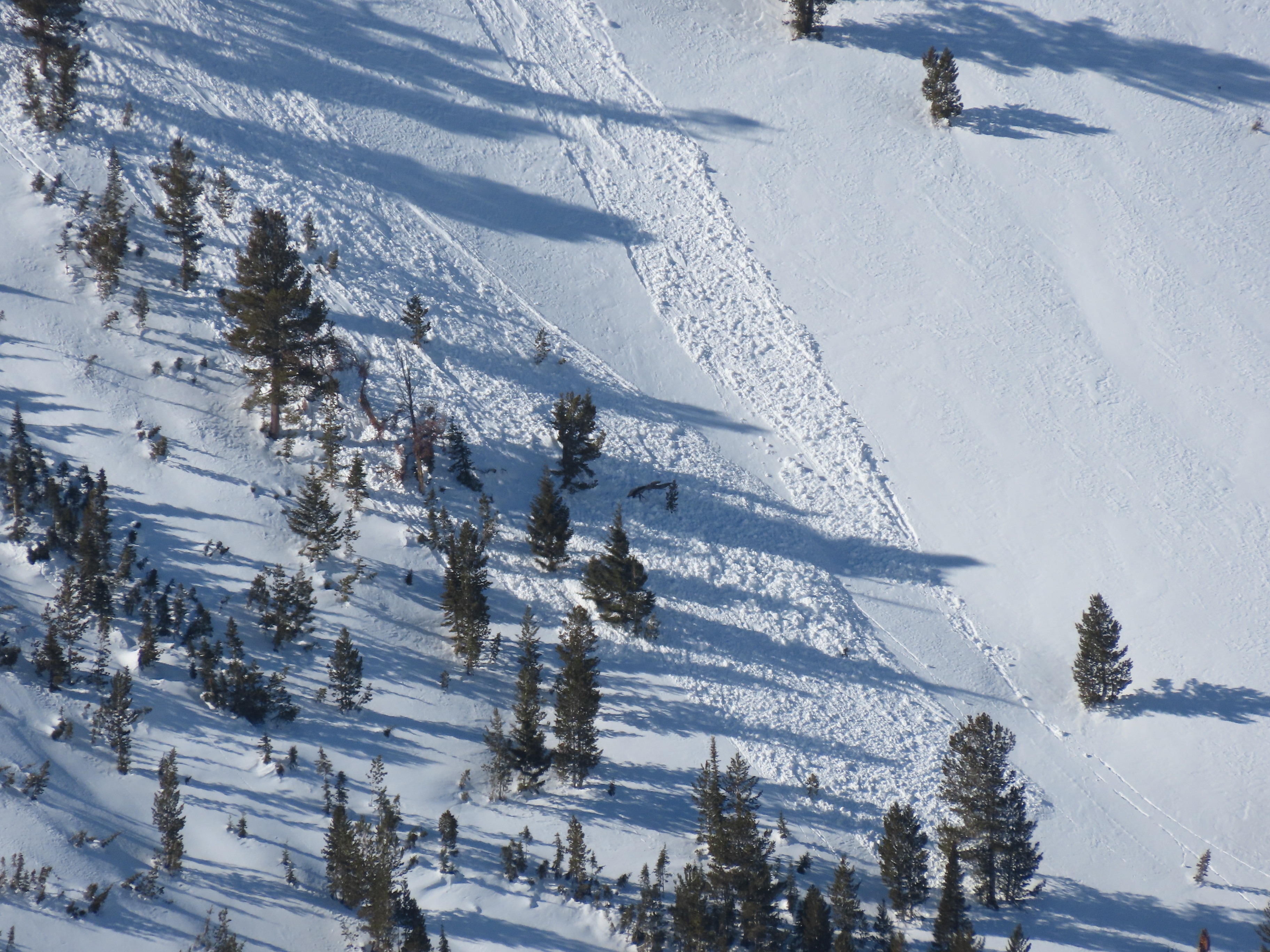
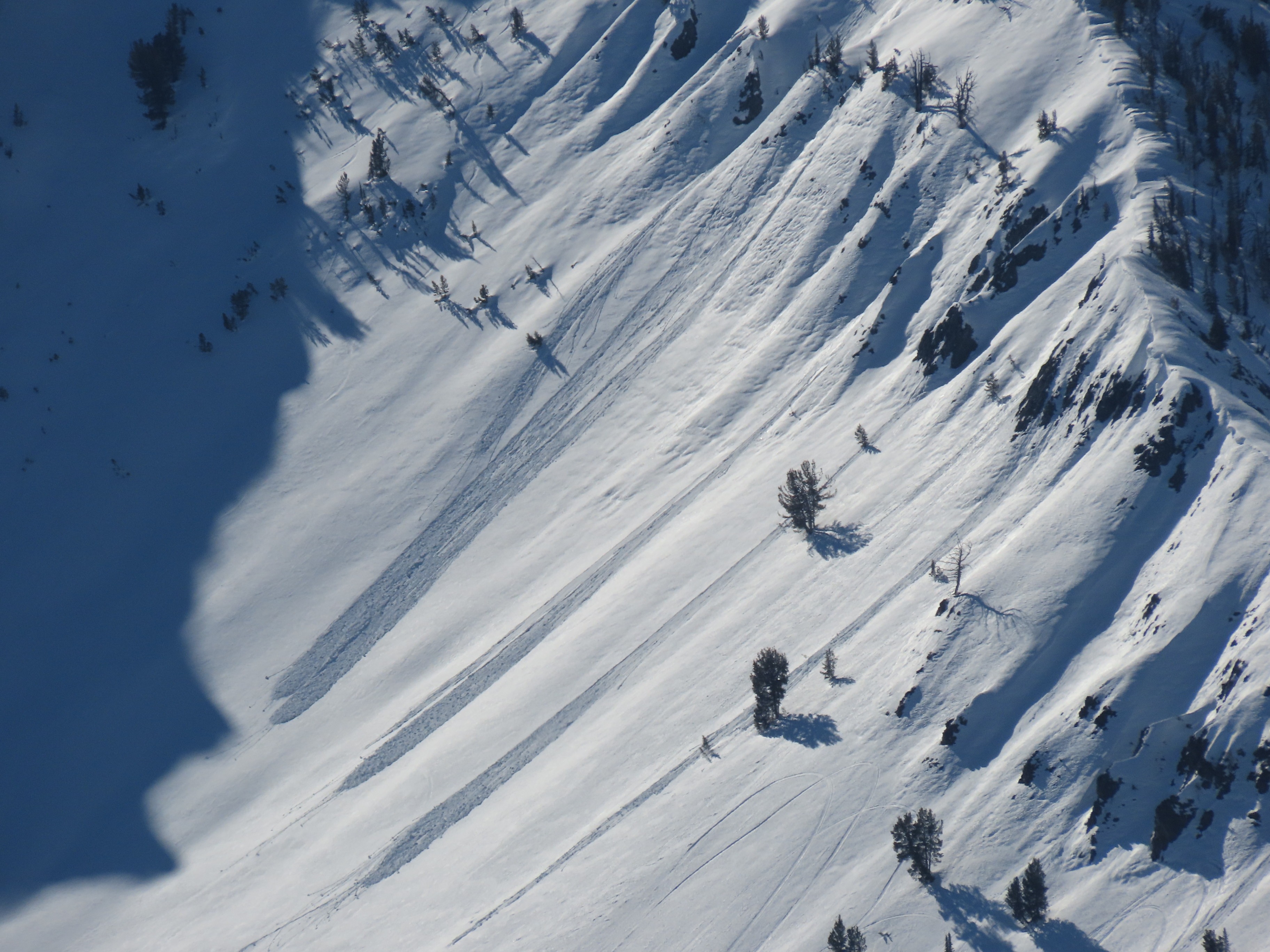
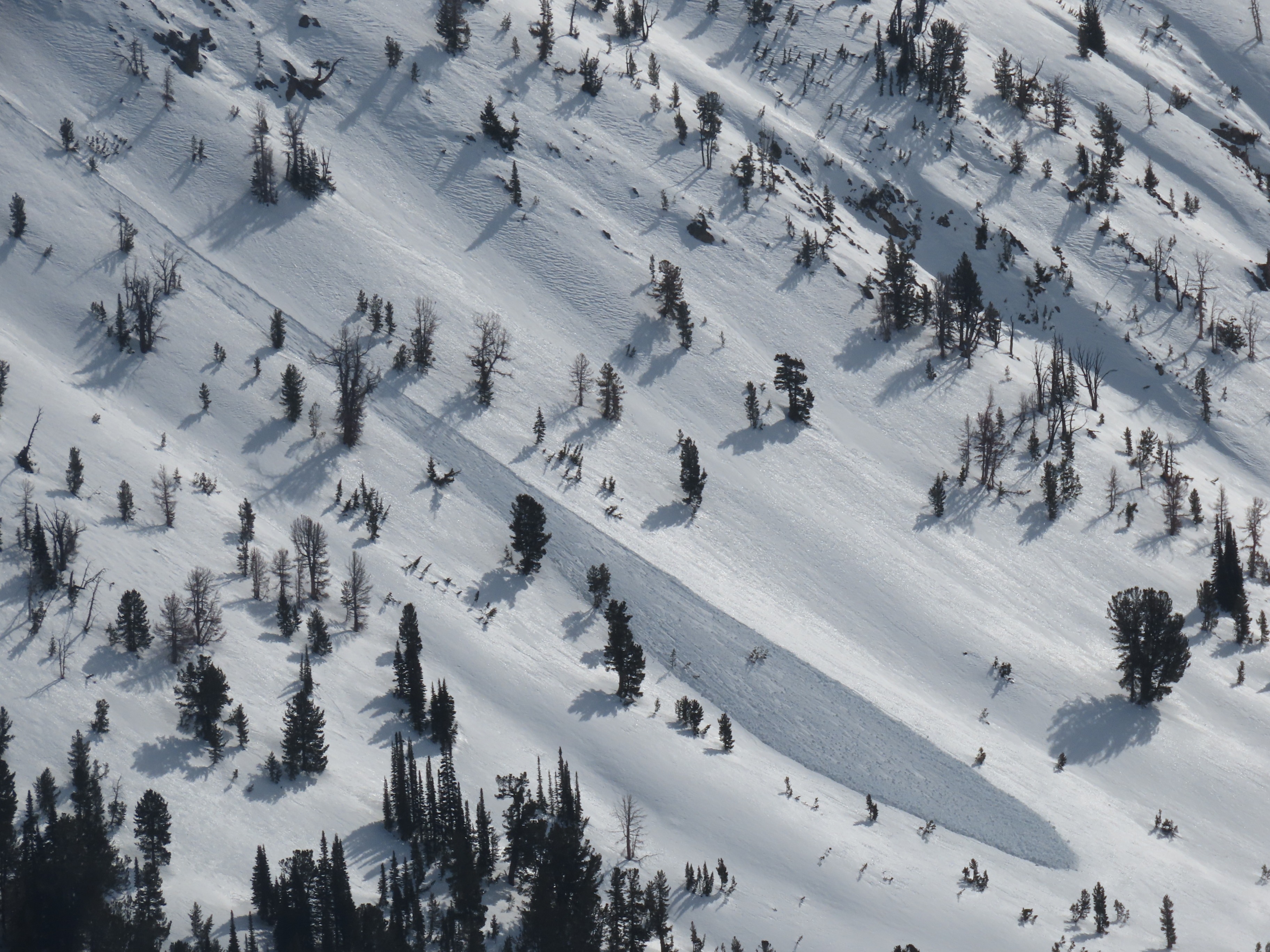
Loose snow problems have been the primary concern over the past 10 days. A reactive dry loose facet sluff problem developed in late January when relatively small but fast-moving slides were easy to trigger on slopes steeper than about 40 degrees. I did not see any slides become large enough to bury a person, but many could have knocked you off your feet and sent you for a ride. This problem was at its worst on shaded slopes that previously avalanched during the major December avalanche cycles. These same slopes will provide a weaker base for upcoming snowfall than slopes that did not avalanche. It's impressive how different the snow feels in these starting zones that slid. Avalanche activity was quite widespread in December, particularly during the Christmas Eve-alanche cycle, so there are many such starting zones with significant snow deficits. Wet loose problems started to turn on around the start of February. Initially, these problems were very small and at their worst on shaded slopes at low elevations where the snow surface became wet for the first time thanks to warm ambient air temps. By February 3rd, very warm temperatures combined with plenty of direct sunshine created wet snow problems on solar margins at middle elevations (E and W aspects), where dry facets (in places capped by thin crusts) were melting and introducing some liquid water into the upper snowpack. These conditions produced many natural wet snow slides focused on these solar margins between 2/3 and 2/5. Observed wet snow avalanches appear to only involve the snow that fell between 1/1 and 1/9, running on top of the 1/1 surface. I have travelled through quite a bit of "extreme" terrain facing all directions over the past 10 days and have not seen any signs of reactive windslabs, neither underfoot nor visually from afar. I'm looking for them, but not finding them. There is plenty of variable, wind-blasted hardboard out there, but none of it seems to want to move. In most places, cornices have been significantly trimmed back by wind and previous shed cycles. There is a lot of snow along ridgelines, but large, overhanging, suspicious cornices are few and far between. In my travels, the maximum cornice activity appeared to have occurred during the Christmas Eve-alanche cycle, with lesser activity during early to mid-January wind and warming events. I have not seen any recent cornice failures over the past two weeks, but with well-above freezing temperatures and multiple nights without a freeze I'd expect these blobs are doing a bit of creeping and sagging (not directly observed). We head towards a return of precipitation with highly variable snow surfaces. Many of these surfaces look like they will do a good job supporting a load, and many look like they will do a terrible job. Spatial variability in snow surfaces is above-average, both across individual starting zones and across larger scales. Despite the dry feel to the valleys, snow coverage remains excellent up higher. This means that weak surfaces may be capable of producing larger/wider/better-connected slides than usual. In general, surfaces look worse at middle elevations than they do at upper elevations. Natural wet snow avalanches and easily triggered facet dry loose avalanches have provided obvious signs of instability. In a few places where crusts sit atop very weak facets, I've observed cracking and collapsing that involved the crust acting as the slab. These cracks/collapses weren't indicative of current instability, but do a good job painting a picture of how the snowpack will behave when loading resumes.
Snowpack
The snowpack continues to change. It looks a lot different out there than it did in mid-January. Faceting has significantly changed the snow and has penetrated deeply into the snowpack. The Christmas Eve, Christmas, and New Year's rain crusts are breaking down and faceting significantly. In some areas below the inversion level, these crusts are no longer boot supportable, and you can step off your sled through facets down to the ground.
Avalanche
- Size
- D1.5
- Count
- 4
- Aspect
- NW
- Trigger
- AS
- Elevation
- 9500 ft
In my observations, the natural wet loose avalanche cycle began on February 3rd, with additional natural slides occurring on February 4th and 5th. I've observed around 15 natural wet loose avalanches, mostly size D1.5. I have not seen any slides getting up to size D2, but a few of these slides had broad debris piles, and stacked snow at least several feet deep on the uphill side of trees. These would have easily had enough force to injure a human and could have buried you if you found yourself in the wrong spot. Skier-triggered dry loose facet sluffs have been an issue since at least January 26th. I input a few of the avalanches I've observed to populate the database, but this is not a comprehensive list.