
Quick report
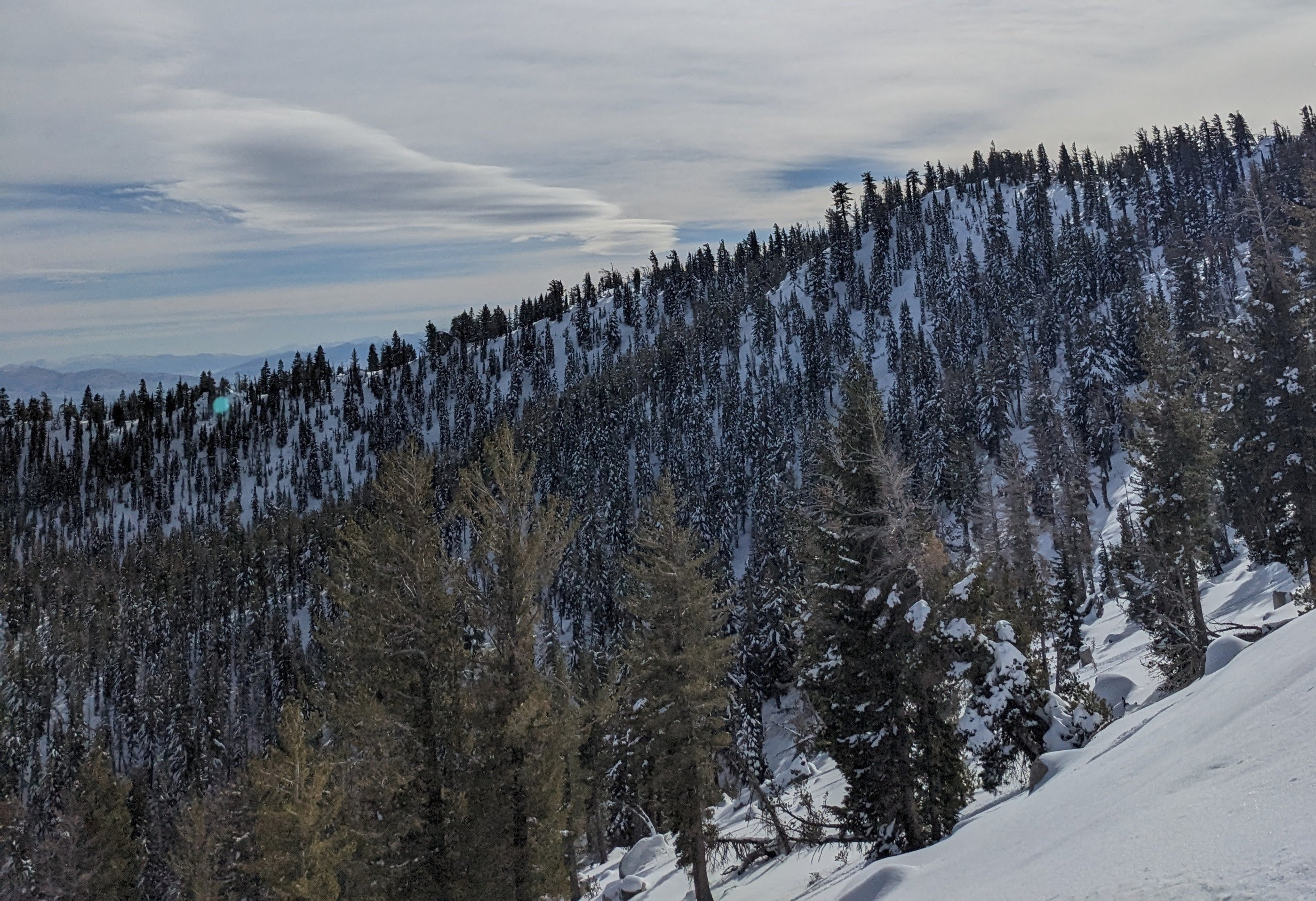
We targeted shady northerly aspects in our tour today so we could investigate the persistent weak layer at various elevations. We also chose a less traveled area to see how the facets behaved in a less disturbed environment. As we skinned up Chickadee Ridge, we could feel the soft, weak snow at the base of the snowpack by probing with our poles. Once we reached the area around Ophir Peak and Price Peak, we dug three different snowpits and got unstable test results in all of them (see snowpack section). We also continued to feel the slab over weak layer stratigraphy with our poles throughout the tour. Even though we did not see any other obvious signs of instability, the consistently unstable test results and problematic layering kept us on low-angle and well-anchored slopes.
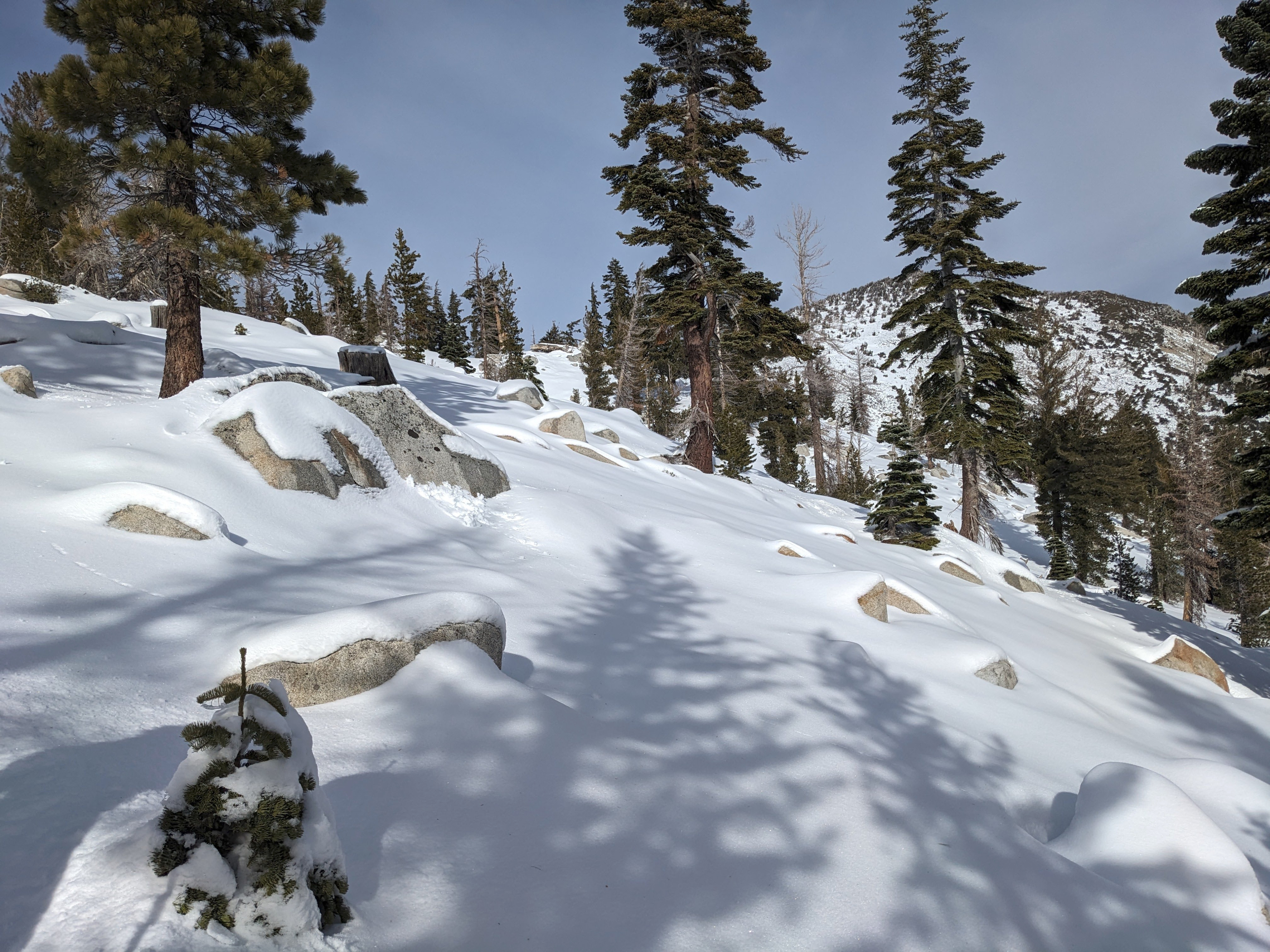
Travel conditions have improved with better coverage and more supportable snow, but numerous rocks and other obstacles still exist. 4-5 inches (10-12 cm) of soft, cold snow existed on top of a ski-supportable snowpack on the N aspects above 8300 ft. This snowpack did not support us when we stepped off our skis, and we would sink through the slab layer into the weak snow below when we tried to move around on foot. Below 8300 ft, a thinner layer of soft snow (2-3 inches | 4-7 cm) existed on top of a firm rain crust that supported us on skis or feet. Many areas of exposed dirt remain on the more sun-exposed SE-S-SW aspects.
Weather
- Air Temp
- 33
- Cloud Cover
- scattered
- Snow Avail For Transport
- small smounts
Cloud cover and winds increased during the day. Despite the increase in wind, we did not see any blowing snow.
Snowpack
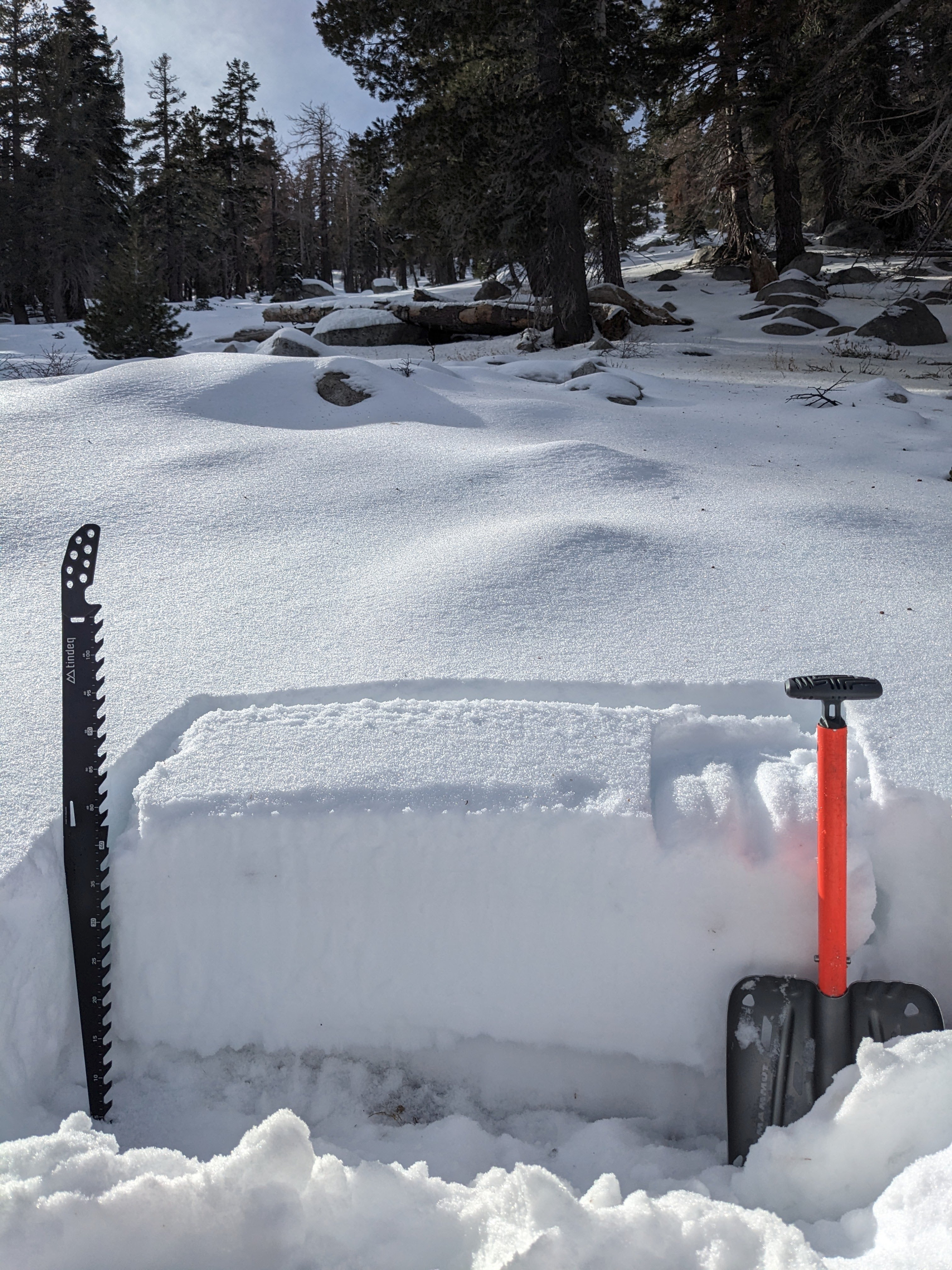
We dug 2 test pits and one full pit at various locations during our tour: one at 8900 ft on a N aspect, one at 9000 ft on a NE aspect, and one at 7900 ft on NE aspect. In each snowpit, we found loose, sugary snow (facets) at the bottom with a more cohesive slab layer above. Snowpit tests targeting this layer produced unstable results, indicating that this layer could break and fractures could propagate along the weak layer at each location. A firm rain crust also existed at the base of the most recent snow below about 8300 ft.