
Quick report
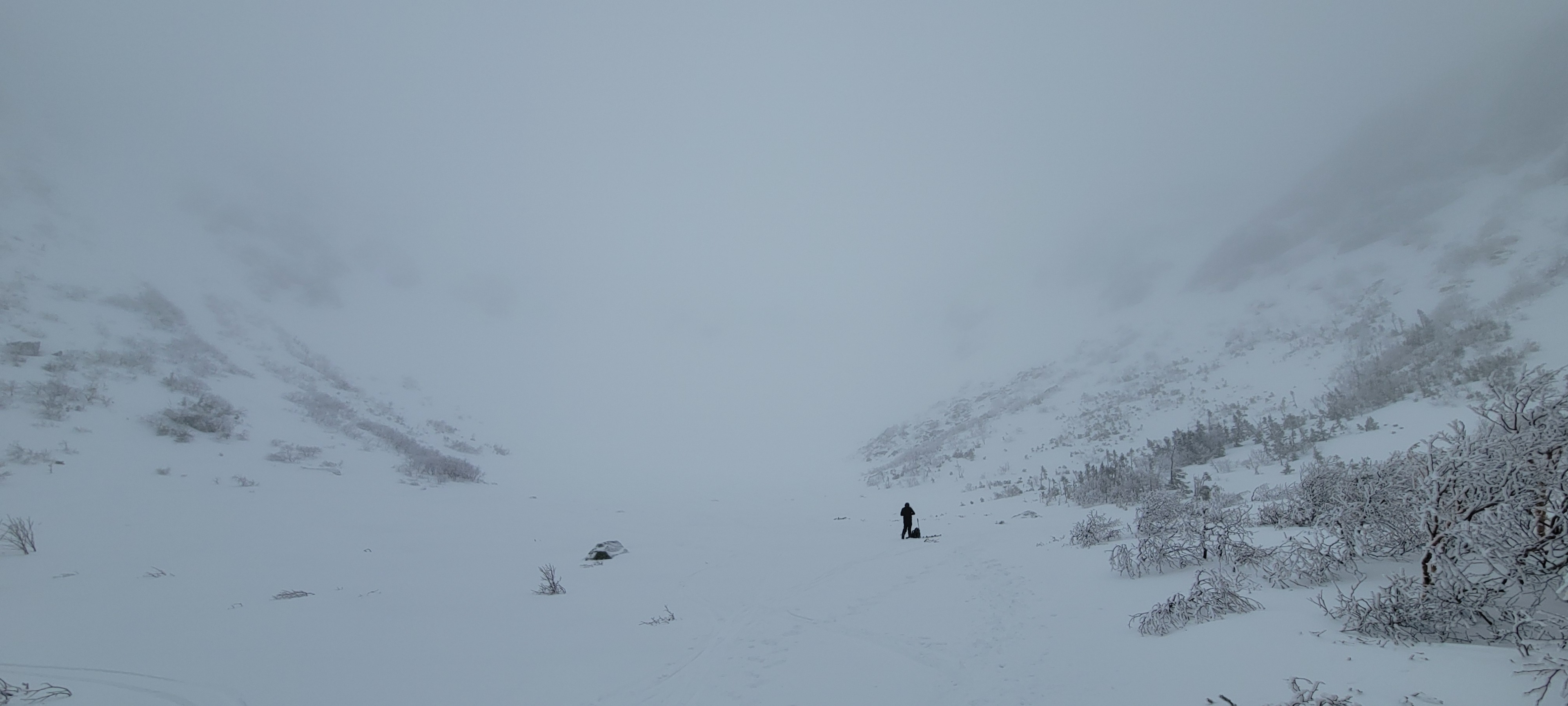
Windslabs of varying depths were widespread across Tuckerman Ravine. In general, the slabs were stubborn in reactivity but poor in structure, harboring multiple weak layers between the snow surface and the hard, refrozen ice crust that was buried up to 75cm below the surface.
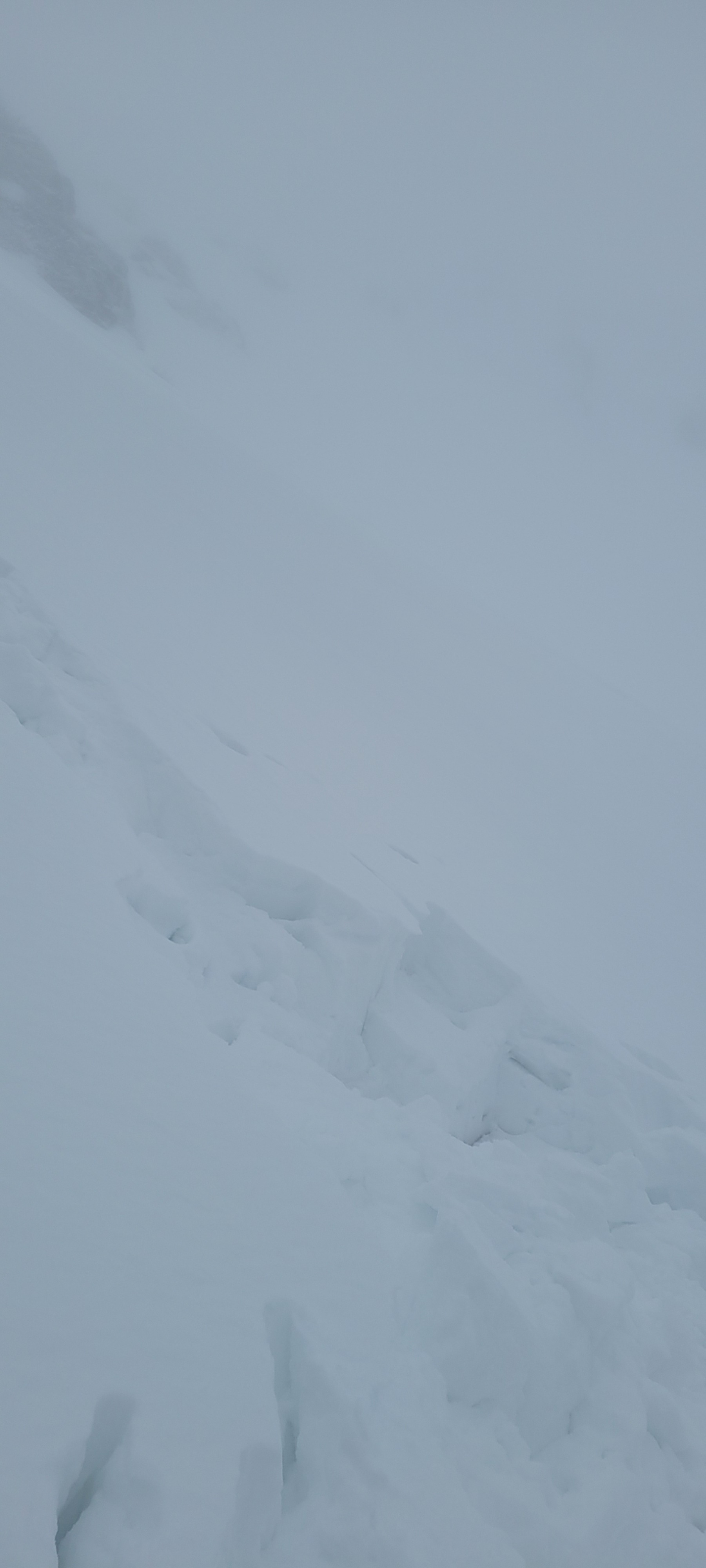
Slabs were most prominent on northeast, east, and southeast facing slopes and underneath protected terrain features where wind drifted snow from Saturday (3/20) was able to collect on top of the hard rain crust. Slabs formed on Saturday were generally small and highly variable in distribution, with a bias towards north-facing and east-facing slopes. Where they do exist, they seem to have the potential to contribute to a deeper avalanche problem that would cause a larger avalanche, likely up to D2 in size. From a distance, it was almost impossible to understand exactly where these old slabs were buried since they are now hidden by 20 - 30 cm of new and wind drifted snow. While climbing, probing the snowpack with a probe was helpful in understanding the overall depth down to the buried rain crust and gave a sense of areas that could have a much higher consequence of triggering an avalanche.
Weather
- Air Temp
- 25
- Cloud Cover
- obscured
- Wind Loading
- none
- Recent Snowfall
- 15
- Snow Avail For Transport
- moderate amounts
Winds were light in speed and variable in direction. Temperatures were in the mid 20s F. Skies were obscured from fog and low clouds.
Snowpack
While traveling to our pit location we encountered a scoured, stout, ice surface from last week's rain and refreeze as well as drifts up to a meter deep.
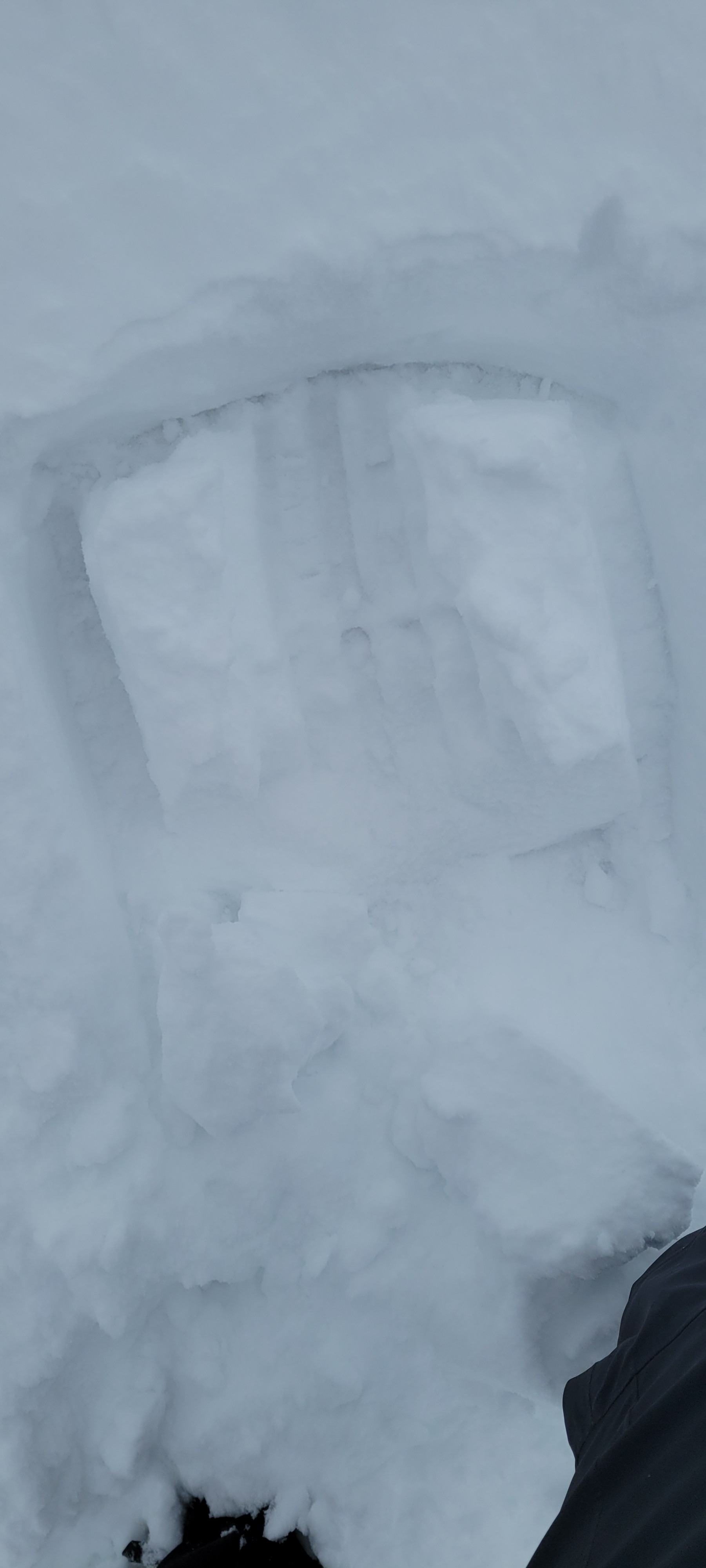
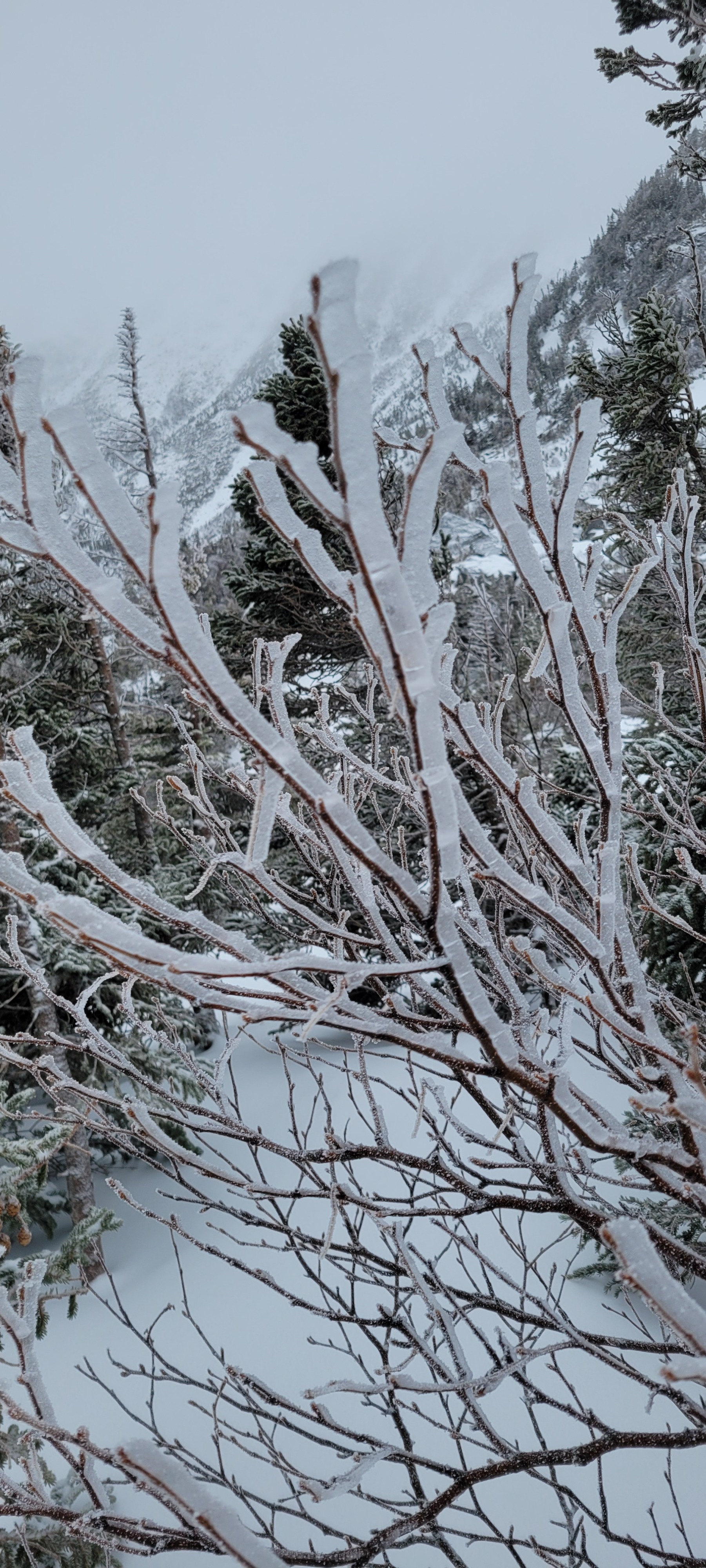
We dug a pit between Left Gully and Chute to assess the sensitivity of newly formed windslabs from the 4-7 inches of recent snow. Our pit depth was about 55cm down to the ice crust. Across all surfaces we traveled today above 4000ft had a thin rime ice layer. It was evident that riming had occurred over the past couple of days as well since we found a few rime layers within the new windslab.
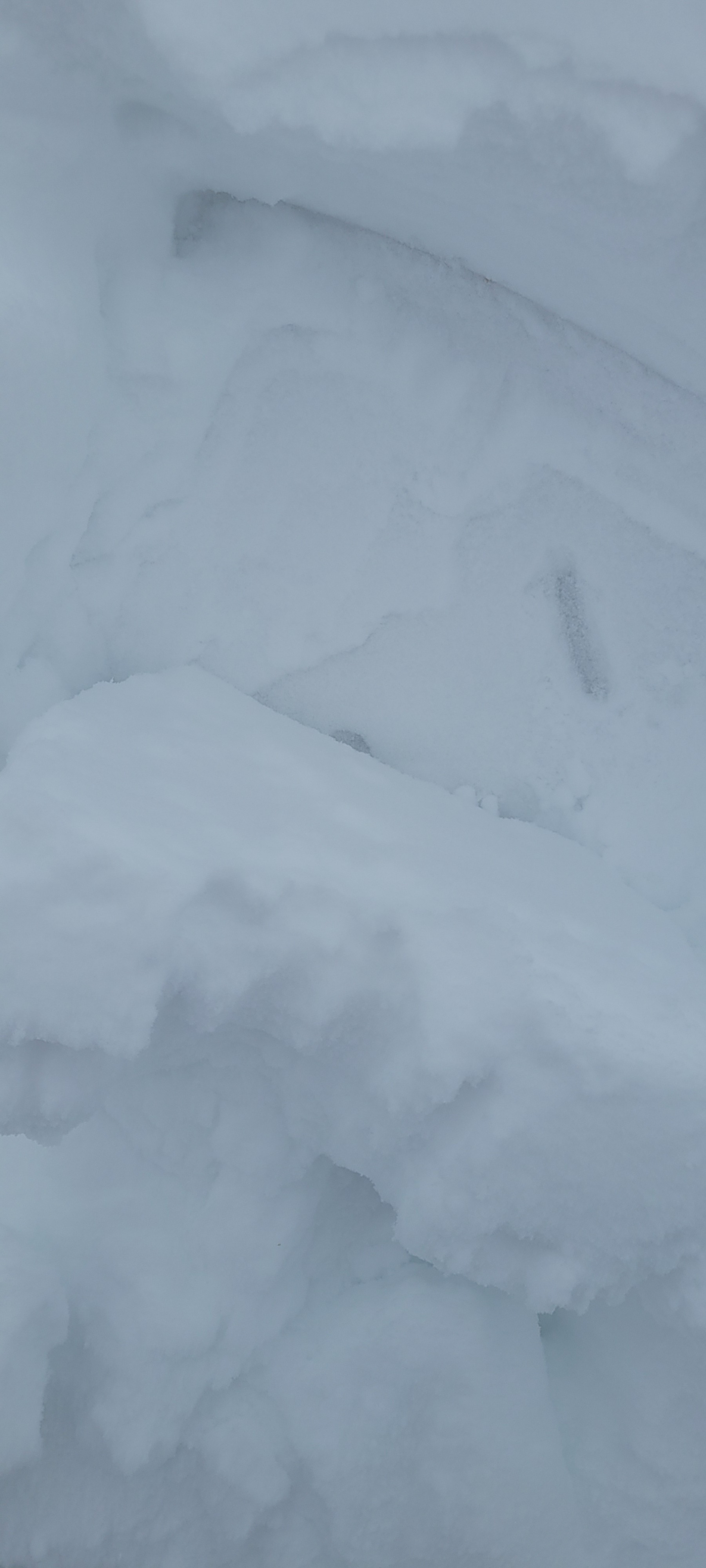
In our pit, a soft layer of fist hard graupel and rime sits protected below a thicker 4 Finger layer of decomposing particles mixed with graupel. It’s likely to find this graupel layer in multiple locations at middle and upper elevations throughout the snowpack at differing depths. An ECT test resulted in a non propagating failure at the bottom of this layer at 11 taps (ECTN11). Having slightly denser snow sit on top of this graupel mixed layer, along with a thin rime crust at the surface, could be the ingredients needed to create a problem when/if additional snow continues to load. The thin rime layer may act as a bridge, protecting the weaker layers below as well.
The spatial variability of slab depth and cohesion with the ice crust and snow from Friday the 20th, is significant. Hand shears in multiple locations on the way to our pit ranged in results. Some producing a cohesive block with a planar shear (upside down), while others showed cohesionless snow that was well bonded to the firm surface below (right side up).