
Quick report
- Cracking
- specific
A quick, healthy shot of snowfall add news problems to the menu. These are likely to evolve from dry to wet snow problems as typical following spring storms. Be mindful of how soft or firm these fresh slabs are as stiffer slab areas are more likely to fail from a rider or machine.
Cracking between ski tracks, more sensitive in wind affected locations. Recent and current wind drifting and cornice formation.Weather
- Cloud Cover
- broken
- Wind Loading
- moderate
- Rain Elevation
- 3,000 feet
- Recent Snowfall
- 60 to 70, drifts up to 90
- Snow Avail For Transport
- large amounts
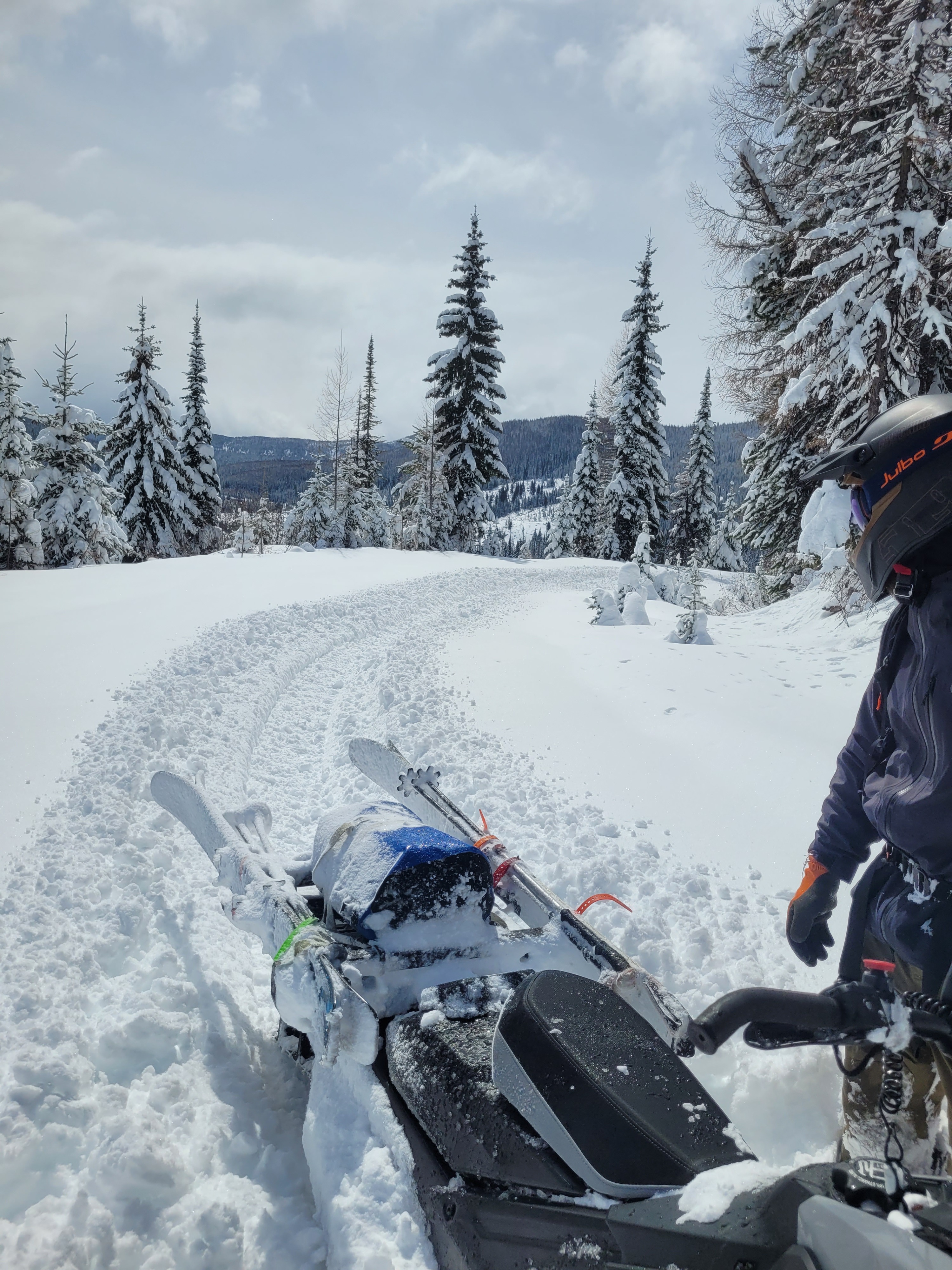
Intermittent sun and cloud cover. Moderate ridgetop winds.
Snowpack
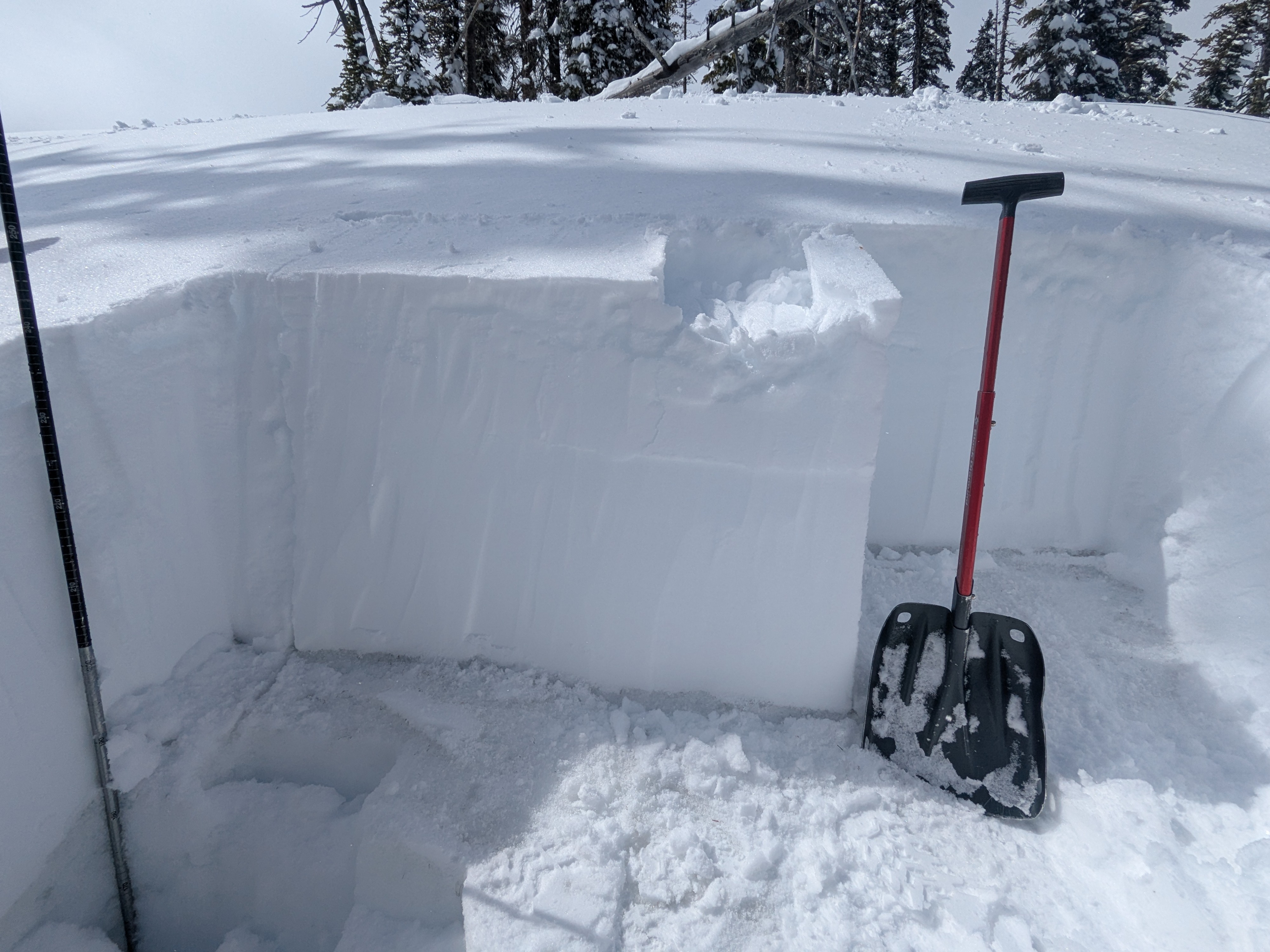
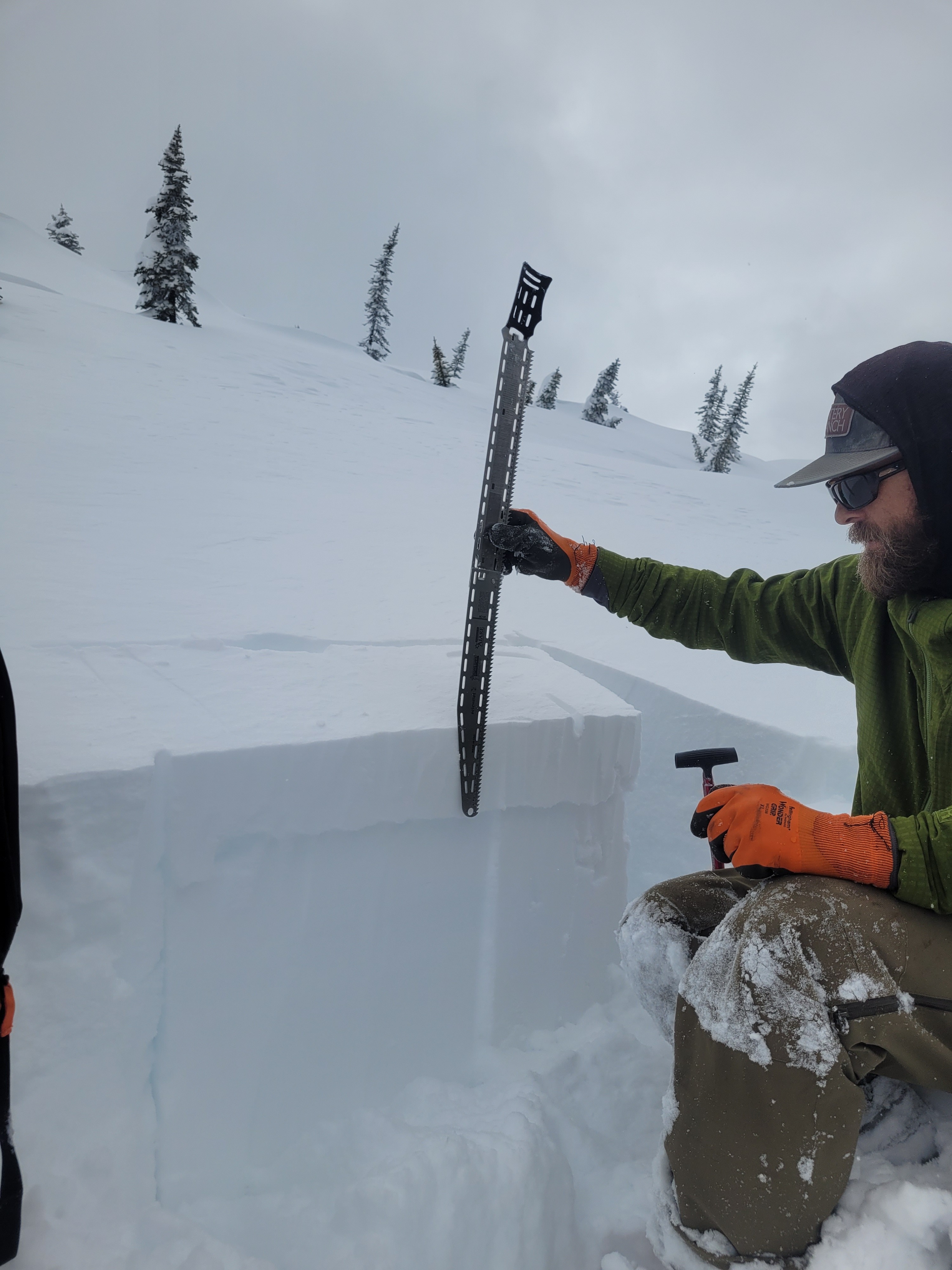
We observed about 60cm (2 ft) of new storm snow that fell from Tuesday, April 14 to Wednesday, April 15. Wind-drifted and cross-loaded areas near ridgetops held deeper new snow amounts and slabs - isolated drifts closer to 3 feet deep. In general, snow surfaces had either a thin wind skin, or a zipper sun crust from intermittent sunshine. The top 10 to 15 cm of the slab was slightly inverted and made for more reactive slabs in tests. These drifted areas are where we observed surface cracking and the most notable test results, but with mixed results - easy propagation and non-propagating results. These results repeatedly occurred at a mid-storm interface with an obvious hardness differences about 25cm deep. Below the recent snowfall sits a knife hard rain crust that formed during pre-snowfall rain followed by a sharp drop in temps before snowfall began. This harder layer was around 6 inches thick with weaker melt forms below.
Avalanche
- Size
- D2
- Type
- SS
- Count
- 2
- Aspect
- E
- Trigger
- N
- Elevation
- 6200 ft
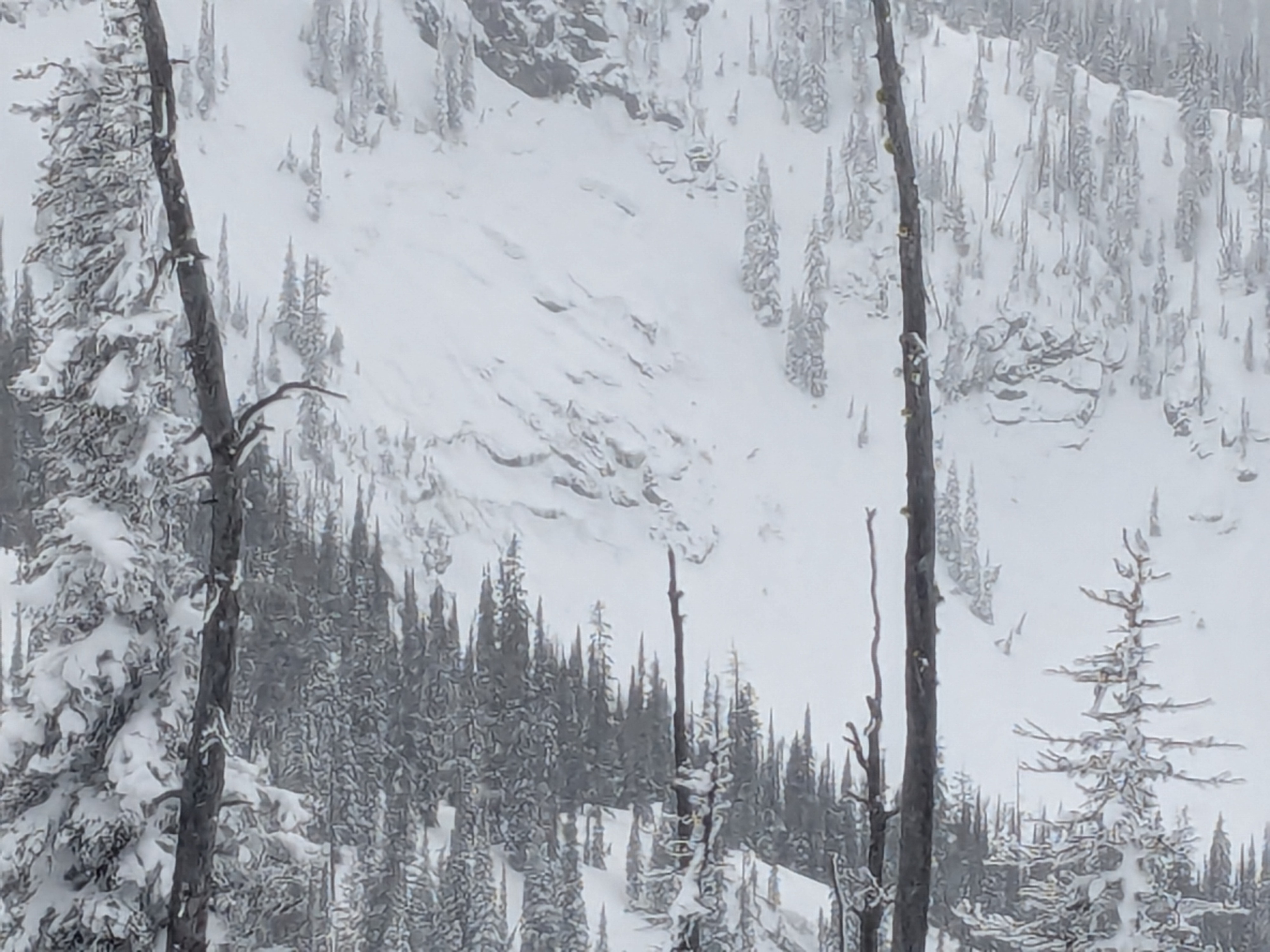
Multiple small natural mid-storm avalanches, one large recent natural avalanche on a steep convex rocky area.