
Quick report
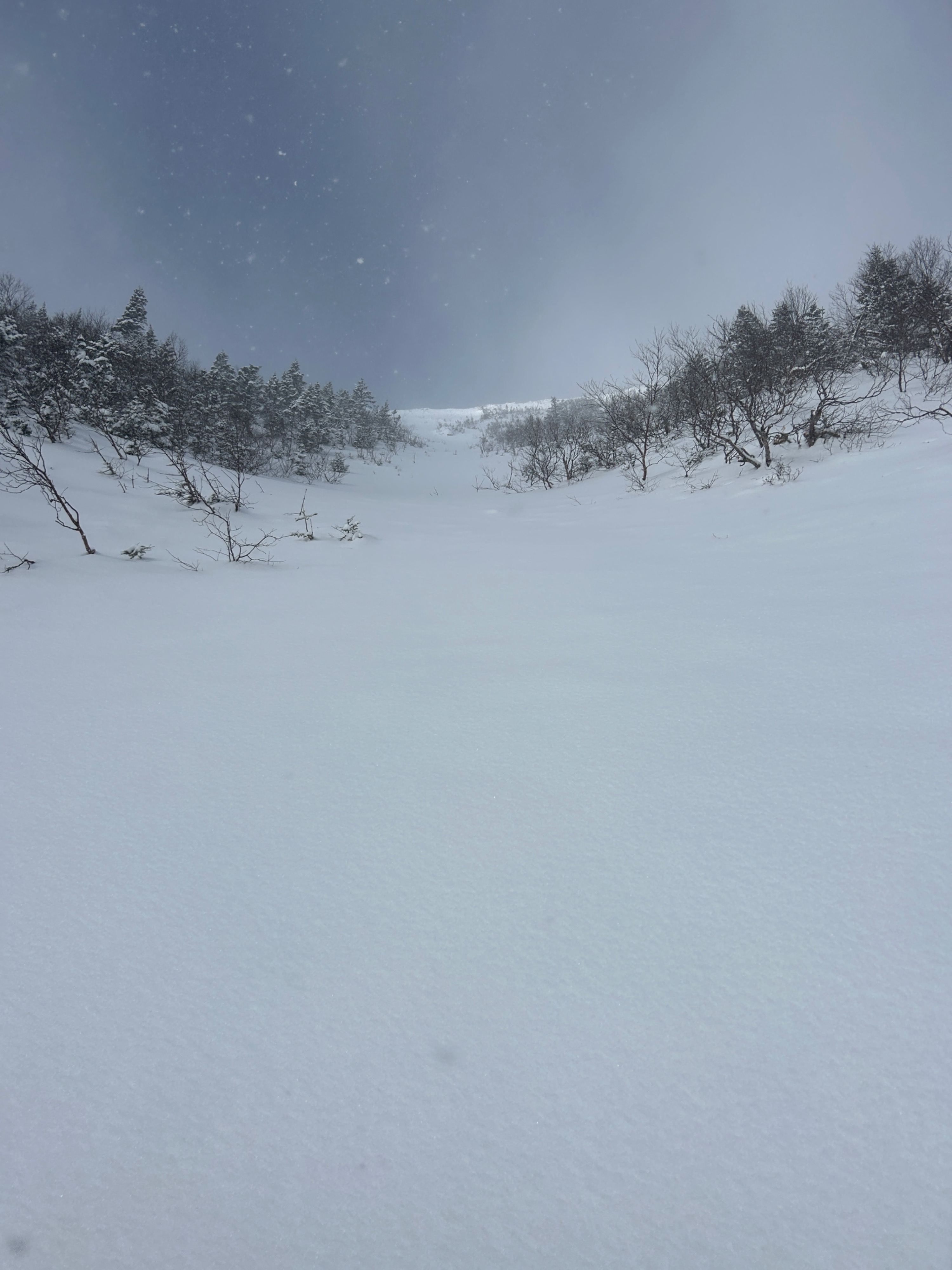
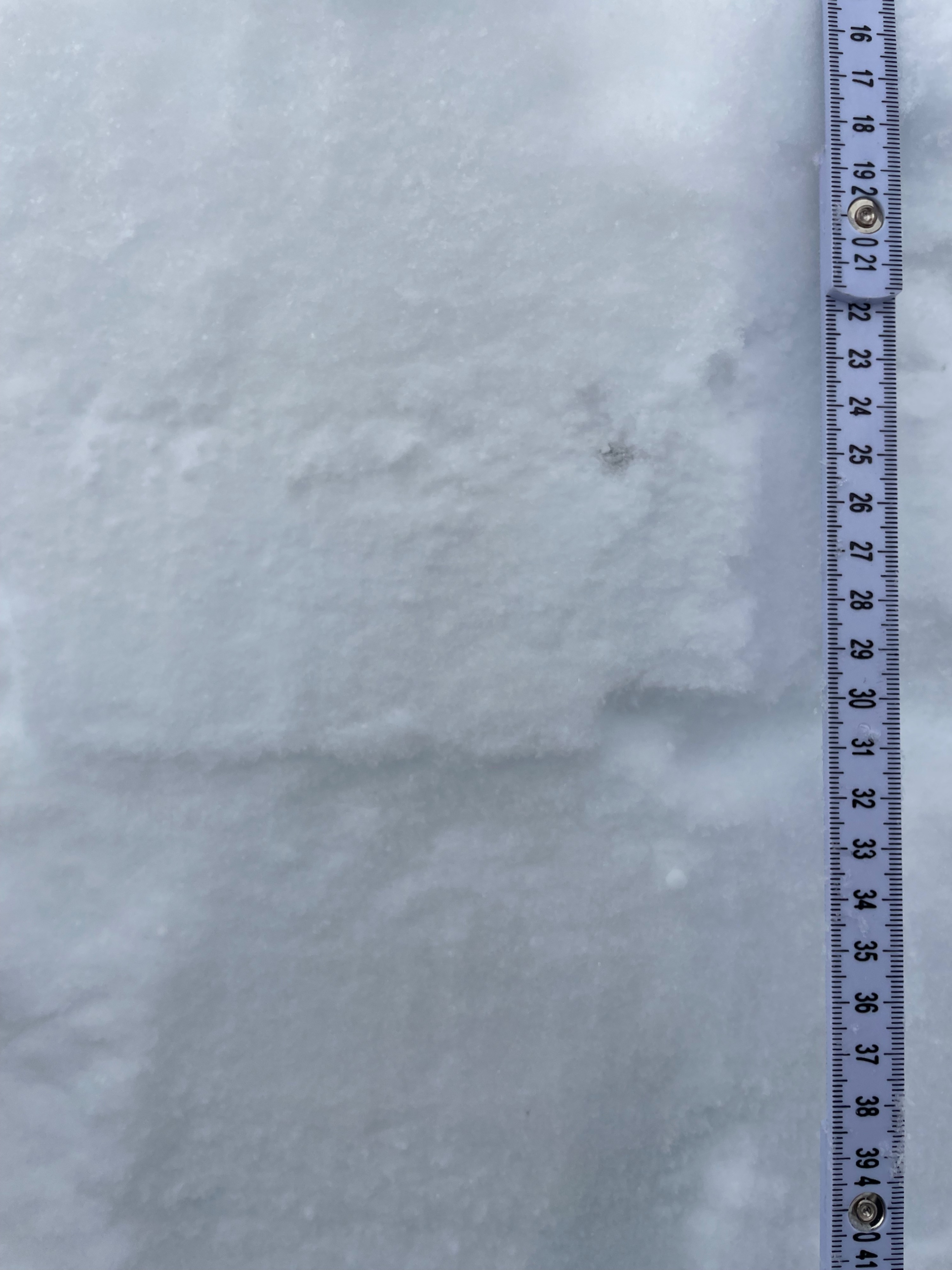
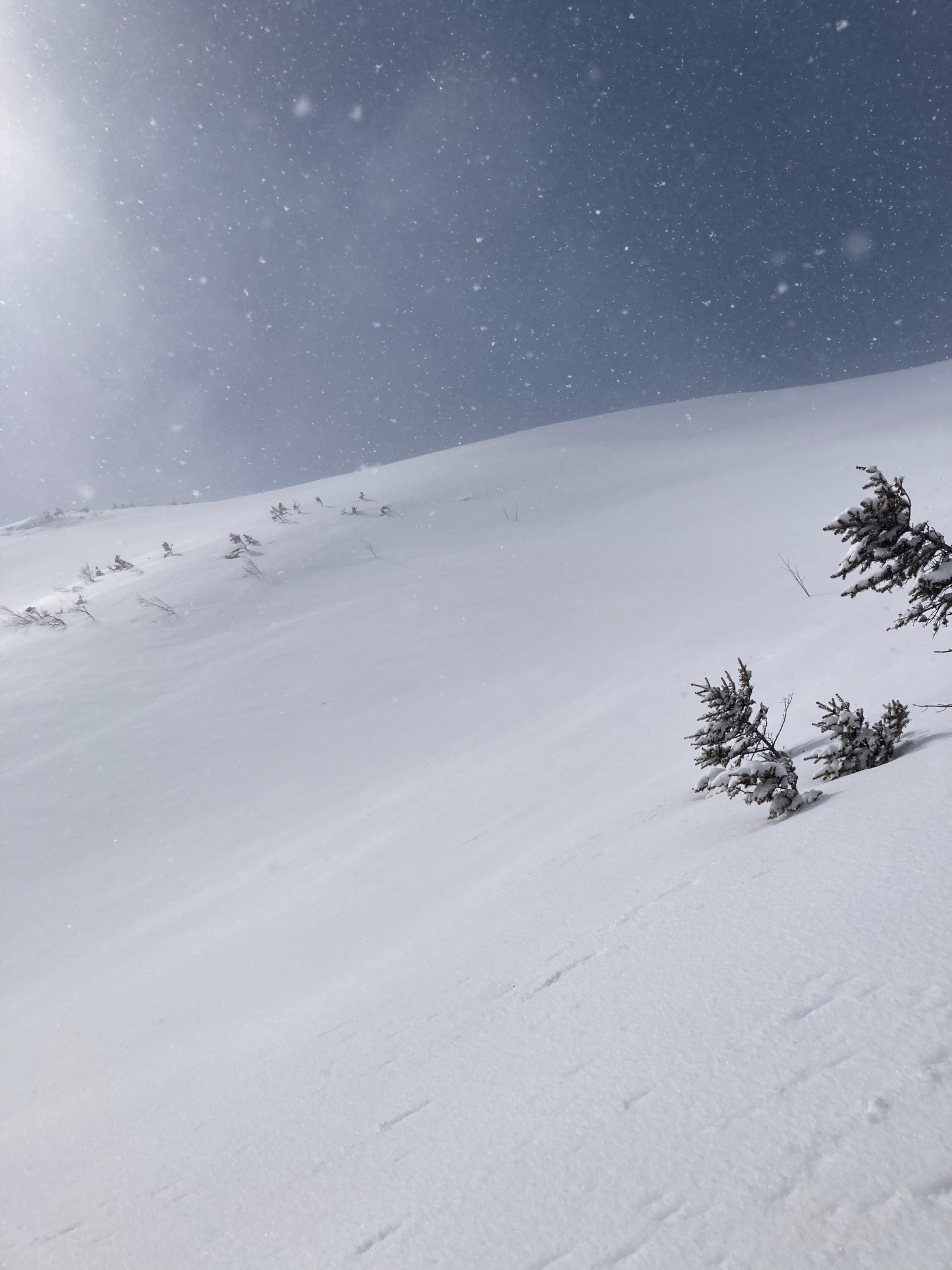
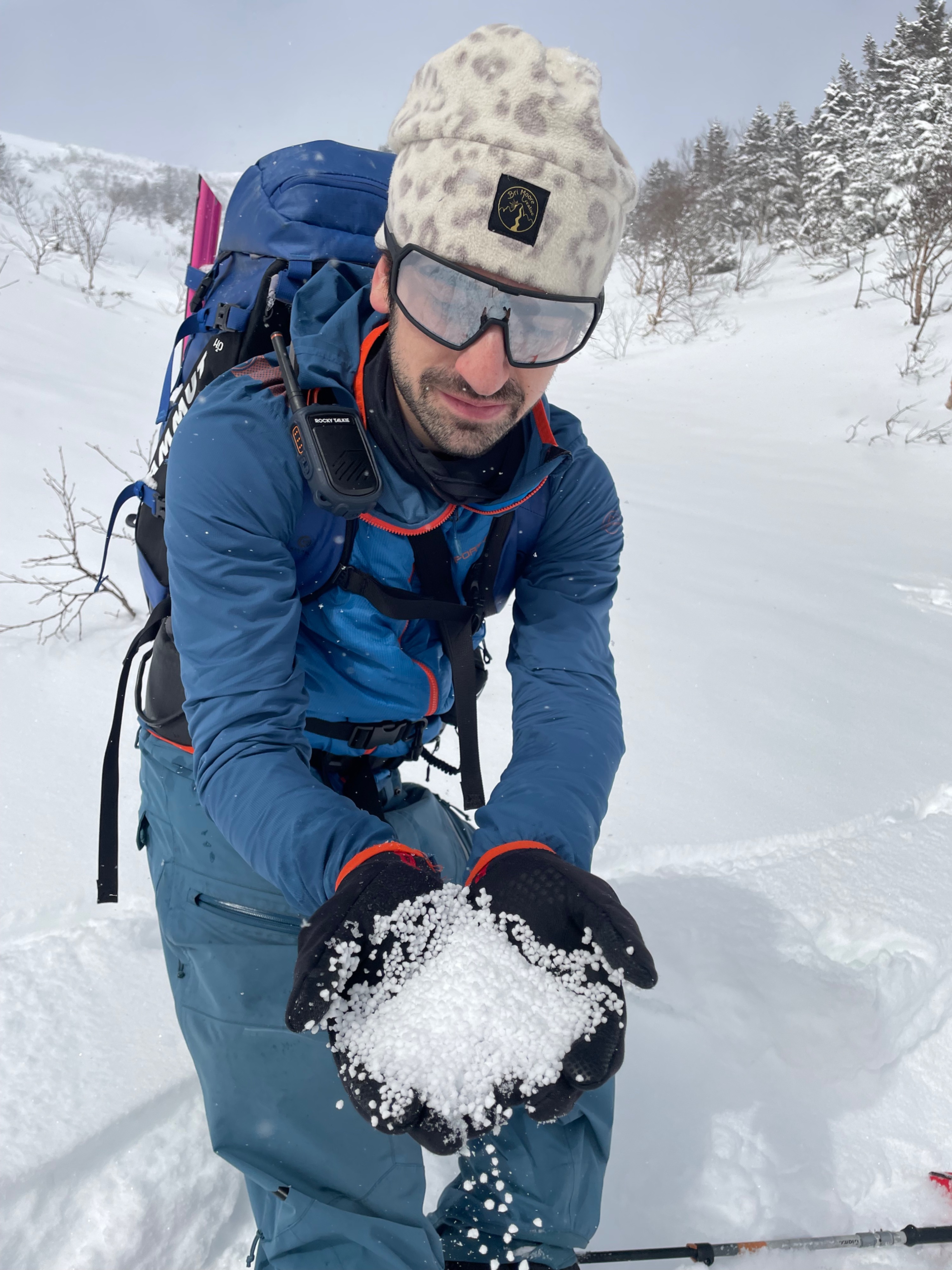
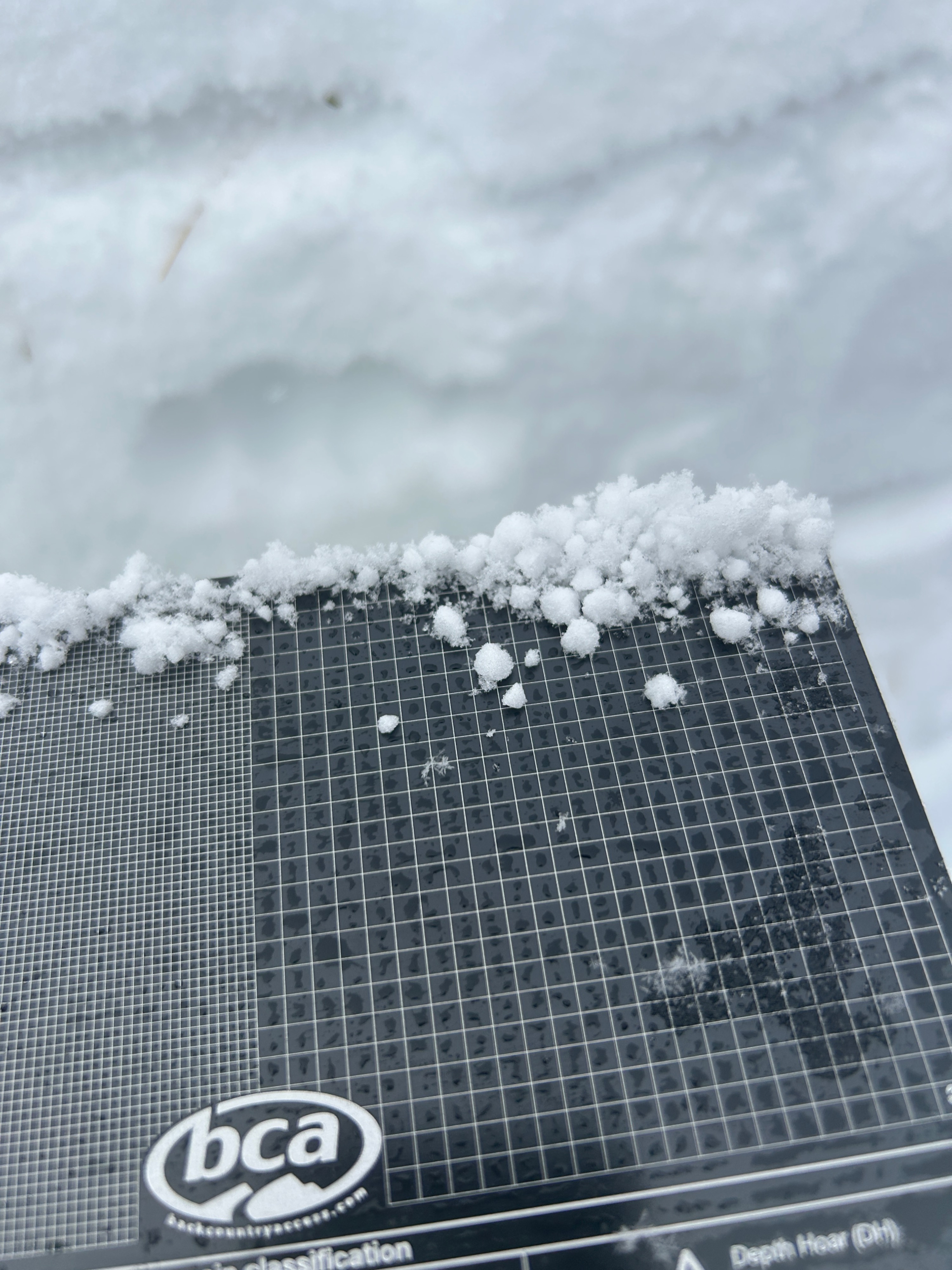
We toured into GoS via the ski trail and began skinning up Gully #3. Quickly, we observed that a natural avalanche occurred during the cycle late last week and ran from high up in the gully all the way around the corner into the drainage. The debris was over 200cm deep in places. No visible crown was observed. As we continued climbing, we quickly identified a 2-3cm thick layer of graupel that was spread throughout the gully. The graupel layer sat above a 4F/FH layer of snow and below the 19cm of fresh snow from last night's storm. We dug a pit at 4396' on a 145 SE aspect and observed a FH layer from 1-19cm, graupel from 19-21cm, a 4F layer from 21-31cm, and a 1F layer from 31 cm to the bed surface at approximately 45 cm. We then got an ECT 7 result that propagated 31 cm down where the 4F layer sat on top of the 1F layer. We dug a second pit at 4413' at 115 SE and observed a FH layer from 1-19cm, a graupel layer from 19-22cm, a FH layer from 22-26cm, and a FH/1F layer from 26-43cm. We then got an ECT 17 result that propagated on the graupel layer. We were also able to identify a hard slab that broke again on the interface between the FH and 1F layers. After identifying the graupel layer and two subsequent ECT results, we turned around and skied the Sandbox and Main Gully. We triggered small point-releases of consolidated slough, but observed no slabs. The wind picked up throughout the day and was moving snow constantly. A great day of skiing and an even better day to be wearing a fishnet shirt.
Avalanche
- Size
- D2
- Aspect
- SE
- Trigger
- N
- Elevation
- 4200 ft
We observed a natural avalanche likely from the same cycle sometime last Thursday/Friday that saw natural avalanches in the bowl. The slide likely started below the fork of the two main lines of Gully 3 and ran all the way around the corner on the bed surface. The problem layer appeared to be deep but no crown lines were observed.