
Quick report
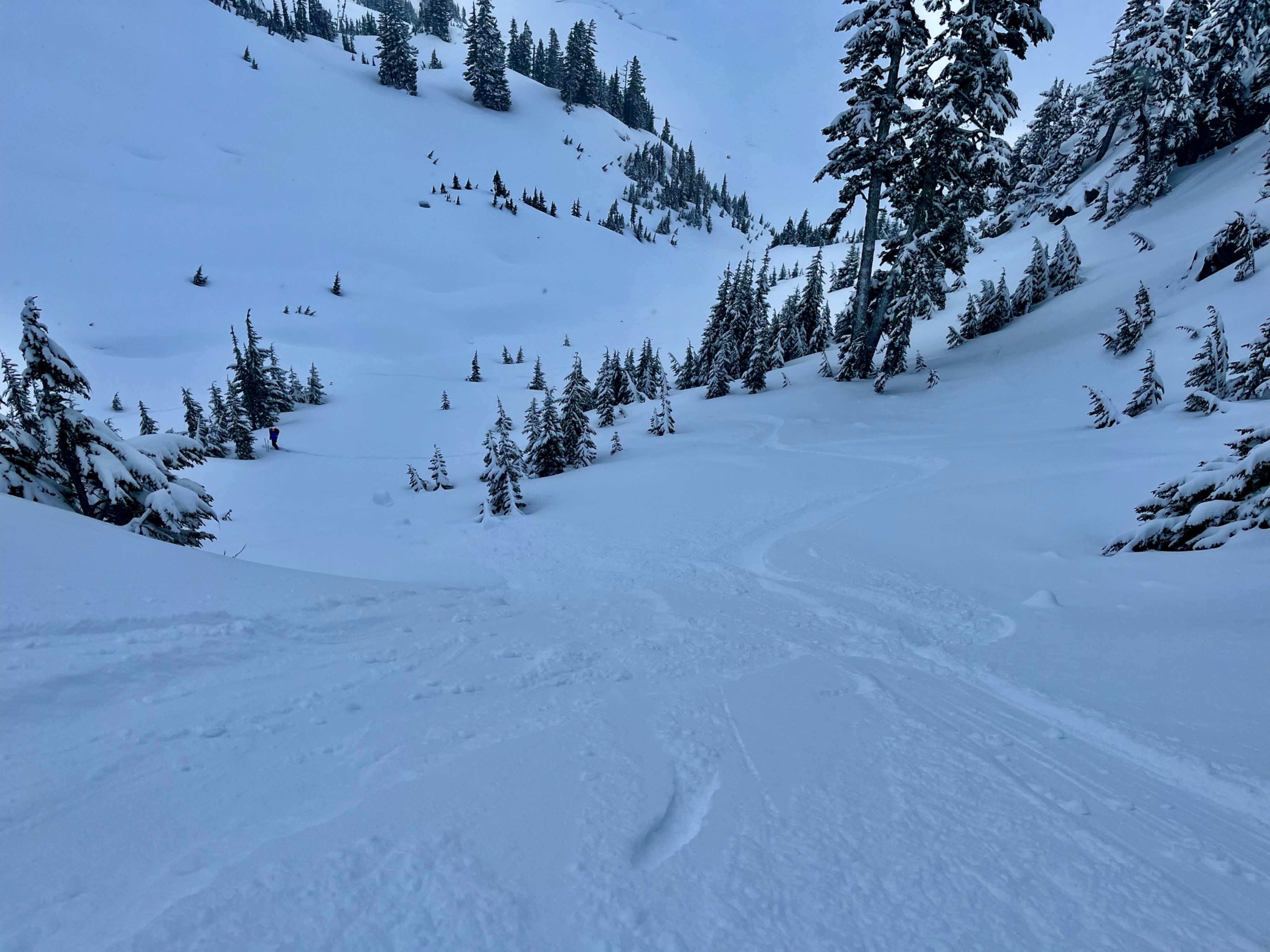
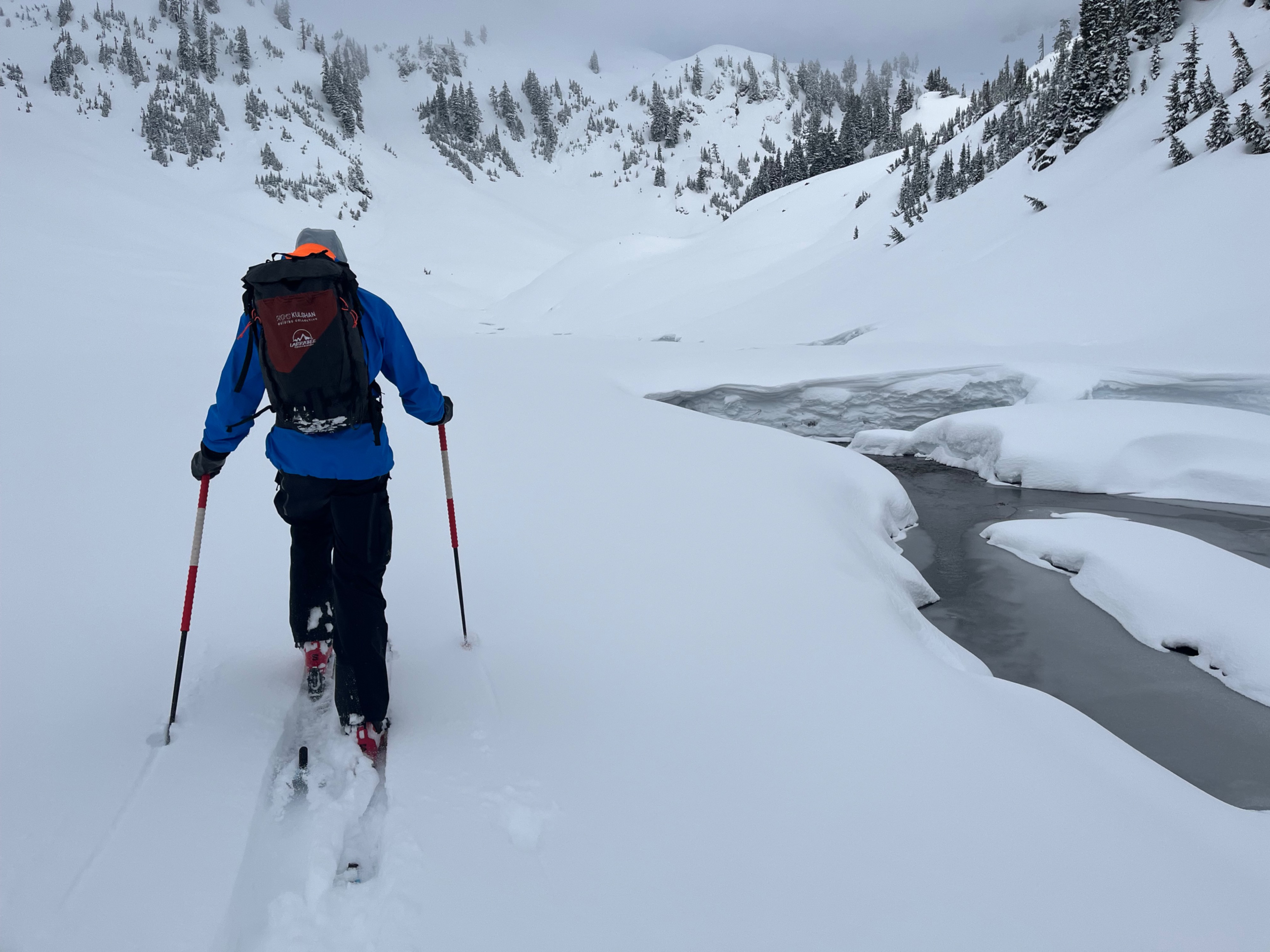
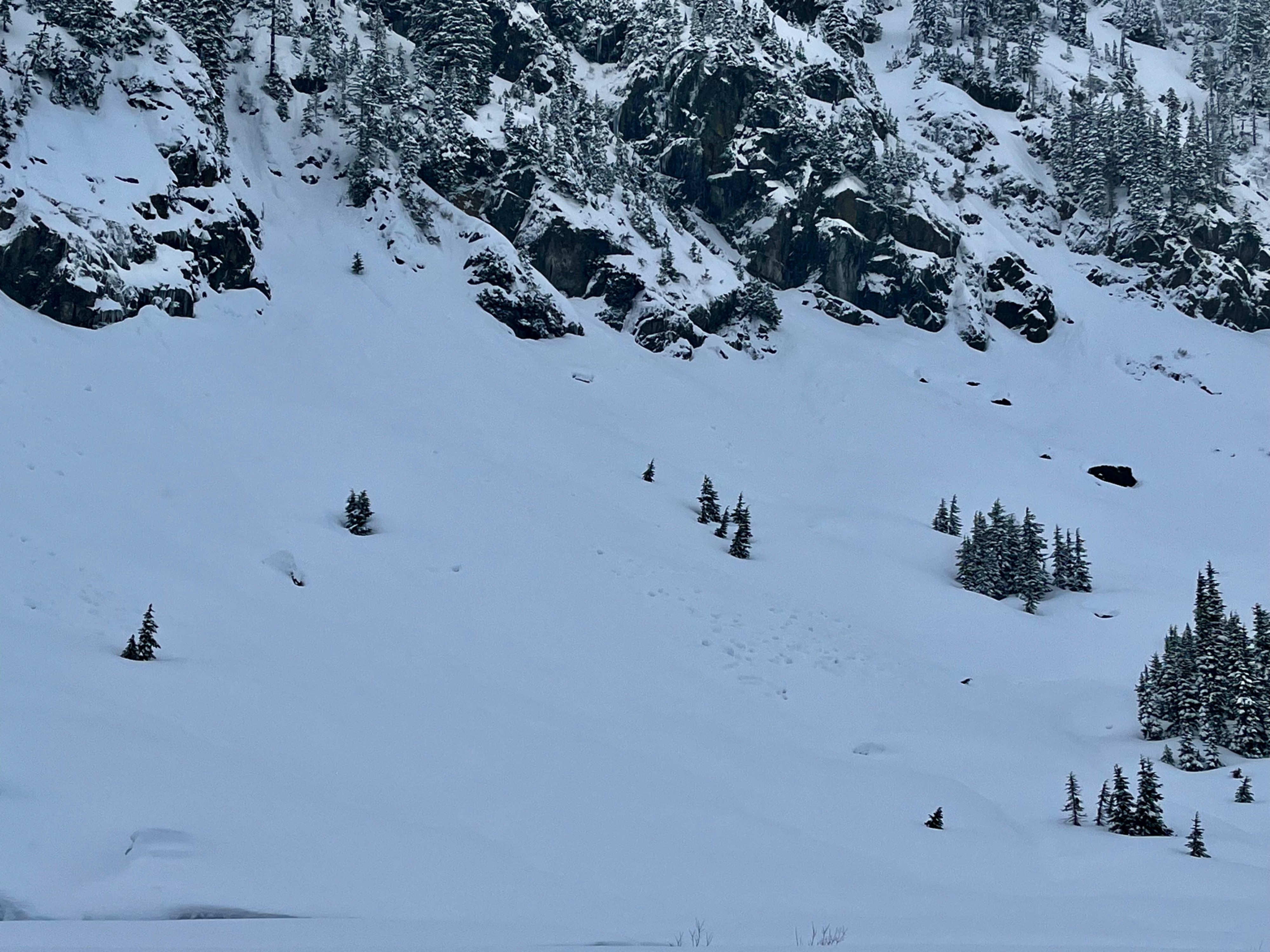
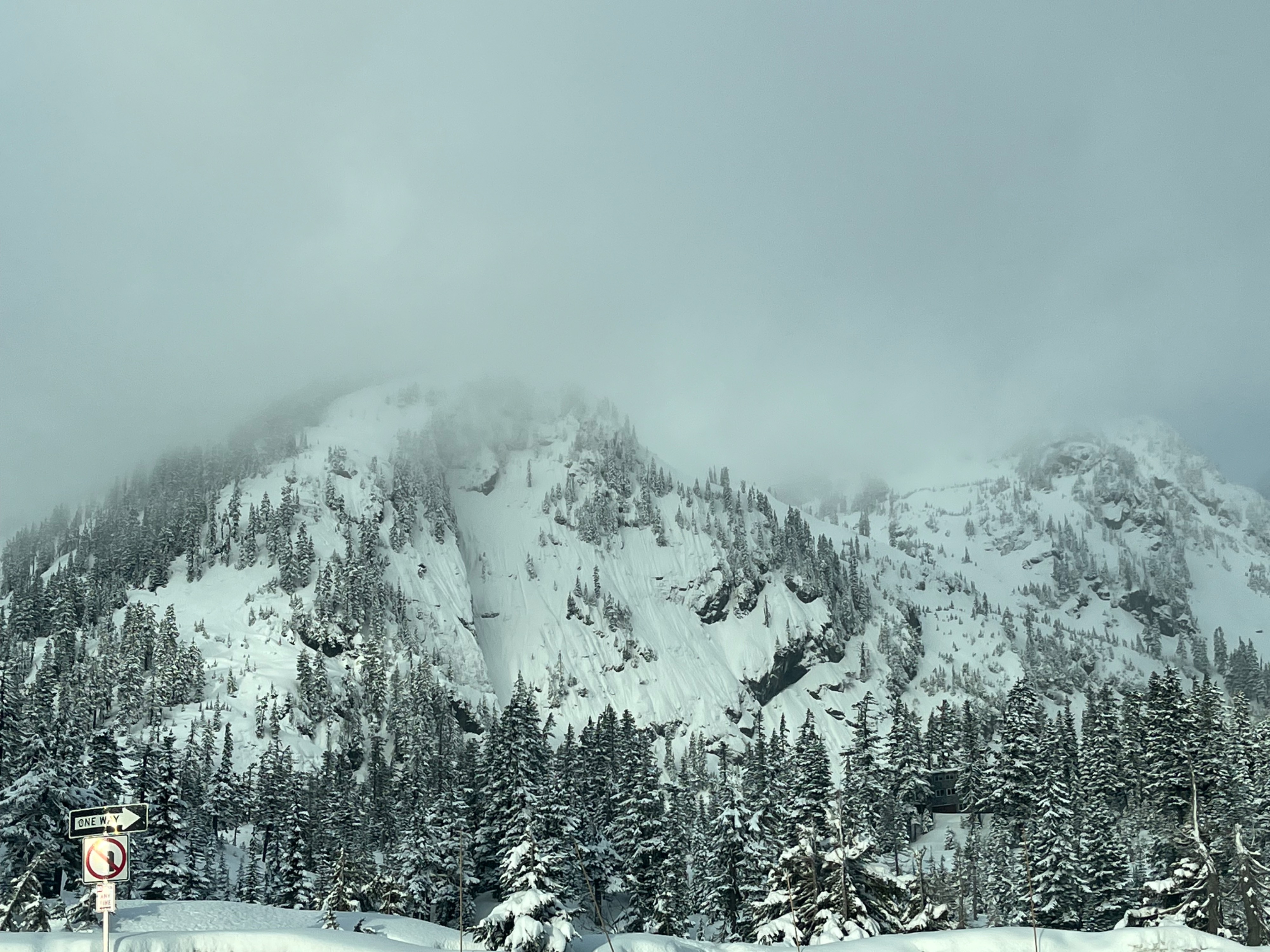
It was a chilly one for the PNW today, with temperatures remaining in the teens. You could describe the 8-12" of snow over the 3/8 crust as a hearty "dust on crust", with very low density snow thanks to the cold temperatures. On steep slopes, loose dry avalanches were running - naturally in very steep terrain, and with a human trigger in steep areas. Very light winds were observed lower in the Bagley Basin, but as we began making our way up out of the basin, wind speeds increased and active and past wind transport was evident. Despite this, we didn't experience any cracking or slab development where we were in the morning, although after I left just before noon, an increase in wind was reported, and reactive slabs developed.
Weather
- Air Temp
- 17
- Cloud Cover
- obscured
- Wind Loading
- light
- Rain Elevation
- 1000
- Recent Snowfall
- 20
- Snow Avail For Transport
- large amounts
Skies were a mix of infrequent sucker holes with sunny patches, to high clouds, but visibility was predominantly minimal above about 5200ft.
Snowpack
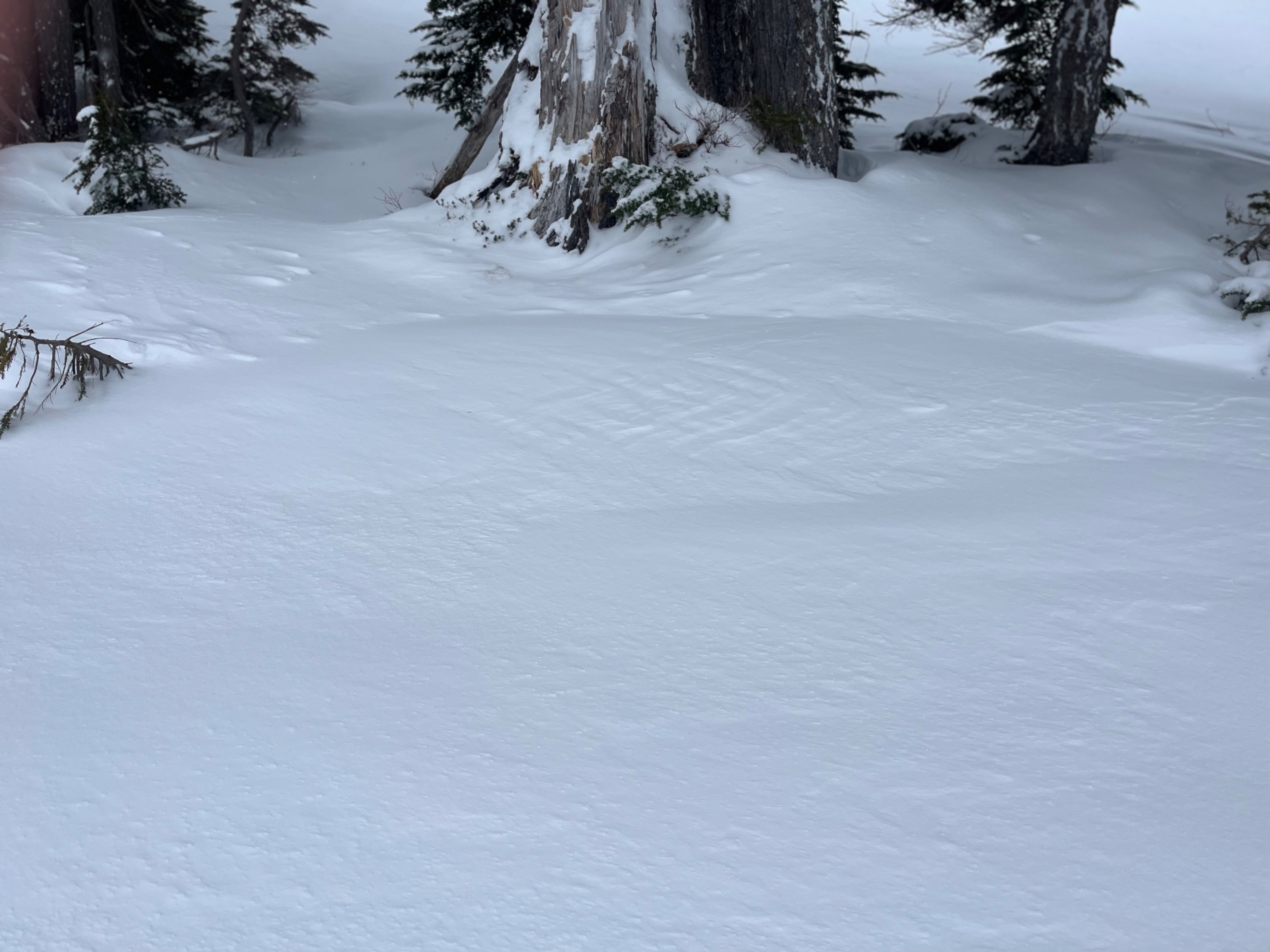
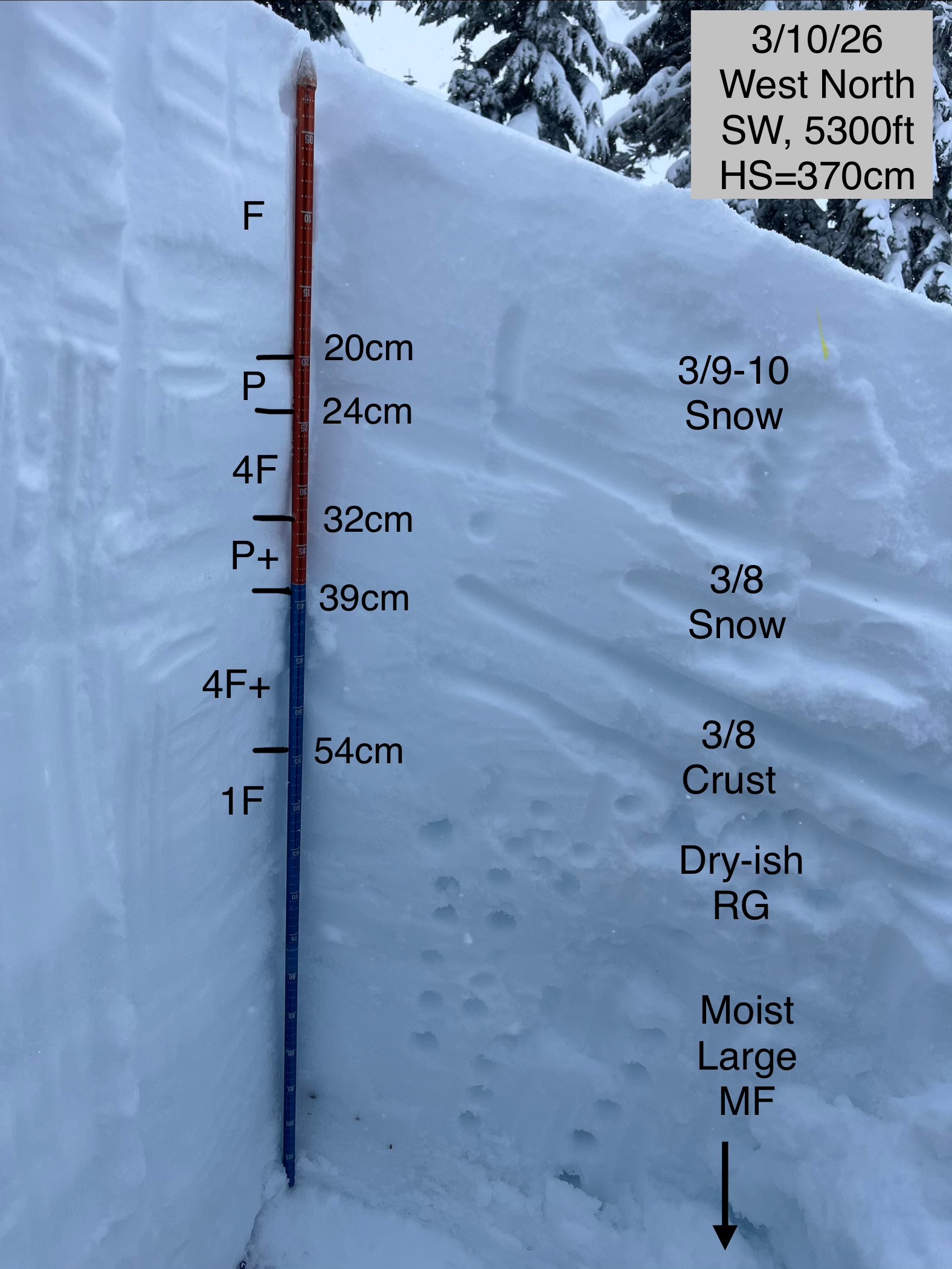
Low density snow from 3/9-10 coated surfaces everywhere. Only as we made our way to mid elevations did it begin to show a little wind-affect, but overall, the wind's impact on the snow was rather minimal in the morning, with no heavy or hollow drifts felt beneath us, or cracking noted. On steep terrain we were able to initiate small loose dry avalanches or sluffs that weren't highly remarkable. After I left at around noon, wind increased and reactive wind slabs developed.
Above about 5000ft, there was a highly wind-affected layer from early on 3/8 sitting over the 3/8 crust. This ~10cm layer was harder than the newer snow above it, and had a few cm soft wind crust at the top of it. Beneath 5000ft, the clicking of the pole tips on the underlying 3/8 crust beneath the low density snow was obvious with every pole plant.
The wind-affected snow above the 3/8 crust was bonded reasonable well to the crust, and below 5000ft the low density layer didn't slide easily on the crust- but there wasn't a slab to test it. That being said, the crust was bumpy and irregular in most areas, not particularly indicating it would be the best sliding surface for overlying slabs.
The 3/8 crust had grown a little in thickness since the previous day. The crust was harder and thicker on the north-facing side of Herman Saddle, and a little softer and thinner on the south-facing side. The layer of dry rounded grains beneath the 3/8 crust on both aspects had been wet the previous day, but they had since dried out. Beneath that layer, the moist large-grainined melt forms were softer on the south-facing aspect, variable 1F, vs a variable P on the north-facing side, where they were starting to freeze up and get crusty.