
Quick report
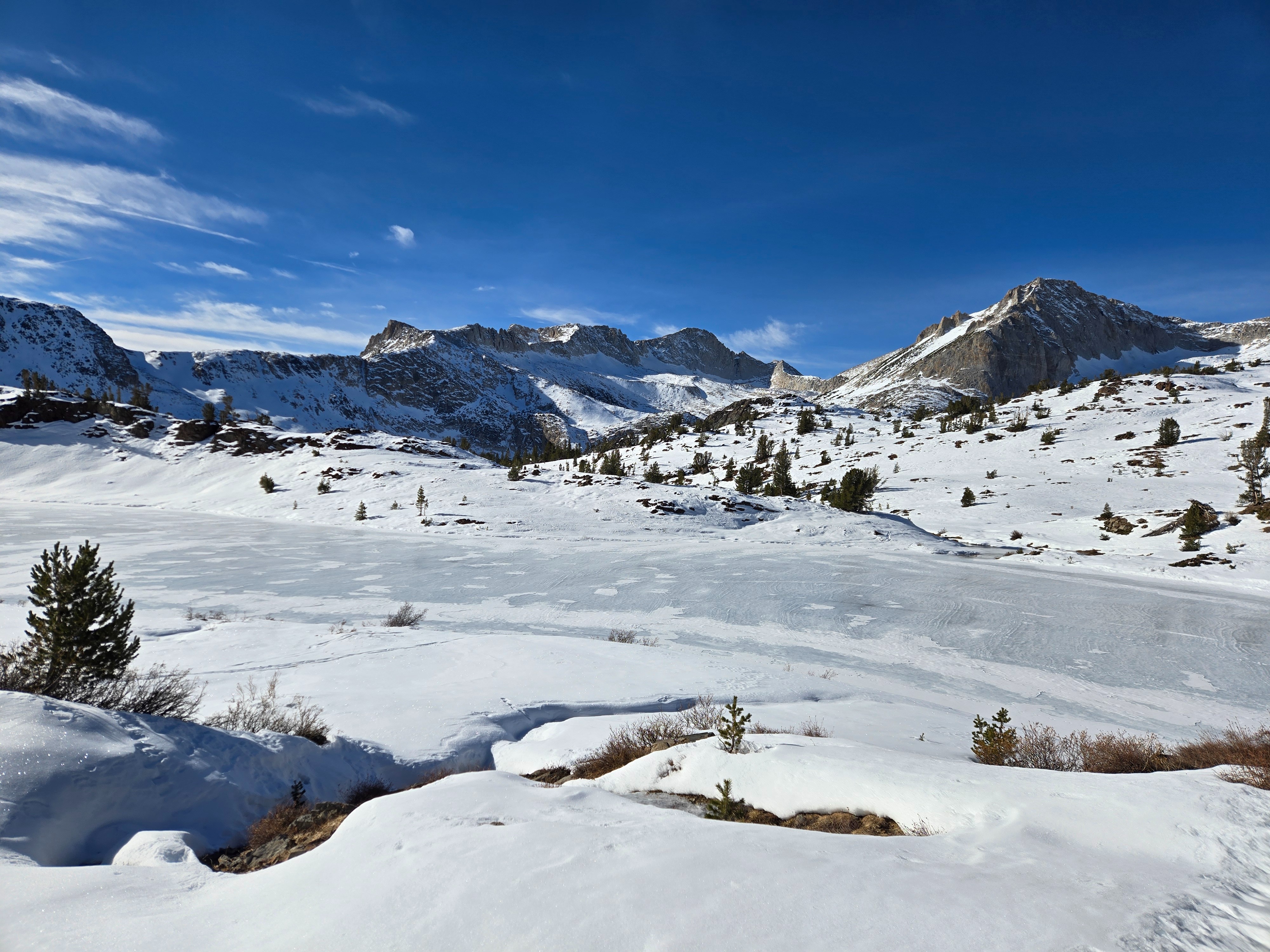
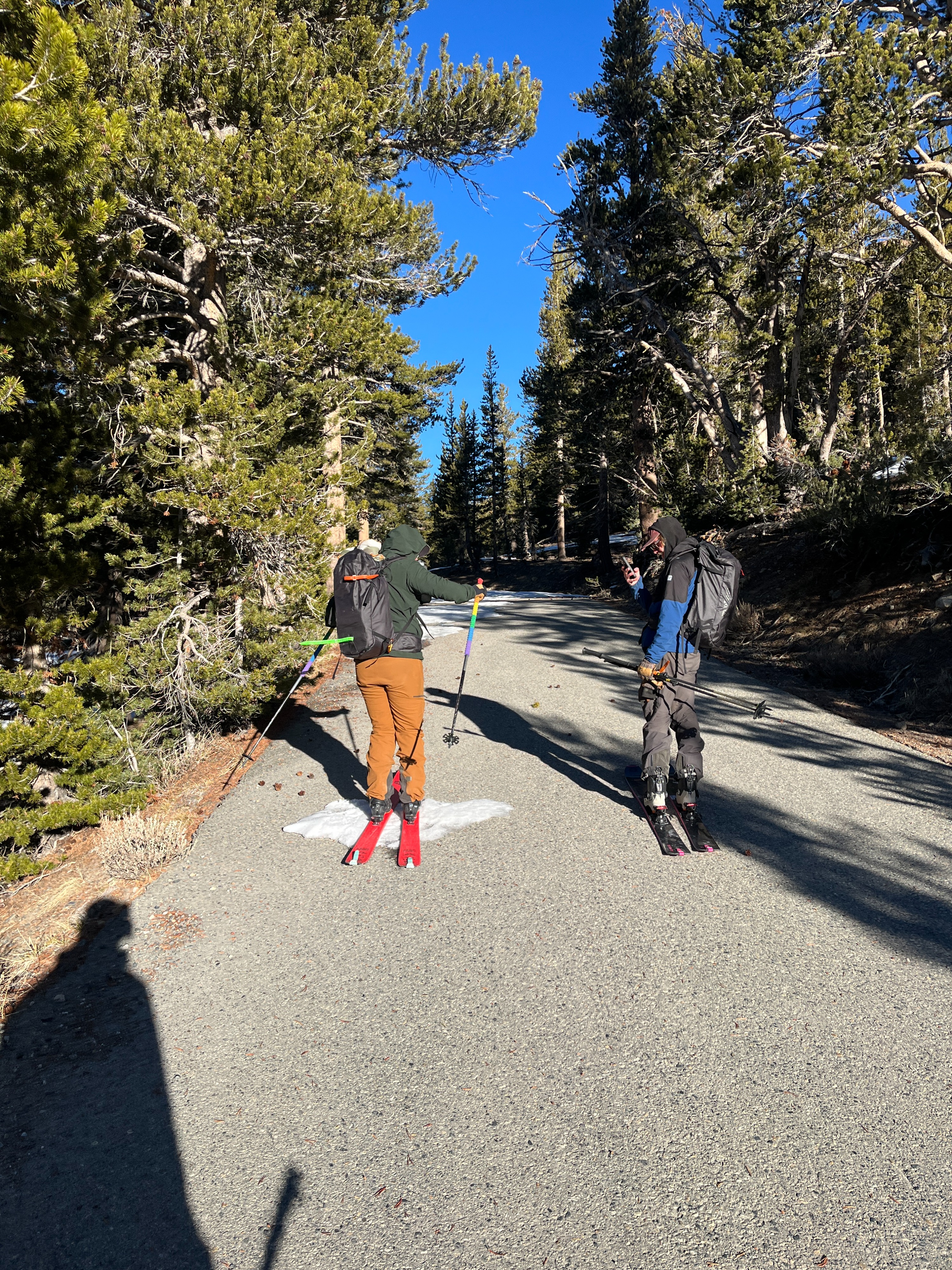
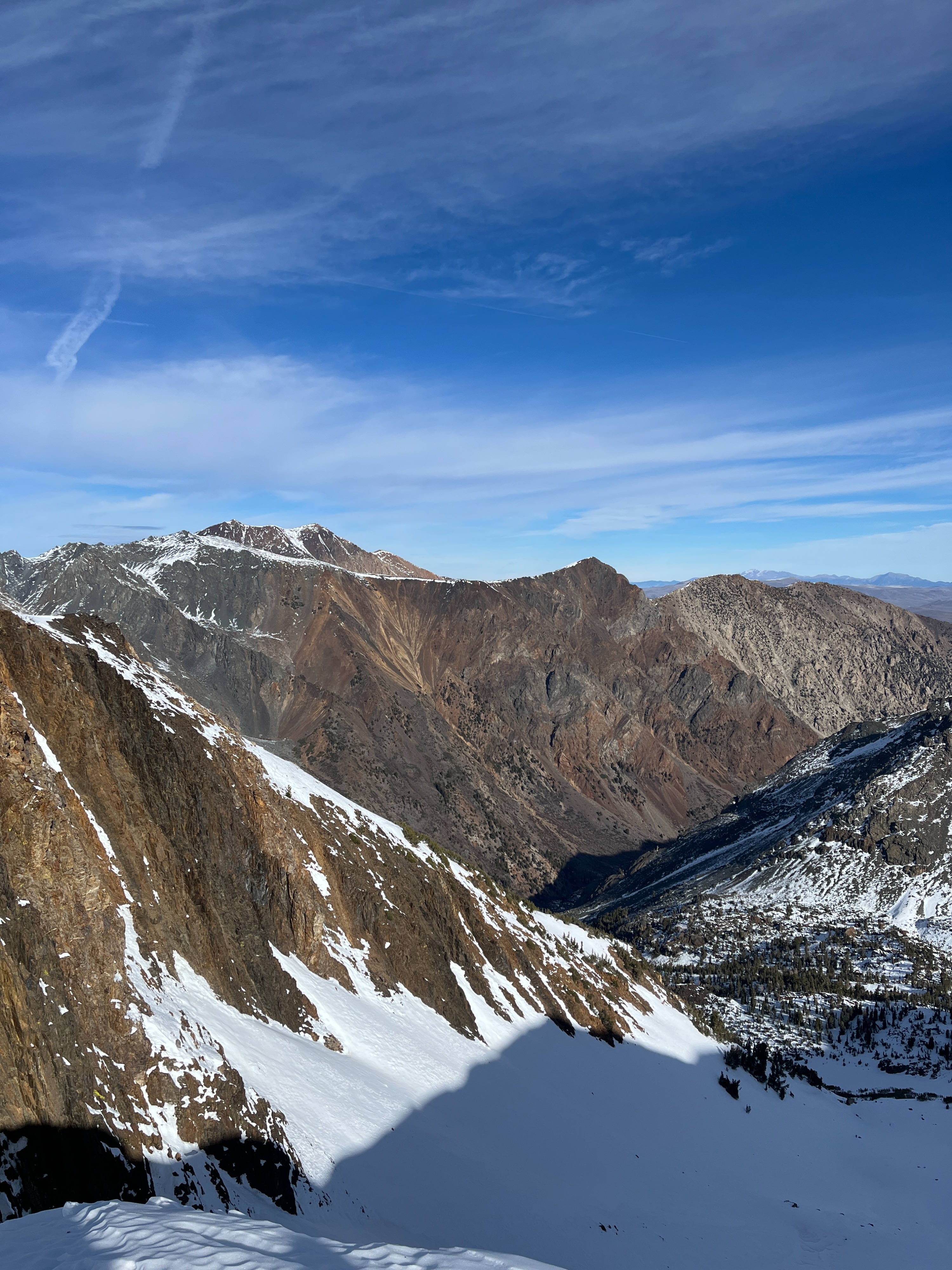
We managed to keep our skis on for almost the entire tour today, though we decided not to continue with our previous plan to descend into Lundy. There were a few, rock-dodging turns to be had. 10 or so anyway.
- Coverage is slightly worse for wear.
- We saw no signs of instability.
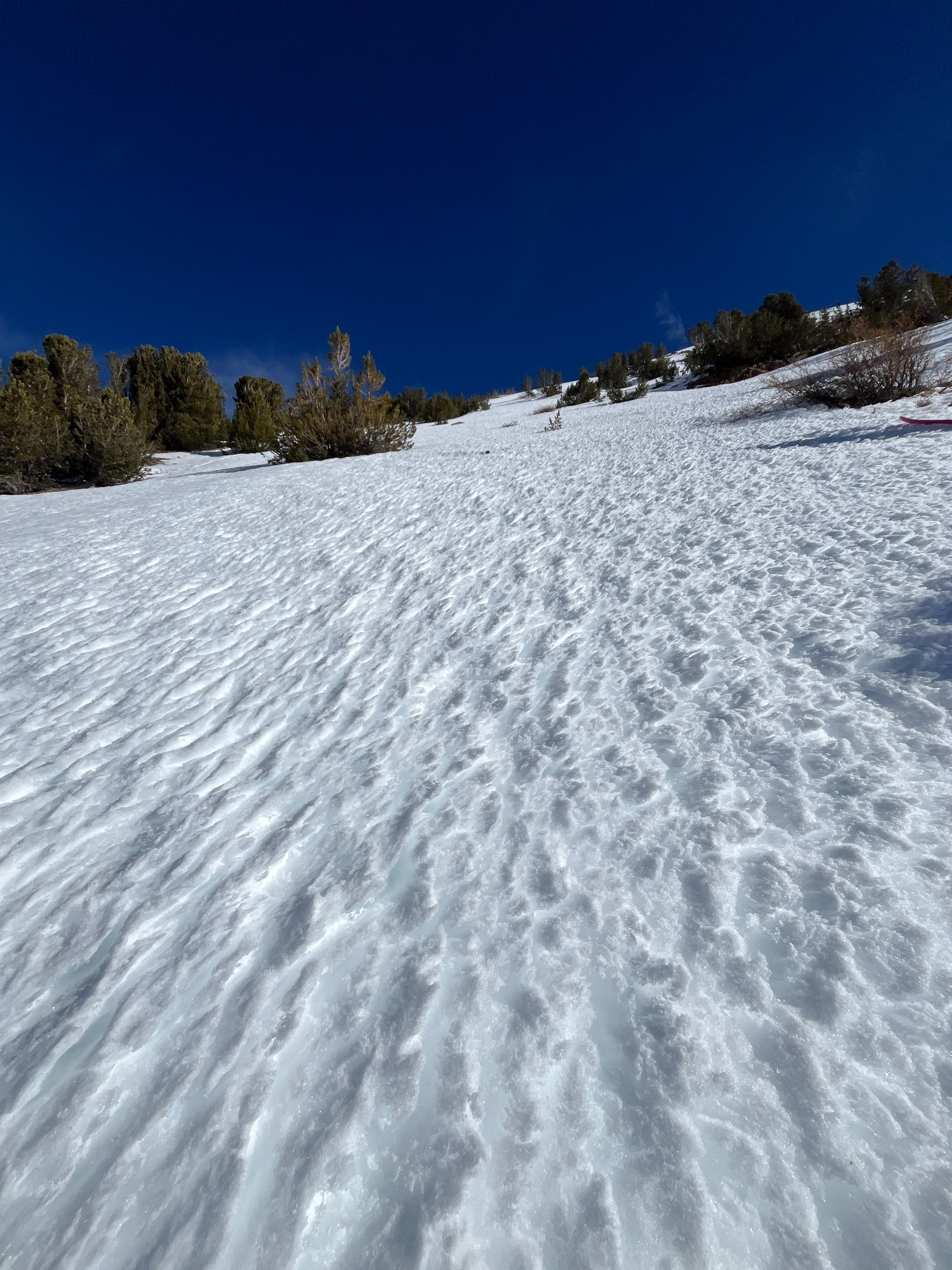
- Surfaces are firm and variable. Of note, we found that old windboard on shaded slopes is faceting at the surface.
Weather
- Air Temp
- Above Freezing
- Cloud Cover
- scattered
- Wind Loading
- none
- Rain Elevation
- NA
- Recent Snowfall
- 0
- Snow Avail For Transport
- small smounts
Temps rose from the teens to the 40s and clouds increased throughout the day. Winds were calm to light from the northwest.
Snowpack
Below 10,000 feet:
- Patchy snow cover.
- Surfaces: mostly melt-freeze. Some wind board in open areas. Some very sheltered areas with just facets.
- Snow depth: Less than 1 foot.
Above 10,000 feet:
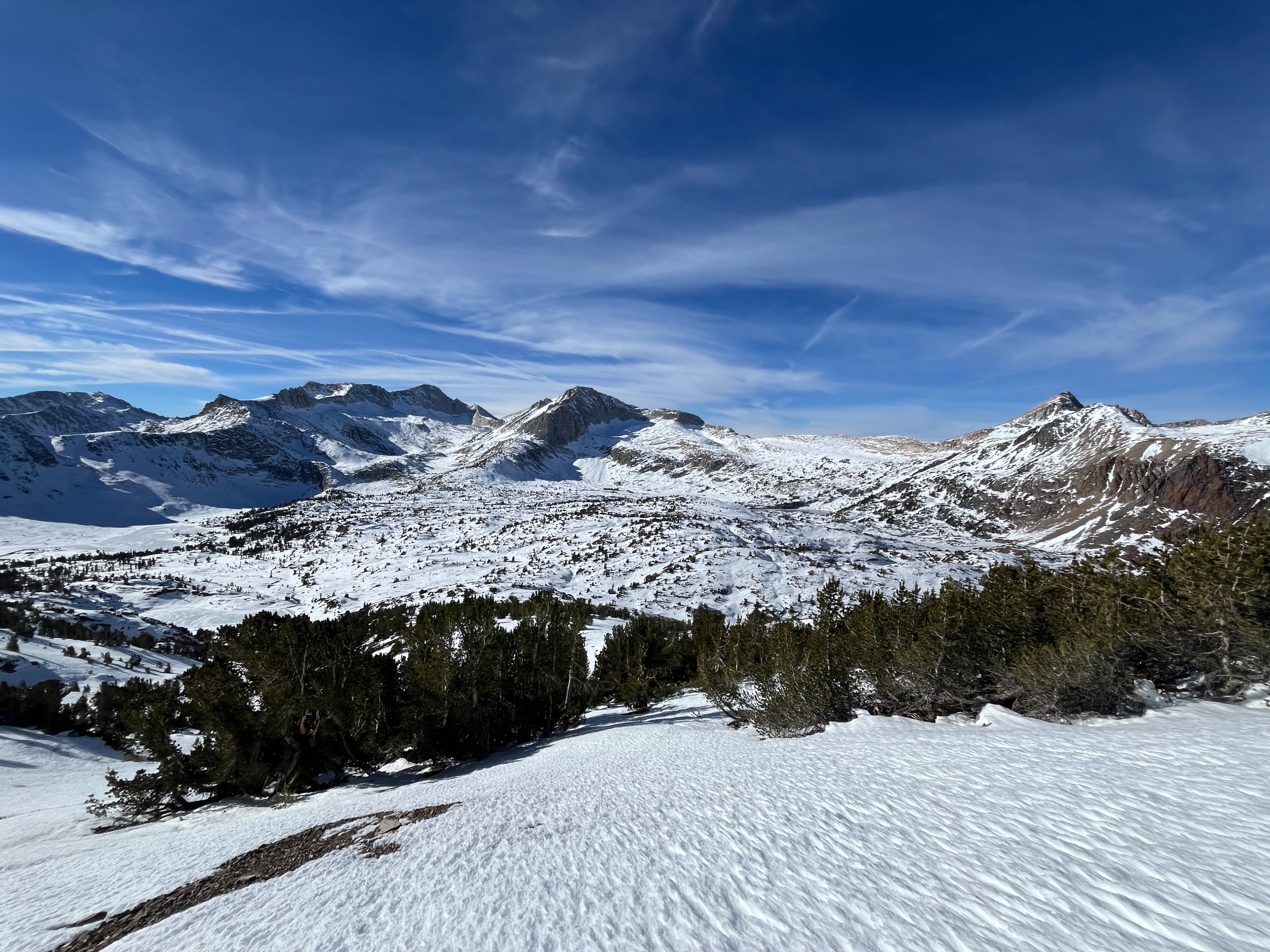
- Better coverage. Better is a relative term, like saying, "Oh, there are more sharks today than yesterday."
- Snow depths: 2 feet at the deepest, average: just over a foot. (30-60cm, average 35)
- In this open, alpine basin, most surfaces are affected by wind or sun. Under these surfaces, the snowpack consists of large facets on west, north, and east aspects. We found an old melt-freeze crust near the ground in most areas.
- Steep, solar slopes (southwest, south) have advanced sun-affect at the surface. The snowpack is very thin and consists of melf-forms top to bottom.
- The surface of shaded, wind-whacked slopes is faceting. We found a thin layer of 0.5-1 mm near-surface facets (FCsf) atop old wind board throughout our tour. Faceted surfaces will be worth monitoring as we return to a period with more precipitation.