
Quick report
- Cracking
- specific
We went to the Mammoth Area to look at storm instabilities in the new snow.
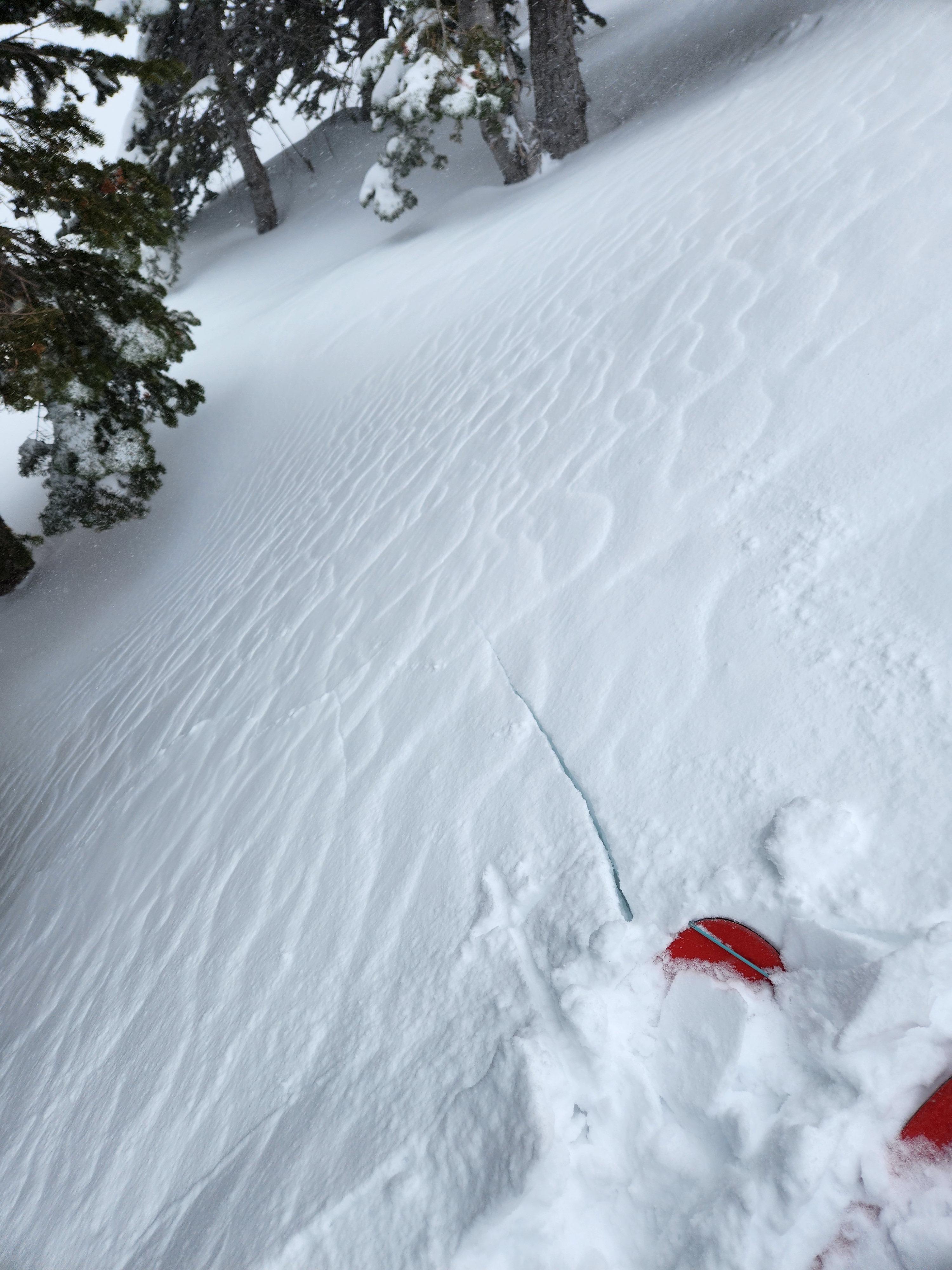
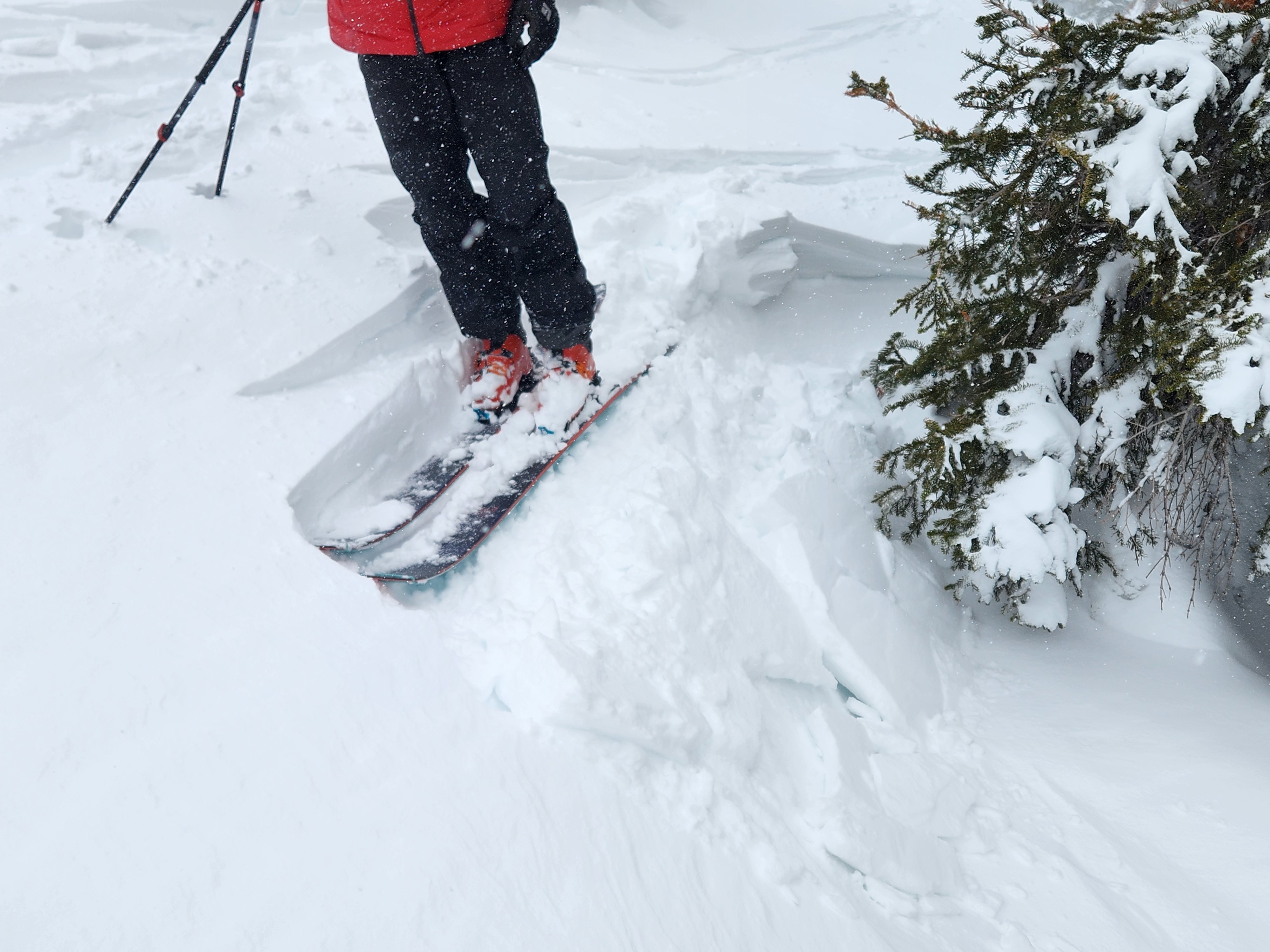
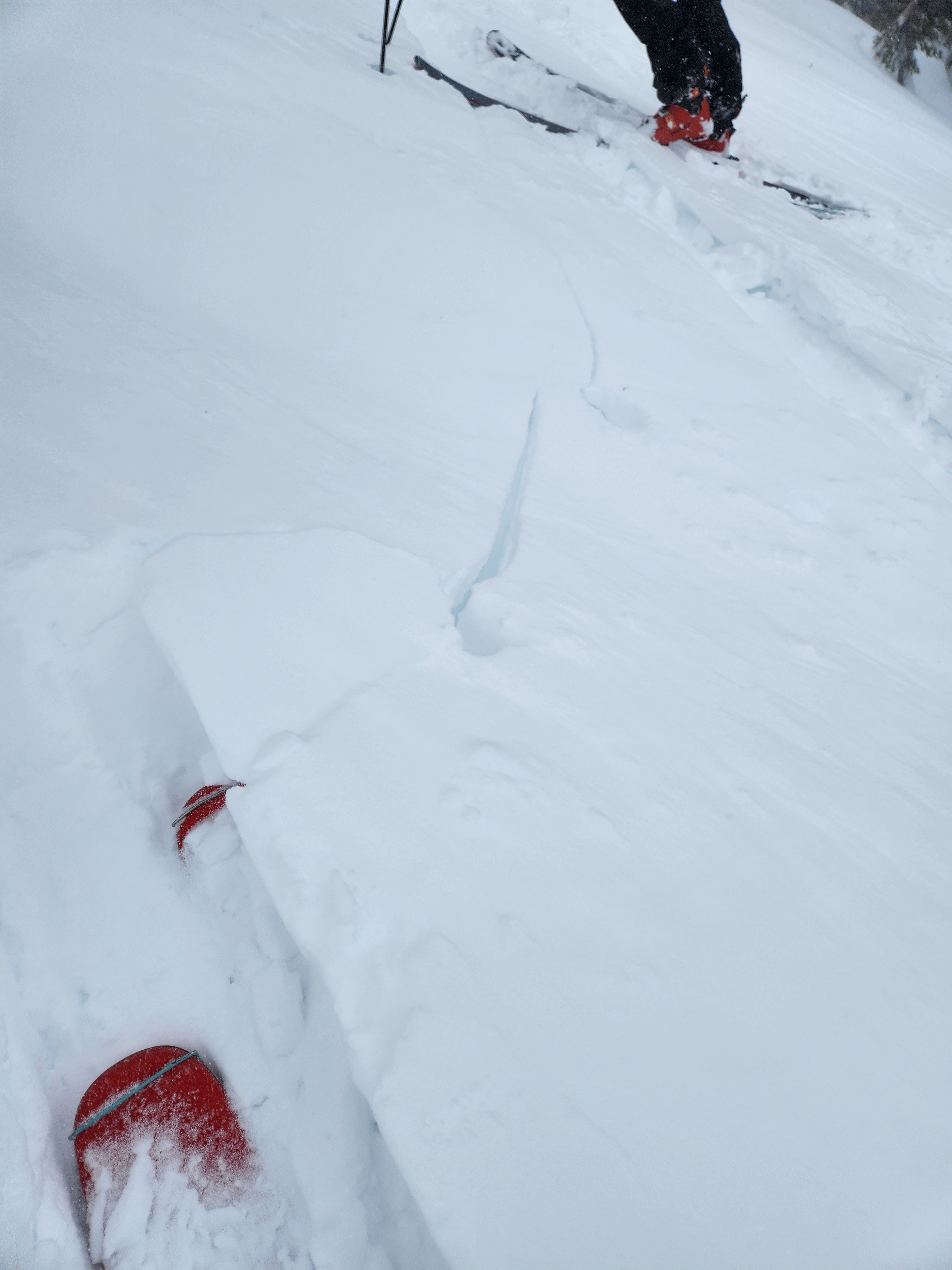
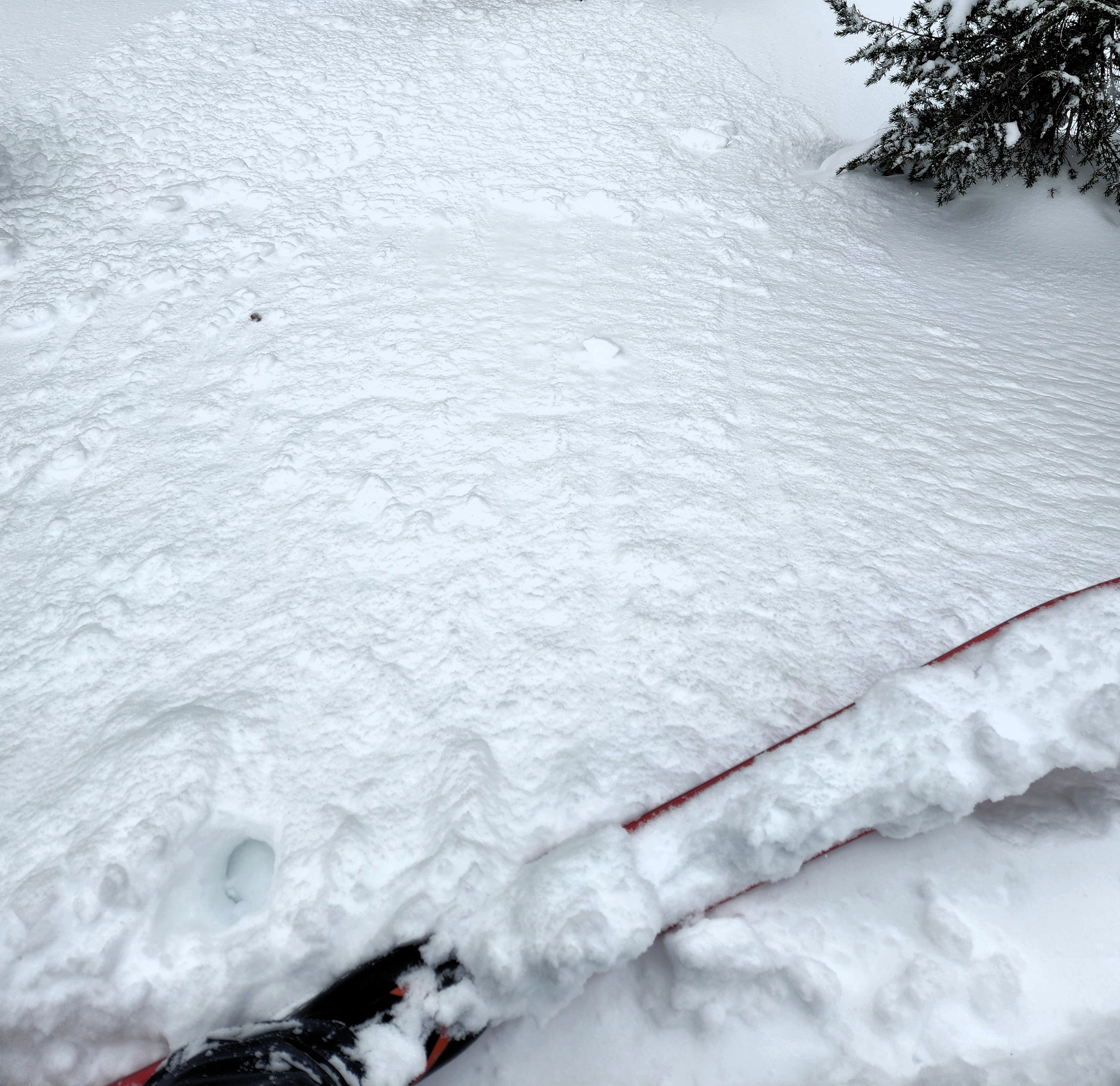
- We got some cracking and small slabs breaking out in drifted snow. Wind slabs were 8 to 18 inches thick. These slabs were soft and resting atop a widespread, thick, hard melt-freeze crust.
- We got some small sluffs running in the top inch of new snow.
- We found a north-facing convexity where the new/old interface was more notable: near-surface facets around a thin crust. Some cracking between our tracks broke down to these facets.
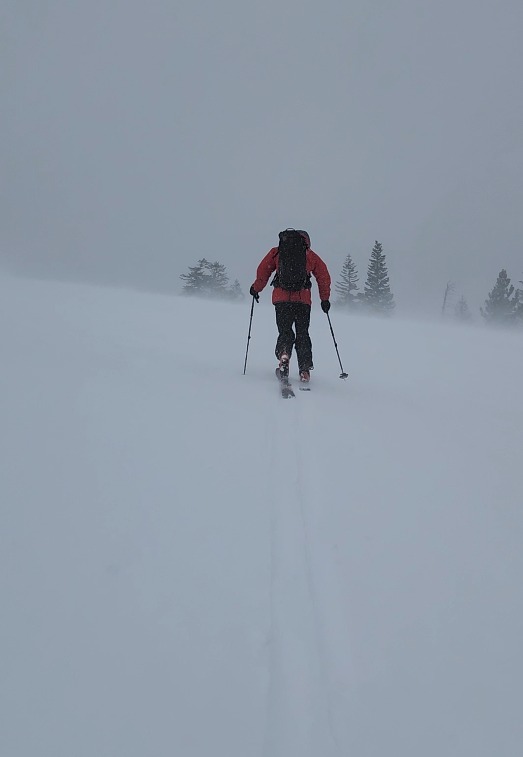
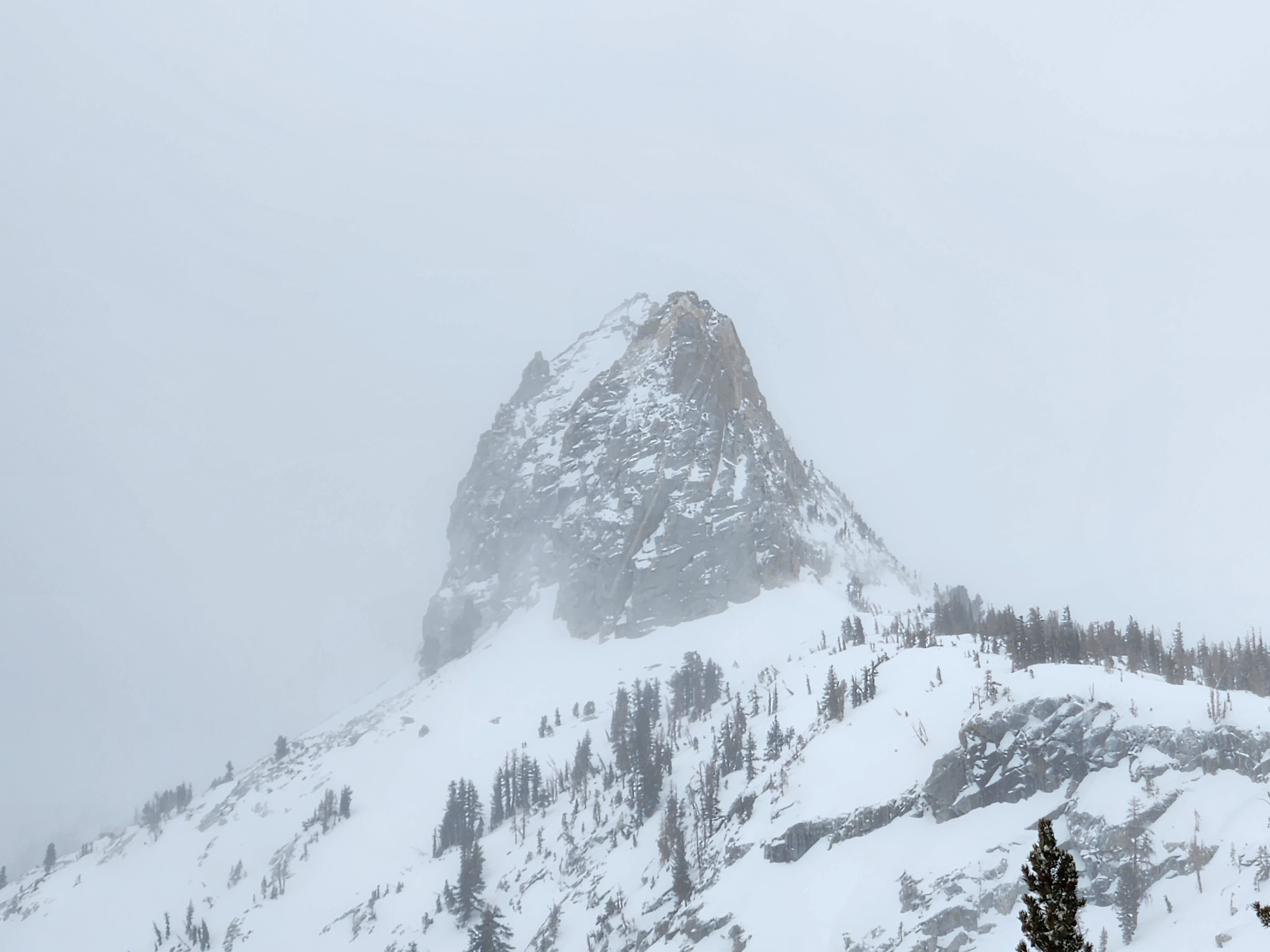
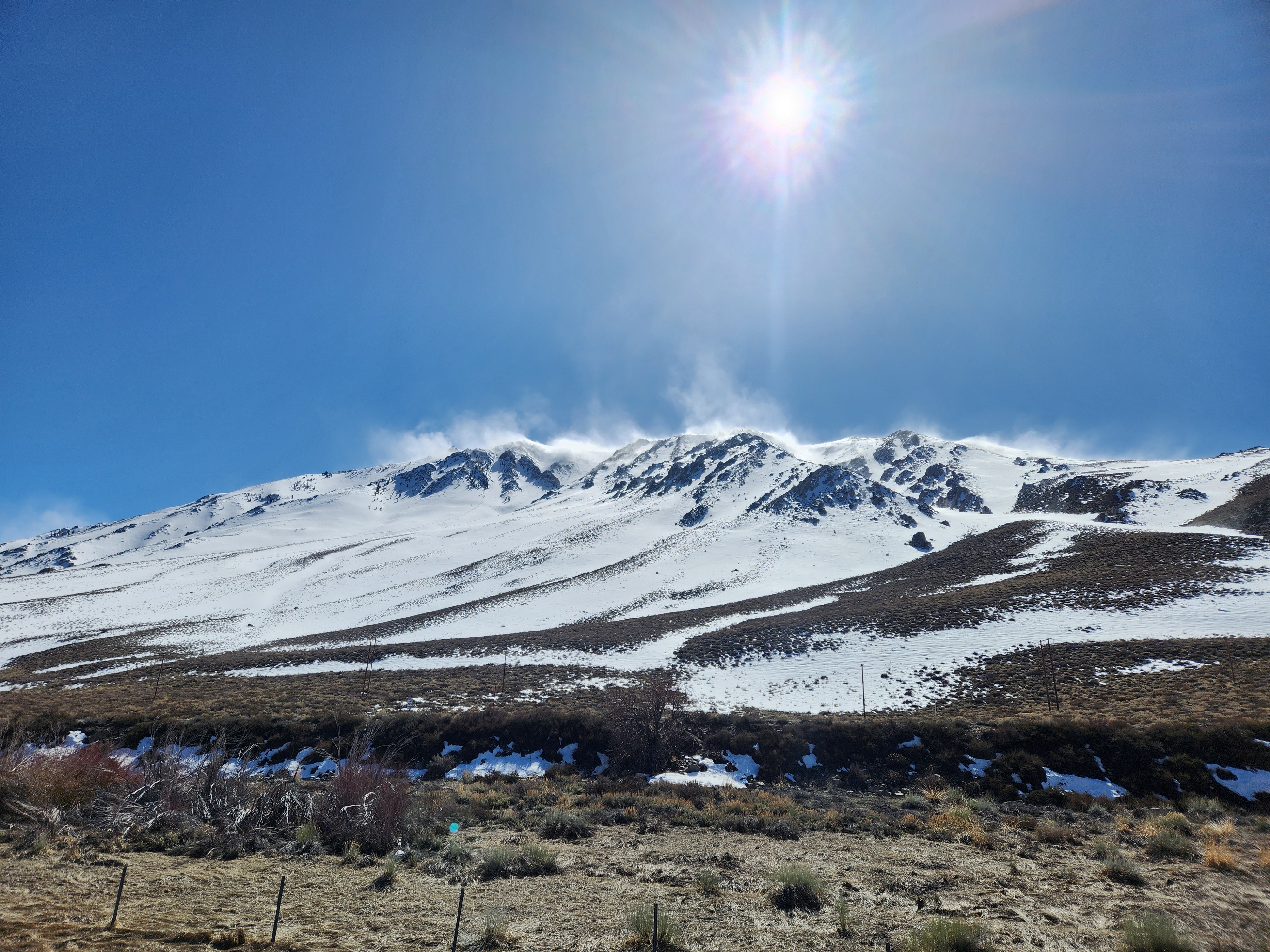
- The Mammoth Crest was mostly obscured by clouds, periods of moderate snowfall, and moderate to intense blowing snow. On the drive home to Bishop, I saw intense blowing snow in start zones across the mountains between Mammoth and Rock Creek.
Weather
- Air Temp
- 20s
- Cloud Cover
- overcast
- Wind Loading
- intense
- Rain Elevation
- 8000
- Recent Snowfall
- 25
- Snow Avail For Transport
- moderate amounts
Moderate to intense blowing snow except in sheltered areas. Temperatures were relatively steady with cold wind chill values. Breaks in the clouds and a decrease in precipitation and wind drifting midday, increasing again early afternoon.
Snowpack
New storm snow is upside-down and has a weak, mid-storm interface of rimed precip particles. In general, the new snow is sitting on a widespread melt-freeze crust. On a north-facing, sheltered convexity we got cracking that broke down to a layer of near-surface facets under a thin crust under the storm snow. This layer is worth noting, especially in steep, sheltered, northerly start zones where the facets are directly under the new snow and not under a crust. We got non-propagating test results in the mid-storm interface and the facets.