
Juneau Icefield
Quick report
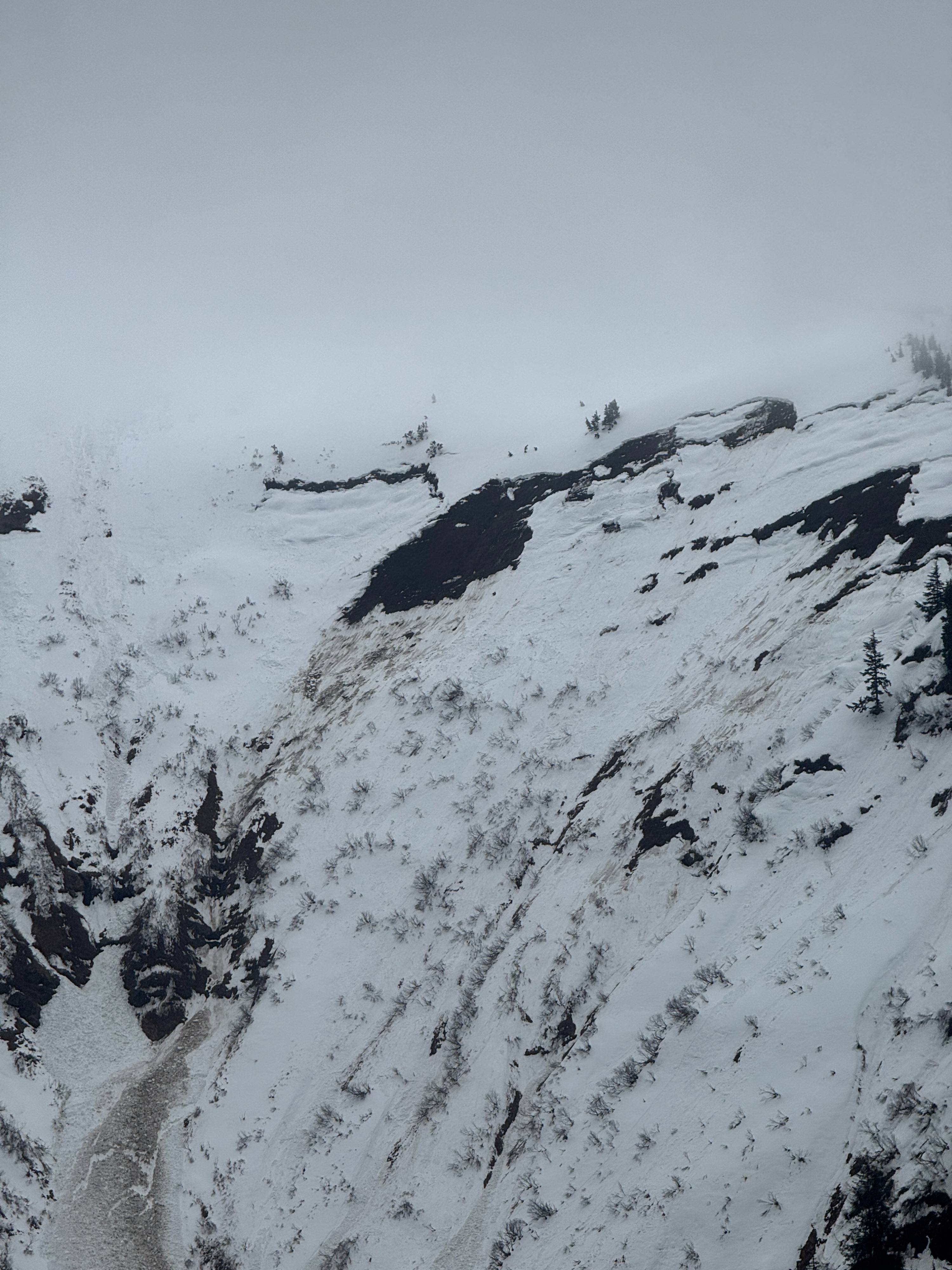
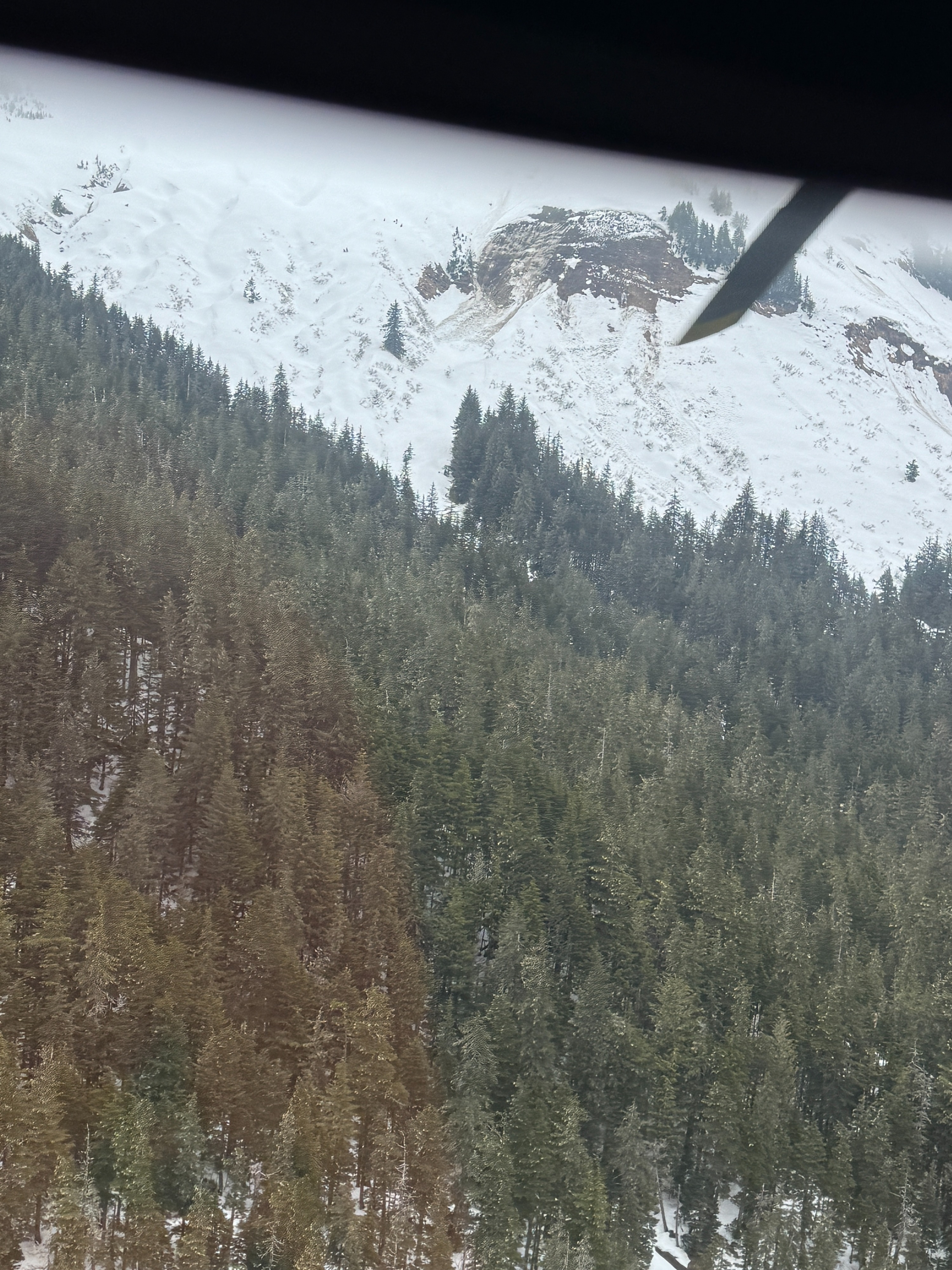
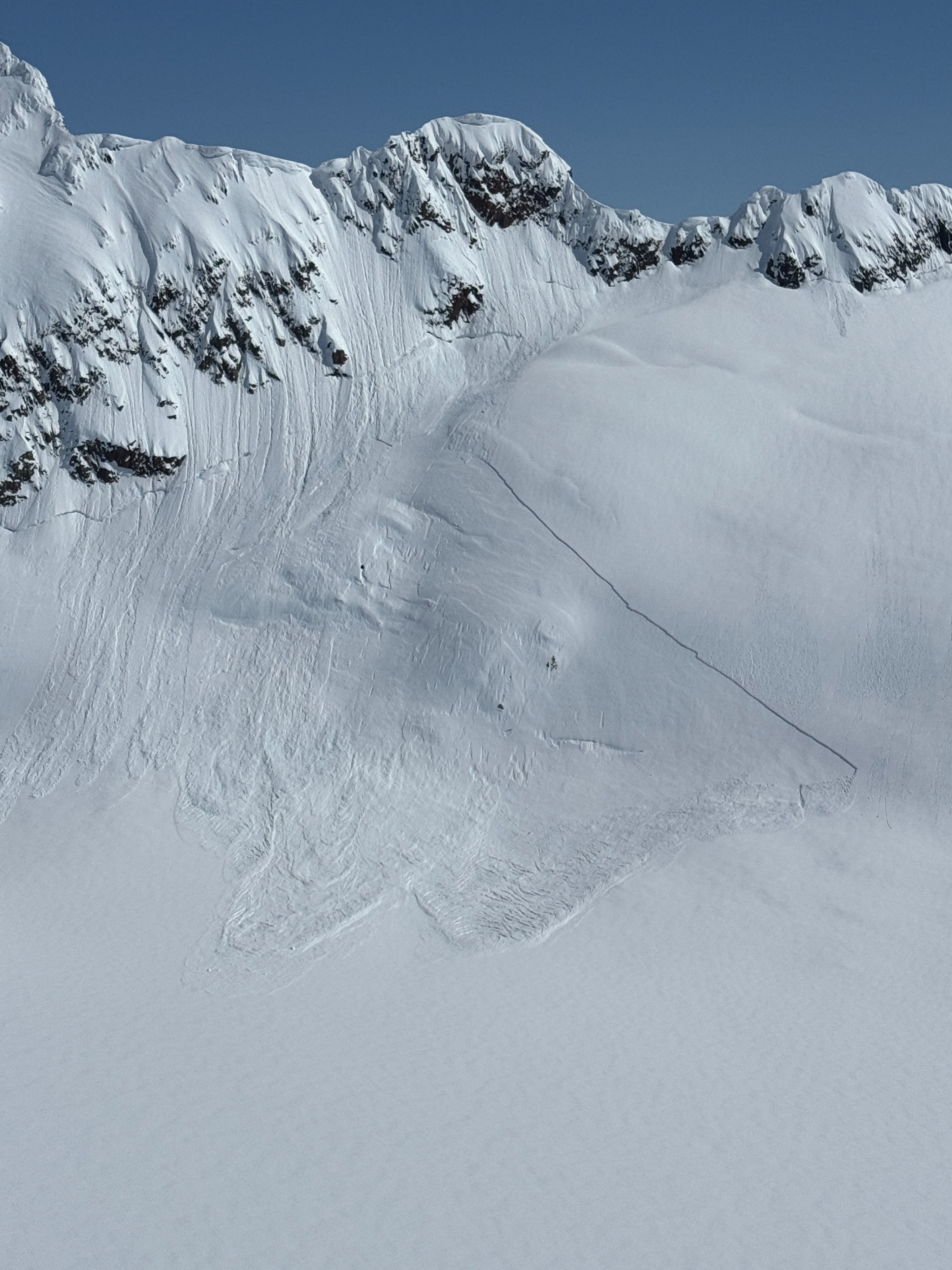
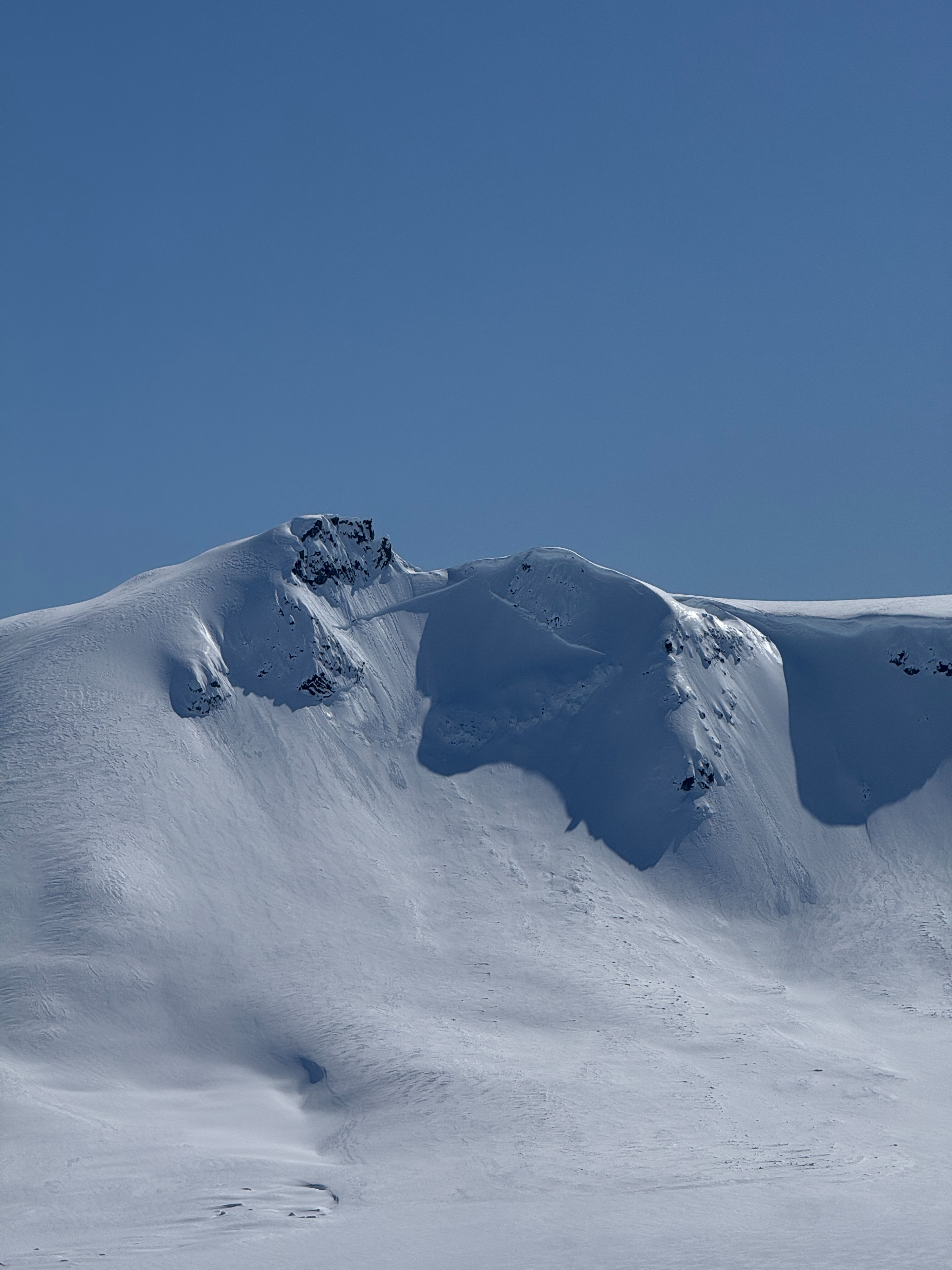
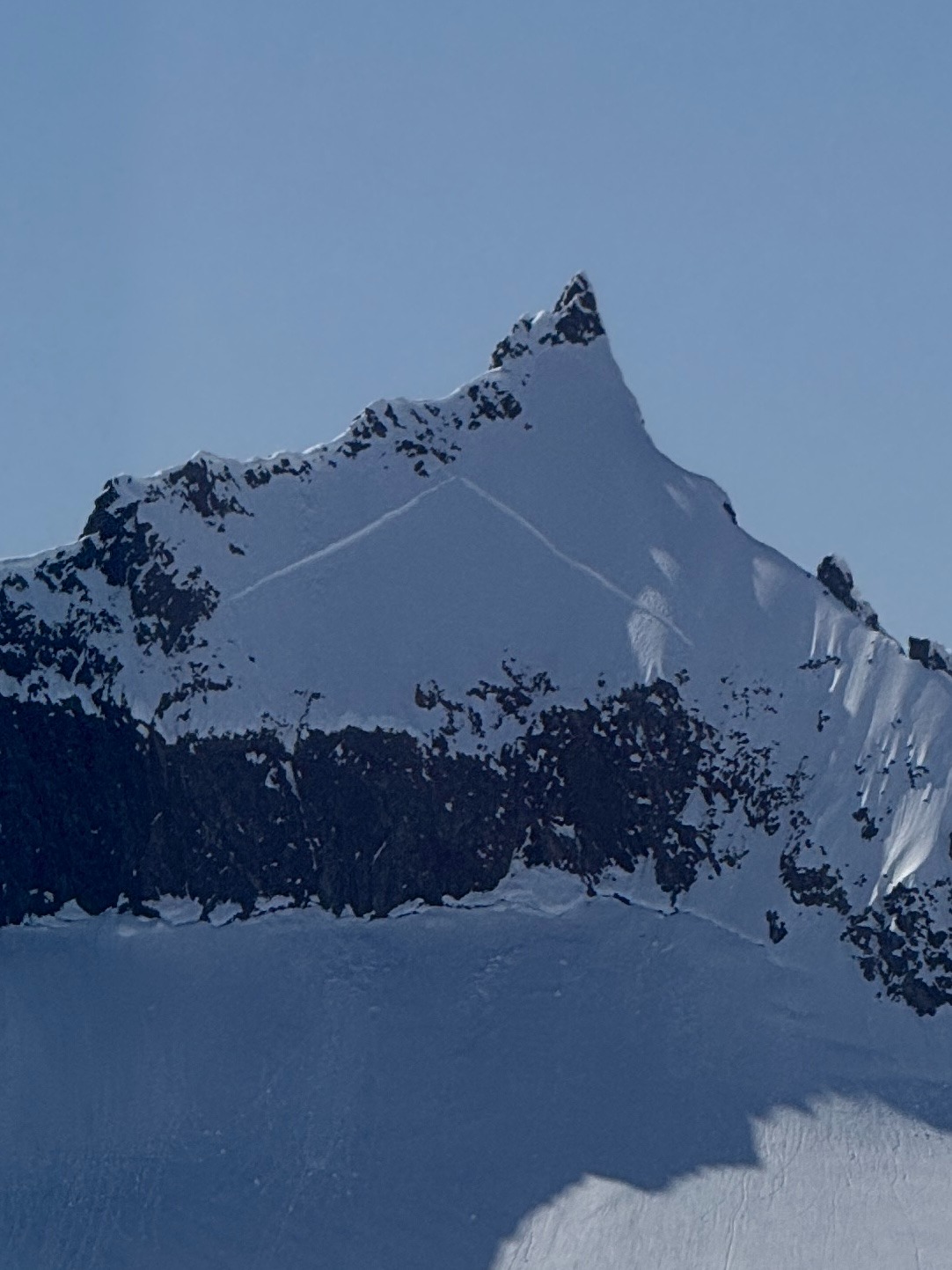
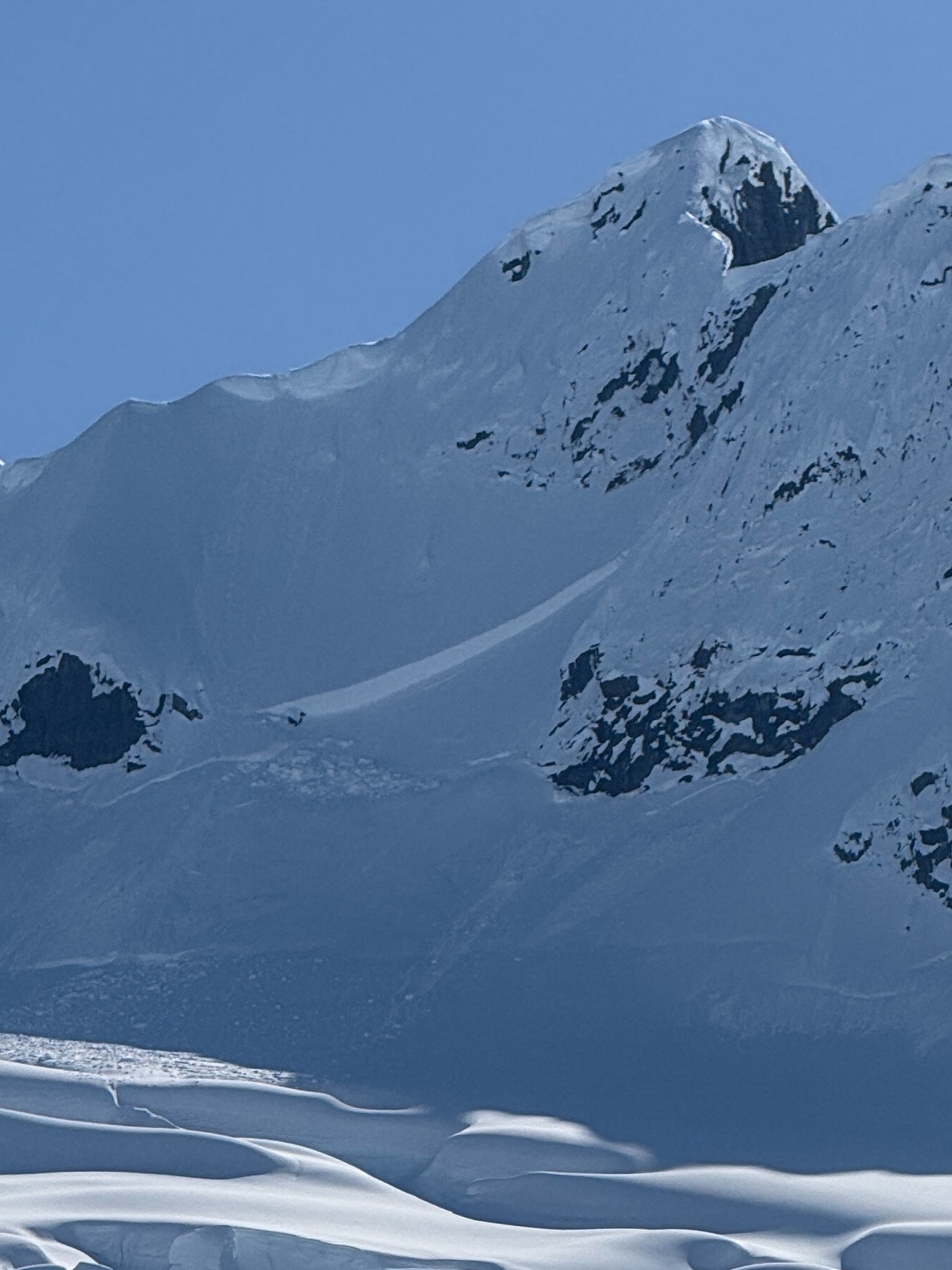
We are well into the spring thaw and the icefield was not spared, freezing levels were very high and almost all snow surfaces have been affected by the warmth and/or sun. Large glide cracks and glide avalanches were observed along the coastal corridor. Higher on the icefield numerous larger/ deeper avalanches were observed mostly due to cornice failure triggers. Stability while skiing was good but wet loose slough was building quickly and could have the potential to trigger deeper layers within the snowpack. Cornices are showing widespread failure and should be given a wide berth.
Only signs of instability underfoot were on solar aspects where even small steep slopes were producing large piles of wet loose debris.Weather
- Air Temp
- 50F plus
- Cloud Cover
- clear
- Wind Loading
- none
- Rain Elevation
- 3500'
- Recent Snowfall
- none
- Snow Avail For Transport
- none
A thick marine layer was present over town, we were able to pop through some holes up the Herbert and found clear blue skies over the icefield. Temperatures were very warm and solar radiation was extremely strong.
Snowpack
Sun had affected almost all aspects and elevations. Cold dry snow was found on a super North facing pocket that doesn't see much sun. Most of the snow surfaces had warmed, frozen, and then rethawed to various degrees. Any South facing aspects were very wetted out, sticky, and gloppy, with large piles of wet debris on steeper roles. Older deeper layers are beginning to wake up from bigger triggers like cornice failures or wet loose debris.
Avalanche
Multiple cornice triggered avalanches that stepped down into deeper older layers. A few large glide avalanches on McGinnis.