
Quick report
Preliminary information. Will be updated as info is gathered. FAC plans to visit the site Monday. 2/19.
Summary:
A skier triggered a slide that caught another member of the party below. The victim was carried through small trees and came to rest partially buried and injured. The party administered first aid and alerted EMS (InReach and cell phone call from ridge). EMS received the call at 16:50 and dispatched Two Bear Air. Two Bear inserted a Deputy and then extracted both the victim and the deputy from the scene. They transferred the patient to an air ambulance at Hungry Horse Reservoir (the patient was able to walk between helicopters). The patient was hospitalized overnight and treated for serious but non-life-threatening injuries.
Preliminary events and details:
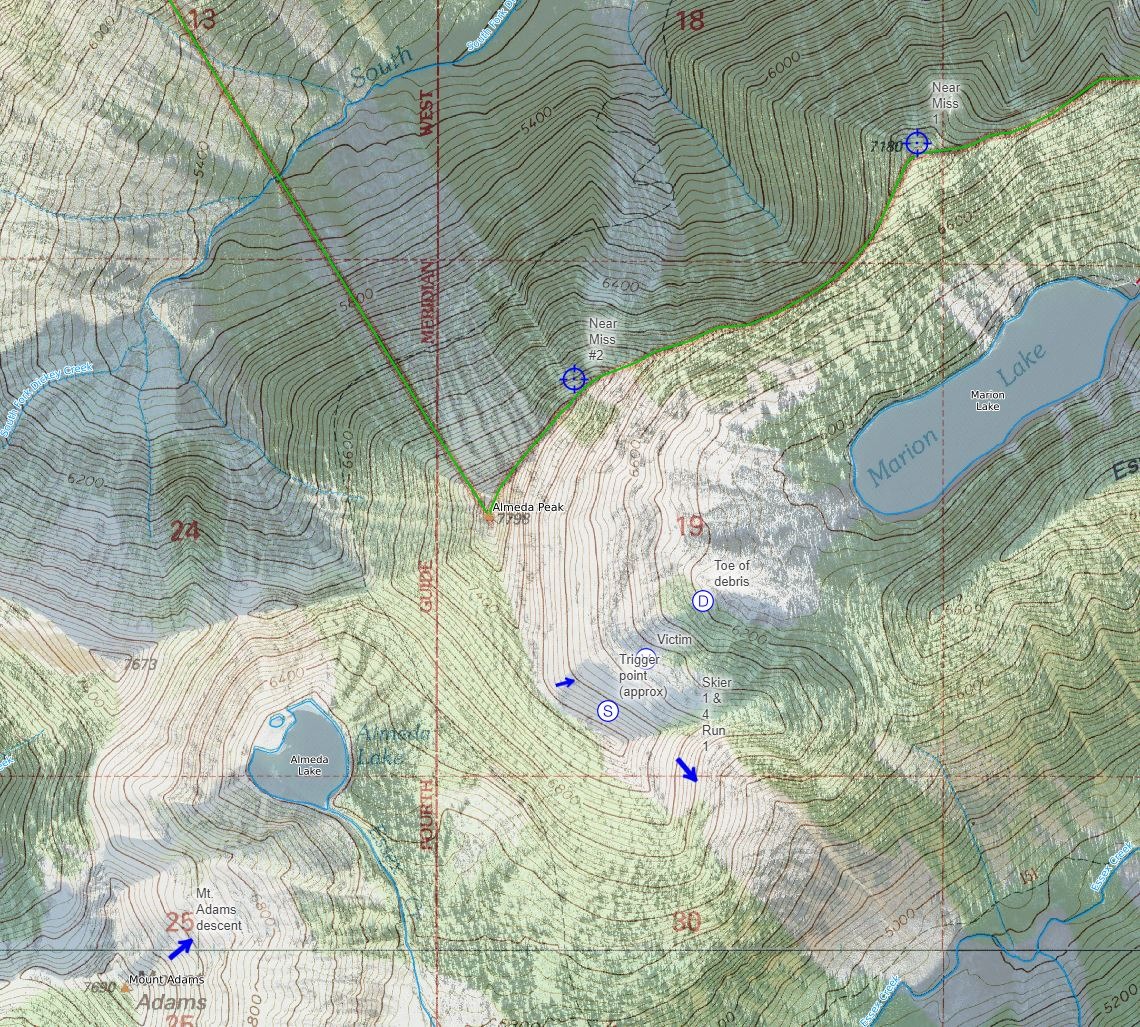
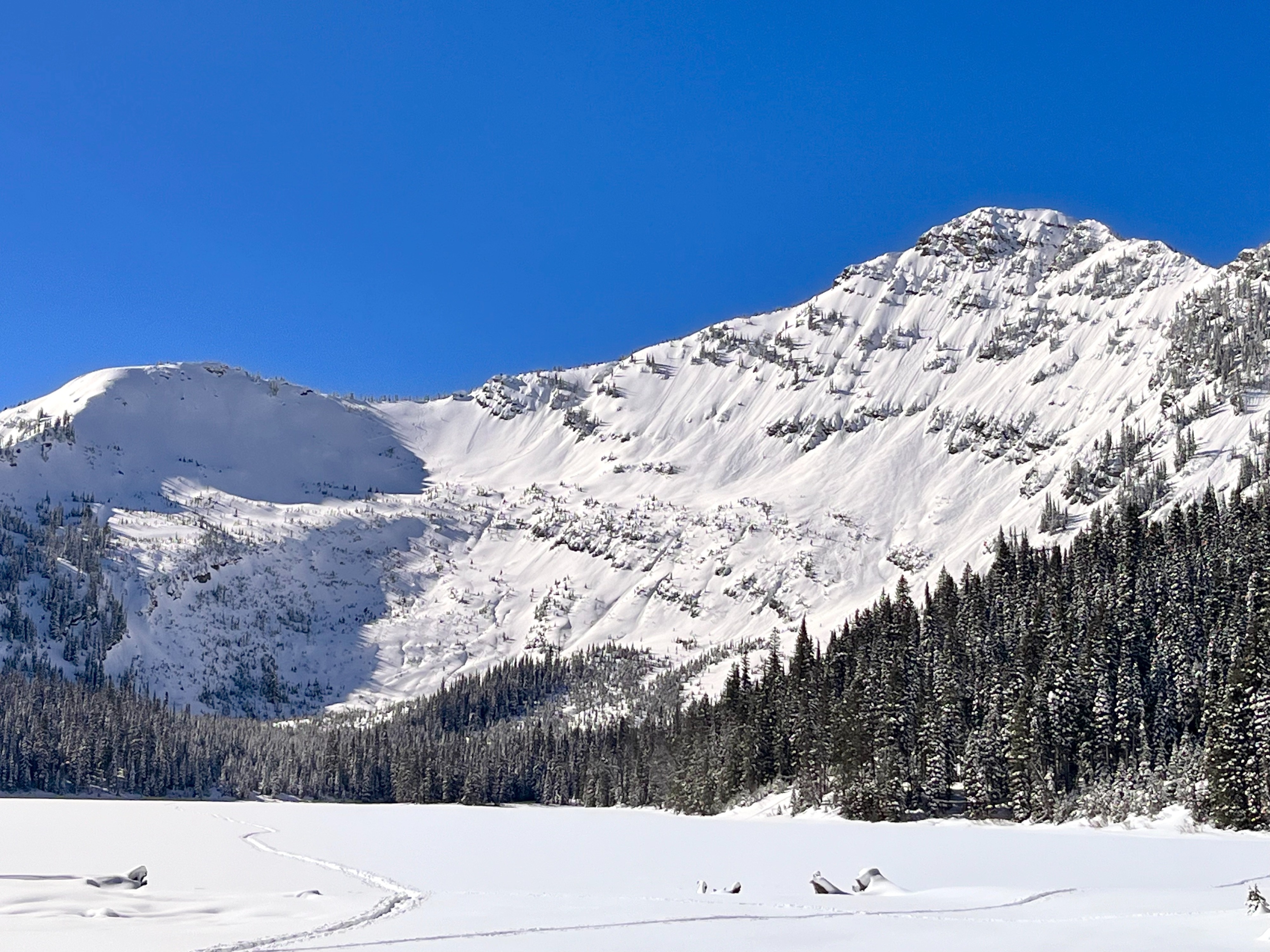
Two parties of 2 left the Izaak Walton trailhead planning on summitting and skiing Mt. Adams on the crest of the Flathead Range. They left at different times and were unaware of each other's plans. The first party approached across Marion Lake with a descent off the south ridge of Pt. 7798 into Essex Creek. This large avalanche path has numerous names, including Marion's Big Mouth. The second pair approached up Essex Creek.
The parties met on the uptrack to Mt. Adams and skied the east face of the peak as a single group without incident (it had also been skied the previous day). They then climbed out of the Alameda Lake Basin in Essex Creek to the south ridge of Pt. 7798 above Marion Lake. The east-facing slope above the lake is sometimes known as Peanut Butter Bowl. It had been skied the day prior by at least two riders and by at least six riders earlier in the day of the accident. Another party skied steeper, southeast-facing slopes to skier's left about 90 minutes before the accident. That party reported conducting an ECT that broke but did not propagate at a storm interface roughly a foot below the snow surface.
On the ridge, the group of four split into 2 parties comprised of 1 member from each of the original groups. The two parties were equipped with radios, and avalanche rescue gear. One pair (Riders 3 and 4) planned to ski the concave, east-facing slope with existing tracks (Peanut Butter Bowl). The other pair (Riders 1 and 2) chose a line to skier's right that is northeast facing, with a steep, convex entry. Rider 1 skied the upper part of the slope with no incident. They stopped below the run.
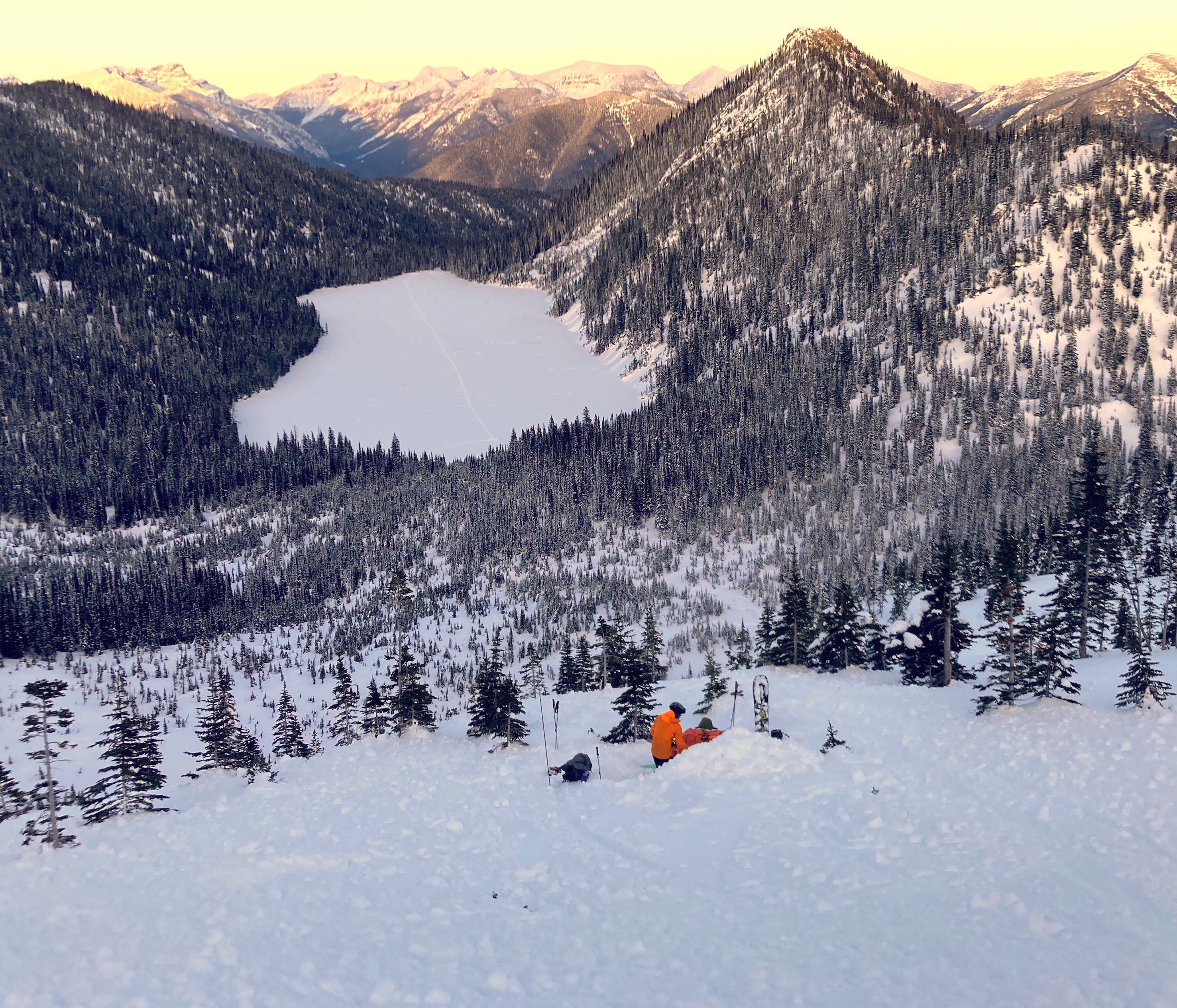
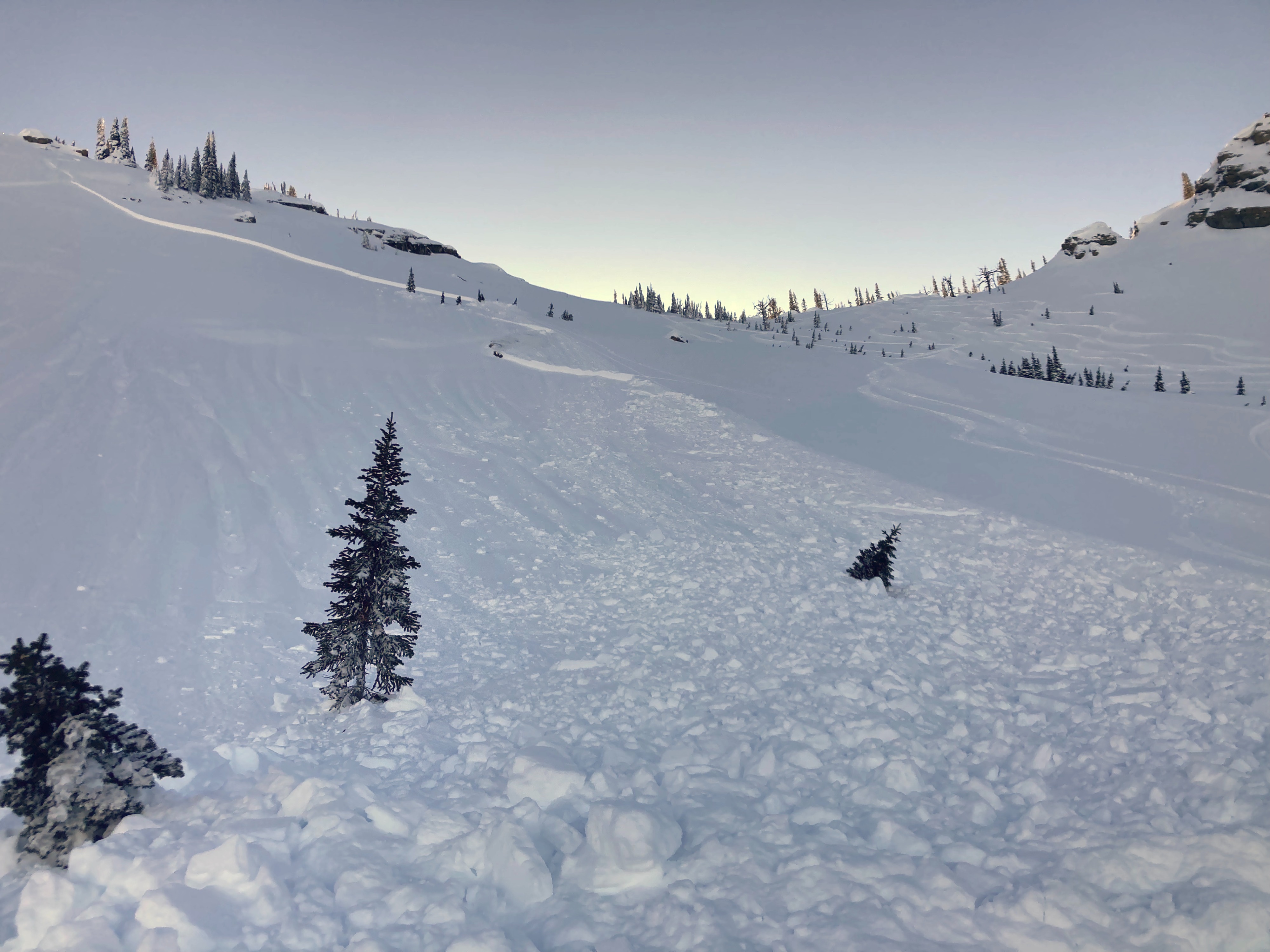
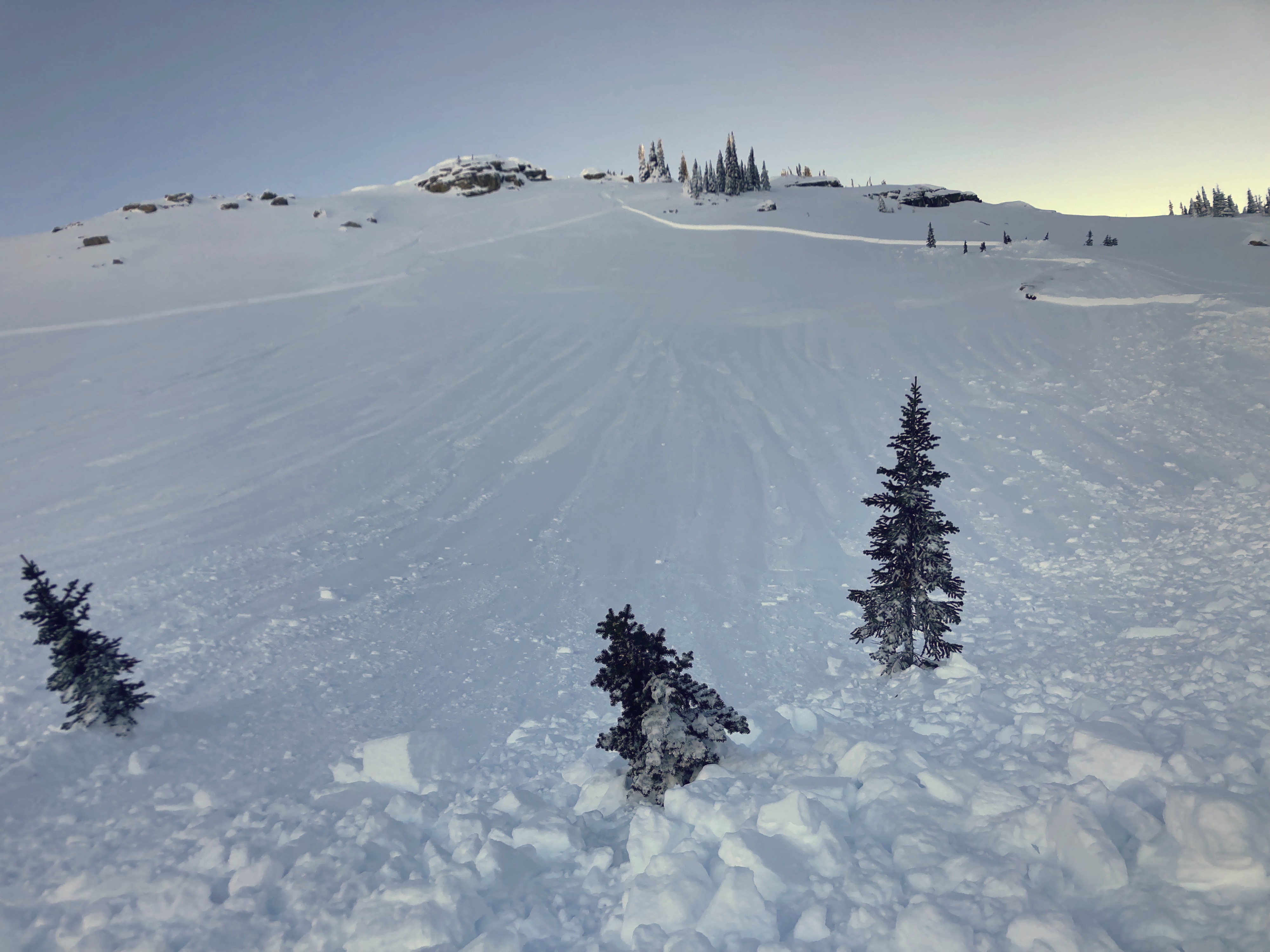
Rider 2 entered the slope and triggered a large, soft slab avalanche. Rider 1 alerted the rest of the group of the slide and watched Rider 2 ski off the slab to skier's left. Unfortunately, this did not give them time to escape the debris rushing down at them. The debris carried Rider 1 roughly 50 meters through some small trees. They came to a rest mostly on the snow surface (legs buried). Rider 1 did not lose consciousness. Rider 1 was able to make brief radio contact with the rest of the group. They lost a ski and pole. The slide occurred at about 16:30.
Rider 3 stayed on the ridge where they had cell service. Riders 2 and 4 rode down to Rider 1, where they assessed the victim and planned a rescue. They decided Rider 2 would look for the victim's lost gear while Rider 4 assessed and stabilized the victim, whose symptoms included arm, chest, and back pain. After 5 minutes or so, the group decided against self evacuating due to the back pain and potential for further injury. They alerted EMS via InReach and cell phone.
EMS received notification at 16:50 and launched Two Bear Air. They inserted a deputy, then extracted the victim and deputy. They transferred the patient to an air ambulance at Hungry Horse Reservoir (The patient was able to walk between helicopters). The patient was hospitalized overnight and treated for serious but not life-threatening injuries. Riders 2, 3, and 4 self evacuated.
One member of the party cited several factors that contributed to the accident:
- Confirmation bias - they'd skied a larger, more consequential line earlier in the day (Mt. Adams) and there were other tracks nearby.
- Complacency and fatigue: it was late in the day, and the riders were tired. The 4 riders had already skinned over 7000 vertical feet.
The avalanche was a large avalanche (D2.5) that likely failed on old snow - either an interface between storms or a thin layer of facets a few inches above the Feb. 3 ice/ crust layer. The slab may have been composed partly of wind-drifted snow. It released at roughly 7100 feet on a convex, upper elevation, shaded slope. The debris stopped mid path, at about 6400 feet, after covering part of the uptrack set in Peanut Butter Bowl the day before and used by other parties the day of the accident.
The avalanche forecast for Feb. 15-17 listed a Persistent Slab avalanche problem in terrain with these characteristics, with a Moderate (L2) avalanche danger. The party was riding one at a time, though Rider 1 did not stop in a safe zone. Their response to their accident was exemplary.
Two other near-misses occurred the same afternoon on shaded, upper elevation slopes in the next drainage north.
Weather
- Cloud Cover
- clear
Avalanche
- Size
- D2.5 R2
- Type
- SS
- Aspect
- NE
- Trigger
- AS
- Elevation
- 7100 ft
Two parties of 2 left the Izaak Walton trailhead planning on summitting and skiing Mt. Adams on the crest of the Flathead Range. They left at different times and were unaware of each other's plans. The first party approached across Marion Lake with a descent off the south ridge of Pt. 7798 into Essex Creek. This large avalanche path has numerous names, including Marion's Big Mouth. The second pair approached up Essex Creek. The parties met on the uptrack to Mt. Adams and skied the east face of the peak as a single group without incident (it had also been skied the previous day). They then climbed out of the Alameda Lake Basin in Essex Creek to the south ridge of Pt. 7798 above Marion Lake. The east-facing slope above the lake is sometimes known as Peanut Butter Bowl. It had been skied the day prior by at least two riders and by at least six riders earlier in the day of the accident. Another party skied steeper, southeast-facing slopes to skier's left about 90 minutes before the accident. That party reported conducting and ECT that broke but did not propagate at a storm interface roughly a foot below the snow surface. On the ridge, the group of four split into 2 parties comprised of 1 member from each of the original groups. The two parties were equipped with radios, and avalanche rescue gear. One pair (Riders 3 and 4) planned to ski the concave, east-facing slope with existing tracks (Peanut Butter Bowl). The other pair (Riders 1 and 2) chose a line to skier's right that is northeast facing, with a steep, convex entry. Rider 1 skied the upper part of the slope with no incident. They stopped below the run. Rider 2 entered the slope and triggered a large, soft slab avalanche. Rider 1 alerted the rest of the group of the slide and watched Rider 2 ski off the slab to skier's left. Unfortunately, this did not give them time to escape the debris rushing down at them. The debris carried Rider 1 roughly 50 meters through some small trees. They came to a rest mostly on the snow surface (legs buried). Rider 1 did not lose consciousness. Rider 1 was able to make brief radio contact with the rest of the group. They lost a ski and pole. The slide occurred at about 16:30. Riders 3 stayed on the ridge where they had cell service. Riders 2 and 4 rode down to Rider 1, where they assessed the victim and planned a rescue. They decided Rider 2 would look for the victim's lost gear while Rider 4 assessed and stabilized the victim, whose symptoms included arm, chest, and back pain. After 5 minutes or so, the group decided against self evacuating due to the back pain and alerted EMS via InReach and cell phone. EMS received notification at 16:50 and launched Two Bear Air. They inserted a deputy, then extracted the victim and deputy. They transferred the patient to an air ambulance at Hungry Horse Reservoir (The patient was able to walk between helicopters). The patient was hospitalized overnight and treated for serious but not life-threatening injuries. Riders 2, 3, and 4 self evacuated. One member of the party cited several factors that contributed to the accident: Confirmation bias - they'd skied a larger, more consequential line earlier in the day (Mt. Adams) and there were other tracks nearby. Complacency and fatigue: it was late in the day, and the riders were tired. The 4 riders had already skinned over 7000 vertical feet. The avalanche was a large avalanche (D2) that likely failed on old snow - either an interface between storms or a thin layer of facets a few inches above the Feb. 3 ice/ crust layer.The slab may have been composed partly of wind-drifted snow. It released at roughly 7100 feet and stopped mid path. It failed on a convex, upper elevation, shaded slope. The avalanche forecast for that day and the previous days listed a Persistent Slab avalanche problem in terrain like this, with a Moderate (L2) avalanche danger. The party was riding one at a time, though Rider 1 did not stop in a safe zone. Their response to their accident was exemplary. Two other near-misses occurred the same afternoon on shaded, upper elevation slopes in the next drainage north.