
Quick report
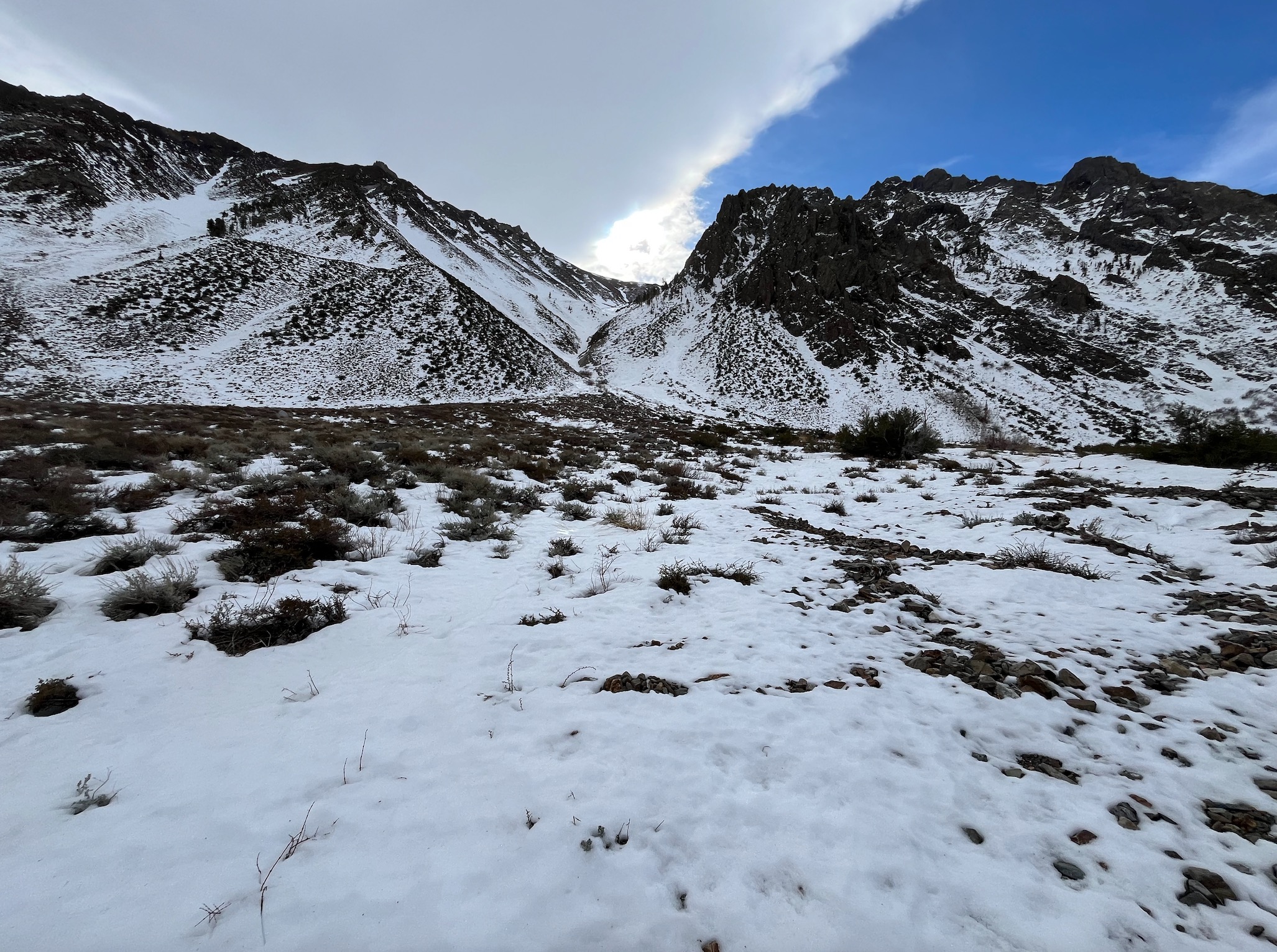
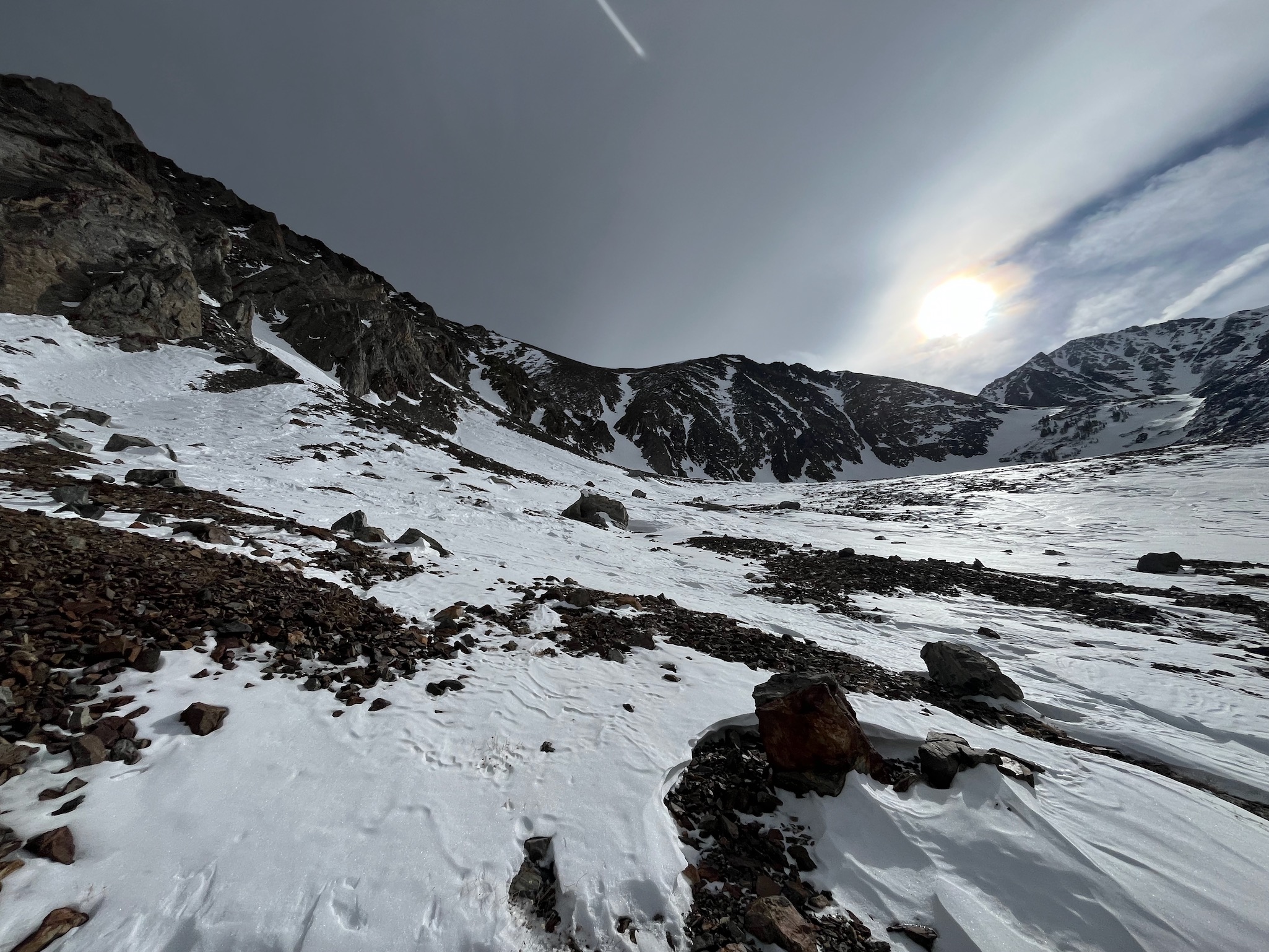
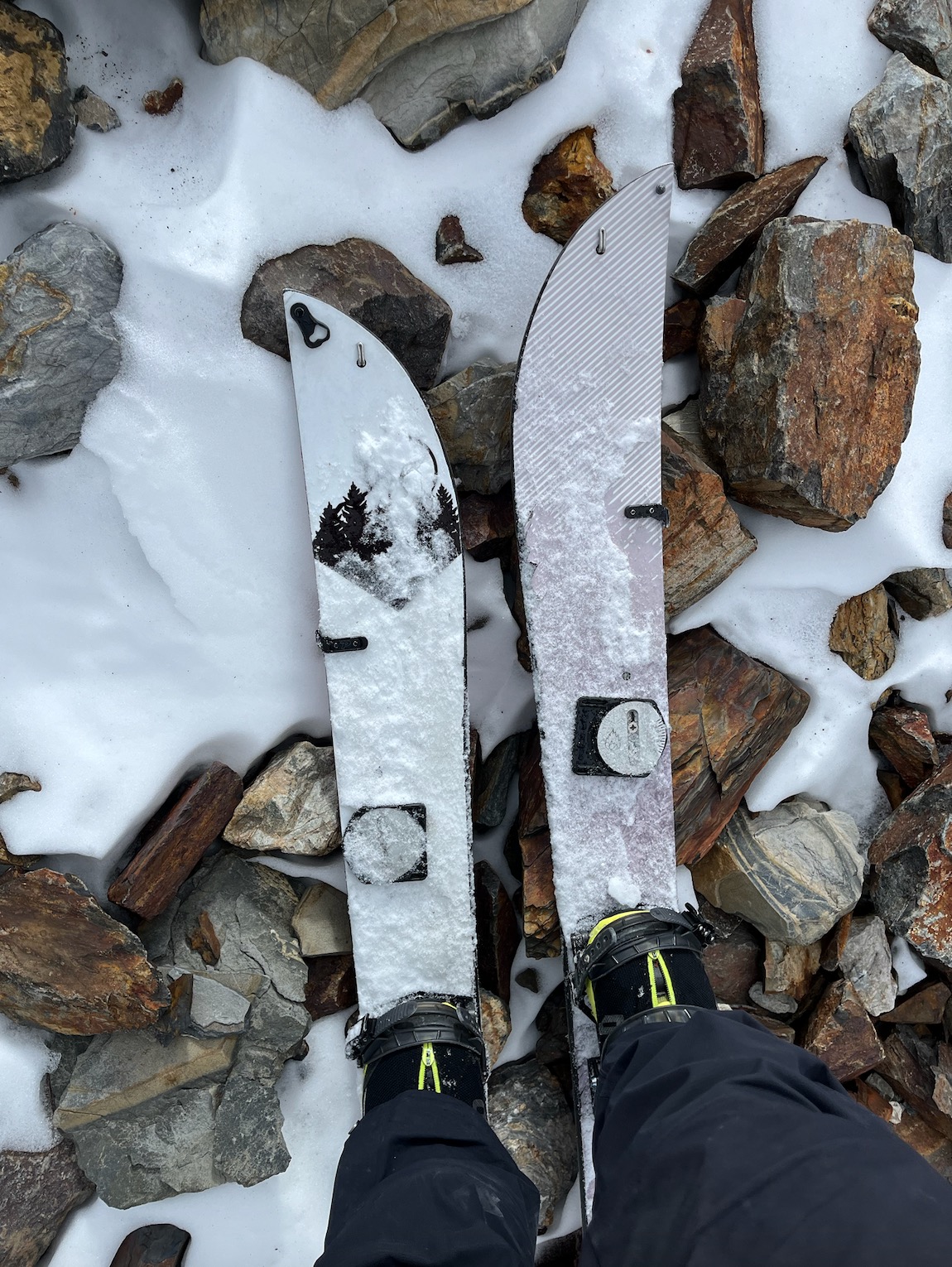
With low avy danger, I set out to explore terrain today, and get a baseline understanding of a zone we've yet to visit this season. As wind slabs from the recent storm have settled, I also wanted check in to see if/how the snowpack and snow surfaces are changing in high elevation, leeward terrain. Getting to the high elevation leeward terrain was somewhat doable, and not as bad as expected (my expectations were very low). But sharps and also talus walking were necessary on the way up, and mostly survival riding was the story on the way down.
I found some surface variability and snowpack structure variability in the high elevation, leeward terrain. See snowpack for details.
Weather
- Air Temp
- 46/34/50
- Cloud Cover
- broken
- Recent Snowfall
- Trace
- Snow Avail For Transport
- small smounts
Freezing line was above 10800' today near Esha peak. Winds were variable through the canyon, likely as a result of terrain funneling. Clouds were moving quickly from the W (with some variability N and S) for most of the day. Winds and gusts were infrequent, picking up and slowing down at various times throughout the day. Partly sunny, mostly cloudy.
Snowpack
In this drainage, elevation and exposure seemed the most important discerning factor for snowpack structure and surfaces.
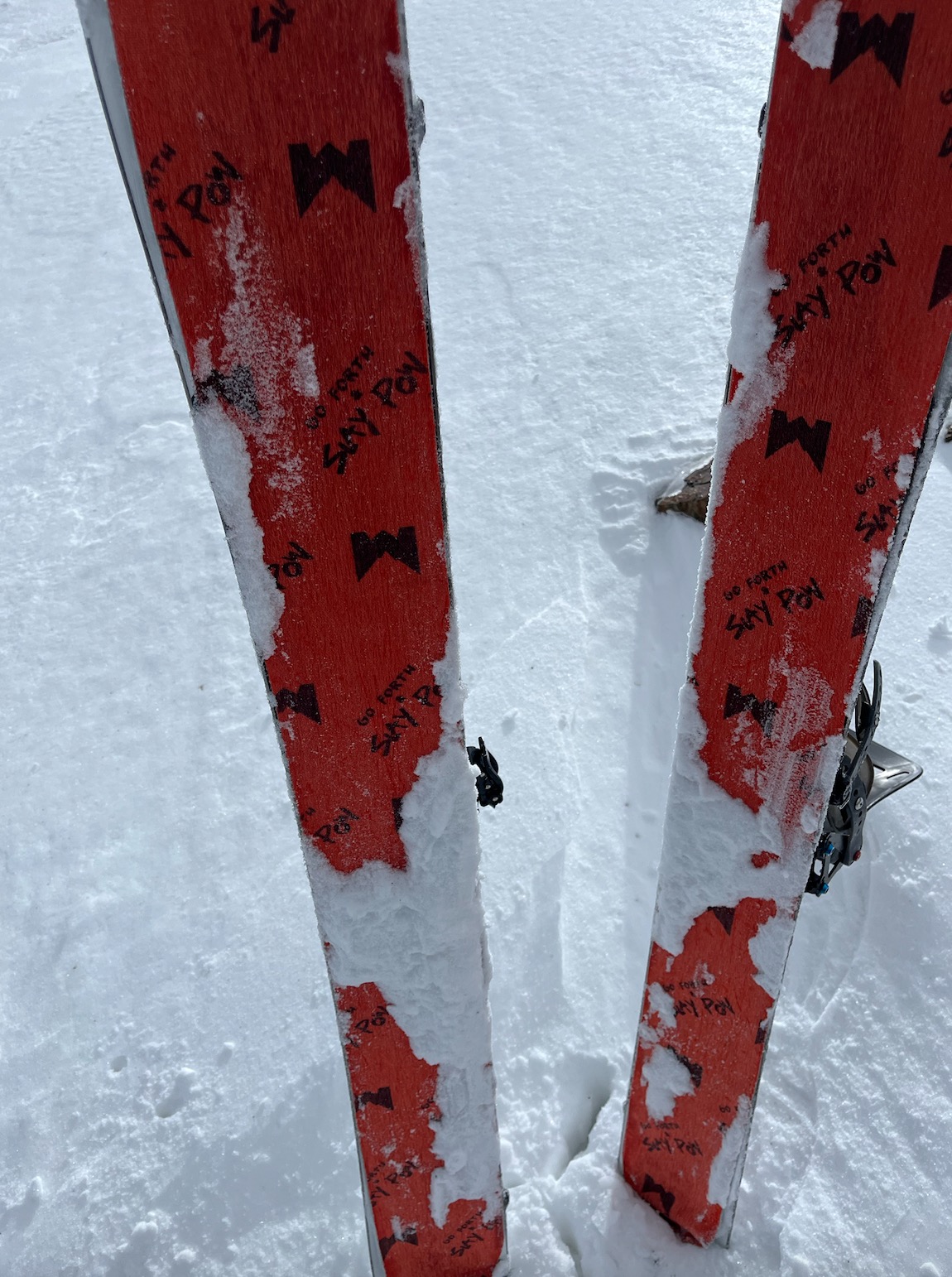
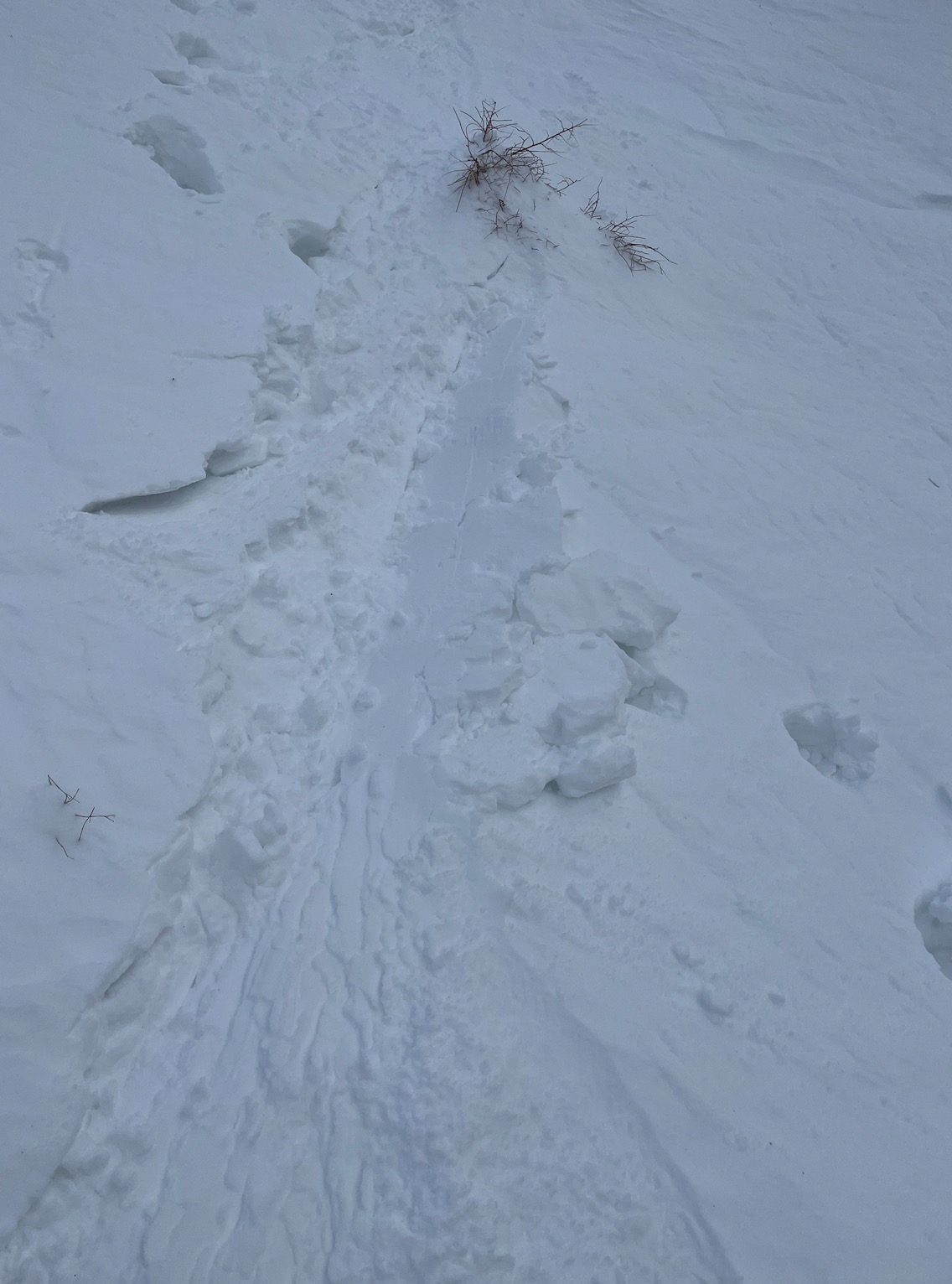
Below 8800: HS 0 - 25 cm. Leeward slopes had more snow, as did catchment zones (gully) than windward or exposed slopes. Snow surfaces were supportable and sometimes slick in the am hours, and then breakable crust on the afternoon descent. *Below 8000 the snowpack was up to 40 cm of mush astop bushes and rocks in the afternoon.
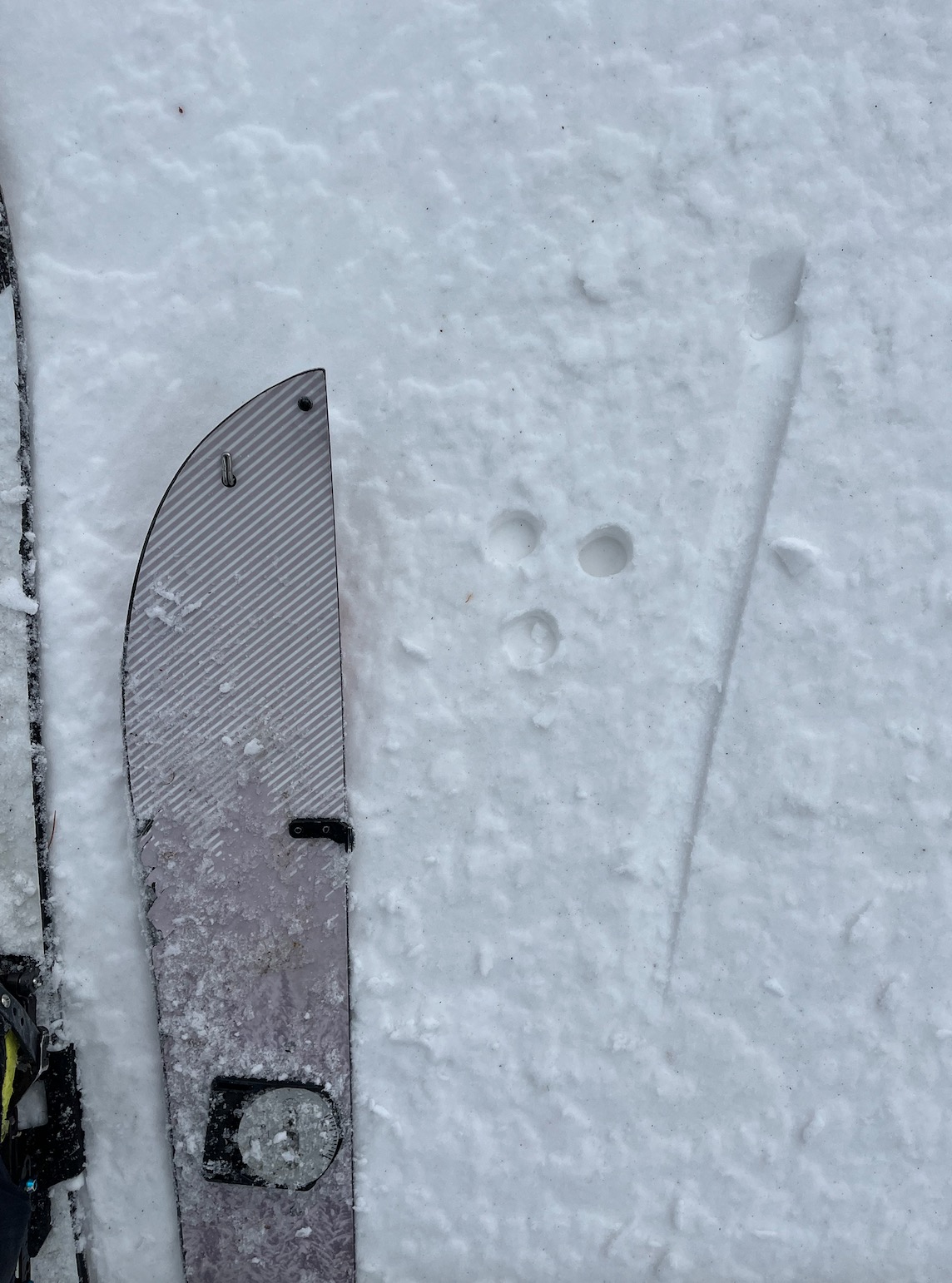
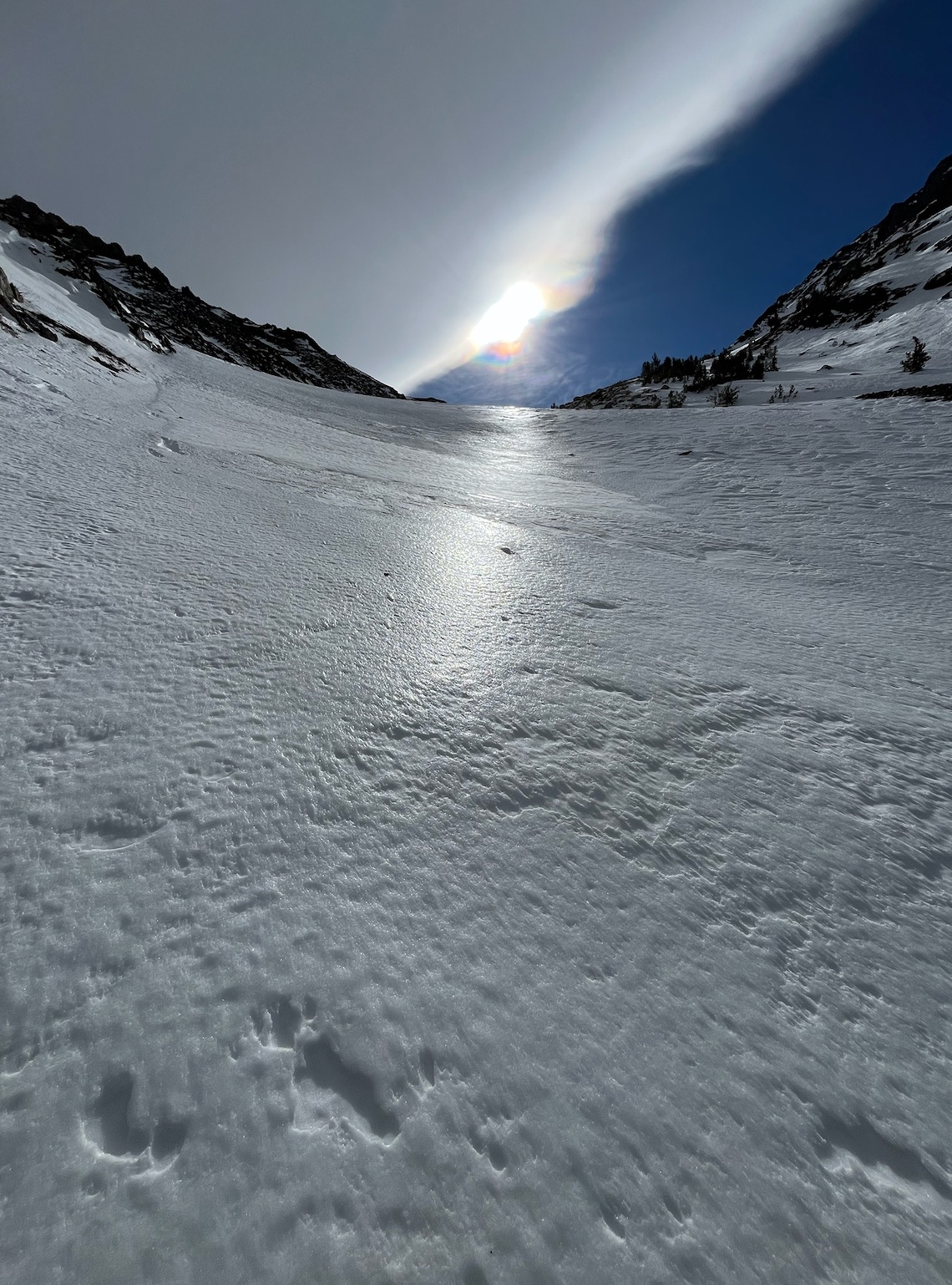
8800' - 10000': HS 0 - 55 cm. Some smooth surfaces P-K hard that softened with warmth just enough to be edgeable (after 11 am), cratered sastrugi, talus, or a trace to 2 in of F wet snow on top of the P-K surface.
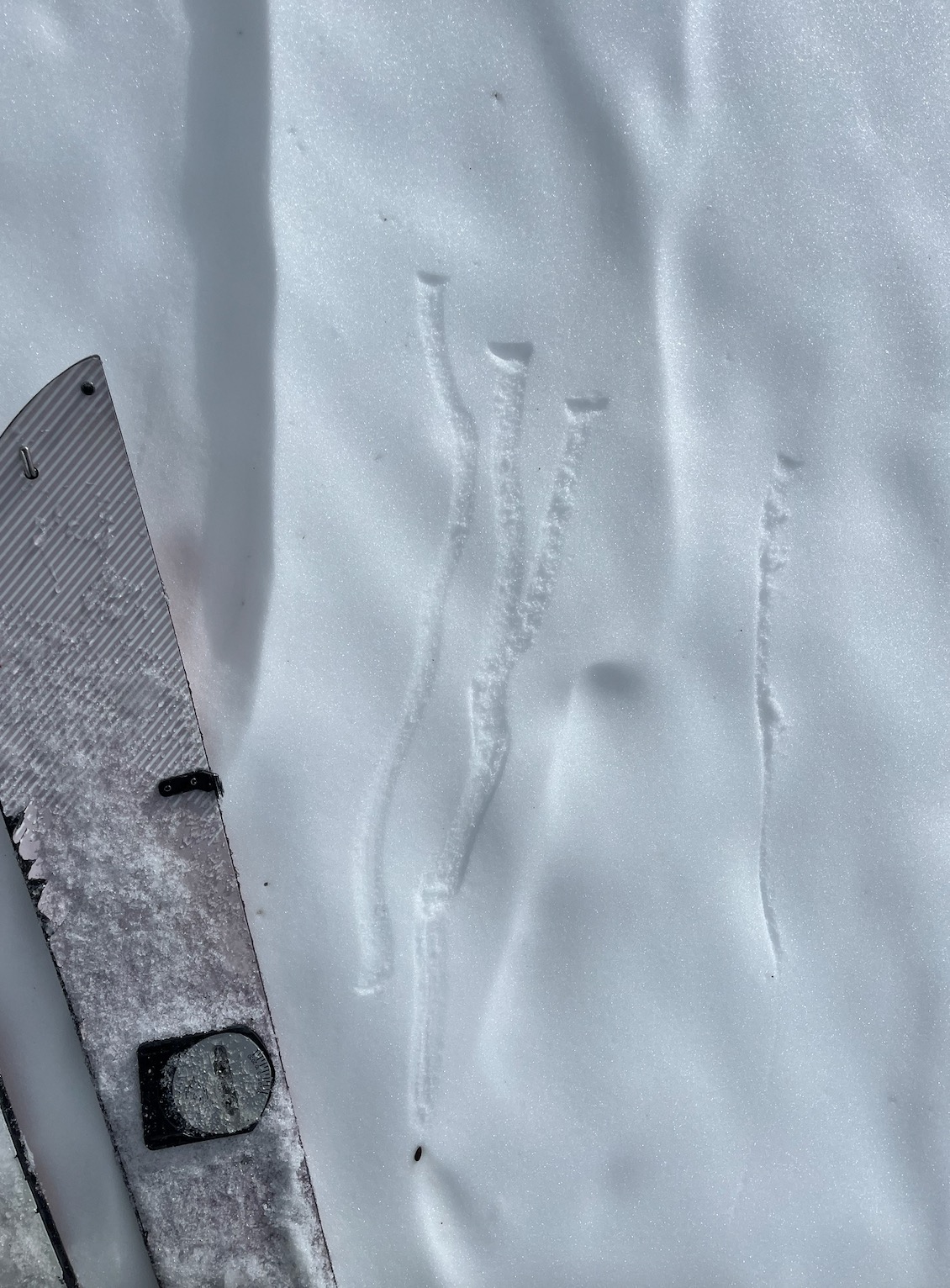
10000' - 108000' (E - N, ATL, protected feature): HS 0 - 95 cm. Variable surfaces and snowpack. General structure is right side up facets F - 1F beneath a P - K wind compacted layer (up to 10 cm) with a variety of surfaces resting on said layer. Surfaces include tiny near surface facets (.01/.03), 4F wind affected snow, and nothing above the P-K wind compacted layer. Some areas held a shallow snowpack of only F facets (up to 25 cm observed), while others areas held 1F wind packed grains to ground with tiny near surface facets (.01/.03) on top.