
Quick report
A mild wet day in the mountains. All our avalanche concerns were limited to the upper foot or so of the snowpack. Conditions transitioned from wet to dry around 4500ft.
Weather
- Air Temp
- 32
- Cloud Cover
- obscured
- Wind Loading
- none
- Rain Elevation
- 3500
- Recent Snowfall
- 8
- Snow Avail For Transport
- small smounts
A mild wet day in the mountains. Snow at the trailhead in the morning, but you could feel it warming. No real snow accumulation until 3500ft. Winds were generally light out of the West.
Snowpack
The snow transitioned from wet to dry around 4500ft in elevation.
Snow Totals: 3000ft 0in, 3500ft trace, 4500ft 2in, 5000ft 4in.
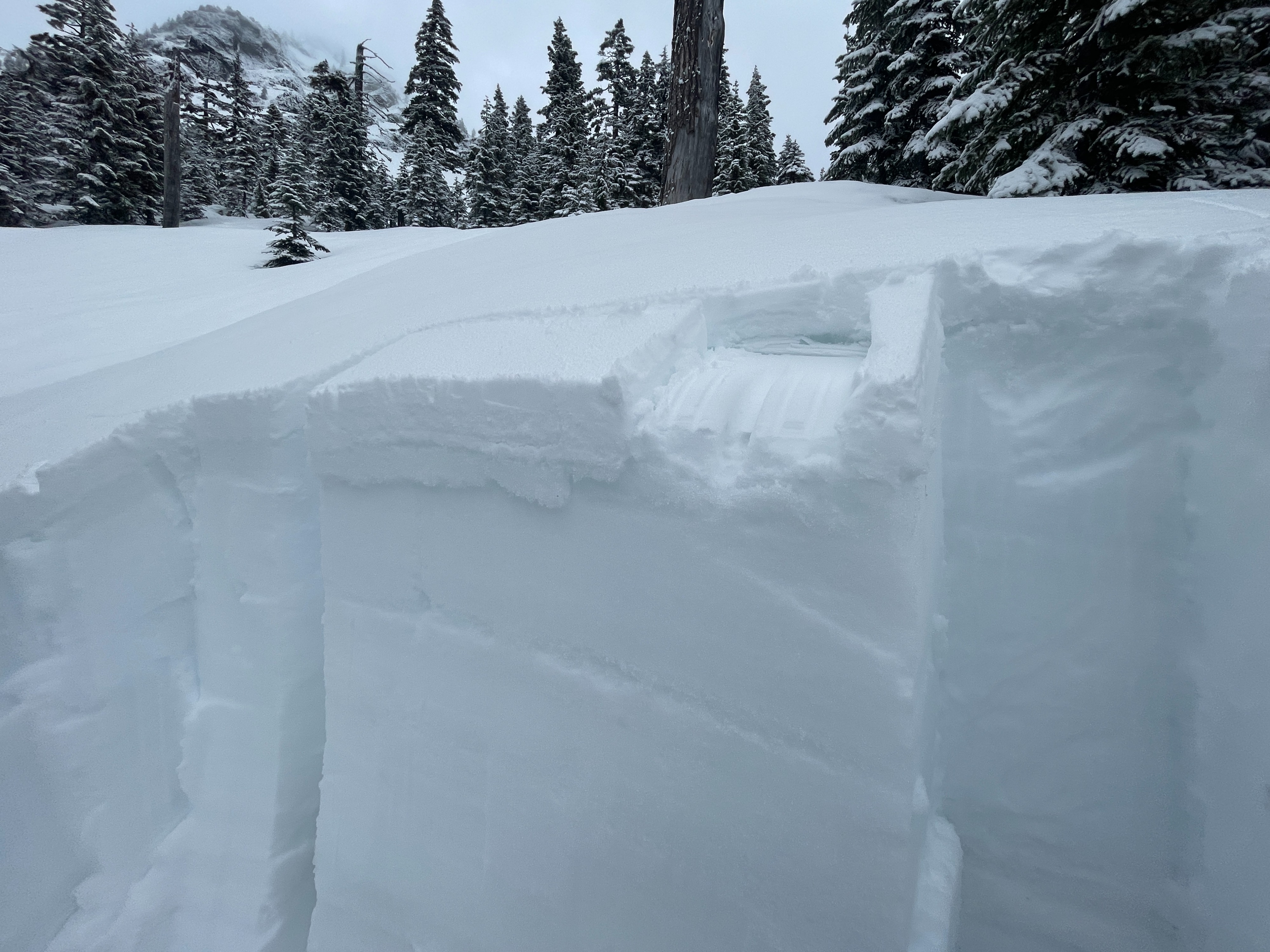
Below the new snow a weak crust was forming over wet grains. This crust was not generally supportable. In some places, as the crust would break the "slab" (almost too shallow to call a slab) would slide on the underlying wet snow.
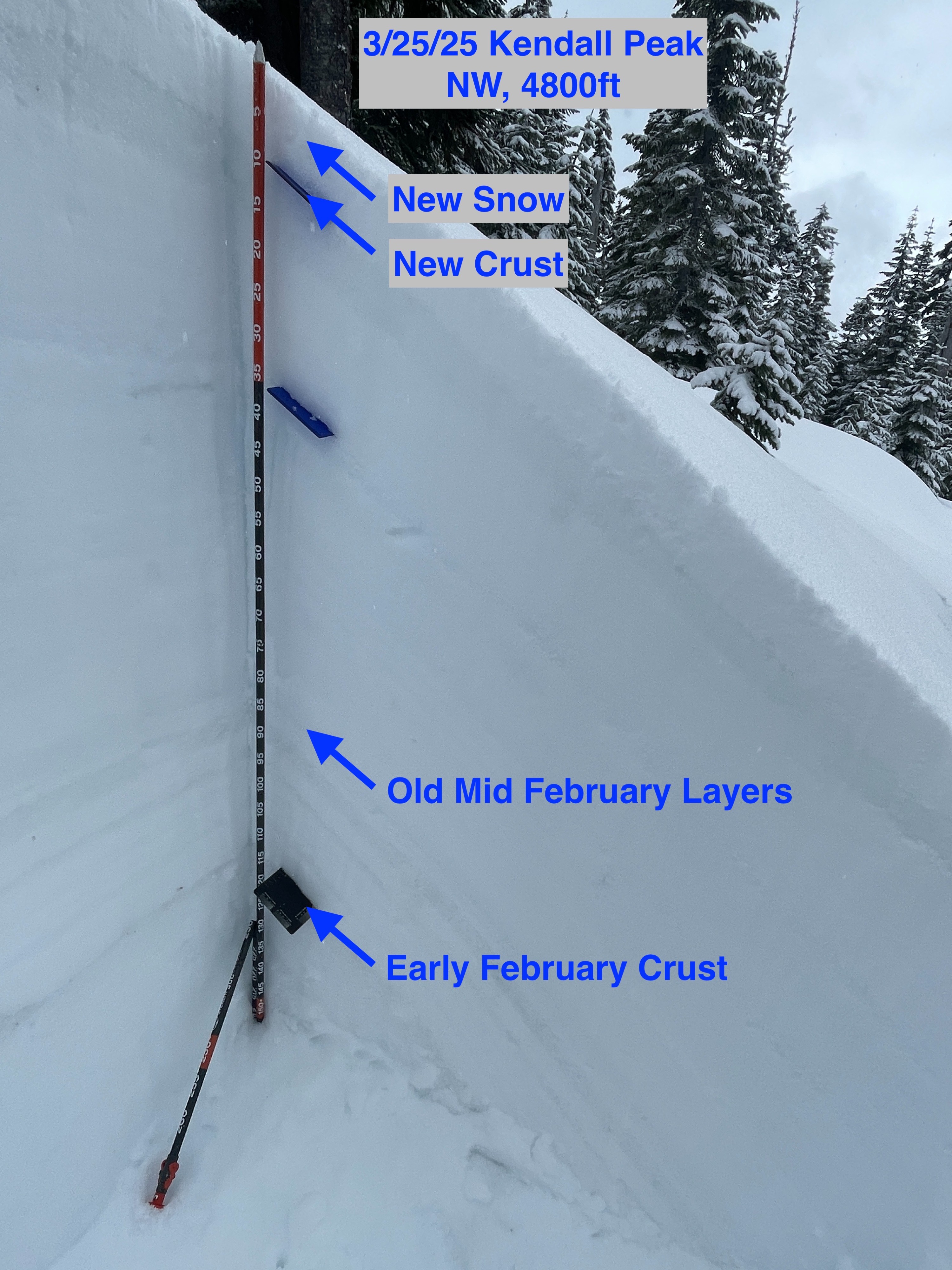
A snow profile at one of our common digging locations (NW, 4800ft) showed alternating layers of wet and dry snow in the upper snowpack. While you could still see most of the notable layers all the way back to the Early February Crust, the upper snowpack is much warmer and very strong. No layers of concern were noted below the wet surface snow.
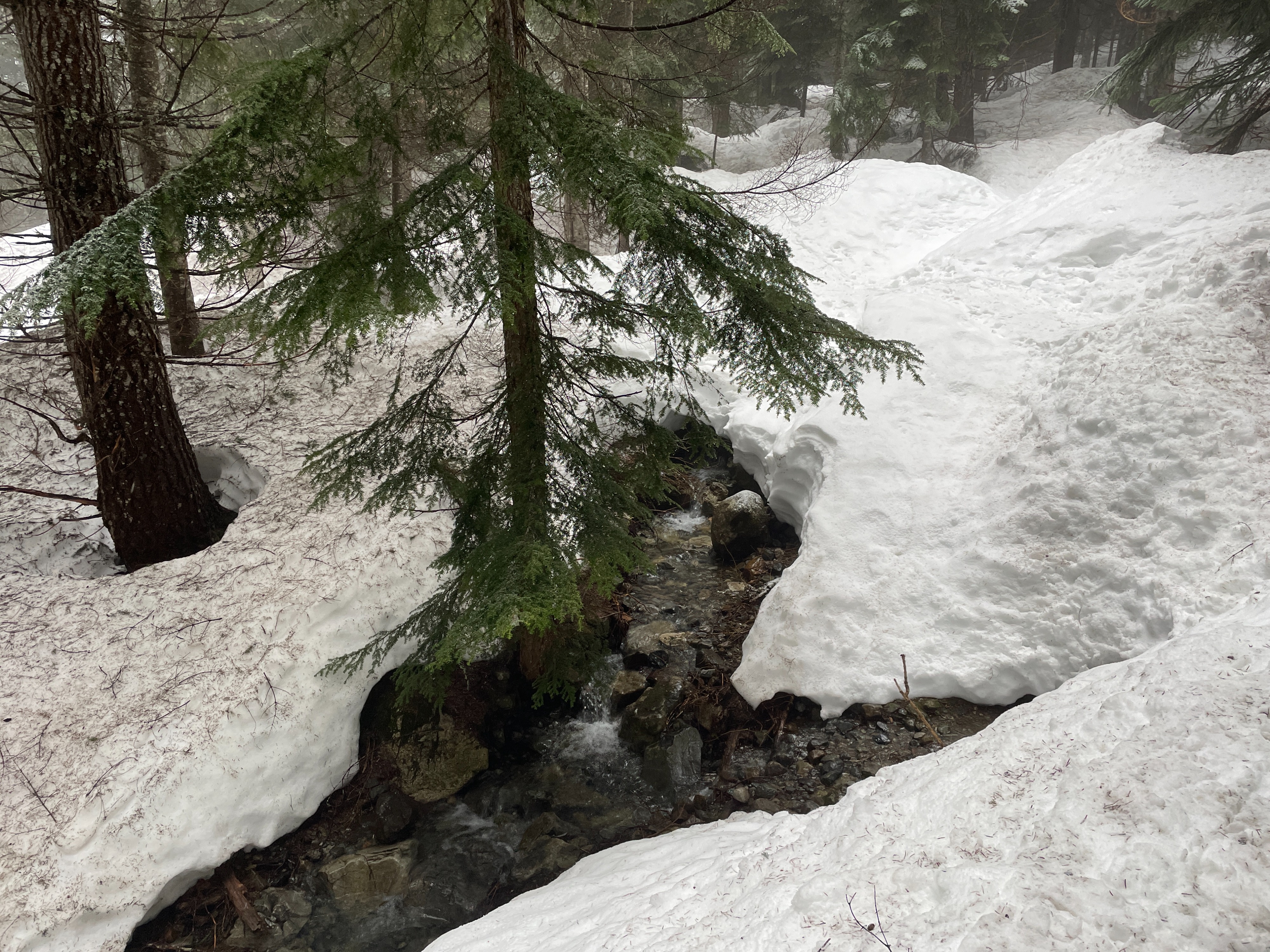
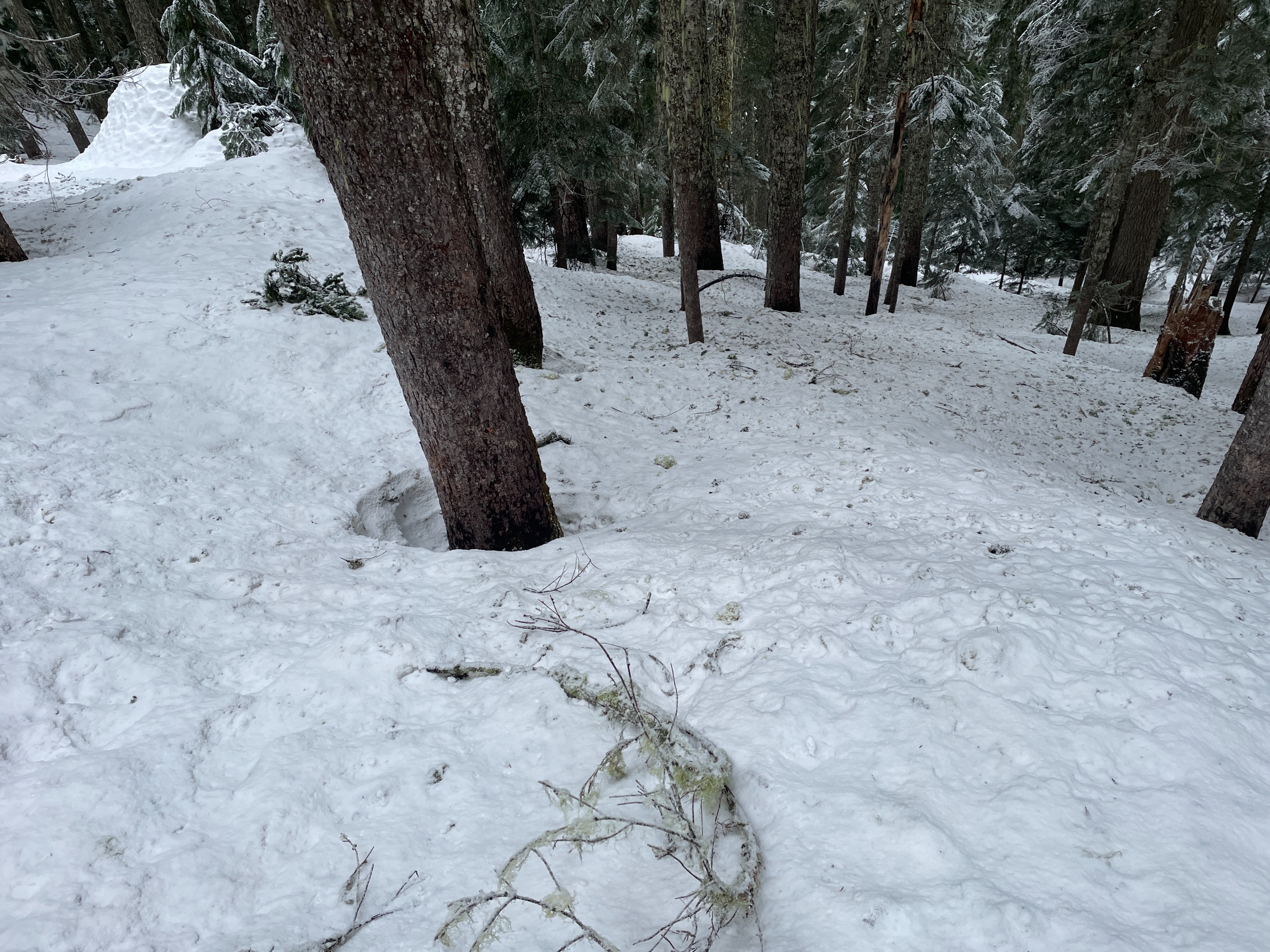
At lower elevations, little or now snow accumulated. The entire snowpack is made up of some sort of melt form. The snow is often punchy, with our boots easily sinking knee deep in many places. The snowpack down low is thinning rapidly. Bare spots, open creeks, and exposed obstacles were common. There's also debris all over the surface. It looks more like late April than March.
Avalanche
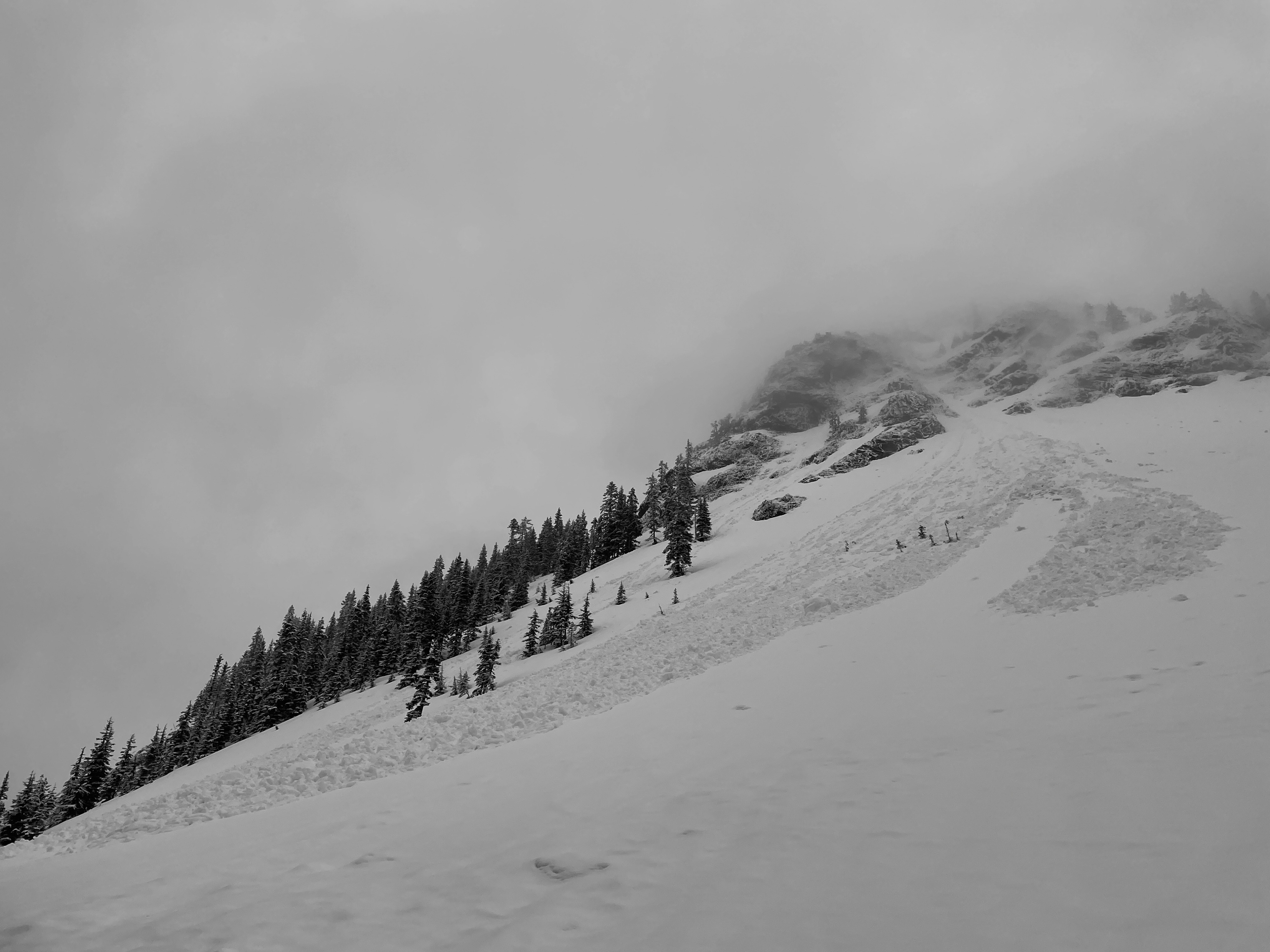
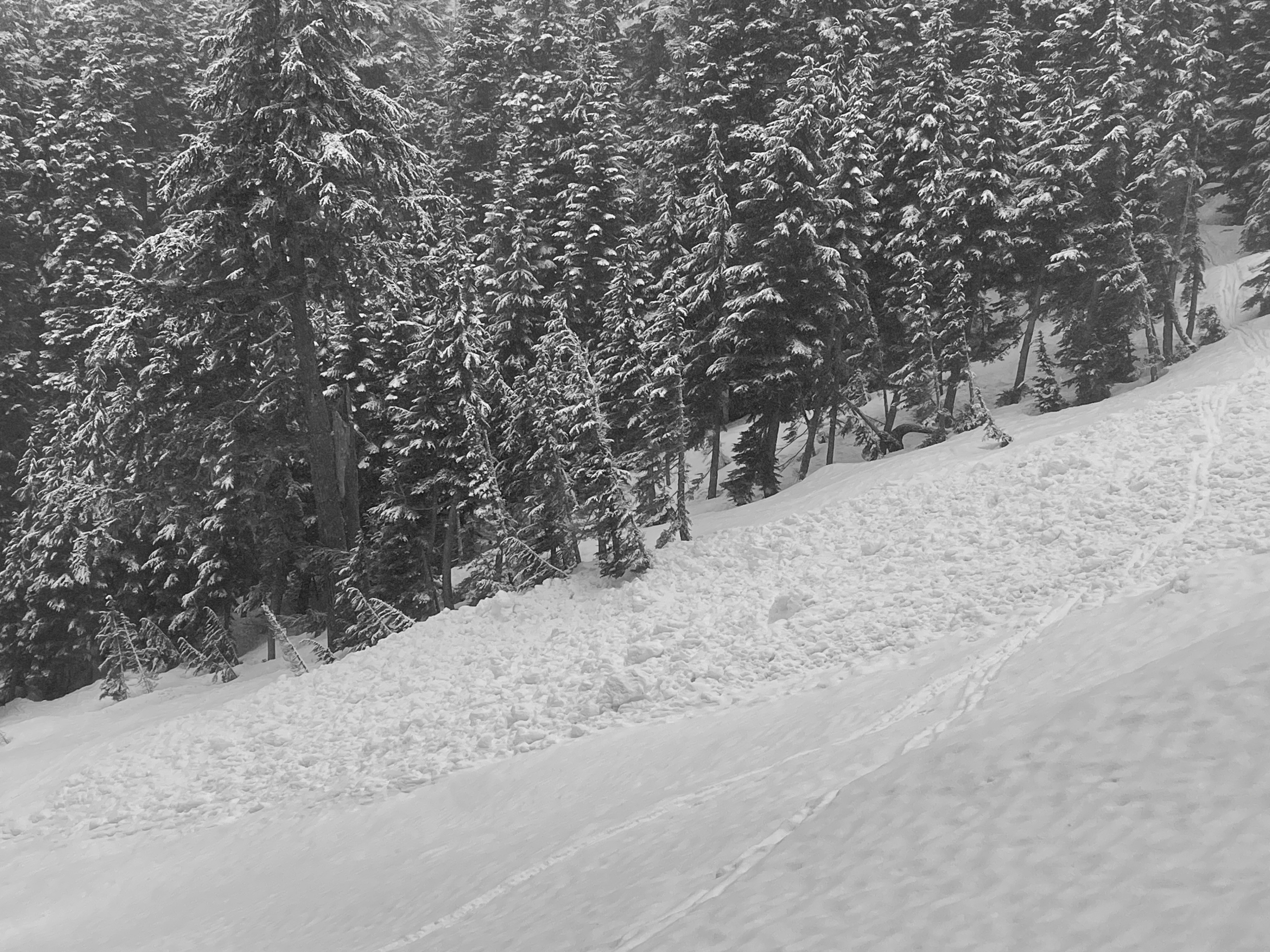
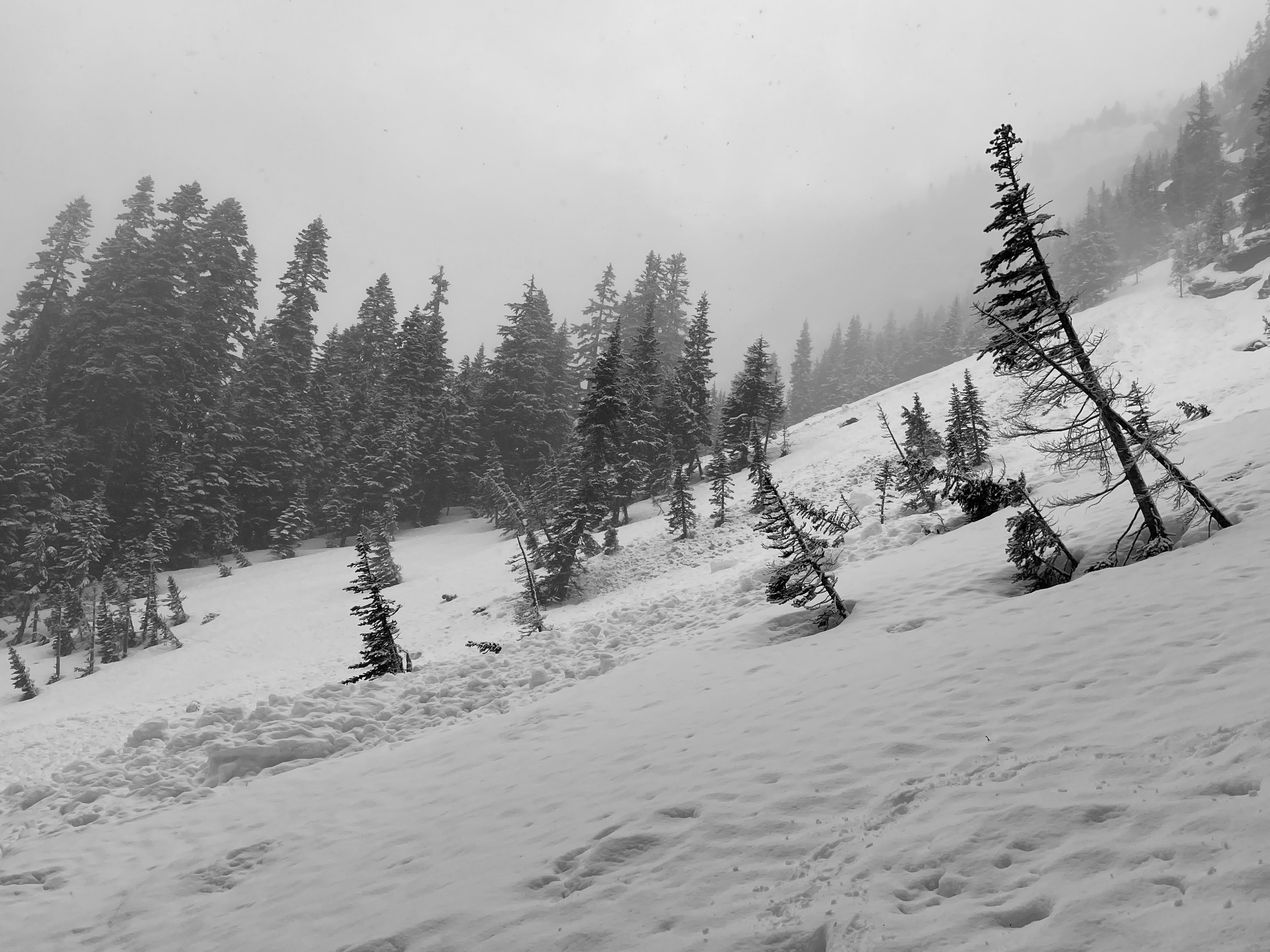
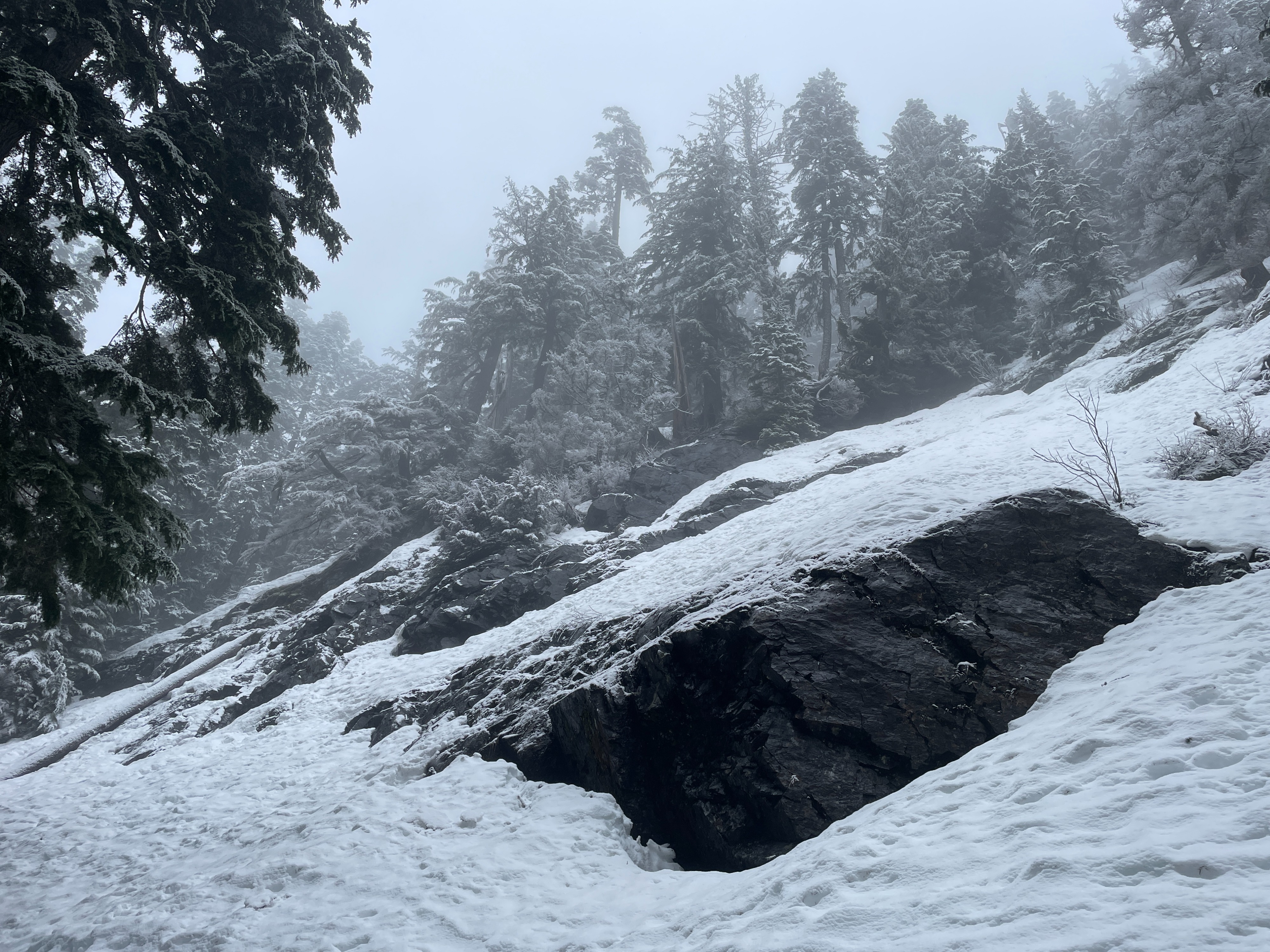
Wet avalanche debris piles of various ages were a common sight. We found 4 significant slides that appear to have occurred on Sunday 3/24. It's unclear if these were wet loose, glide, or some other type of shed-style avalanche. The biggest slides were all confined to very steep rocky terrain.