Persistent Slabs
- Alta montaña
- Límite del bosque
- Bajo el límite del bosque
- Probabilidad
- Possible
- Tamaño
- 1.5–2.5
Multiple weak layers exist in the snowpack, and triggering a persistent slab avalanche remains possible. The distribution, sensitivity, and depth of these layers vary across the zone. Here are two distinct scenarios:
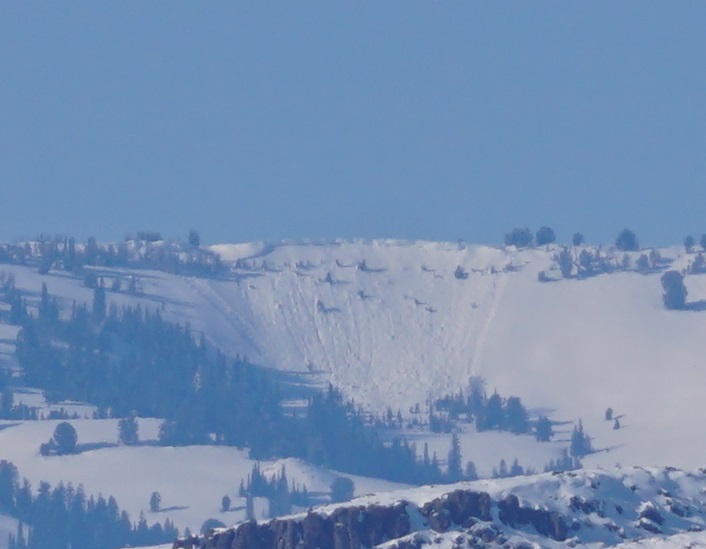
- Surface hoar: A skier triggered a slide near Galena Summit Sunday (view report). The 1-2' thick avalanche failed on a layer of buried surface hoar. This layer is responsible for several skier and rider triggered avalanches over the past two weeks. This layer is most problematic on slopes facing NW-N-NE that are steeper than about 35 degrees.
- Older weak layers: Crusts and/or facets, and occasionally surface hoar, exist deeper in the snowpack. These are buried beneath dense, 2-4' thick slabs—making them difficult to trigger but capable of producing very dangerous avalanches. While triggering them is unlikely, it can't be ruled out in rocky, wind-affected, alpine terrain (example). Slopes like these have variable snow depths, with thinner areas of the snowpack that allow us to impact deeper weak layers.
Overlapping, variable weak layers make avalanche conditions hard to predict. The single best way to reduce your risk is by avoiding slopes greater than about 35 degrees. Consider the consequences of going for a ride. Even small slides can have bad outcomes if they lead to trees, cliffs, or a creek bed.
(1/30/2023) This 1-2 foot thick, skier-triggered avalanche failed on a layer of buried surface hoar. Surface hoar is frequently found in shady, partially treed locations like this. N-NE aspect near 9100' in the Salmon River drainage near Galena Summit.