
Quick report
- Cracking
- specific
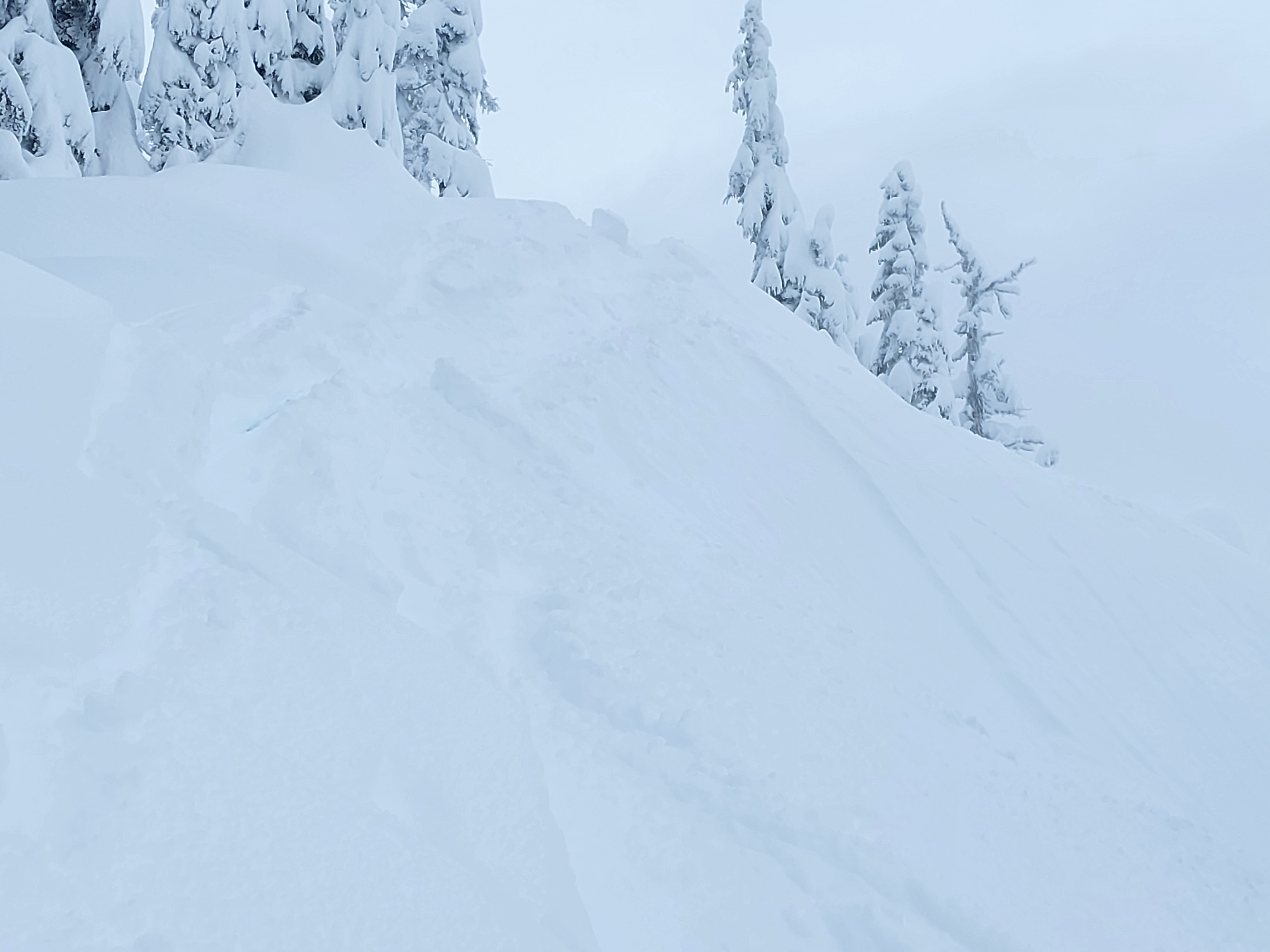
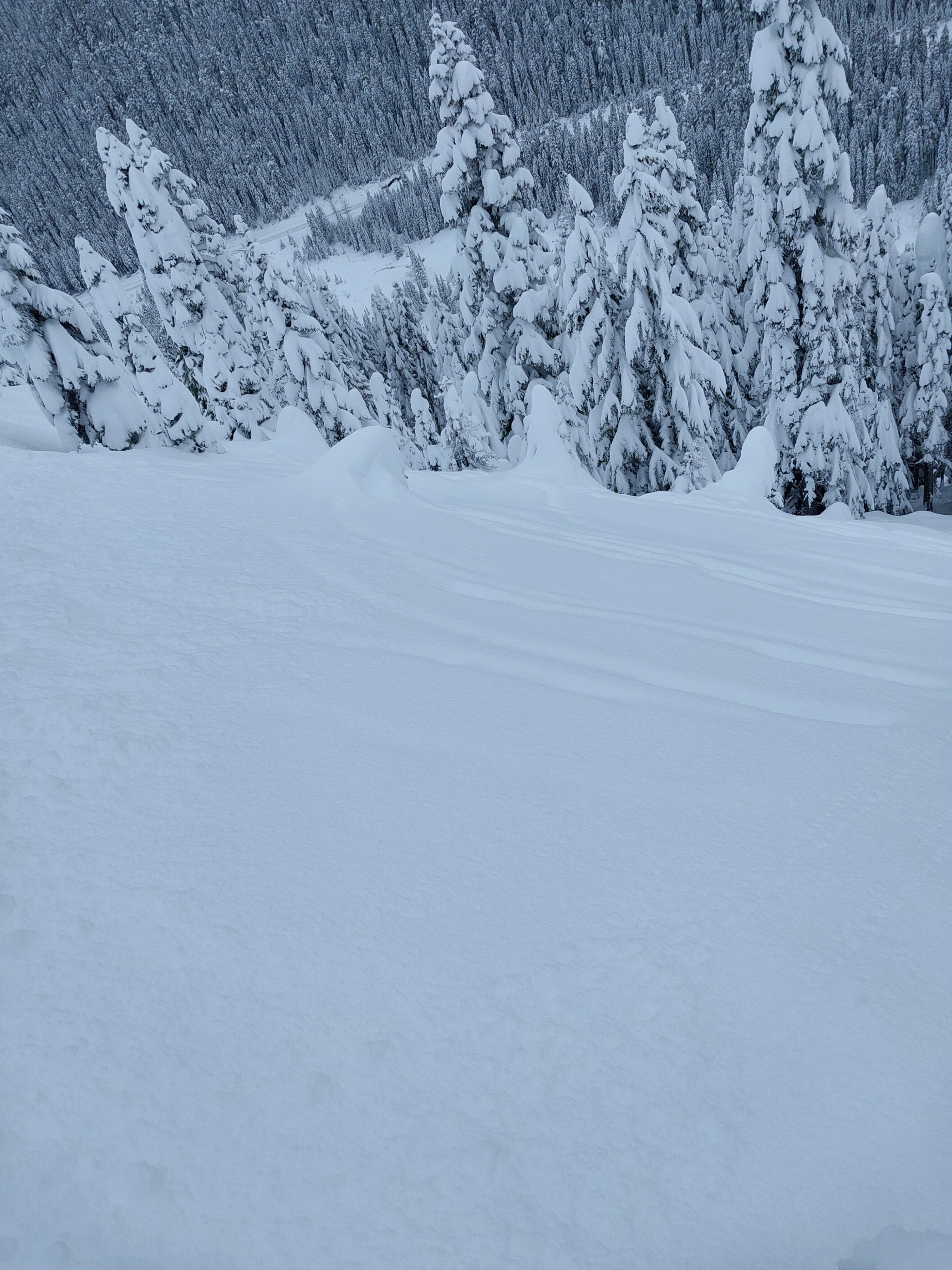
One notable example of cracking- a convex slope ~38° had "spider-web" cracks across it, but hadn't slid.
Weather
- Cloud Cover
- overcast
- Wind Loading
- previous
- Recent Snowfall
- 50cm
- Snow Avail For Transport
- large amounts
Storm snow: HN24 30cm, 50-60cm since 1/6. There was a wind event/peak temp on the night of 1/6. 10-15cm of colder, lower-density snow fell over this by morning. Lots of new snow. S1 through mid-AM. Snowfall tapered with intermittent thinning/ lifting of clouds by late AM. Winds were calm with light gusts at 5,400ft ridge. Temperatures warmed near freezing at pass level by noon
Snowpack
The top 10-20cm of storm snow was exceptionally light (F hard) over a slightly stiffer layer from overnight. The hardness of storm snow was "right-side up" on sheltered slopes, but not in wind-exposed terrain. The storm interfaces were stubborn to trigger on shorter and well-supported slopes. The 1/3 crust was 75-100cm below the surface at low-middle elevation wind-sheltered terrain. Generally, we saw a good bond at the 1/3 crust. However, natural and triggered (by others) avalanches indicate otherwise.
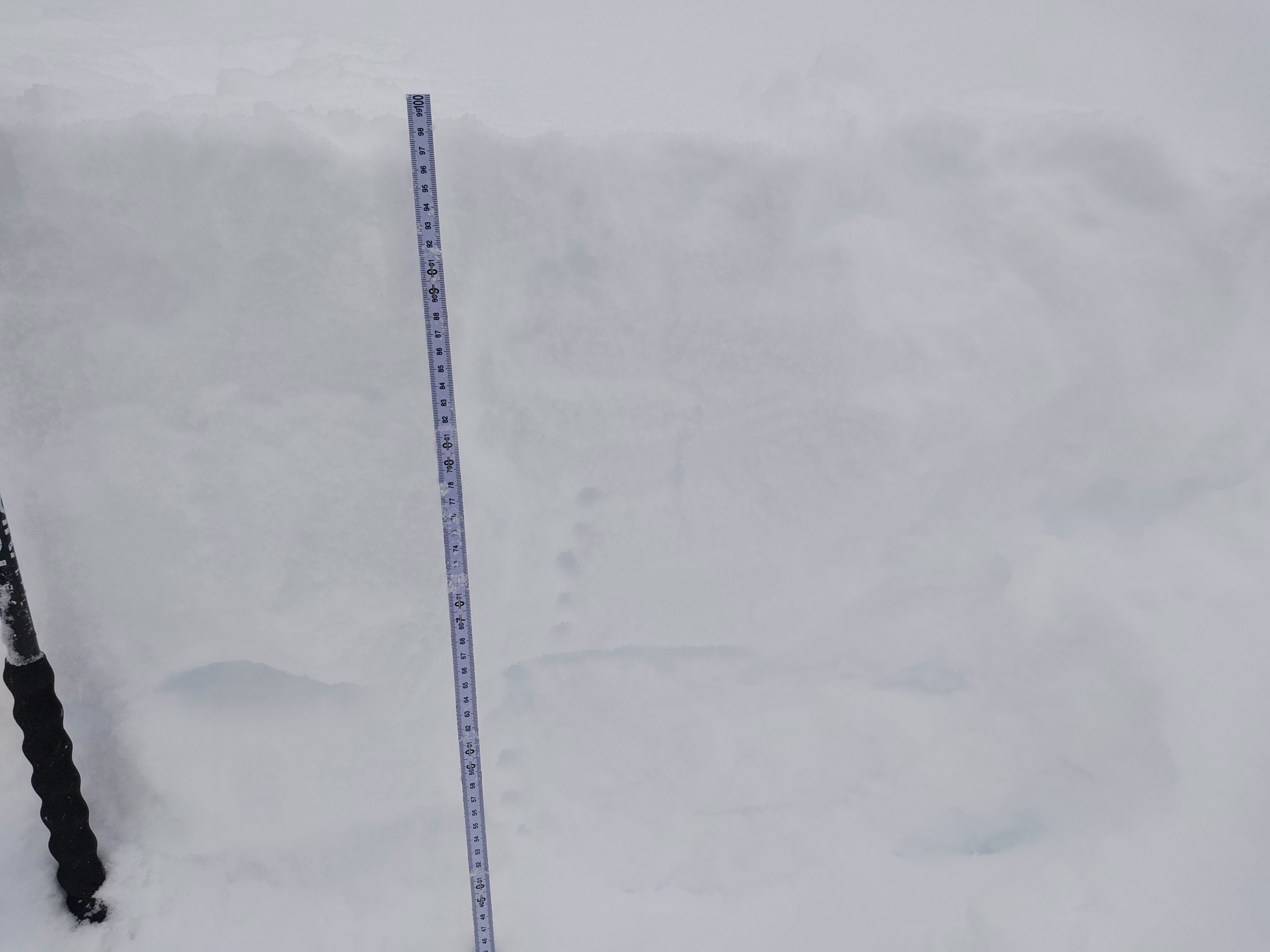
A quick profile of storm snow on a slightly wind-loaded 5,450ft ridge:
0-20cm: F+ hard
20-40cm: 4F+, moderate hand shear, planar (RP)
40-60cm: 4F
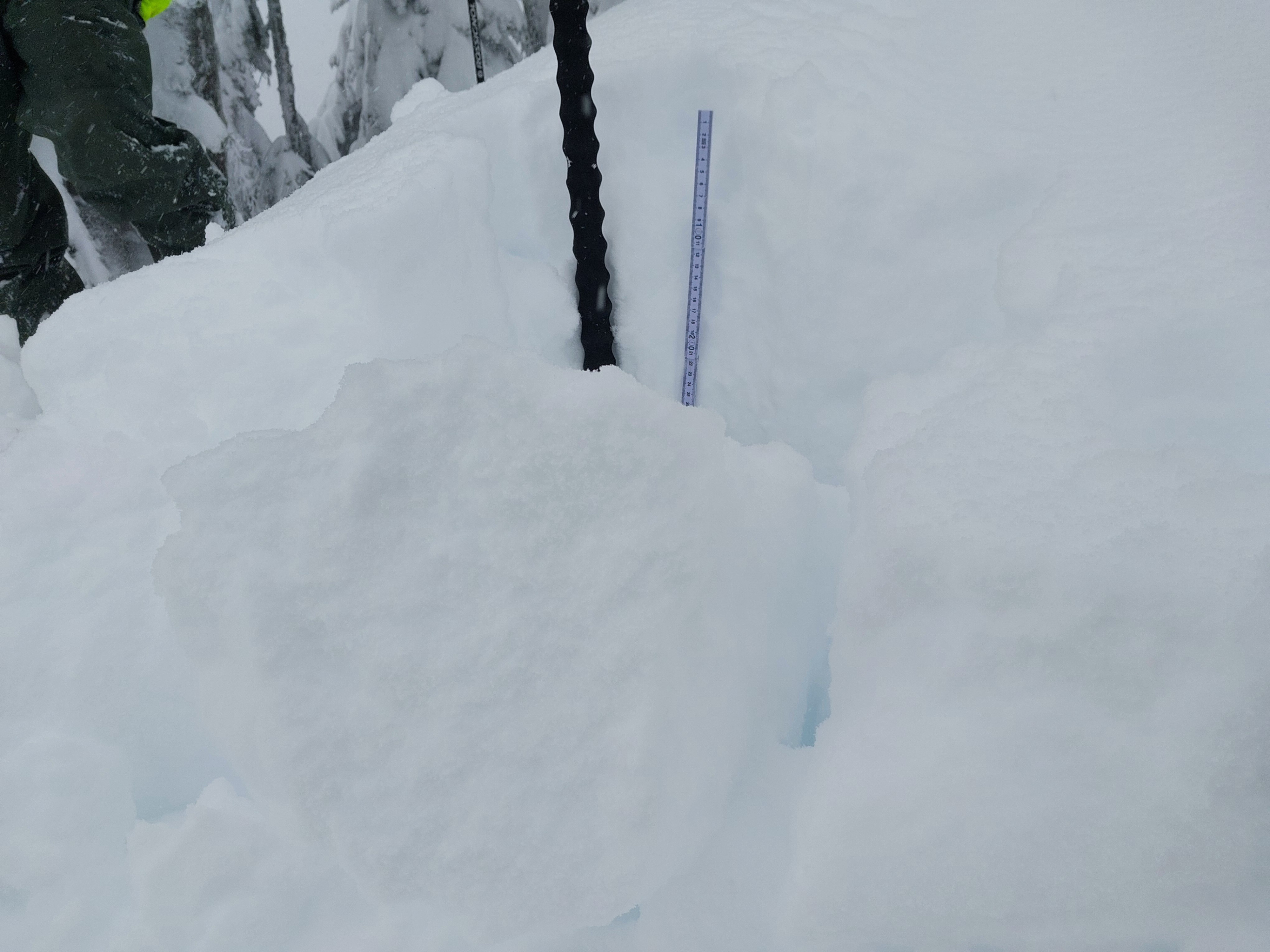
Profile (wind sheltered). S, 5,300ft
HS 206cm, boot pen 145cm, HST 50cm
↓30cm : mid-storm 1/6 interface. Sudden results CTE(SP)
↓50cm: 1/6 interface. resistant planar results CTM(RP)
↓76cm: 1/3 crust. Broken results CTM(BRK)
See profile photo and graph
Avalanche
- Size
- D2.5
- Type
- HS
- Count
- 3
- Aspect
- SE
- Trigger
- NC
- Elevation
- 6600 ft
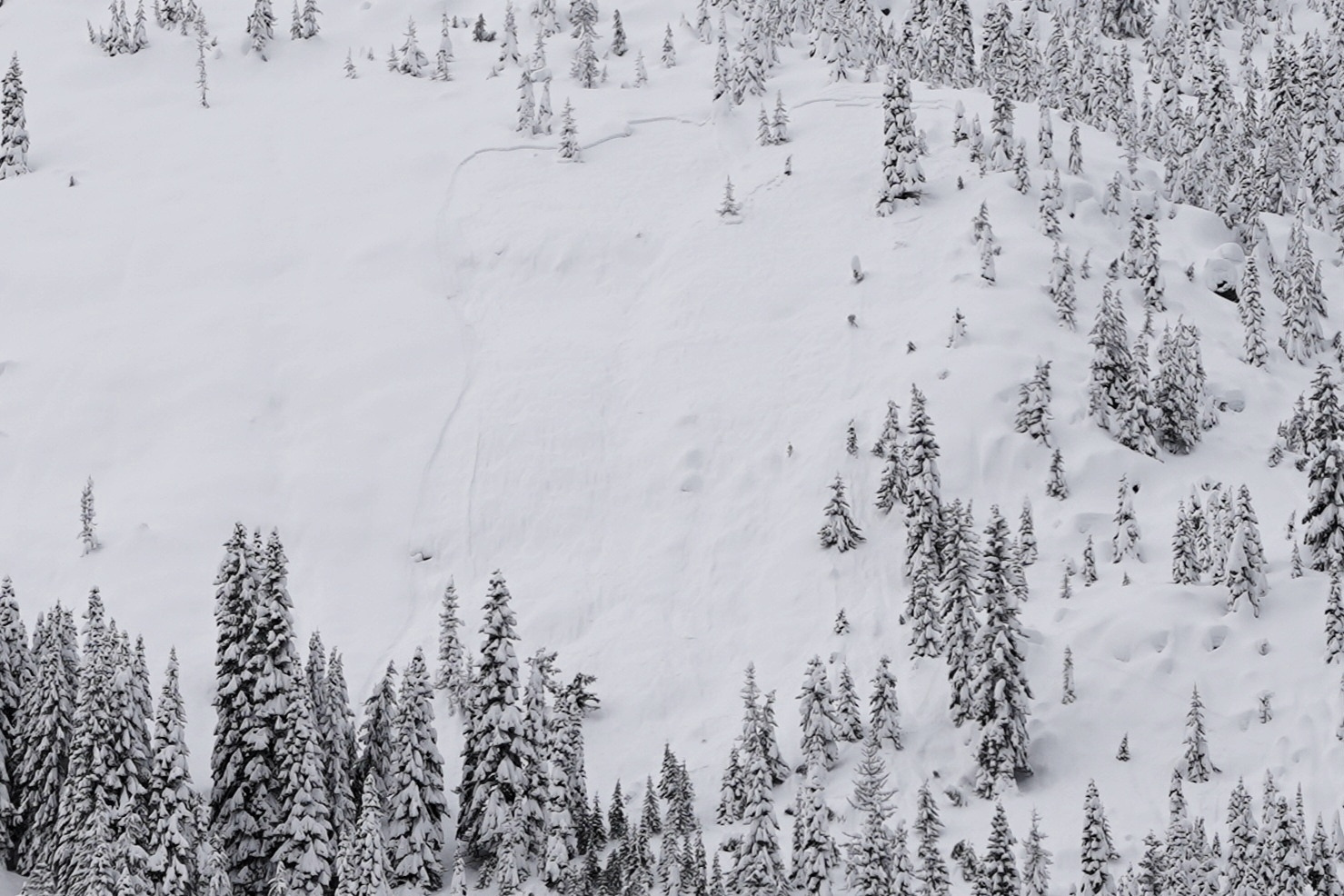
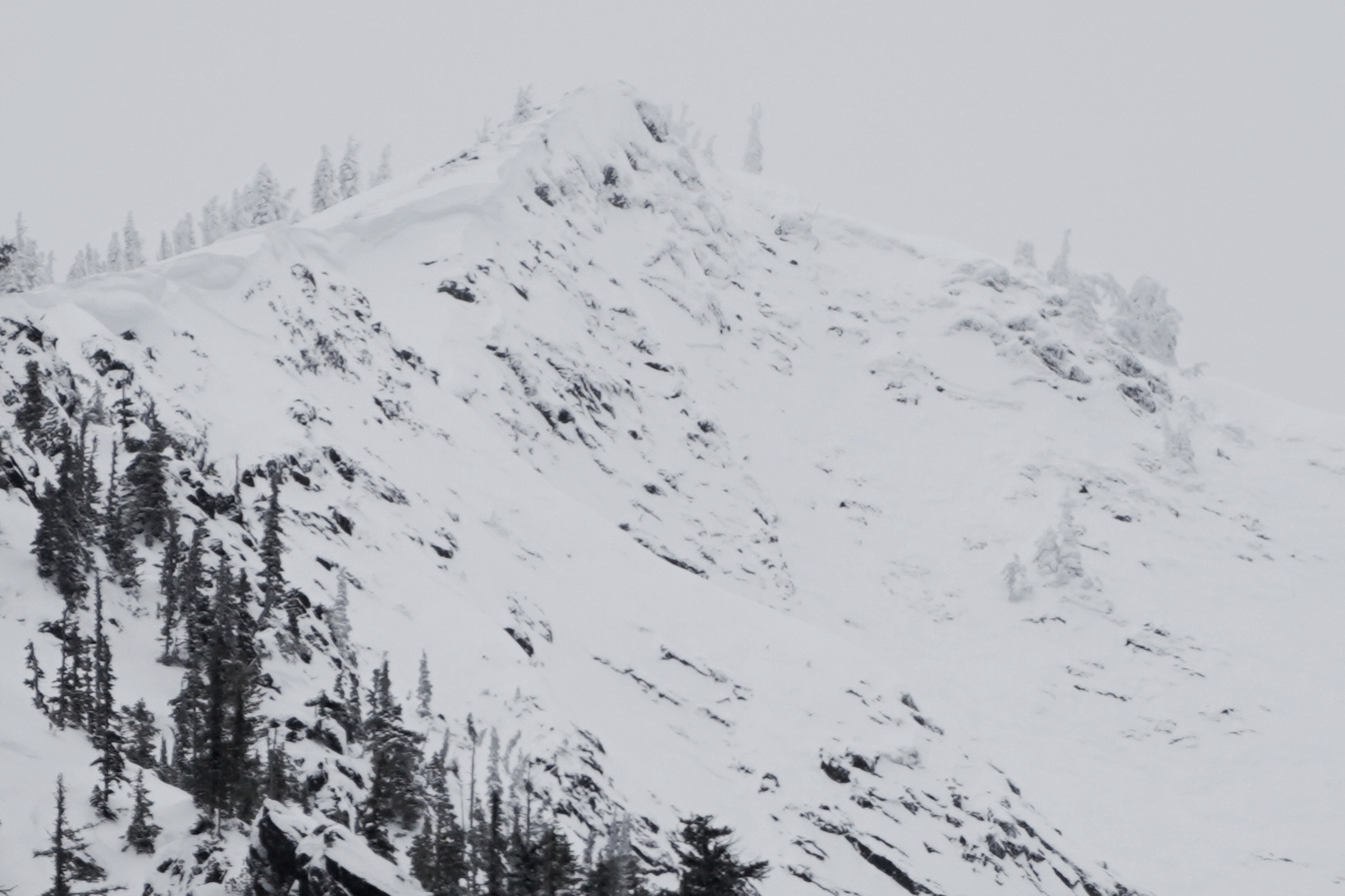
Natural cycle of D2 soft slabs in wind-sheltered terrain overnight. Loose dry avalanches 10-15cm deep were stubborn on most slopes, but easy to trigger on unsupported or sustained +40° slopes. Evidence of 2-3 slab avalanches (all lee/cross-loaded) that likely ran in old snow layers, 1/3 crust or deeper. One impressive, very large hard slab avalanche on Rock Mtn.