
Quick report
- Cracking
- specific
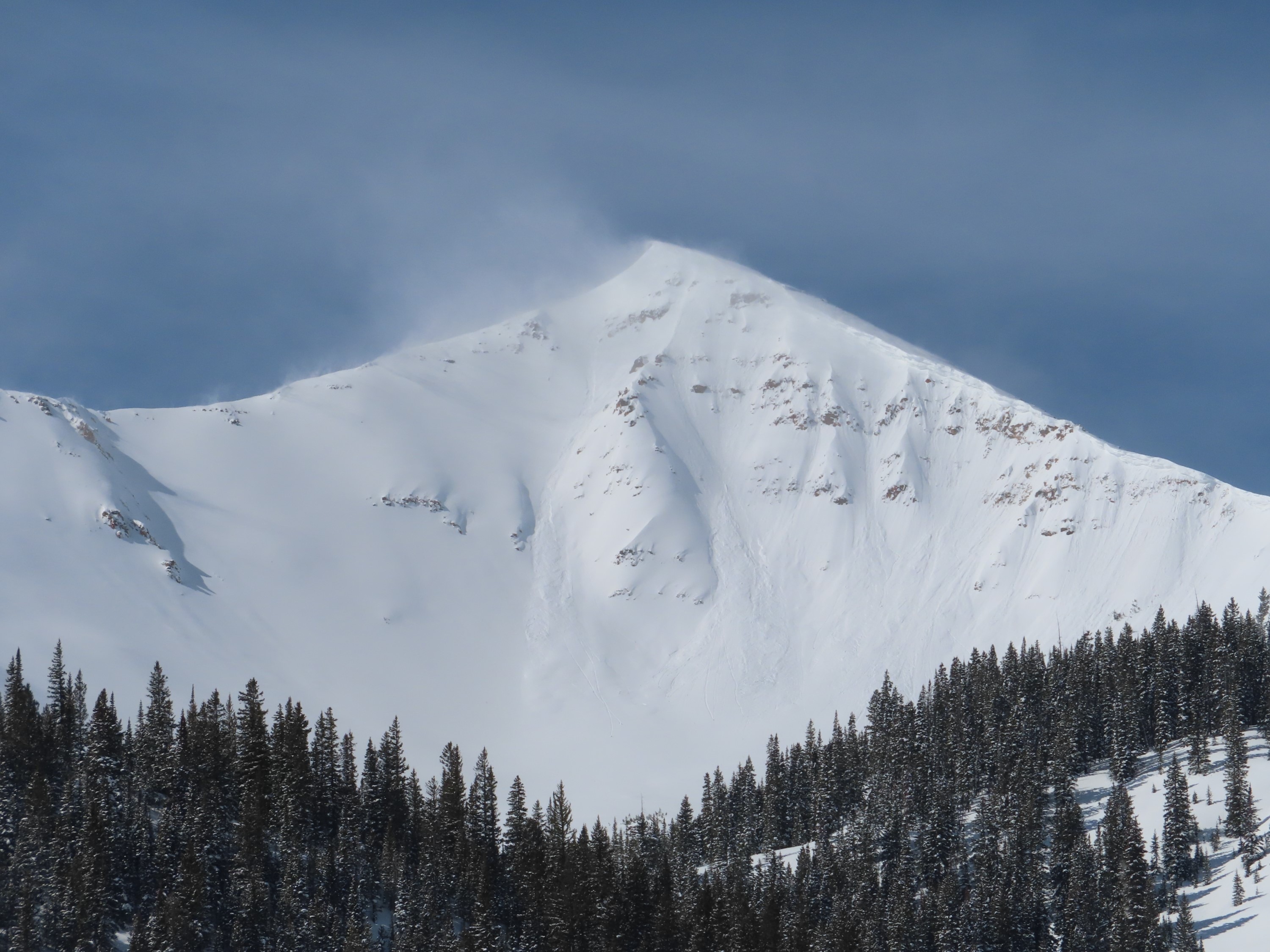
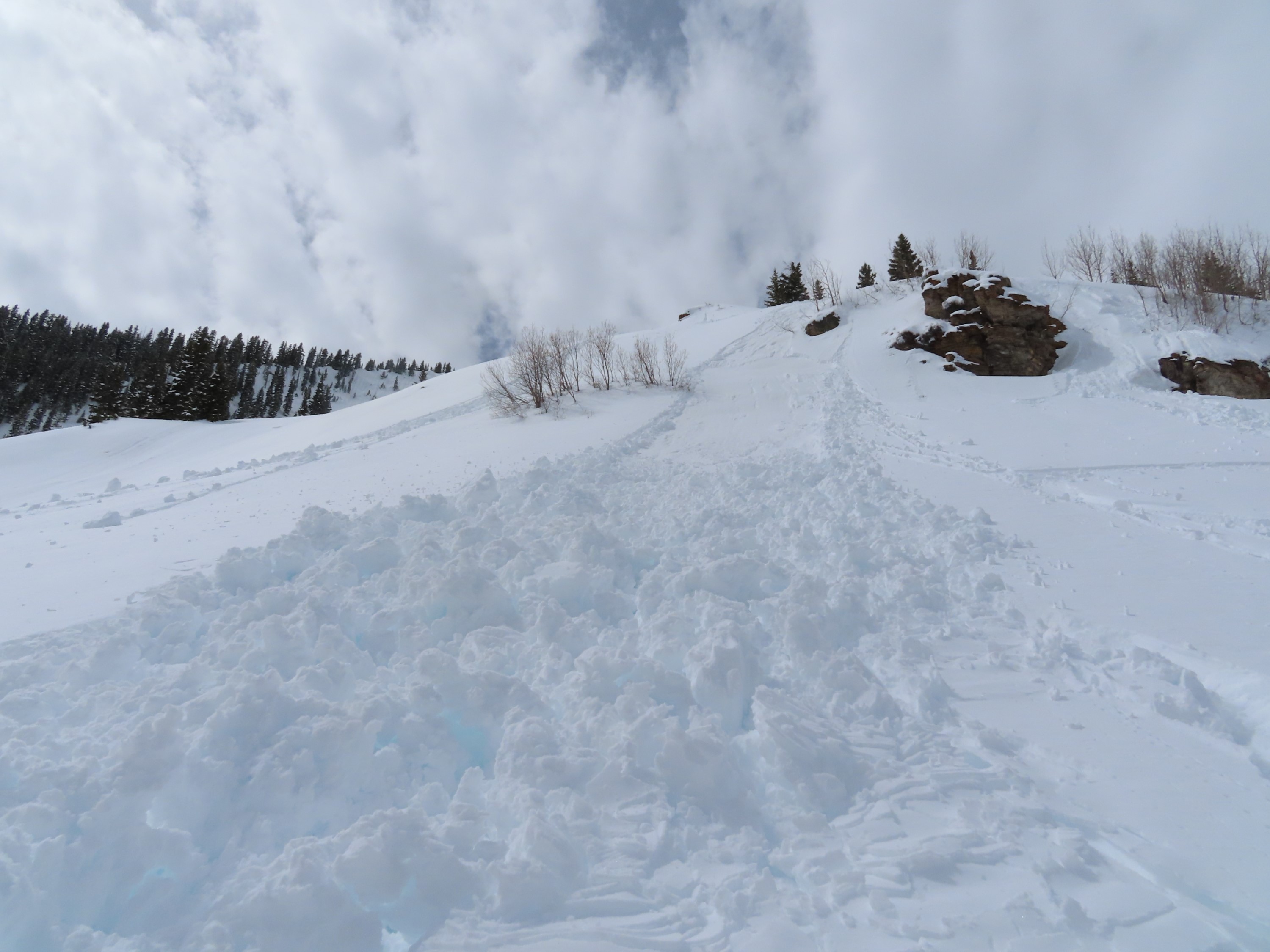
On wind-sheltered slopes below treeline, we managed for stubborn storm slabs and developing wet loose issues as the snow surface got damp on all aspects. Storm snow below 10.5k is typically 15" to 20", consolidating quickly, and on a healing trend. Natural and triggered avalanches at higher elevations, along with more common signs of instability, all pointed towards more dangerous conditions and more reactive instabilities above 10.5k, especially on drifted slopes. Flat light limited our ability to cover much ground in more wind exposed slopes, but the few slopes we did travel on produced cracking or avalanches.
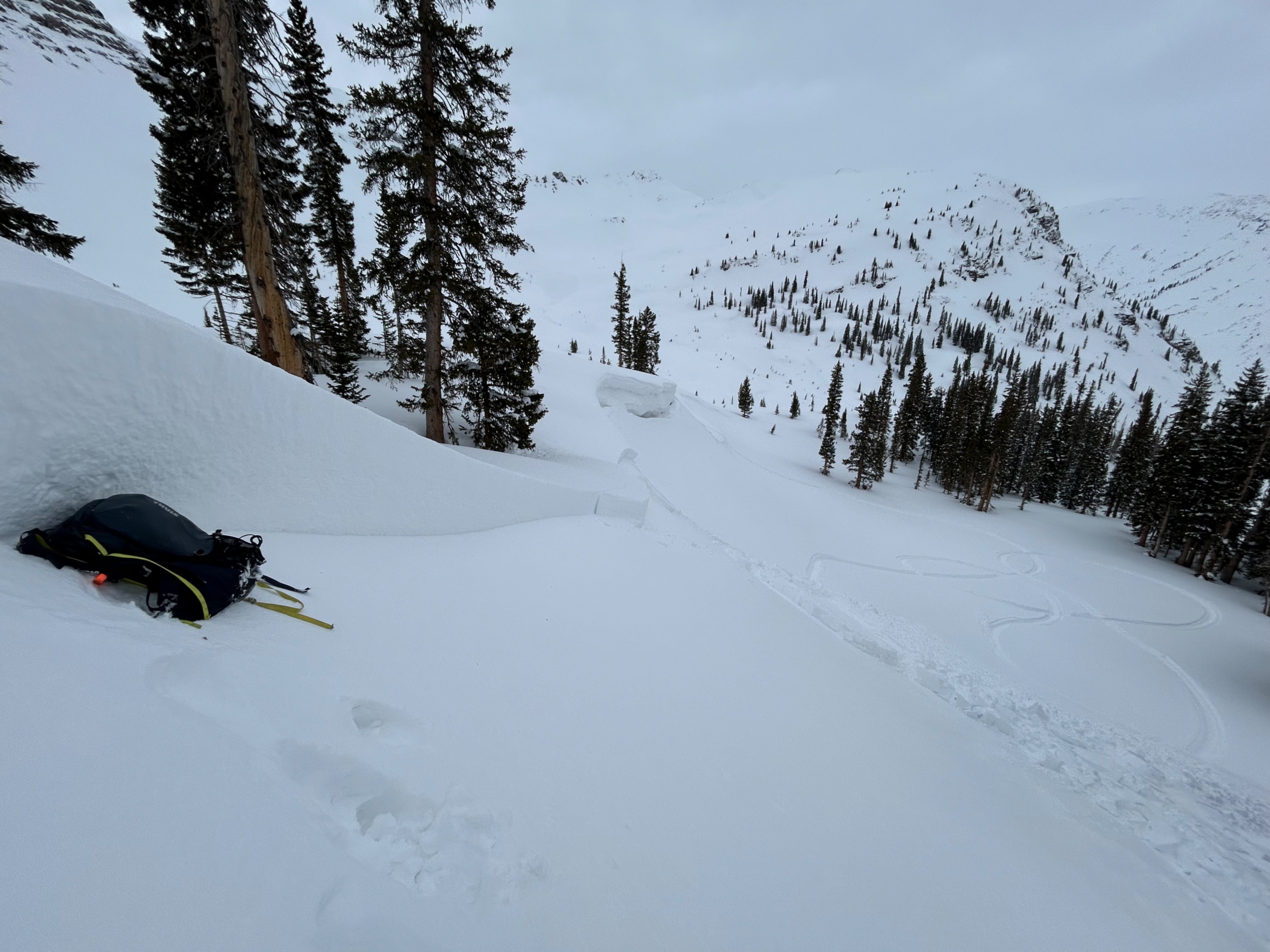
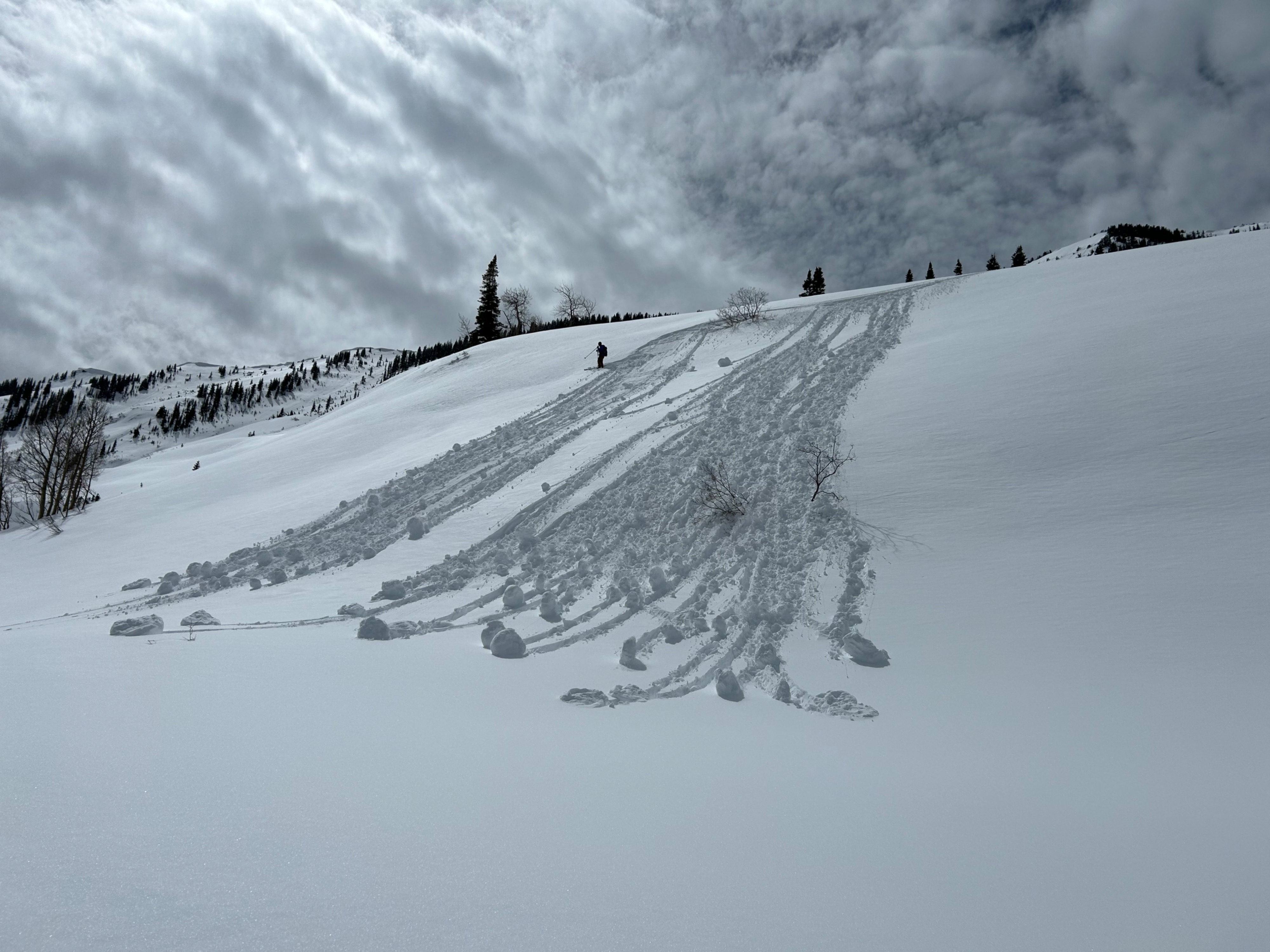
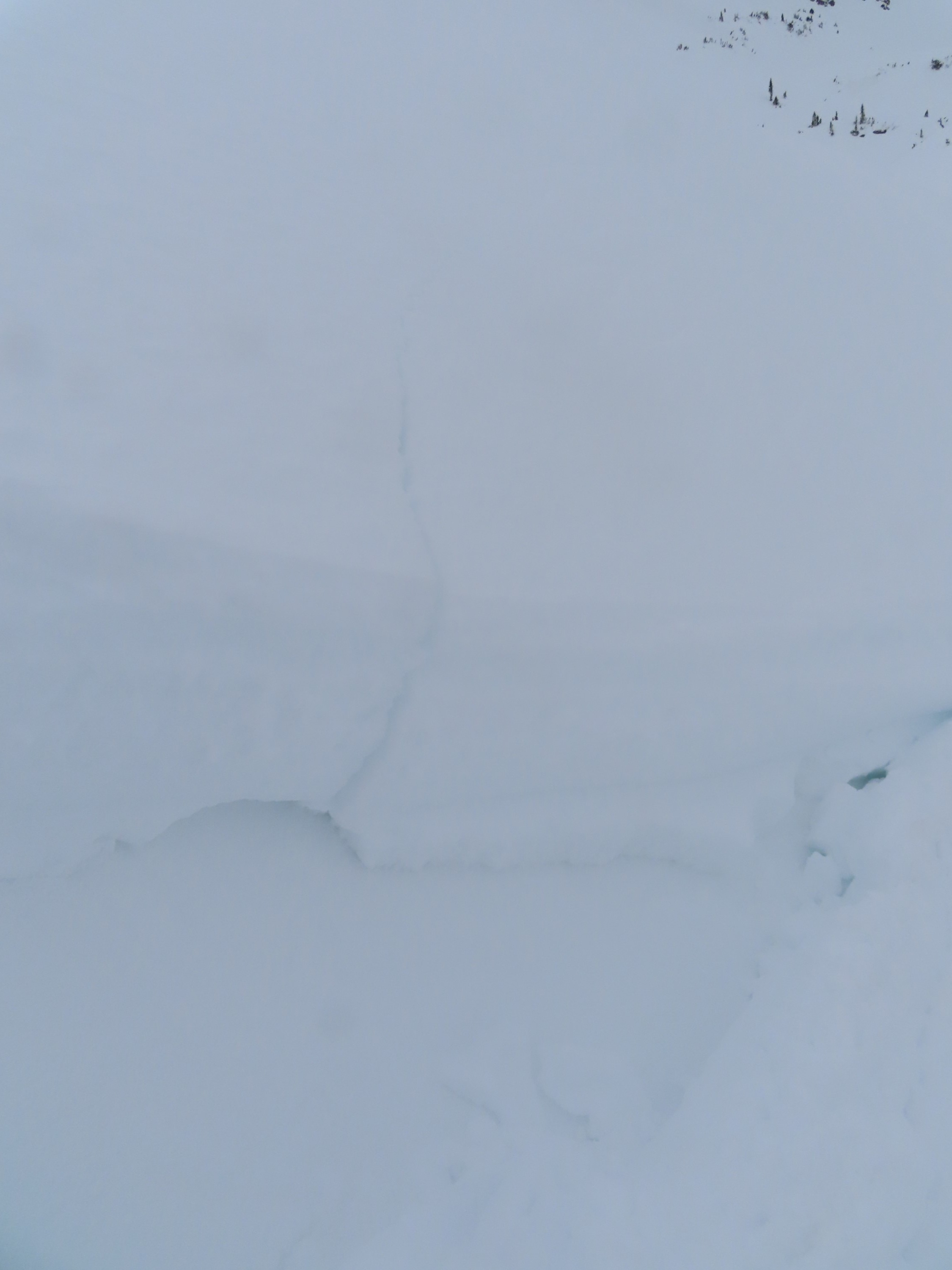
Several shooting cracks and triggered a slab on small rollovers in Baxter Basin; these were all on northeasterly aspects with recent drifting, failing on the late March weak layer about 2 feet deep. In sheltered terrain on Schuylkill Ridge, we triggered a couple of small slabs that didn't propagate as widely and triggered lots of rollerballs/pinwheels once the snow surface got damp.Weather
- Cloud Cover
- broken
- Wind Loading
- moderate
- Snow Avail For Transport
- moderate amounts
No wind transport where we traveled but could see ongoing drifting on some higher peaks.
Avalanche
- Size
- D1.5
- Type
- SS
- Count
- 18
- Aspect
- NE
- Trigger
- AM
- Elevation
- 10600 ft
More than a dozen D1 to D2 natural avalanches from the past few days involving the storm snow. A few likely ran today or last night. Natural activity was mostly near and above treeline where slabs are thicker from more wind drifting or higher snow totals. We intentionally triggered a few avalanches on small test slopes below treeline. The most notable was 2 to 3 feet deep on a wind loaded feature, breaking on the late March faceted crust.