
Quick report
- Collapsing
- isolated
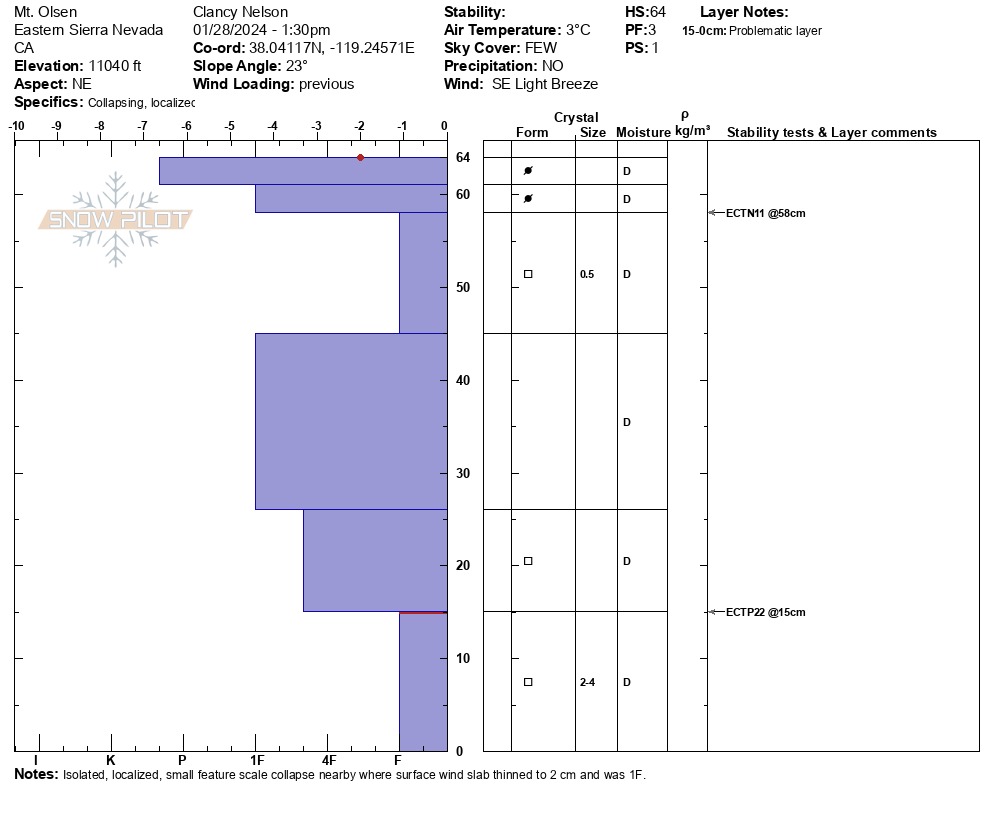
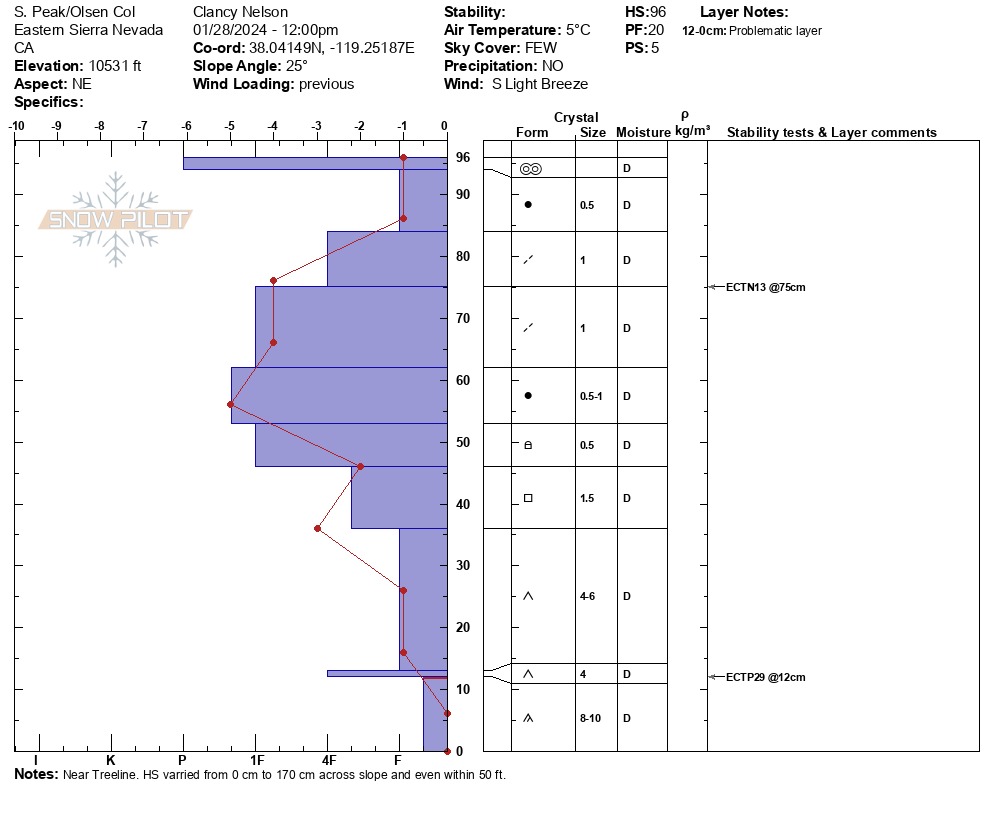
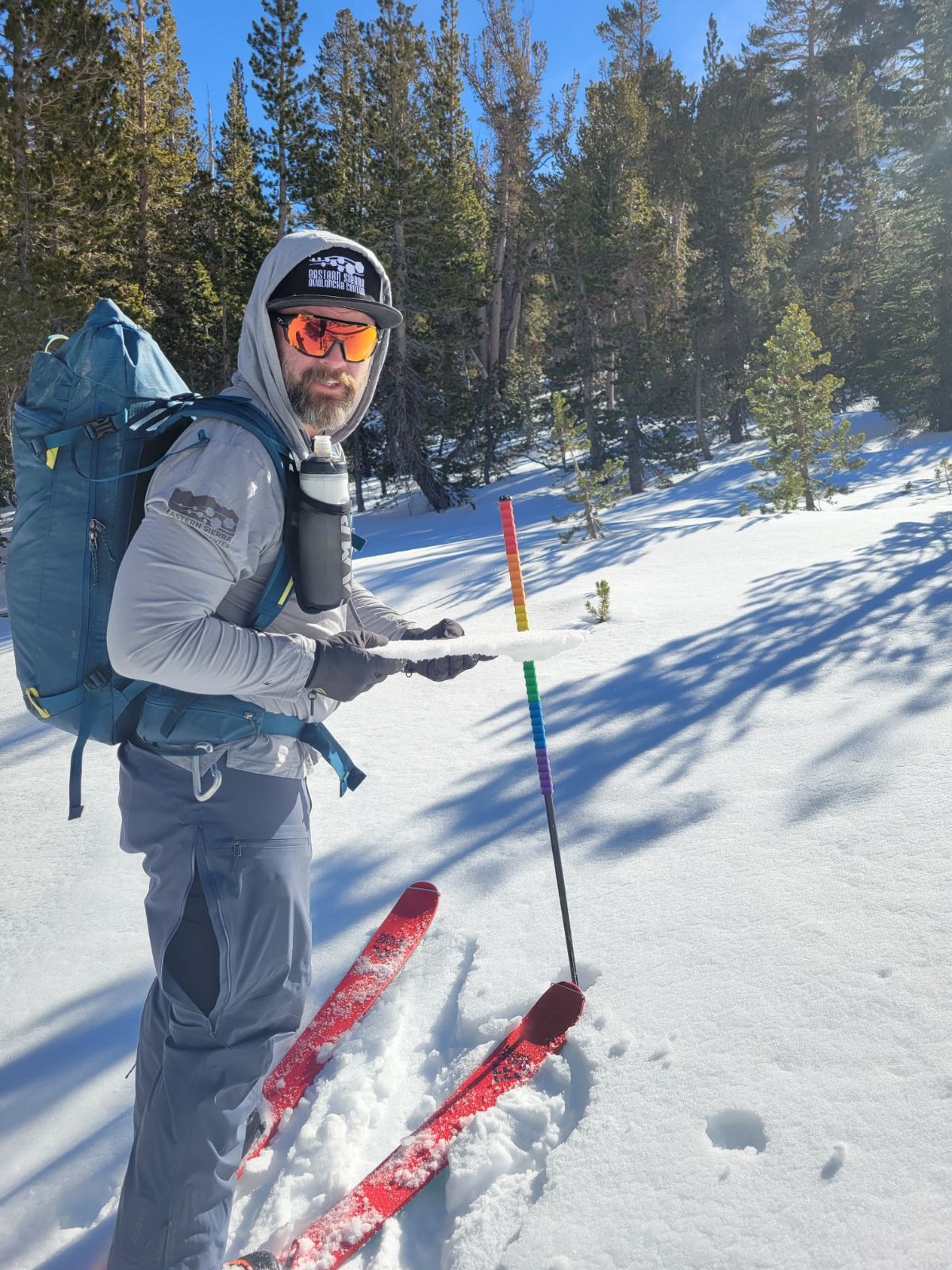
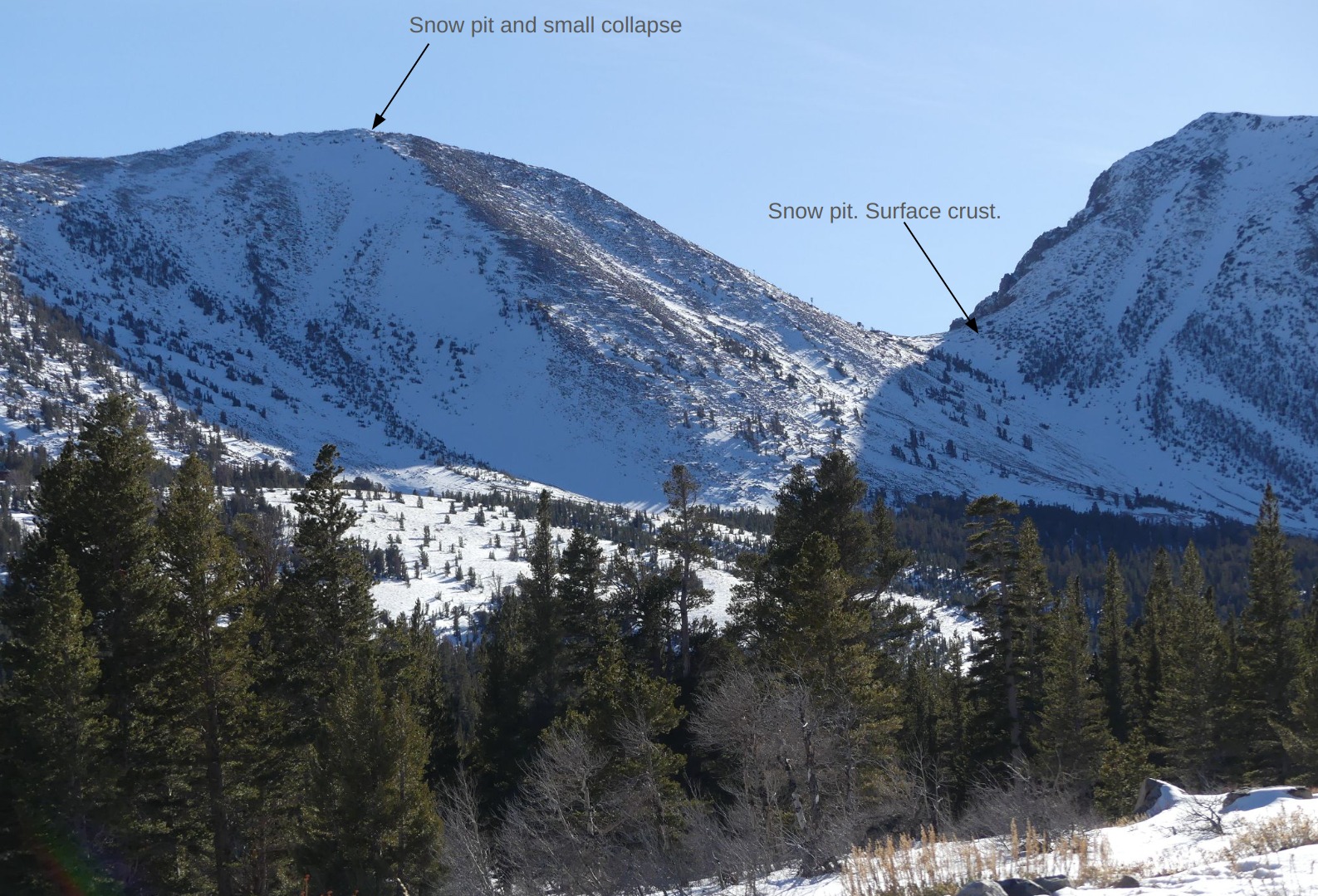
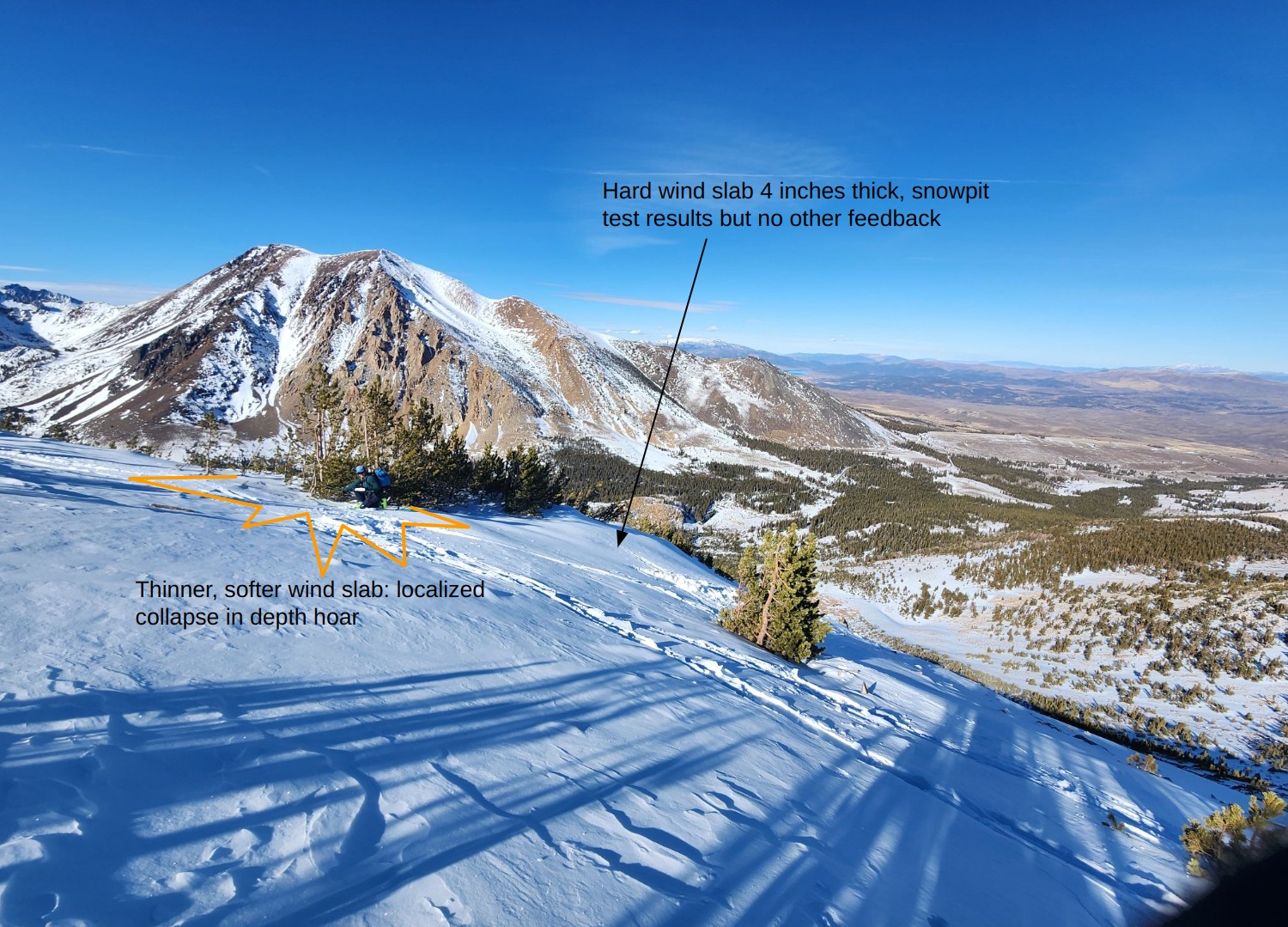
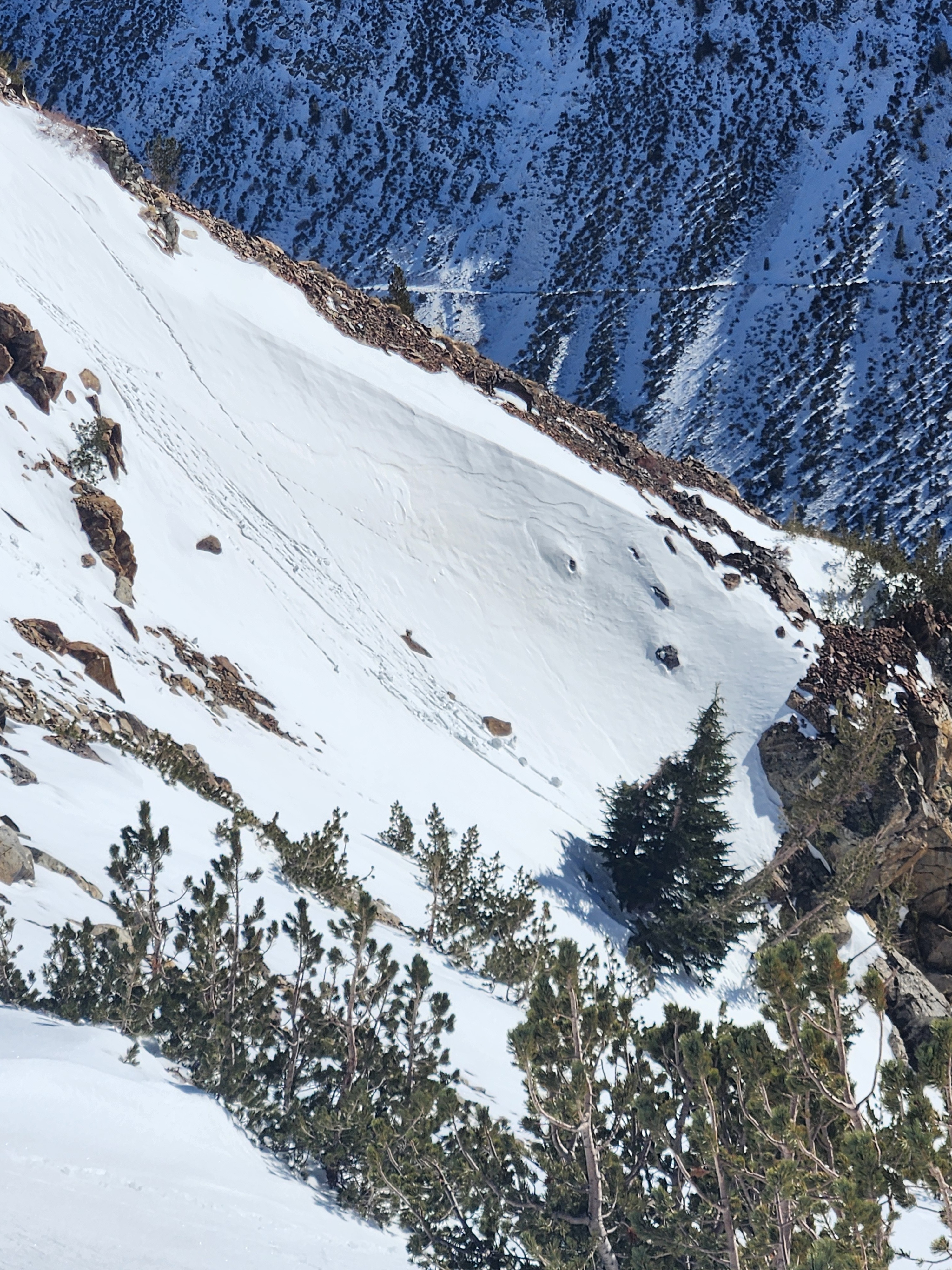
We skinned, booted, and sort-of-skied around Virgina Lakes tracking warming and persistent weak layers buried near the ground. Skies were clearer than expected, allowing formerly wet north-facing slopes to freeze into a crust. We got one small collapse at the margins of a hard wind slab where we had just found a shallow snowpack with rocky trigger points sticking up everywhere, and the persistent slab structure in our snow pit. This type of feature is the most concerning for triggering a persistent slab avalanche. The weather was pretty static. The only change all day was rising temps. There is not much coverage and descending through the new crust while getting core shots on buried rocks was challenging. All in all a lovely Sierra day though. We had one small feature-scale collapse on a slope where we had just dug a pit and found the persistent slab structure. The pit was in a hard wind slab and we got nothing but snow pit test results there. The collapse was nearby where the wind slab was thinner and softer.
Weather
- Air Temp
- 38 to 47
- Cloud Cover
- few
- Wind Loading
- none
- Snow Avail For Transport
- none
It was less cloudy than expected with calm to light south winds. The weather was relatively static with the temperature rise mid-morning to mid-afternoon being the only real change of the day.
Snowpack
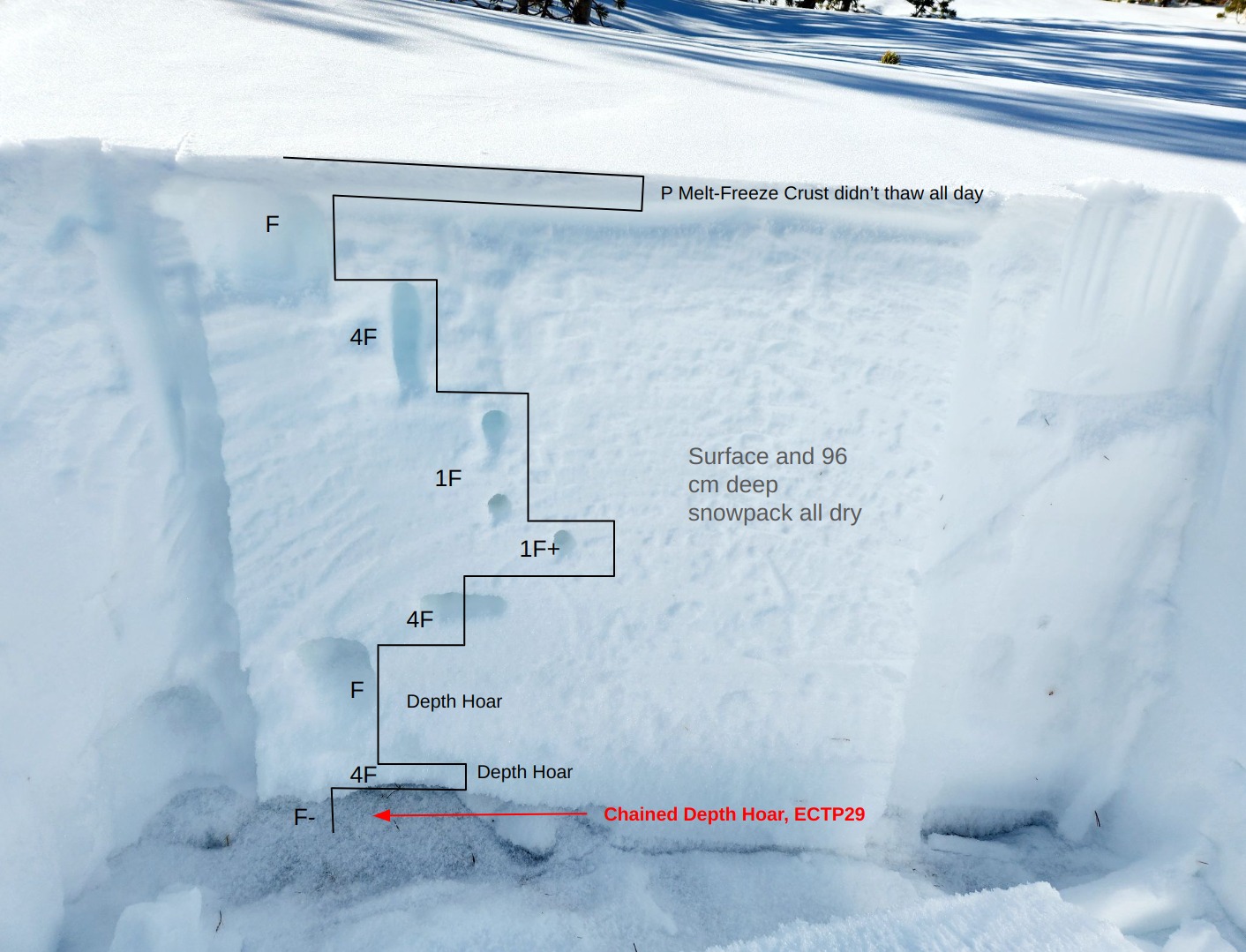
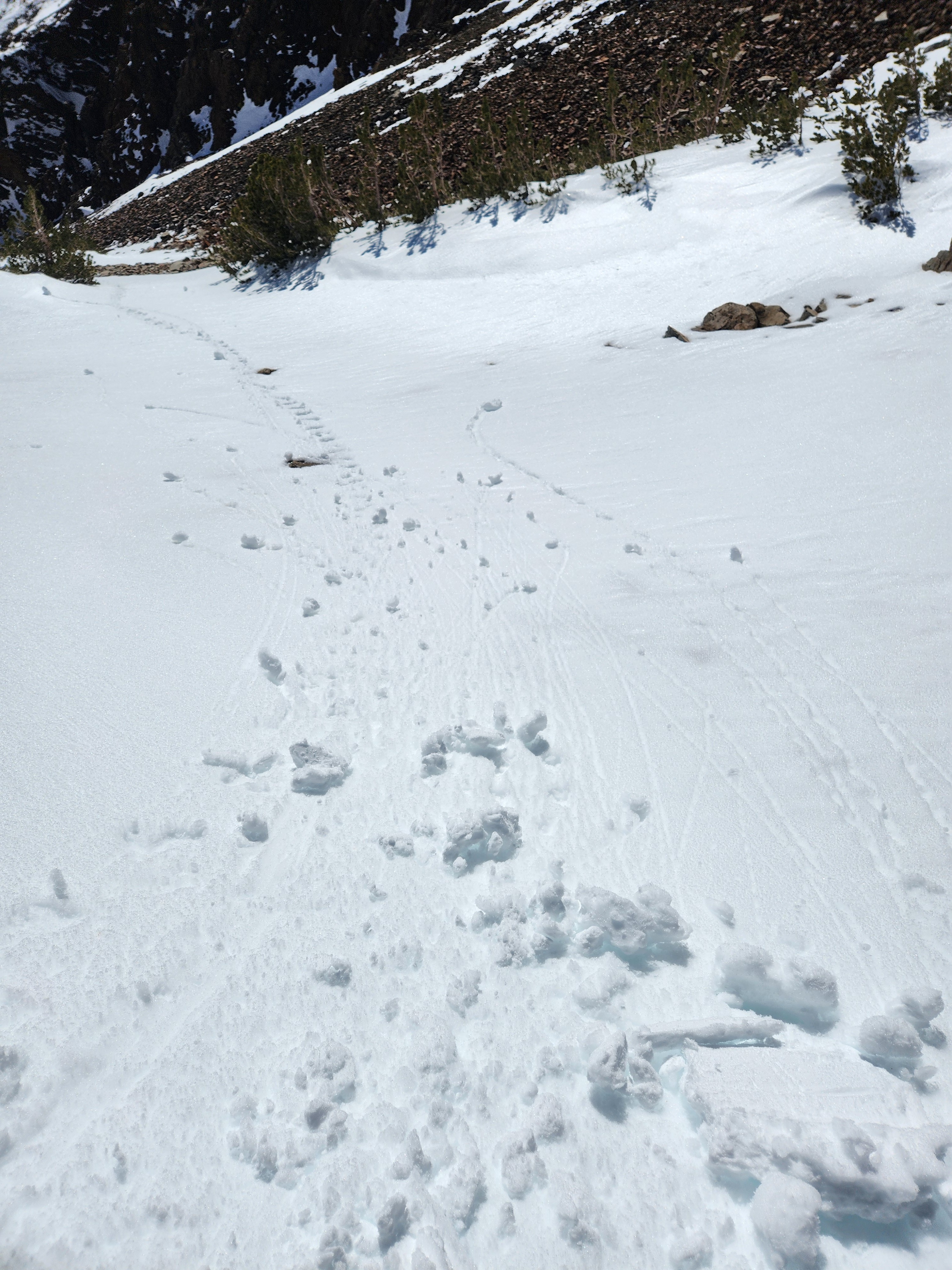
A melt-freeze crust caps the surface on northerly slopes up to 10,600 feet. It didn't thaw all day. A snow pit at 10,500 feet had large depth hoar at the base of the snowpack under a stiff slab and under the new melt-freeze crust. The depth hoar did propagate in our test on almost the last tap from the shoulder. Solar aspects near and above treeline went through another round of the melt-freeze cycle today and we saw natural rollerballs and could kick them off of sunny slopes midday. Above 10,600 feet, on the few northeast-facing slopes that have not been scoured to rock, the surface is hard old wind slabs. On one of these limited terrain features, we go propagation in our snowpack tests with hard force. There are also smaller, dry and sugary facets directly under the wind board.