
Quick report
- Cracking
- isolated
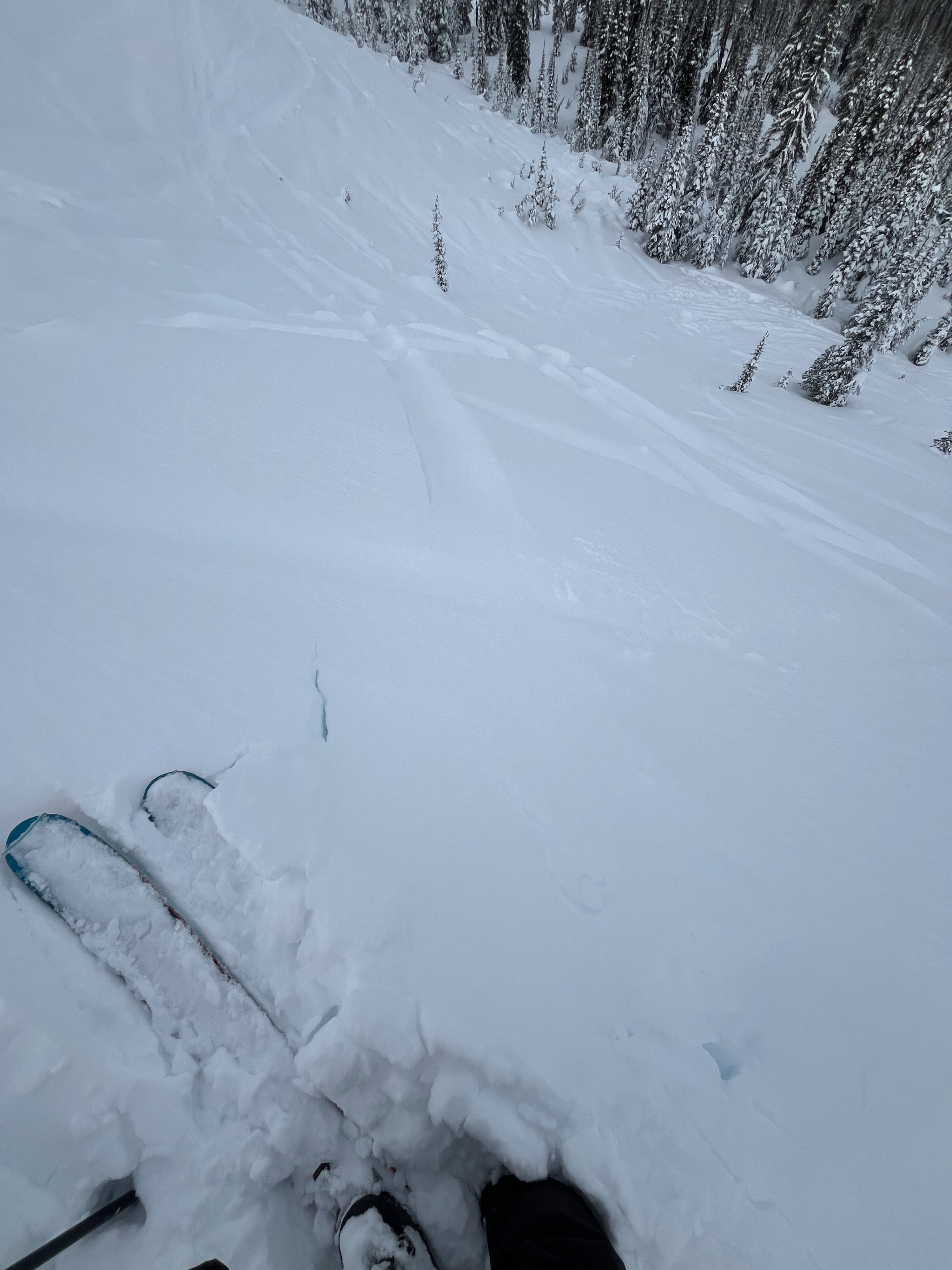
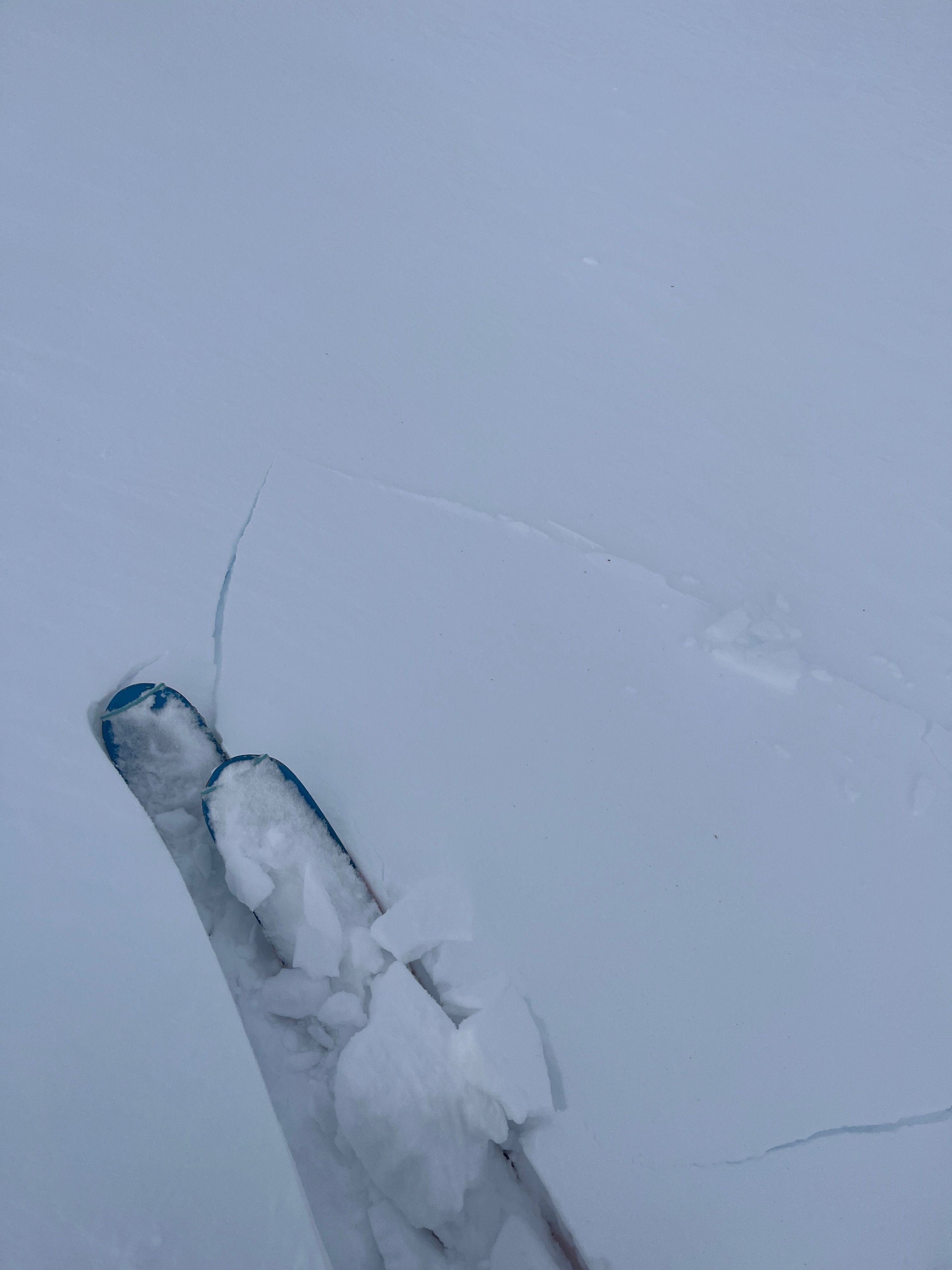
The goal for today was to investigate three potential problems found in the snowpack: wind slab, storm slab, and wet loose. As for the latter two, I found none. For the wind slab, I found stubborn sensitivity. Layers seem to be bonding quite well in this area. I continue to be suspicious of the solstice crust still as more new snow piles on top.
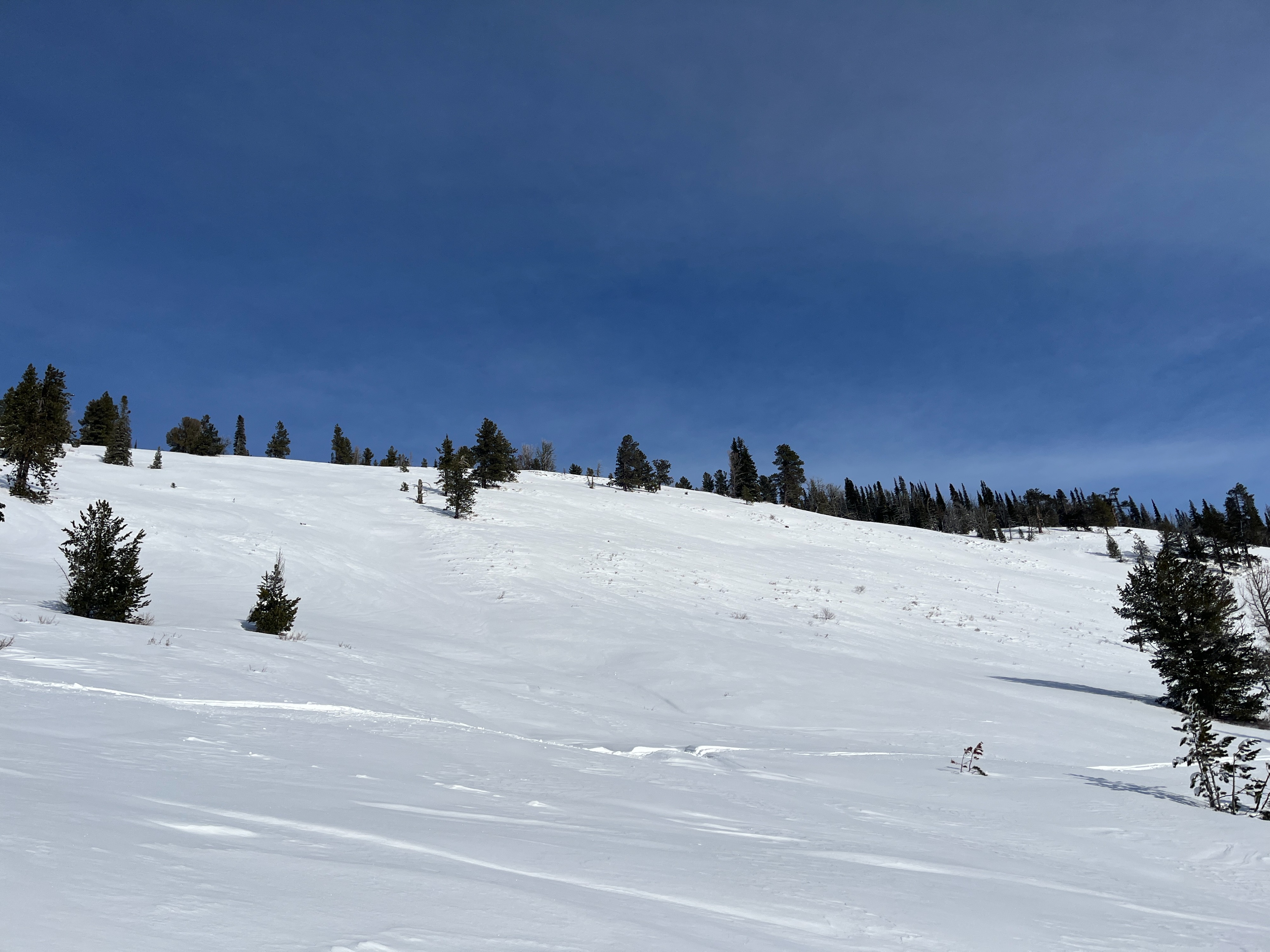
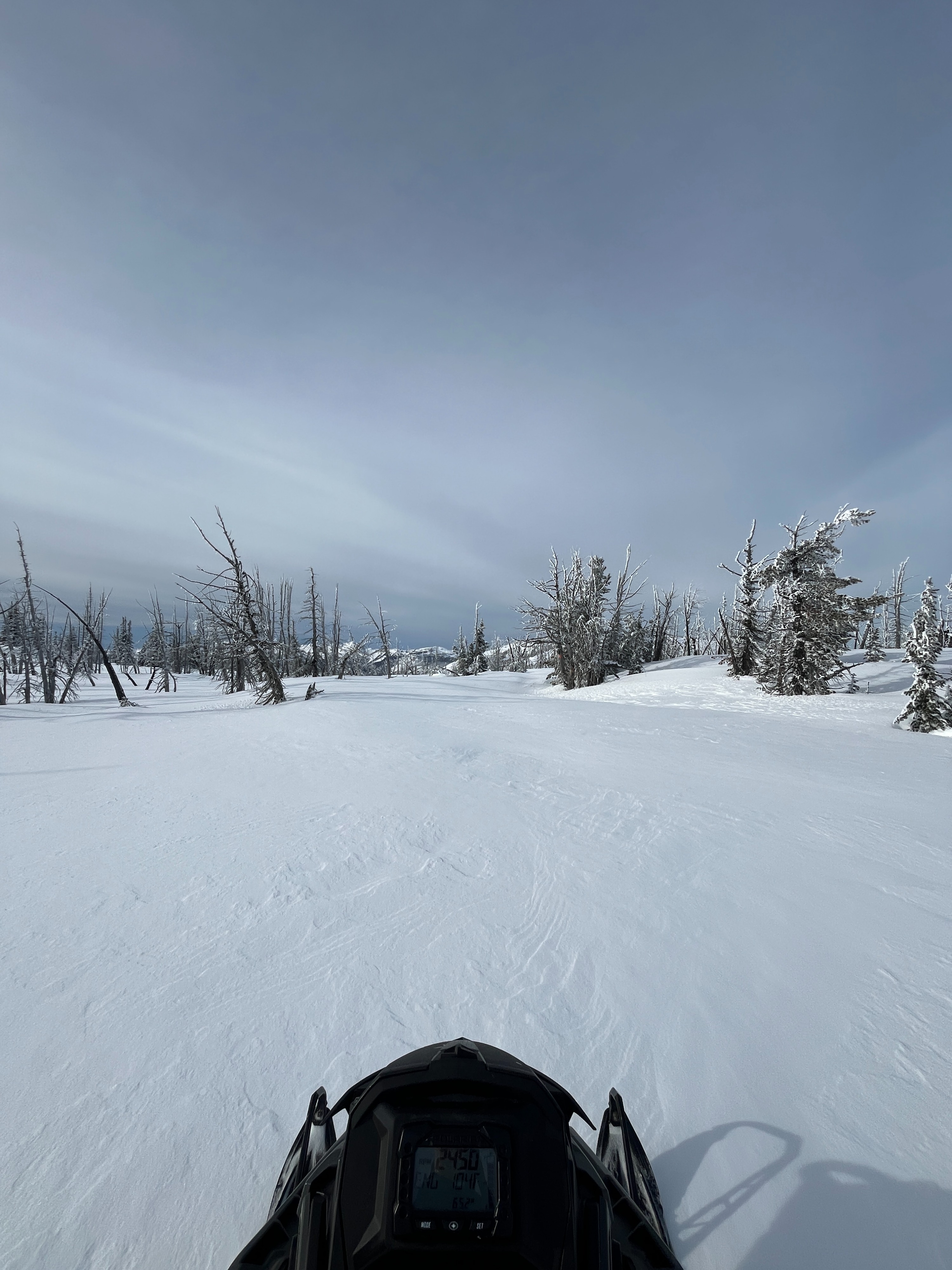
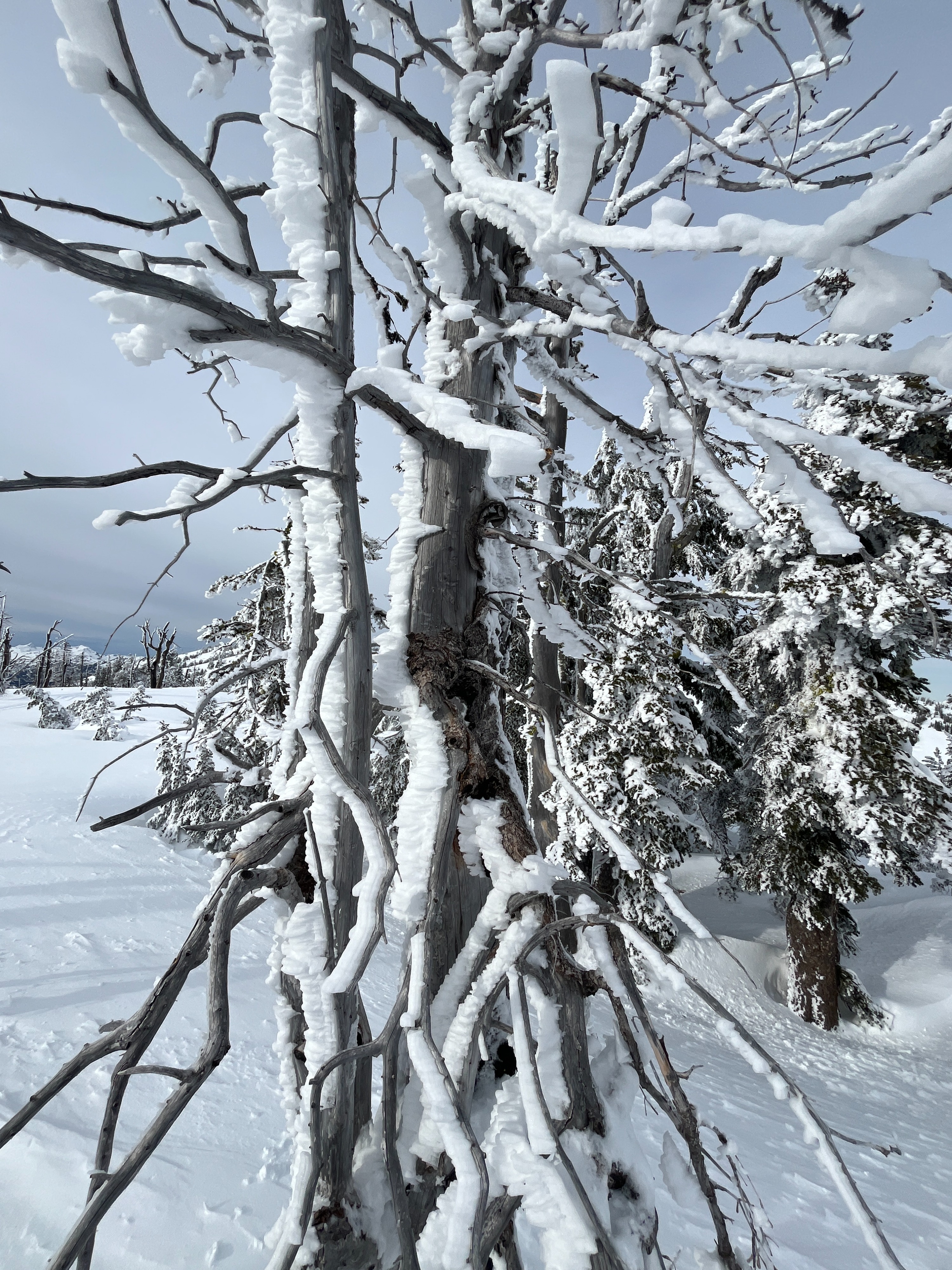
I found stubborn wind slab instability on N-E facing ridgelines however noted lots of signs of wind transport such as ripple snow surfaces, pillowed slopes, cornices, and riming on trees.Weather
- Air Temp
- 19
- Cloud Cover
- broken
- Wind Loading
- light
- Rain Elevation
- 4800
- Recent Snowfall
- 29
- Snow Avail For Transport
- small smounts
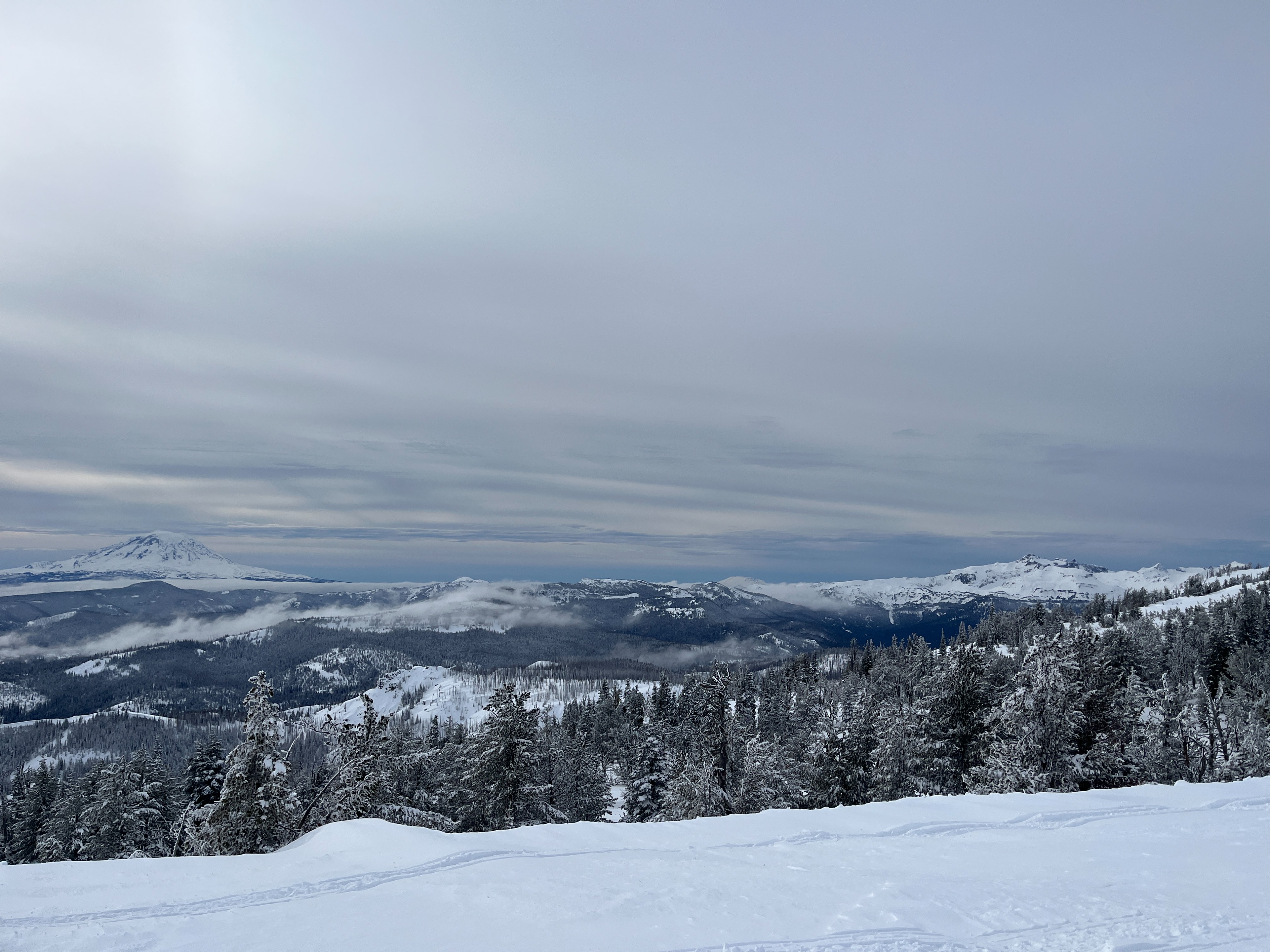
The cloud coverage increased throughout the day but never got quite to what I would call overcast. Temperatures, which were cool to begin with, dropped as cloud coverage increased. The wind increased as well, from calm to light with moderate ridgeline gusts.
Snowpack
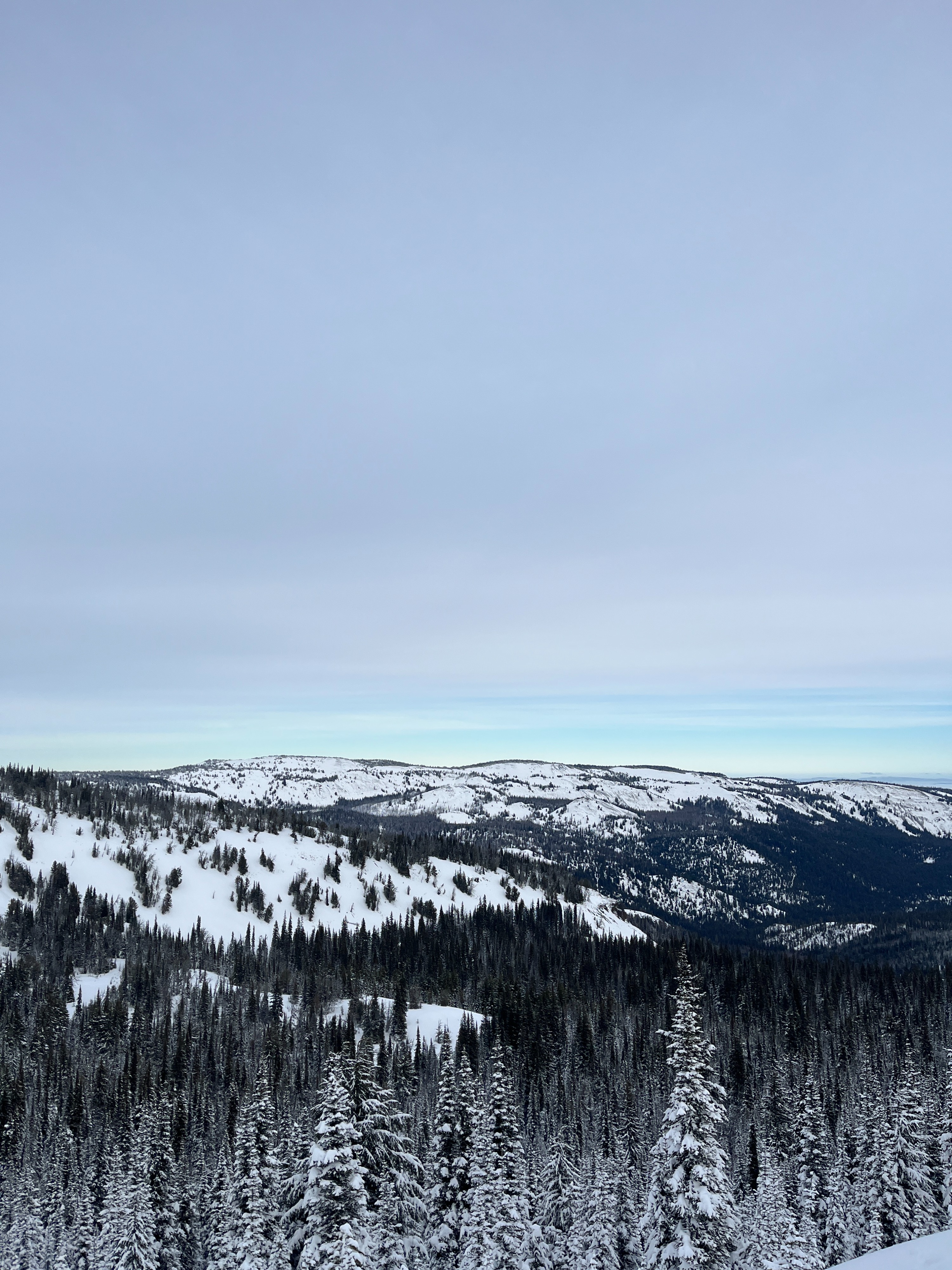
At lower and middle elevations, the snow coverage is lacking still, especially on southerly aspects, but it is accessible. The noticeable increase in depth continues to be starting around 4500 ft.
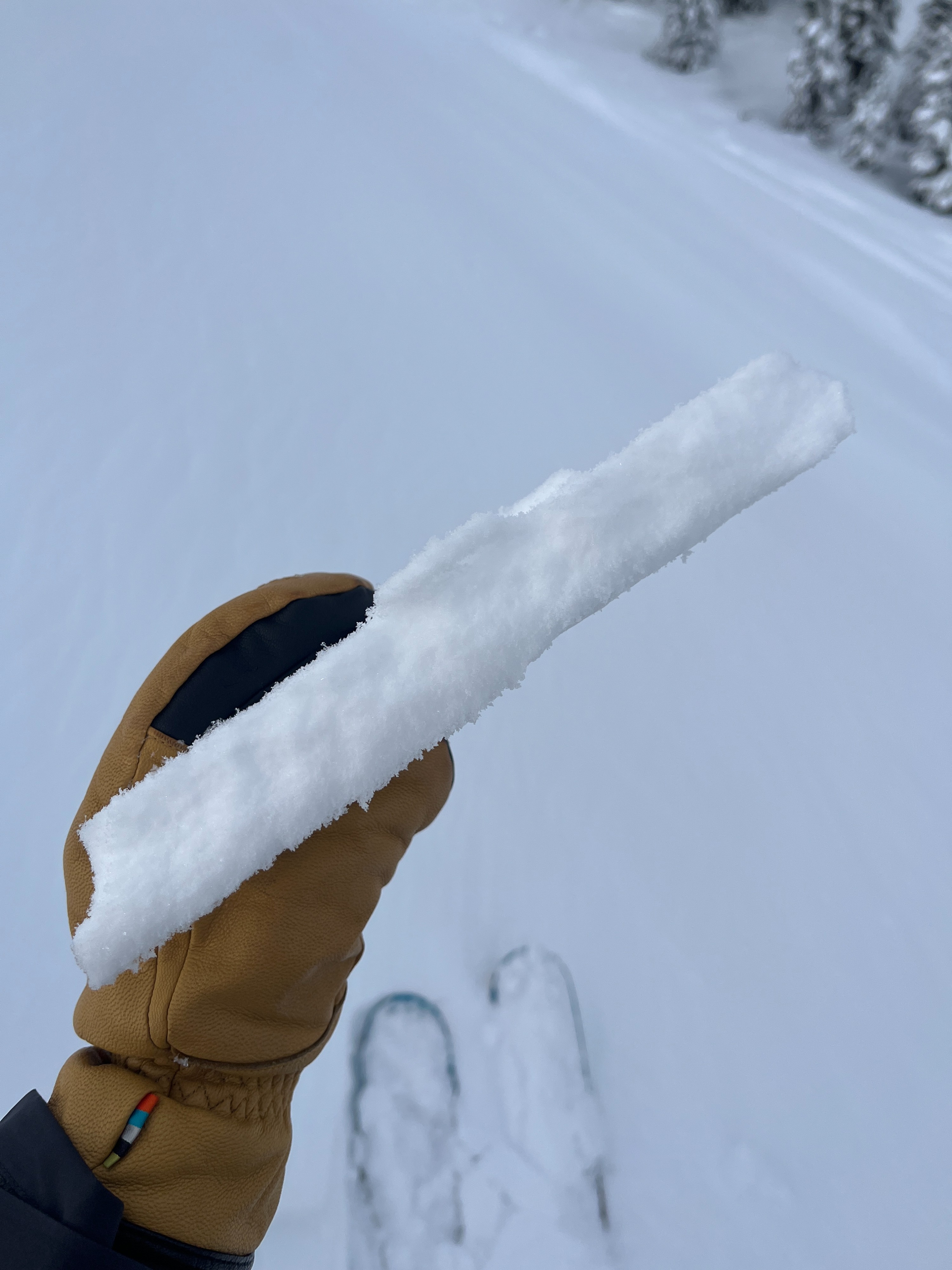
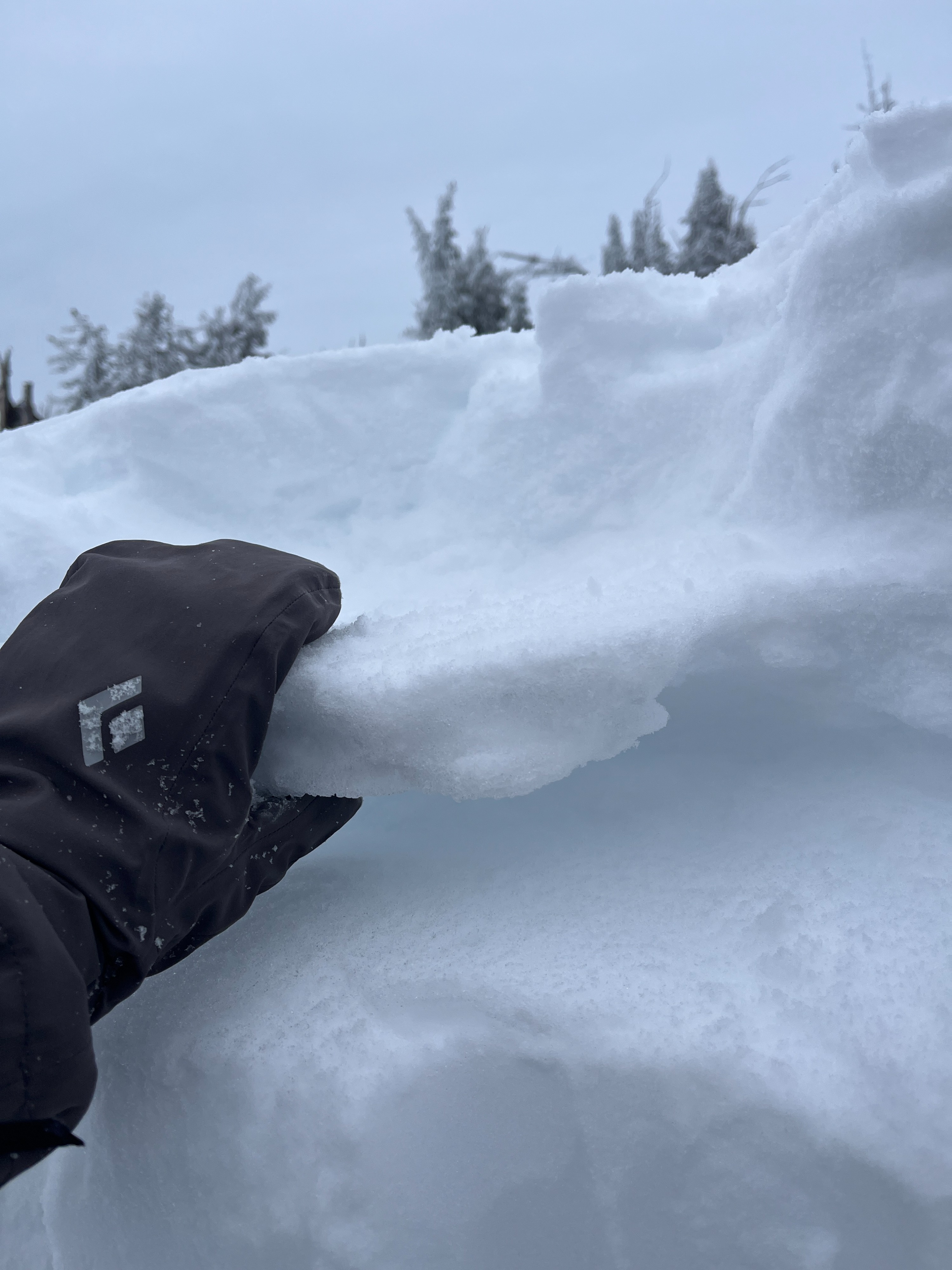
I dug my first pit on a sheltered NE aspect at 6678'. The depth of the snowpack was 74in/189cm but I only dug down to 22in/55cm. My ski penetration was 6in/15cm and my boot pen was 15in/39cm. I found 29cm of new and decently consolidated snow. This snow was sitting on top of a junky layering of four finger (4F) hard solstice crusts. Below this, I found rounded grains and other melt freeze crusts. I did not find near crust faceting (NCF) around the 12/7 crust, nor any other crusts. I performed an extended column test and got a progression of moderate, non-propogating results first within the new snow, then on or within the solstice crusts (ECTN14, 15, 16). A quick shovel shear also gave a moderate result at the top of the solstice crust(s) (STM).
I dug my second pit in a more exposed and wind affected area. This pit was on a NE aspect at 6765'. The depth of this pit was 62in/157cm. I found nearly identical layering and grain ID as my first pit. I also got nearly identical results in an extended column test.
I dug a third not quite full pit/not quite hand pit on a S aspect at 6752'. The depth of the snowpack here was 43in/110cm. I found a significantly more robust and consolidated solstice crust below new snow. I suspect that the crust on this aspect has gone through more pronounced melt freeze cycling as well as getting blasted by wind more consistently which has made it harder and more supportable. Lower down, the snow also seemed to be much harder and consolidated than my previous pits.