
Quick report
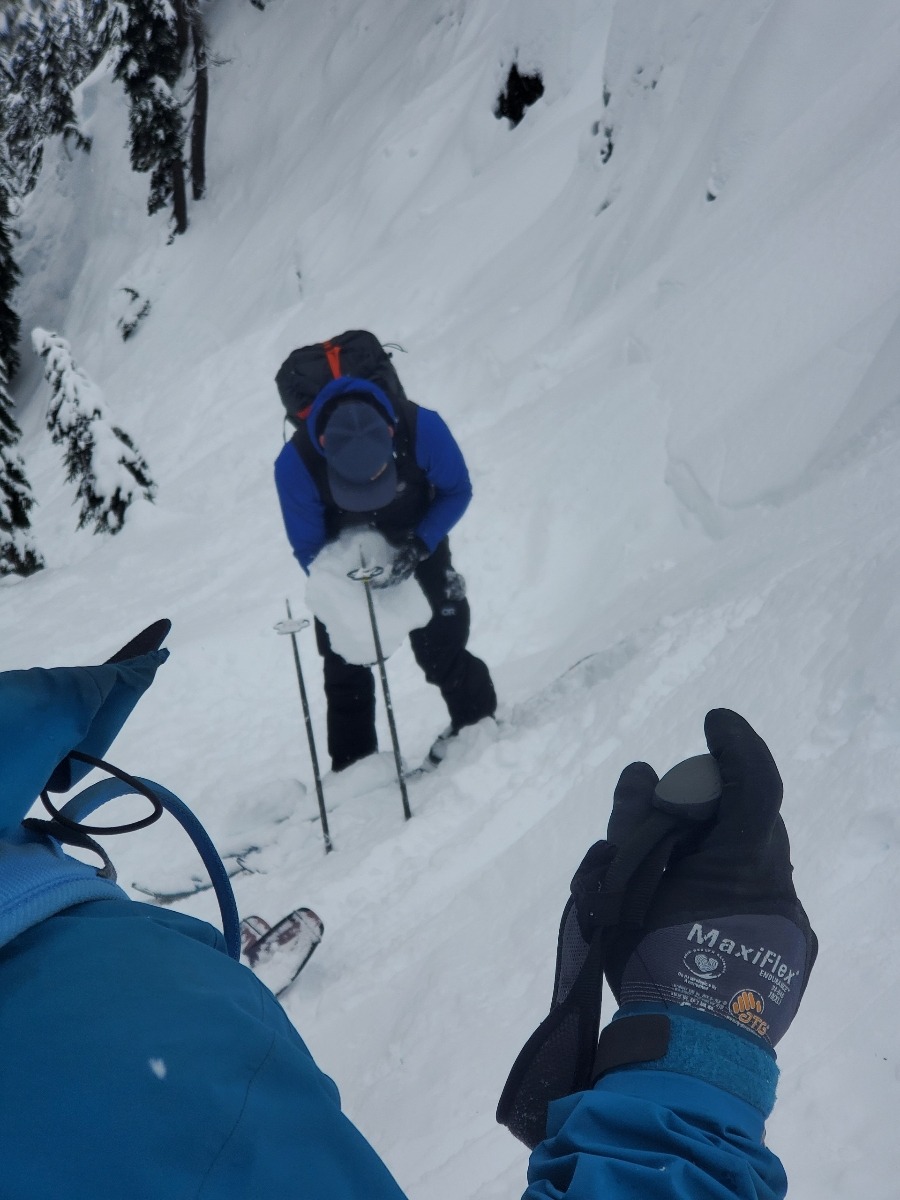
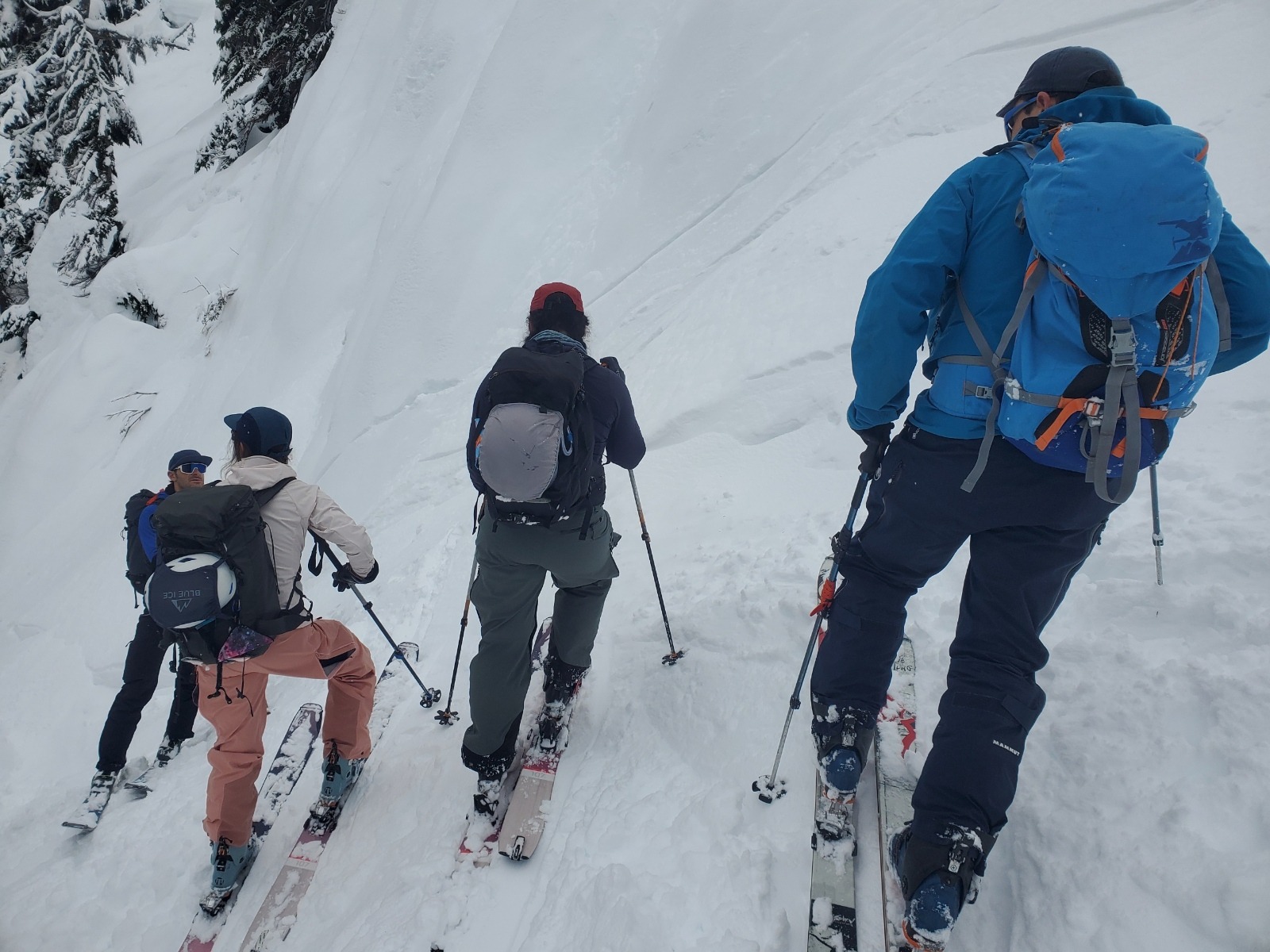
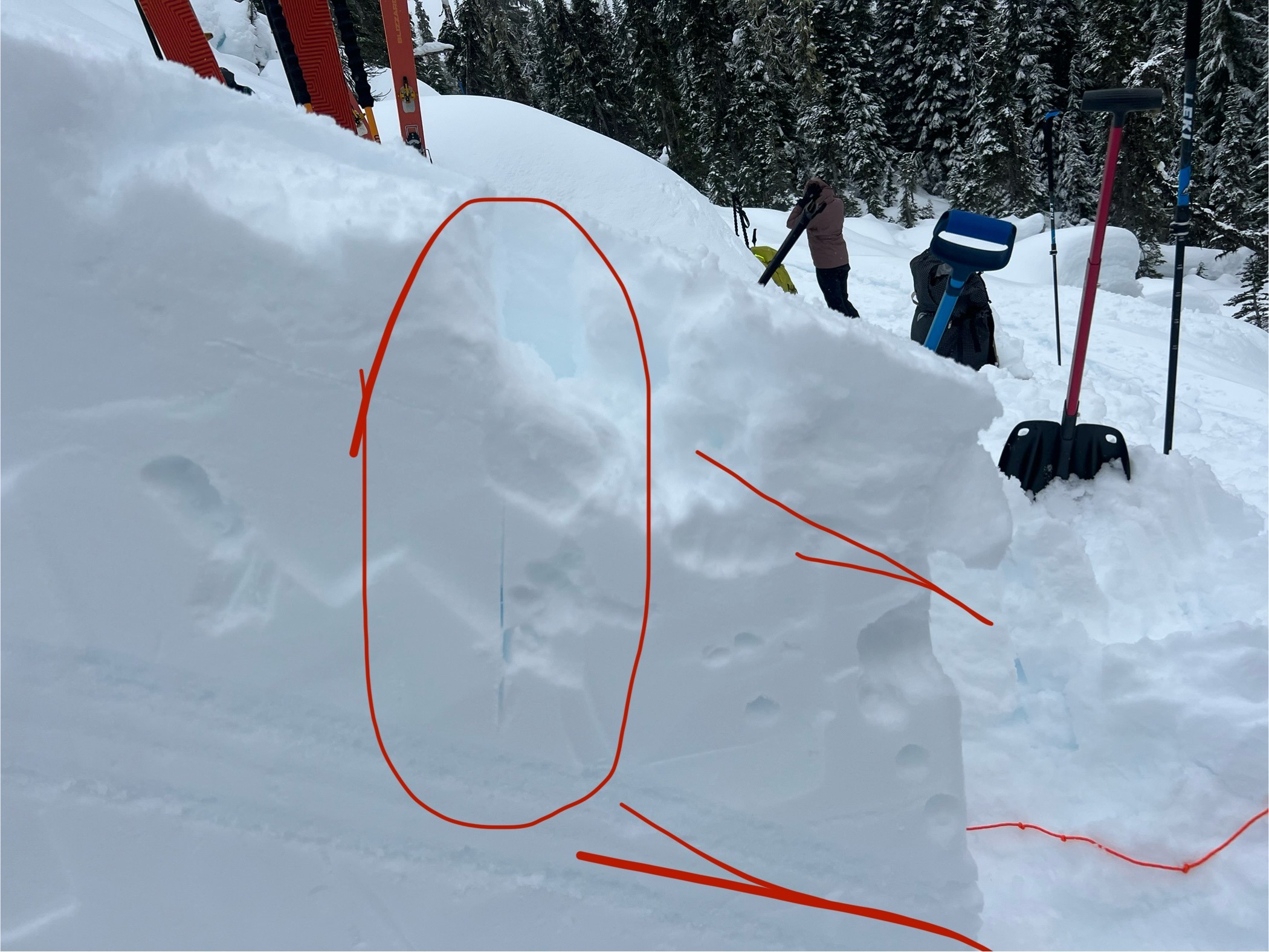
Plenty of evidence to be seen of skier triggered avalanches in wind exposed terrain. However, our Rec Level 2 avalanche courses did not identify any signs of instability in the non-wind affected locations that we observed directly. Near the top of Big Trees/Unicorn, we did observe harder wind-loaded snow below steep & cliffy terrain. Hasty pits produced easy shears and distinct pockets of 2-3mm graupel that seems to have pooled under the cliffs and deposited under the recent wind slab. The presence of this graupel was highly variable across even a small piece of terrain. Previous parties had skied across this slab and it did not release.
Snowpack
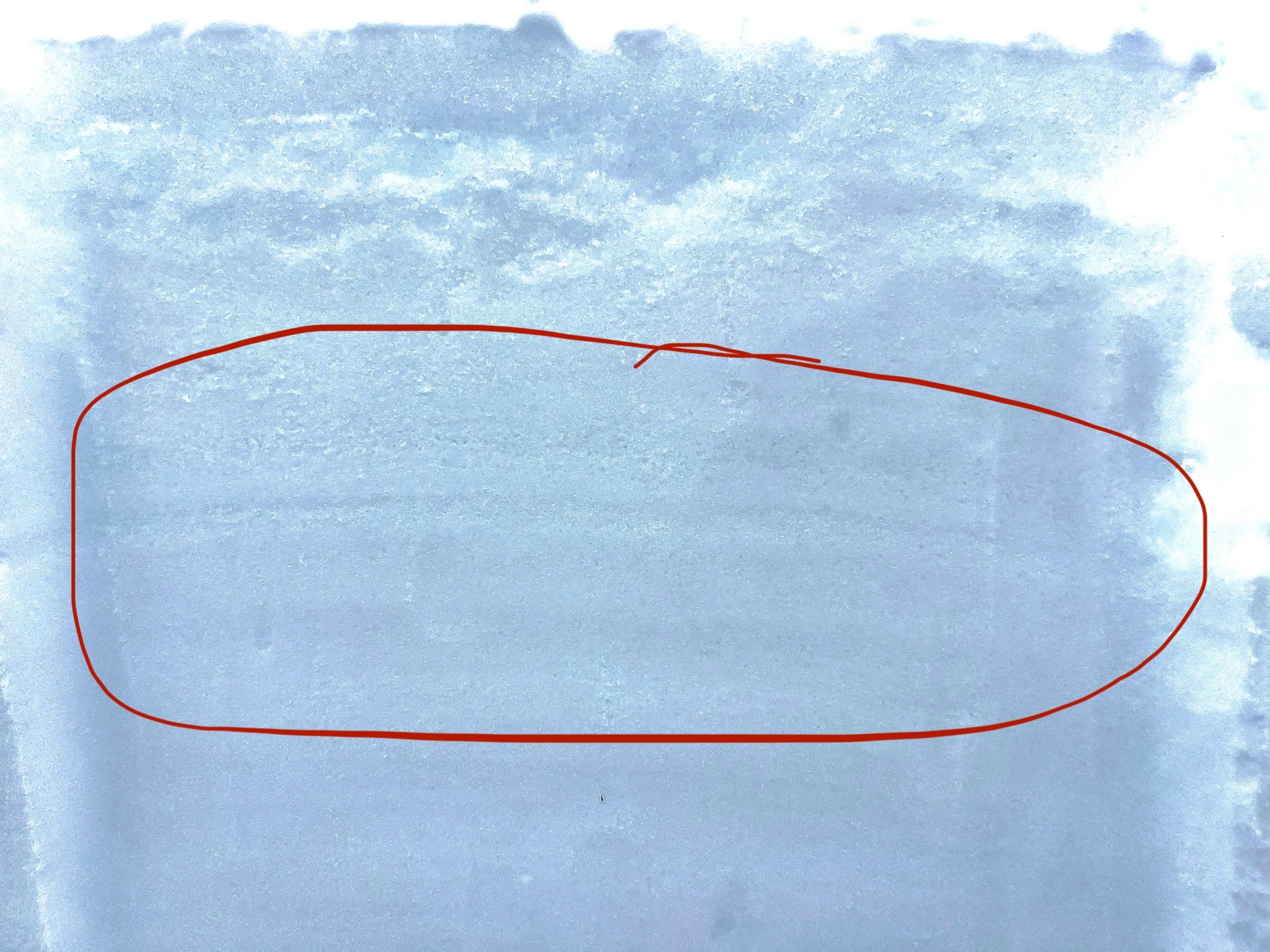
At lower elevations (~4,100') we noted a 5cm surface crust (1/10 interface) with a skiff of new snow from the recent storms. We observed repeatable resistant and non-propagating results in a thin layer of preserved/decomposing precipitation particles (possibly some well rounded surface hoar grains) 15-20cm below the surface within last week's storm layer. At slightly higher elevations (4,600-4,700'), we observed a different structure in the upper snowpack with about 30cm of storm snow from this weekend sitting on top of a distinct layer of melt freeze crusts sandwiching a thin layer of weaker, drier snow. Here again we observed repeatable resistant and non-propagating results with a variety of mechanical tests (CT, ECT, PST). In all of our observations, the snowpack below these upper layers is 1F+ to P hard and comprised of various layers of rounded grains and melt forms. In most locations we observed softer snow below or sandwiched between crusts but did not observe any notable test results. Nor were we able to identify any persistent grain types.