
Quick report
- Cracking
- isolated
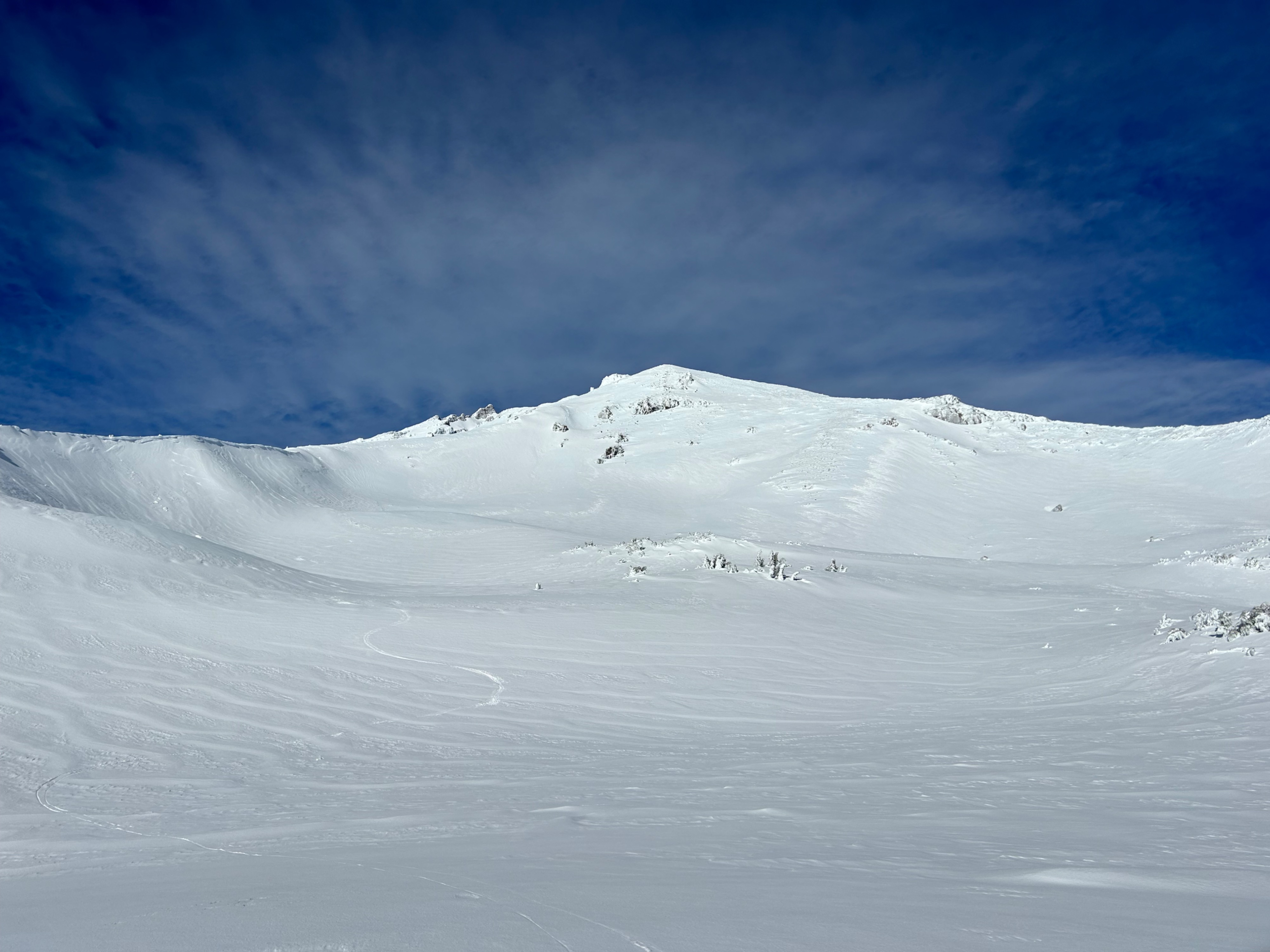
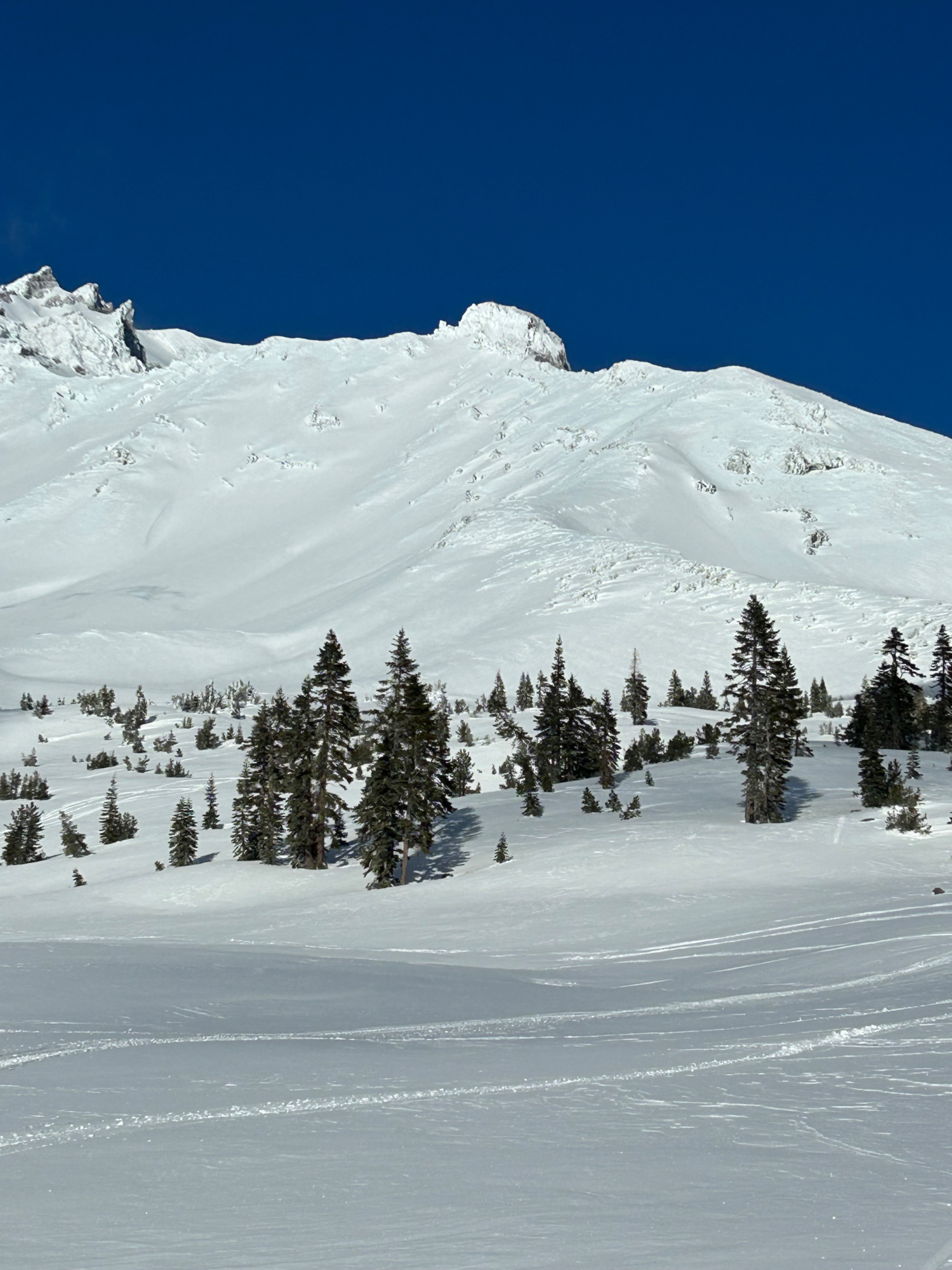
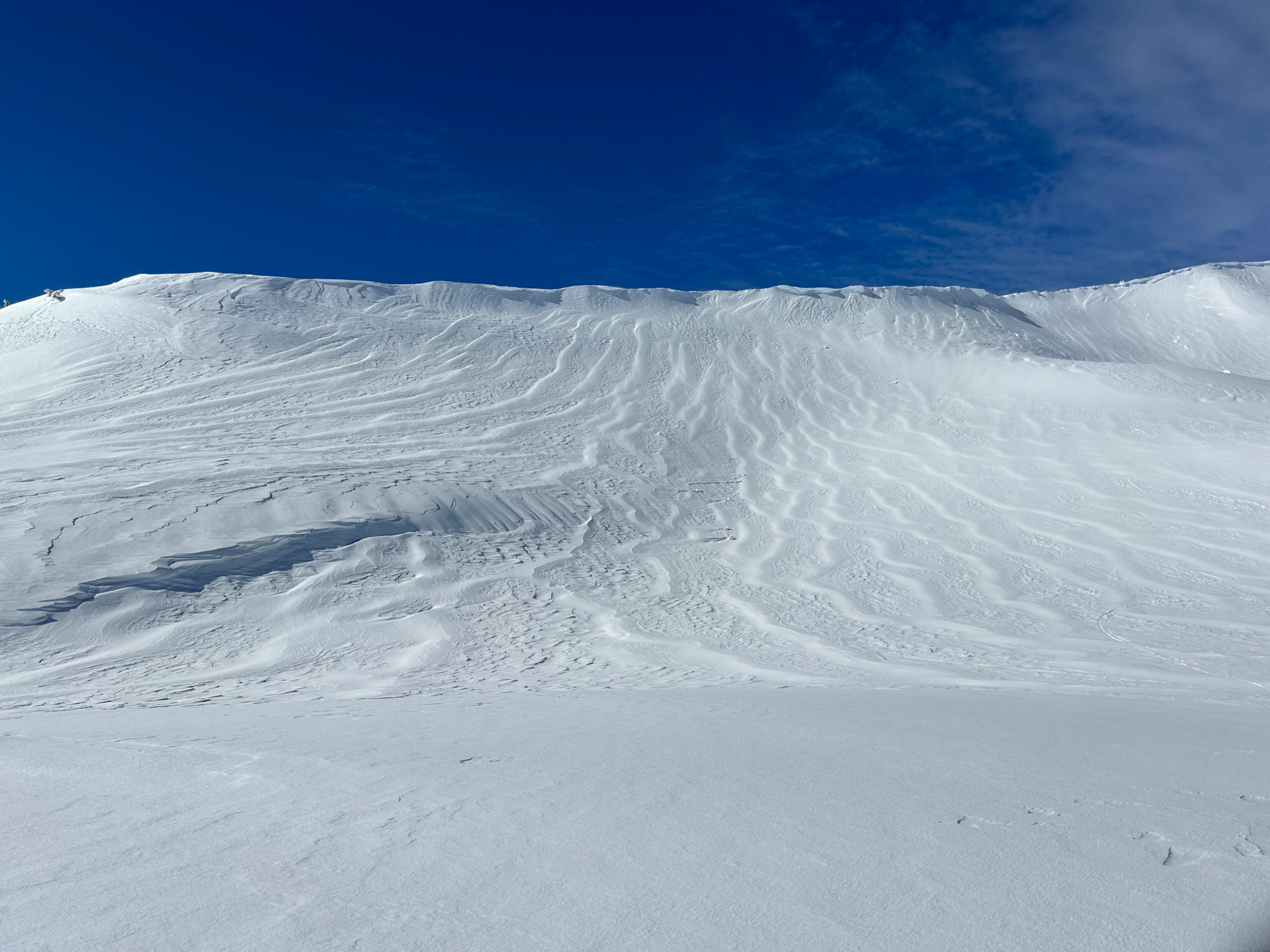
The wind has tremendously impacted the snowpack near and above treeline. Large amounts of snow have been transported, and surfaces have been stiffened and scoured. Overall, signs of unstable wind drifted snow have decreased. Time, paired with stable weather and the amount of snow available or transport, are the factors why.
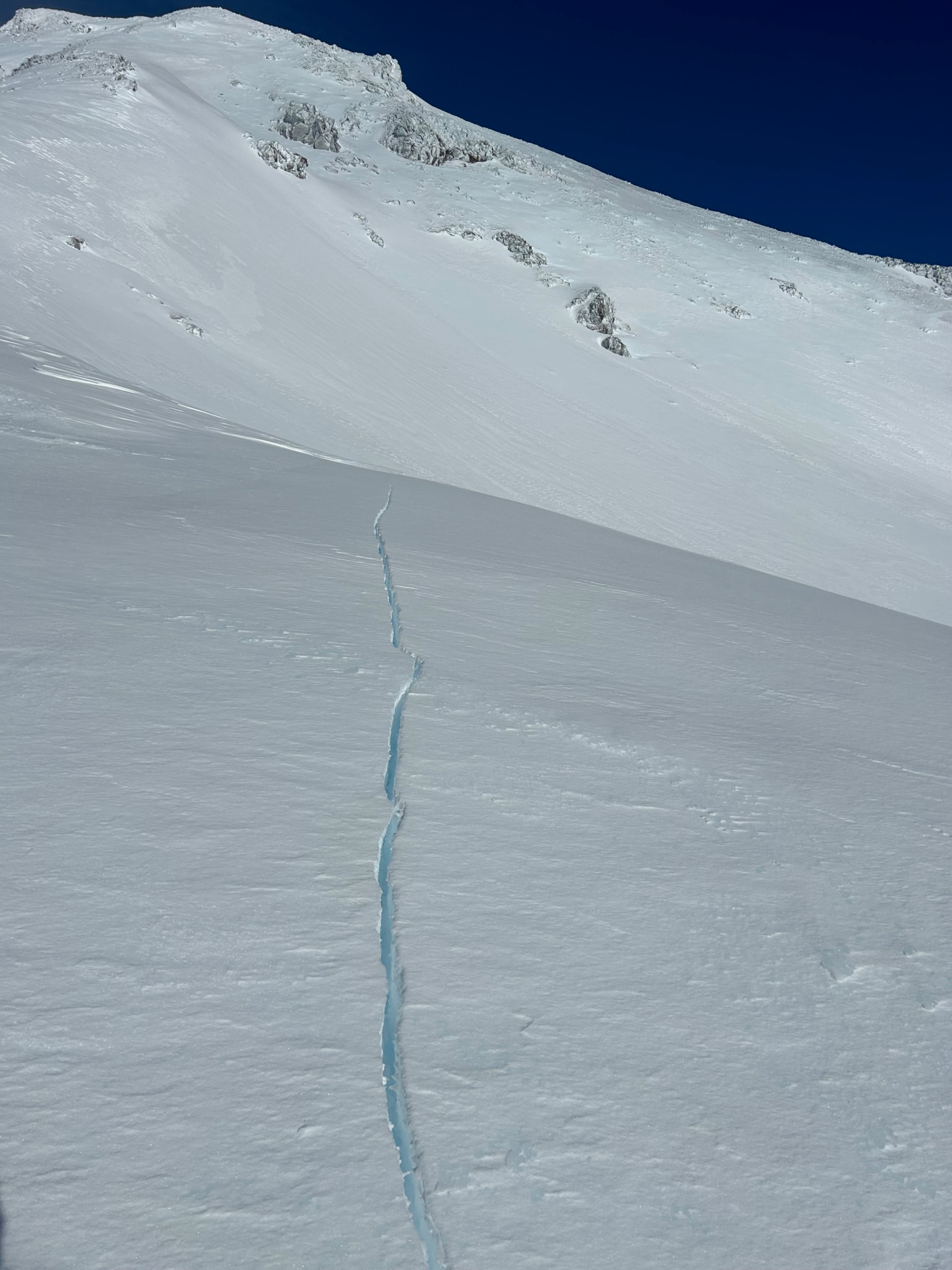
Several large cornice cracks on the windward side of a ridgeline were observed. These cracks were not recent but did illustrate the snowpack adjusting to the recent load.
Weather
- Air Temp
- 22
- Cloud Cover
- scattered
- Wind Loading
- previous
- Recent Snowfall
- 0
- Snow Avail For Transport
- small smounts
Skies were mostly clear with small clusters of clouds over the high peaks. Temperatures peaked into the low 20's, with east-southeast winds blowing light.
Snowpack
Recent winds have largely effected snow surfaces above treeline. Variable wind board is the primary surface type. Soft snow was not observed above treeline. Windward ridgelines and moraine tops have been scoured down to ice, leaving slide for life conditions in many locations. Below and near treeline, a few inches of powder snow exist in forested areas.
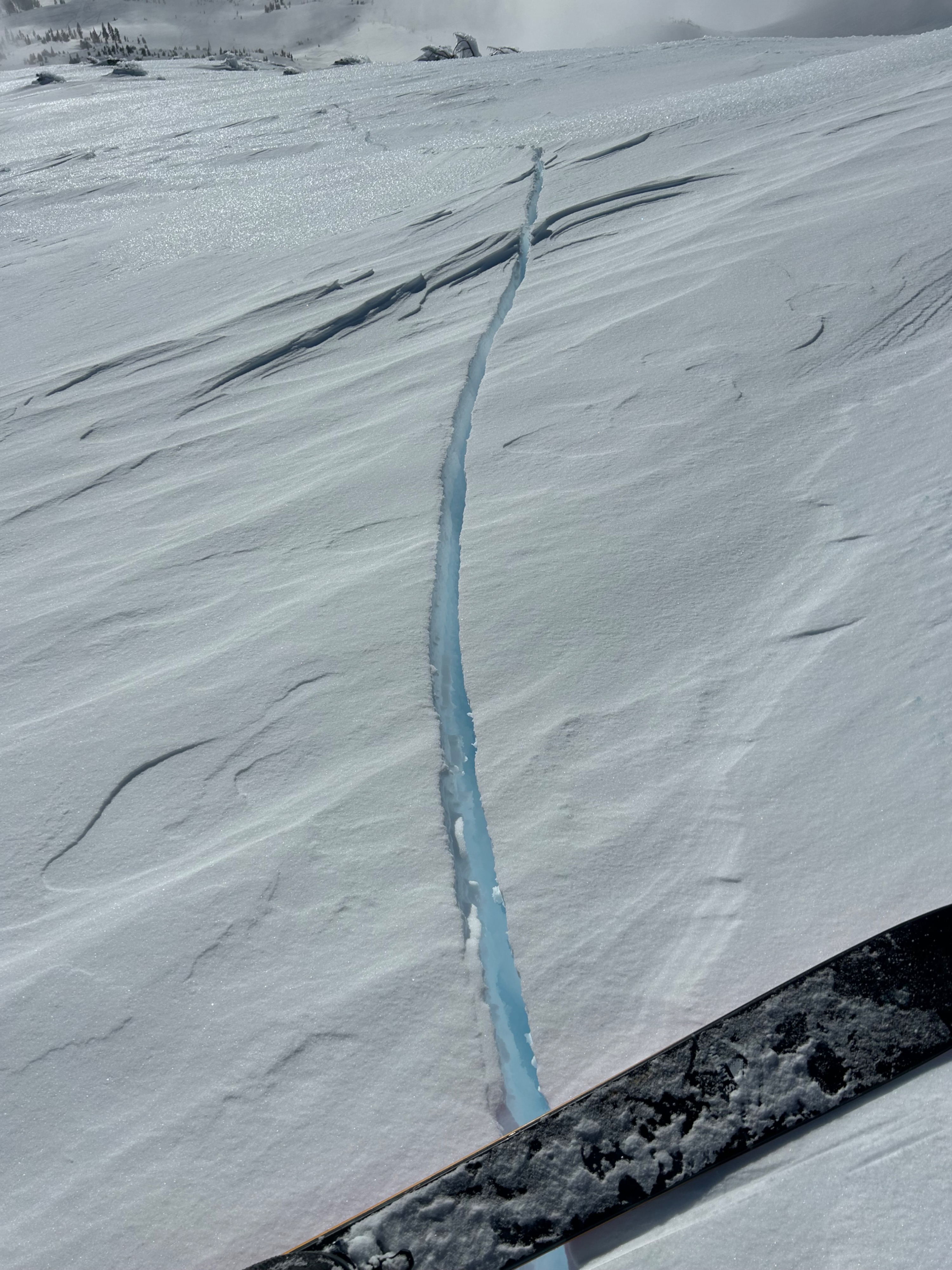
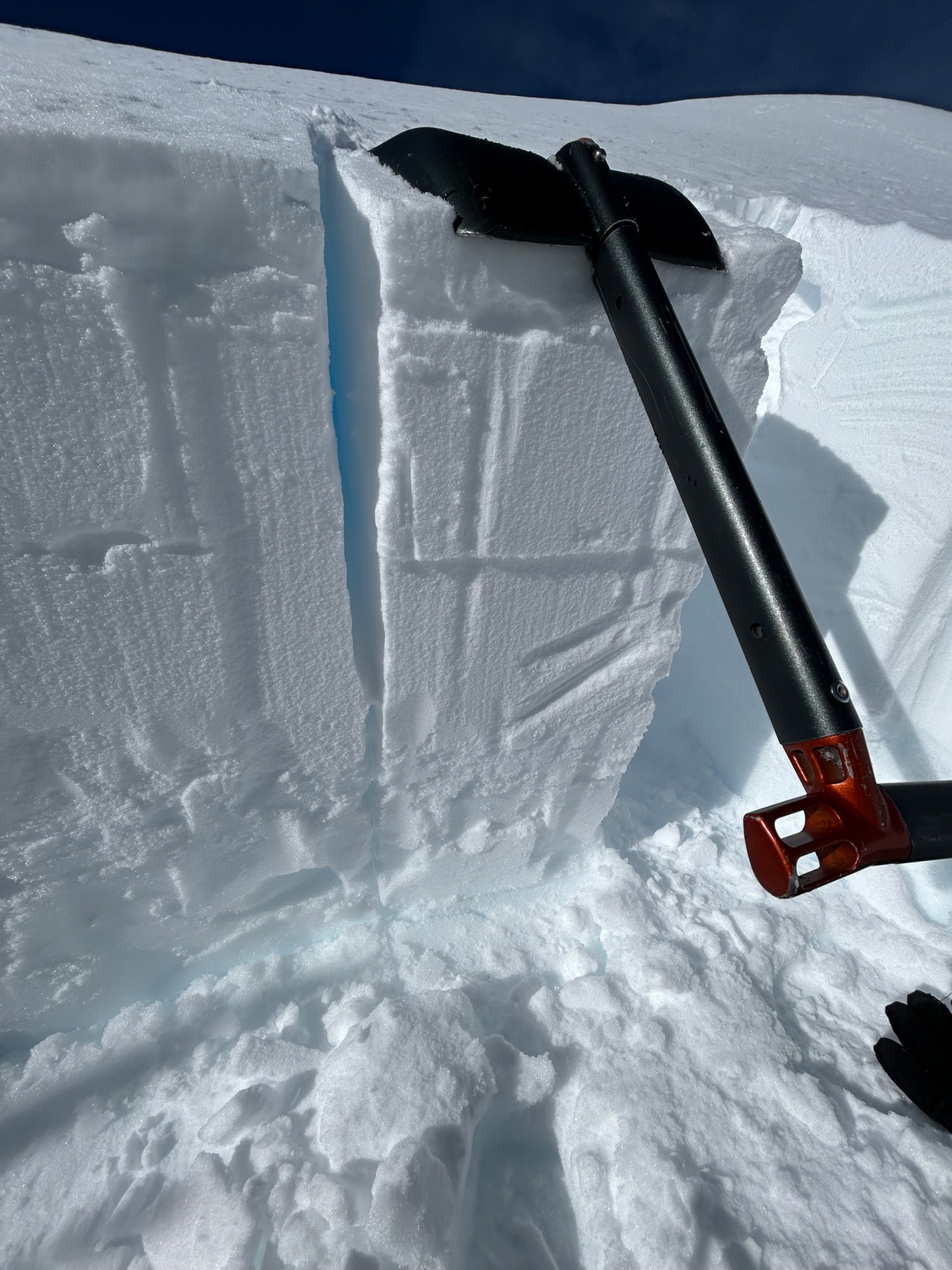
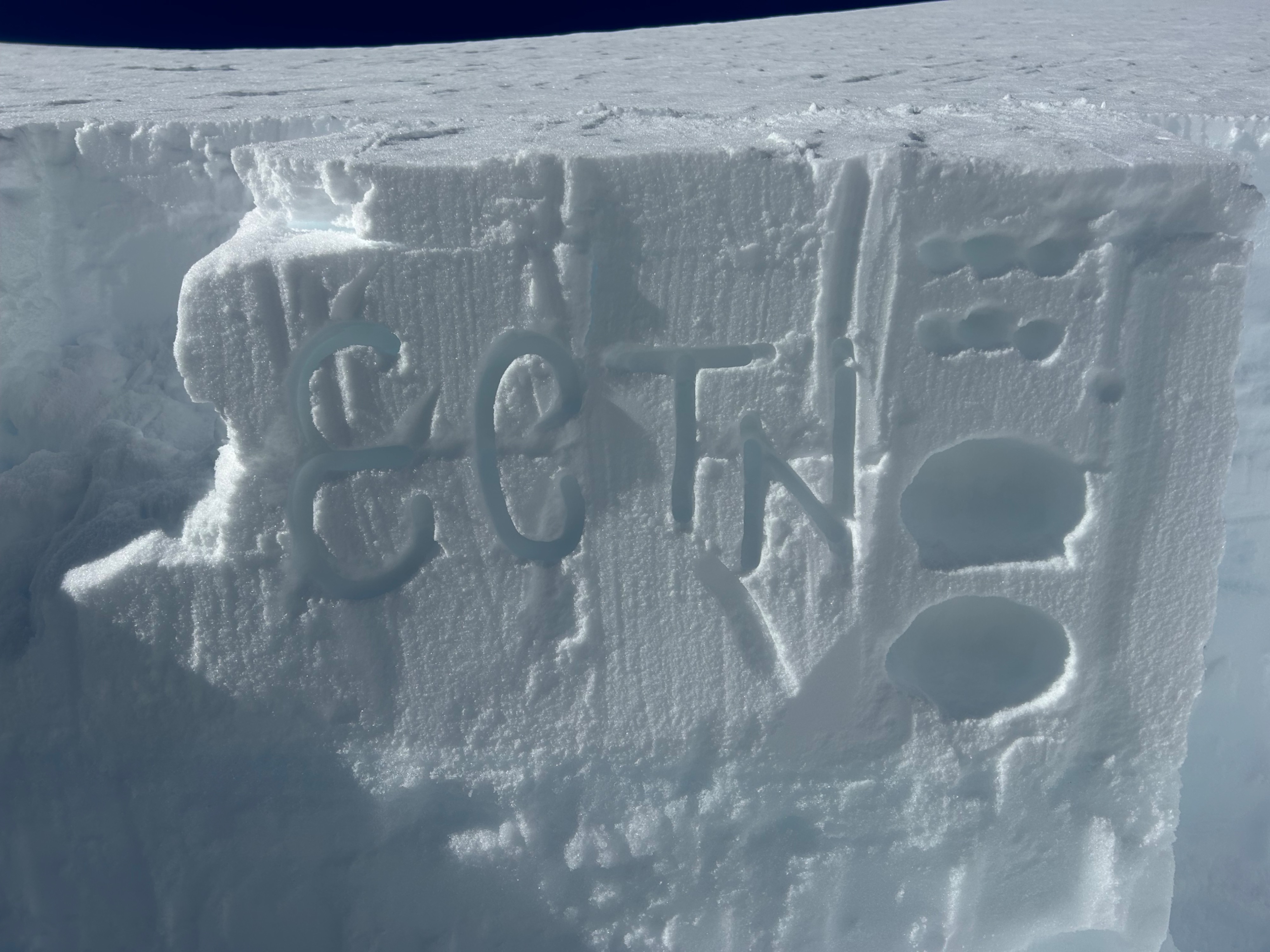
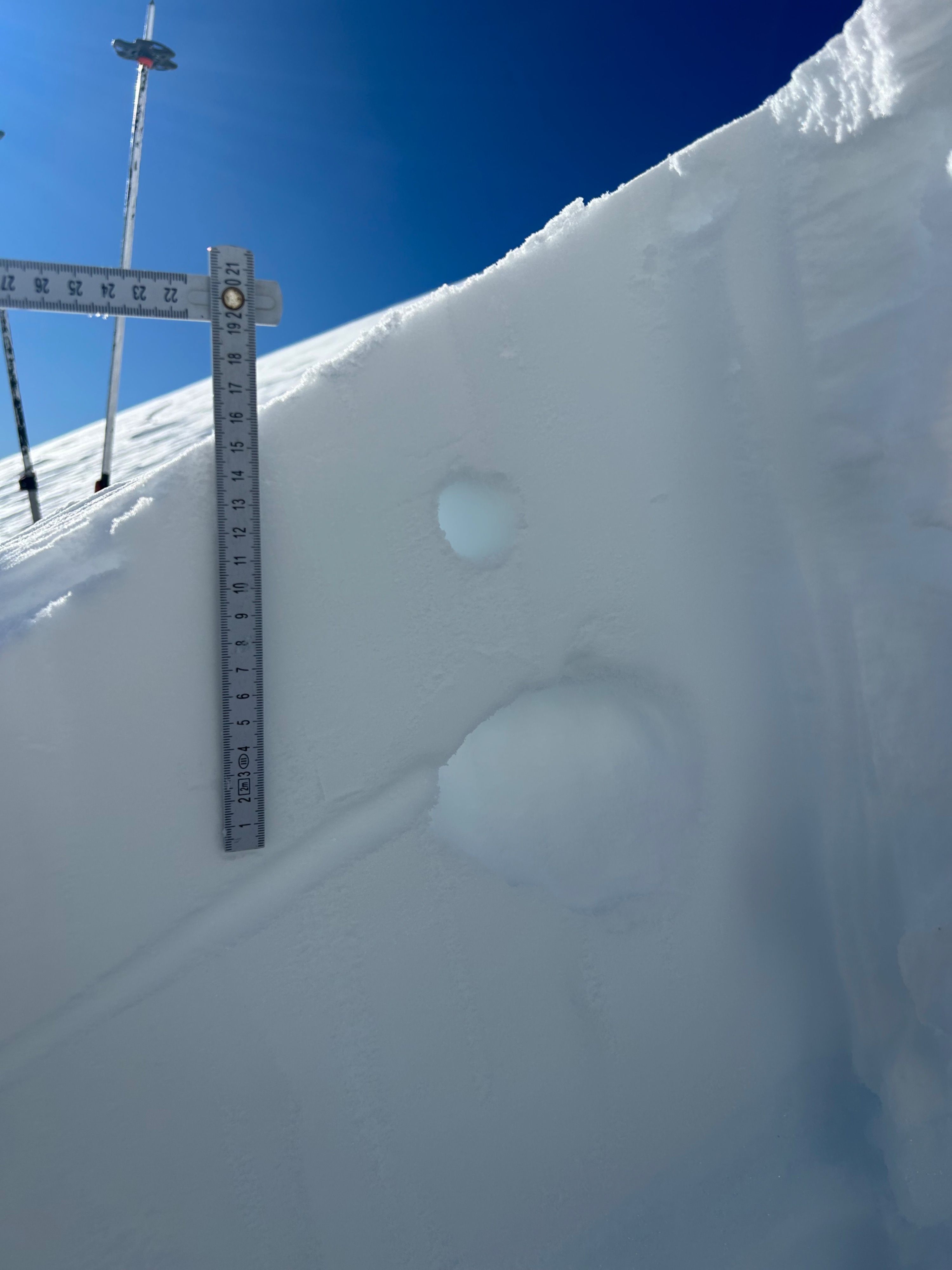
Recent snowfall holding a high moisture content has now frozen and been wind packed over the last 24 hours. This has resulted in very hard surface conditions. Surface slabs range anywhere from 5 to 10 inches in depth. Below these slabs, softer snow exits (see photo). This hard to soft snow interface was reactive in a CT test, but did not propagate in an ECT. Meaning, it is stubborn to trigger and likely does not have enough energy to cause an avalanche. That said, in extreme isolated terrain this problem could be more reactive.