
Quick report
Today, our goals were to continue monitoring faceting above and below the 1/1 crust south of the Mammoth area. We also took a look at our wind slab and wet loose avalanche problems.
Conclusions:
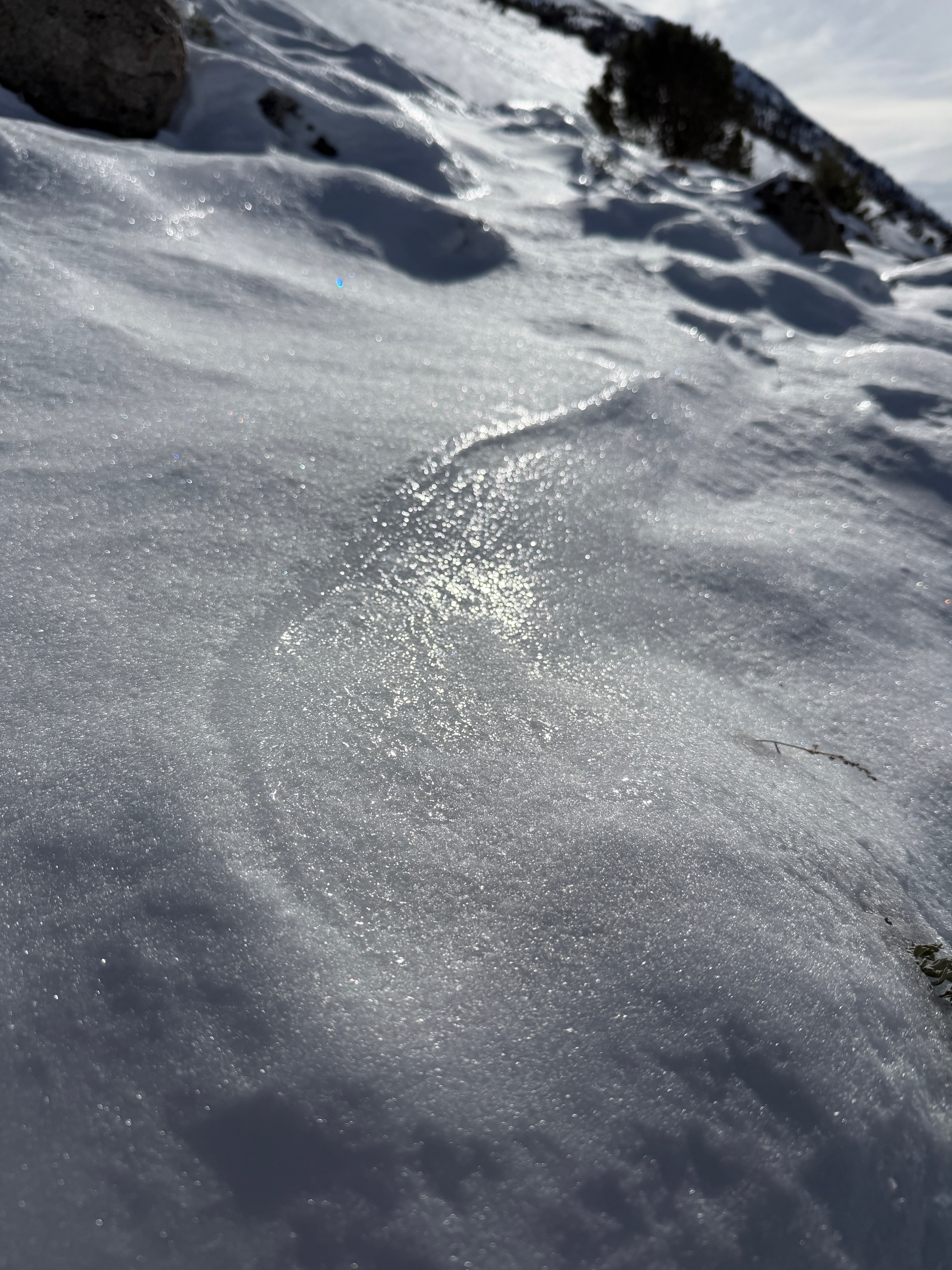
-The southern portion of our forecast zone holds 1/1 crust as widespread as everywhere else. The faceting occurring above the crust is pronounced, but it lacks a slab.
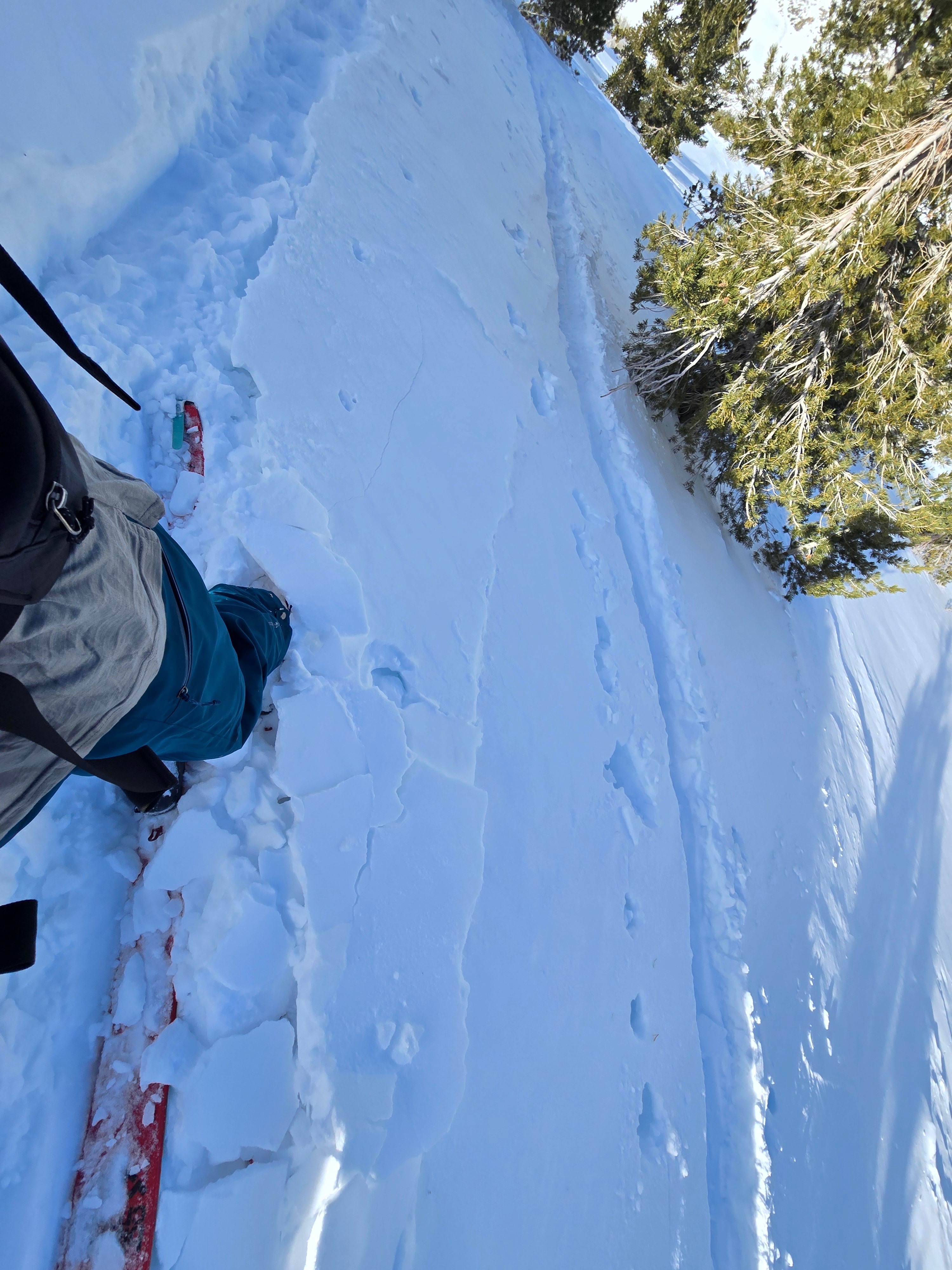
-Wind slabs are becoming more and more stubborn, and are isolated in distribution.
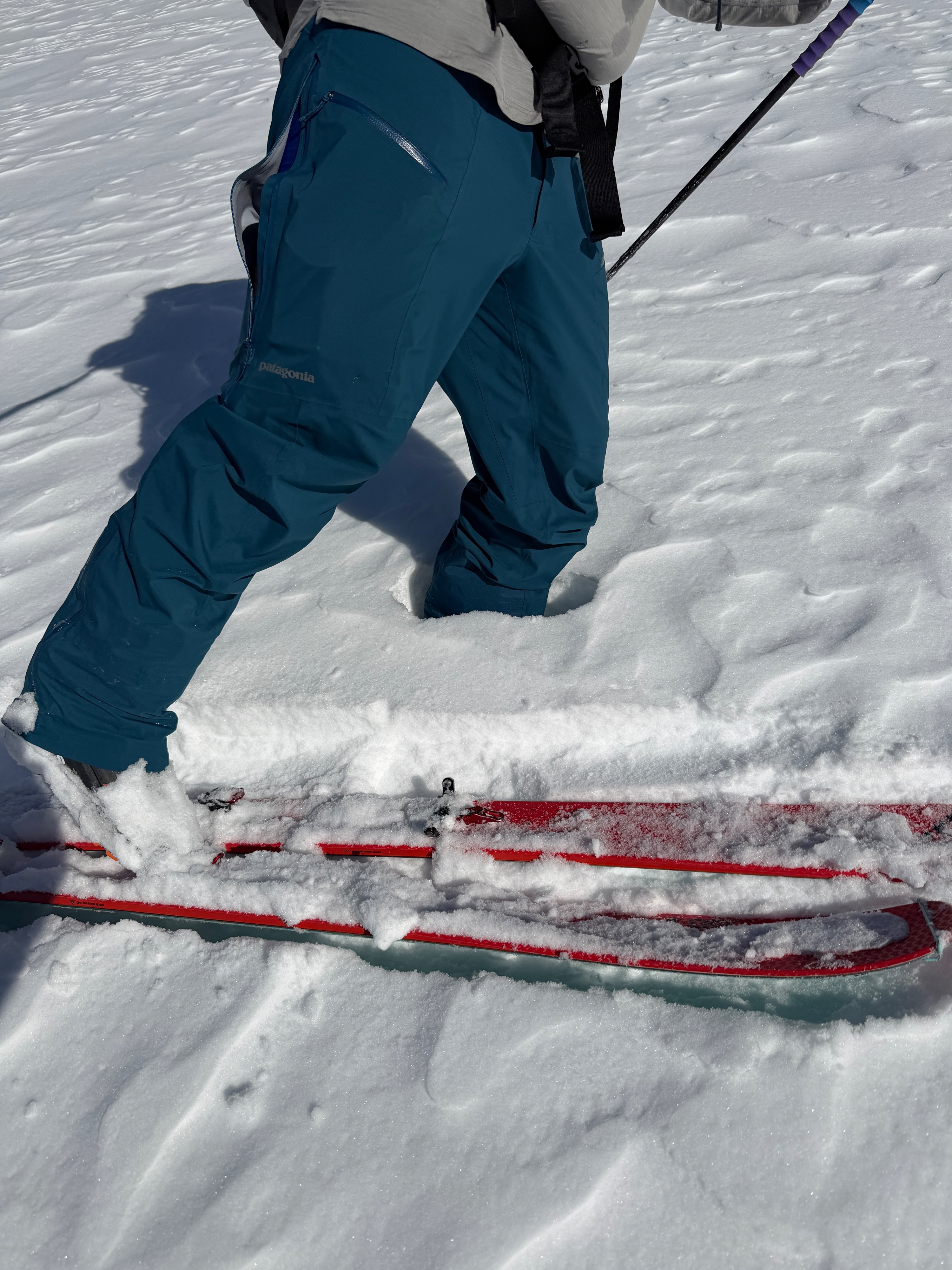
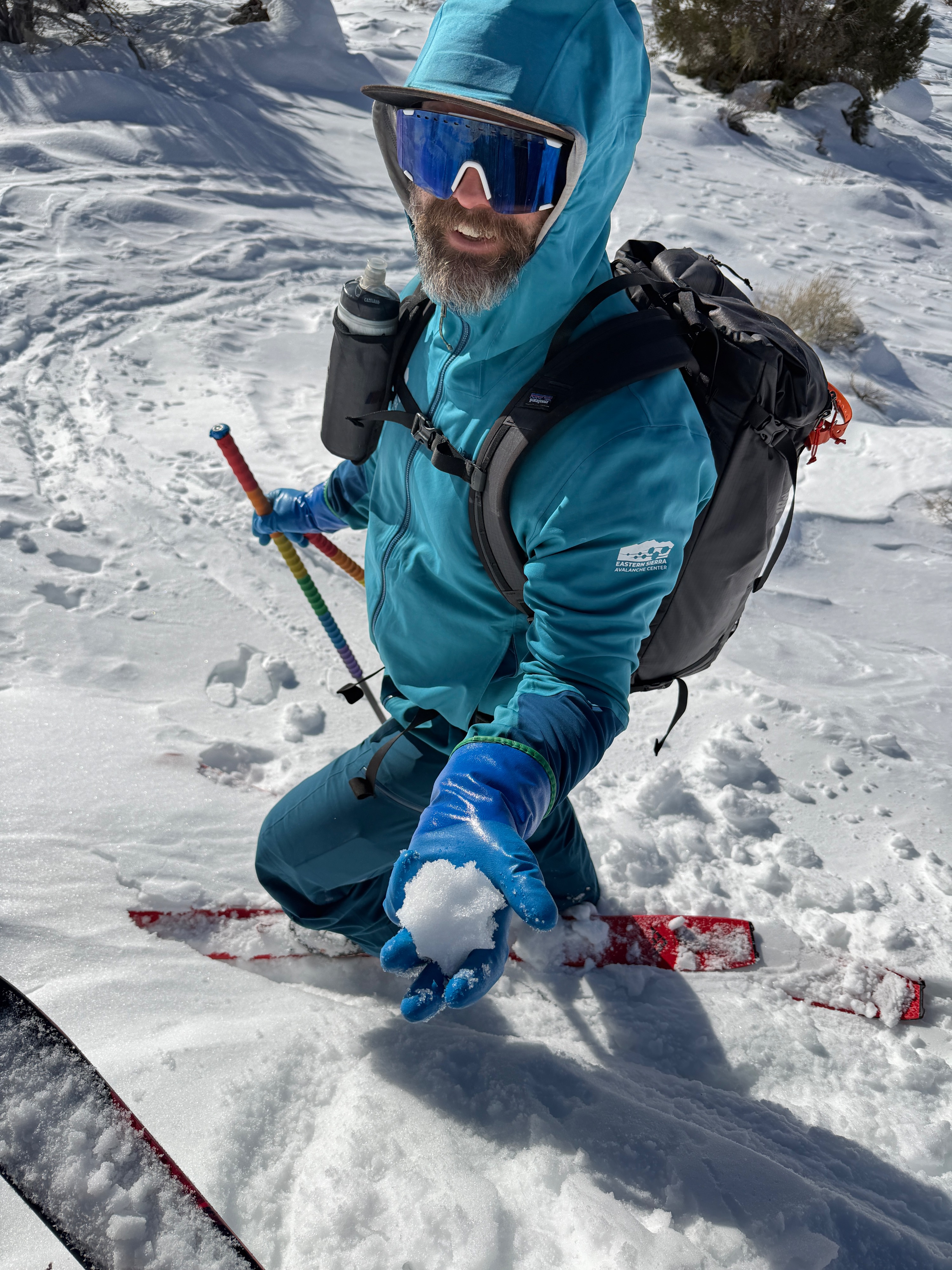
-Wet loose didn't materialize as expected today. While we found some low-elevation solar slopes to have wet snow at the surface, cloud cover kept the sun from really making this a problem for us.
We found localized cracking in old, stubborn wind slabs only when they were unsupported.Weather
- Air Temp
- 40
- Cloud Cover
- scattered
- Wind Loading
- none
- Snow Avail For Transport
- small smounts
Beautiful weather. Calm winds, scattered cloud cover, and warm temperatures.
Snowpack
At 8400', the average height of snow sat around 75cm in places less affected by the wind. As we travelled up to 10,000', we found the average to bump up to around 100cm. Some notes we made:
- On solar aspects around 10,000', 25cm of dry snow sits atop the 1/1 crust. This dry snow will be the fuel for future wet loose avalanche problems as it becomes wet with sunny skies and warm daytime highs.
- Wind slabs are becoming less likely to trigger, and only isolated pockets exist across the terrain. Generally calm winds and a lack of blowing snow prevented new wind slabs from forming today.
- While a bed surface and weak layer exist on northerly aspects 9,500' - 10,000', faceting near the surface has made the overlying snow cohesionless and weak. Without a slab, this is not a concern. We were unable to find a location with a sufficiently cohesive slab to propagate failure in long-column tests. (ECTX x 3)
- The structure in the southern portion of the forecast zone consists of facets, melt-freeze crusts, and multiple rain crusts. Ew.