
Schneedecke
Auf der Karte ansehenRed Lake Area - Virginia lakes - Isolated wind slabs, intermitent coverage
Steve MaceEastside Region
Quick report
- Cracking
- isolated
- Collapsing
- isolated
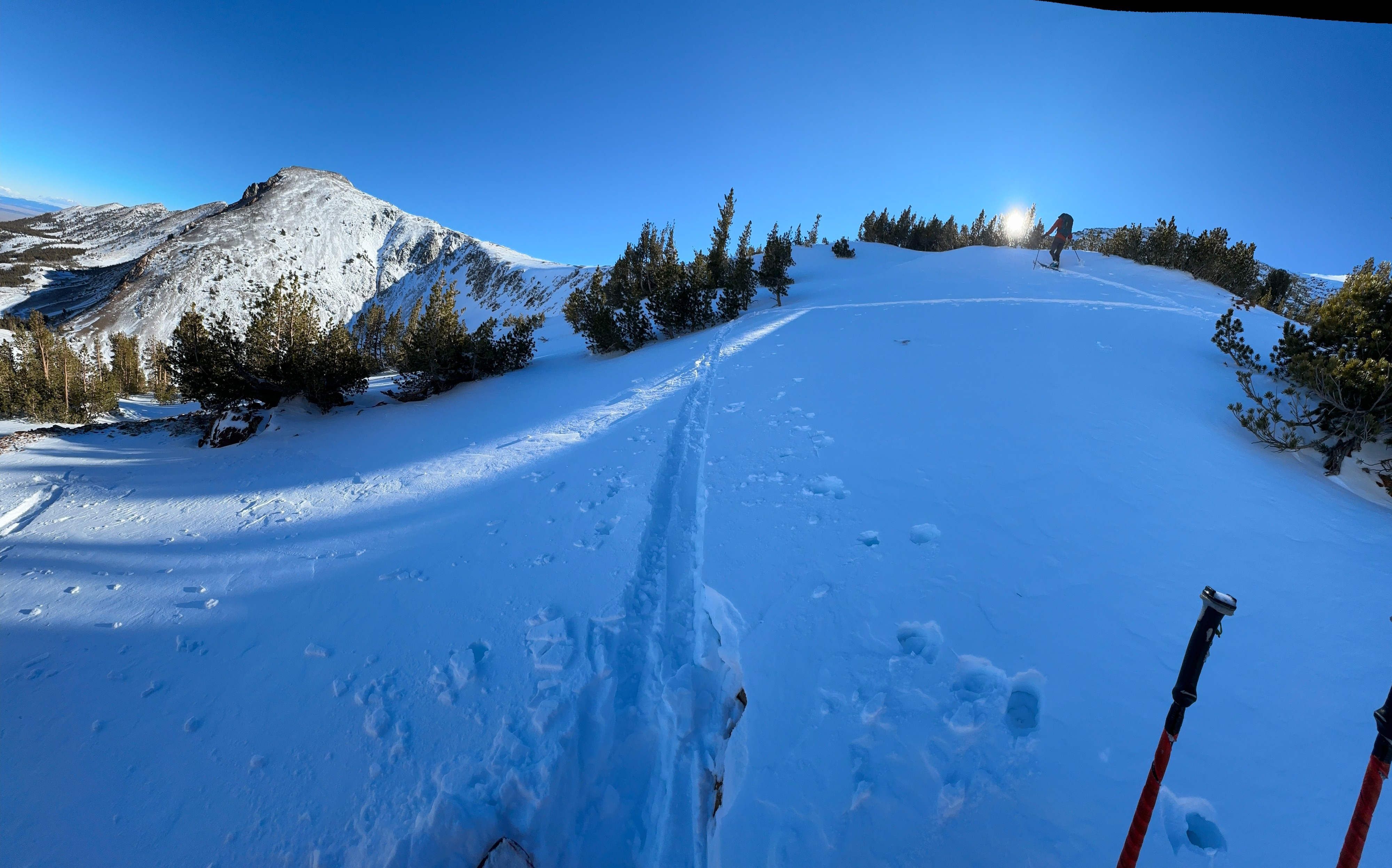
- Overall, the coverage remains thin in the Virginia lakes area with few options for connected travel on snow. Windward slopes and upper elevations are largely stripped of new snow, and in many wind-exposed areas, the snow has been stripped to the ground.
- In areas that encourage drifting, we measured up to 200 cm of snow on the ground. With the “average” being somewhere closer to 50-100 cm.
- The snowpack has gained some strength in the mid-pack since my last visit to the area a week or so ago, with a ski pen averaging 10-20 cm. This made for more pleasant movement, but there are still some hungry sharks to be found out there.
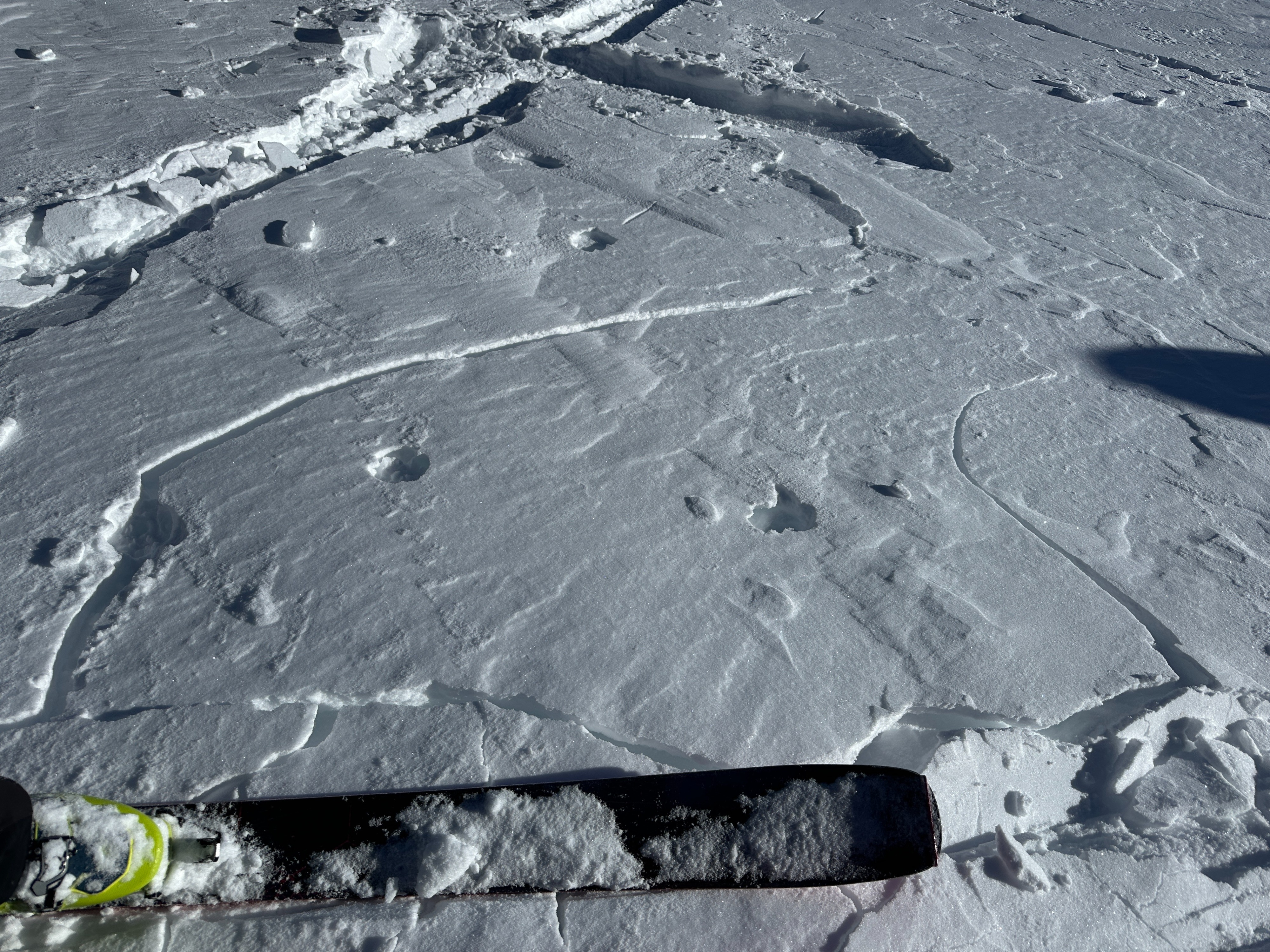
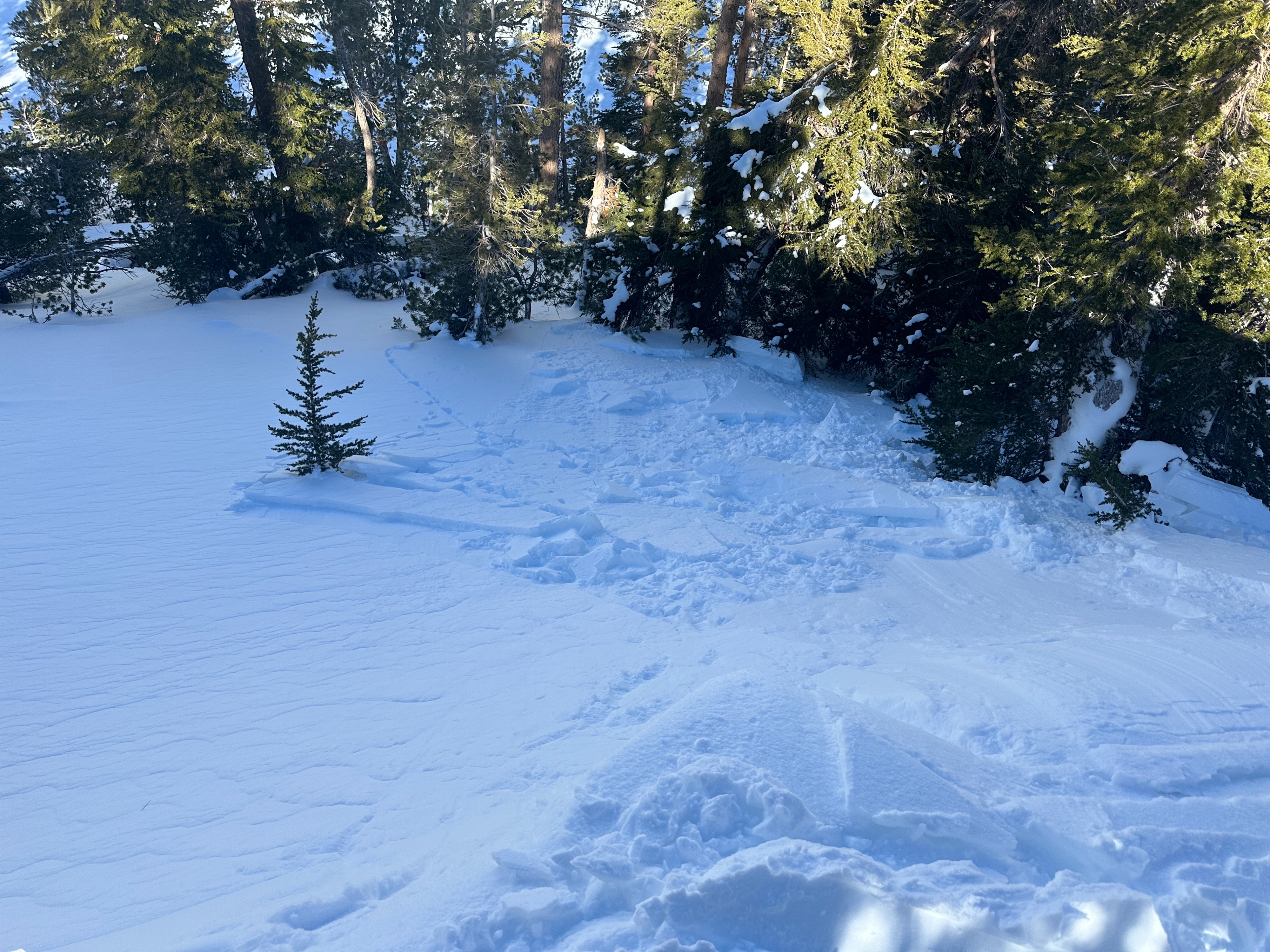
- We found a few areas with recent wind slab formation on test slopes near treeline with some small cornice growth and stiff 1f slabs. These deposits would be best described as stubborn, thin, and small. There are some larger catchment zones at higher elevations that I would suspect hold more concerning deposits but would expect similar reactivity.
Weather
- Air Temp
- 26
- Cloud Cover
- clear
- Wind Loading
- light
- Recent Snowfall
- 2-5
- Snow Avail For Transport
- small smounts
Clear skies and mostly light to moderate winds near and below treeline made for a pleasant day in the hills. Temps remained below freezing and cold winds kept thing chilly.
Snowpack
- We dug in two locations on NE aspects around 10500 ft. One location had a deeper snowpack (140 cm), and the other had a shallower snowpack (50 cm). Both locations had depth hoar at the base of the snowpack, and the idea was to get an idea of the reactivity in areas with different depths.
- Both locations had slabs ranging from 1 finger to pencil hard.
- At the deeper location we observed propagation with moderate force on a density change at the new old interface about 40 cm below the surface but we did not see propagation on the depthhoar until we added significant force after the standard test.
- In the shallow location we saw propagation at the depth hoar with moderate force.
- Our results suggest that triggering a large avalanche near the ground would be much more likely from shallow areas or areas with shallow trigger points.
- All of this suggests that while signs of instability are becoming less obvious and the slab has gained strength in some areas if a rider finds the right trigger point, a resulting avalanche has the potential to be quite large and destructive.