
Quick report
- Cracking
- specific
- Collapsing
- specific
Observed spatially variable snow conditions, with increased reactivity in wind sheltered snow. The snowpack showed strong-over-weak composition and sensitivity within those hardness changes. In wind affected terrain found increasing stability in the limited terrain we observed today.
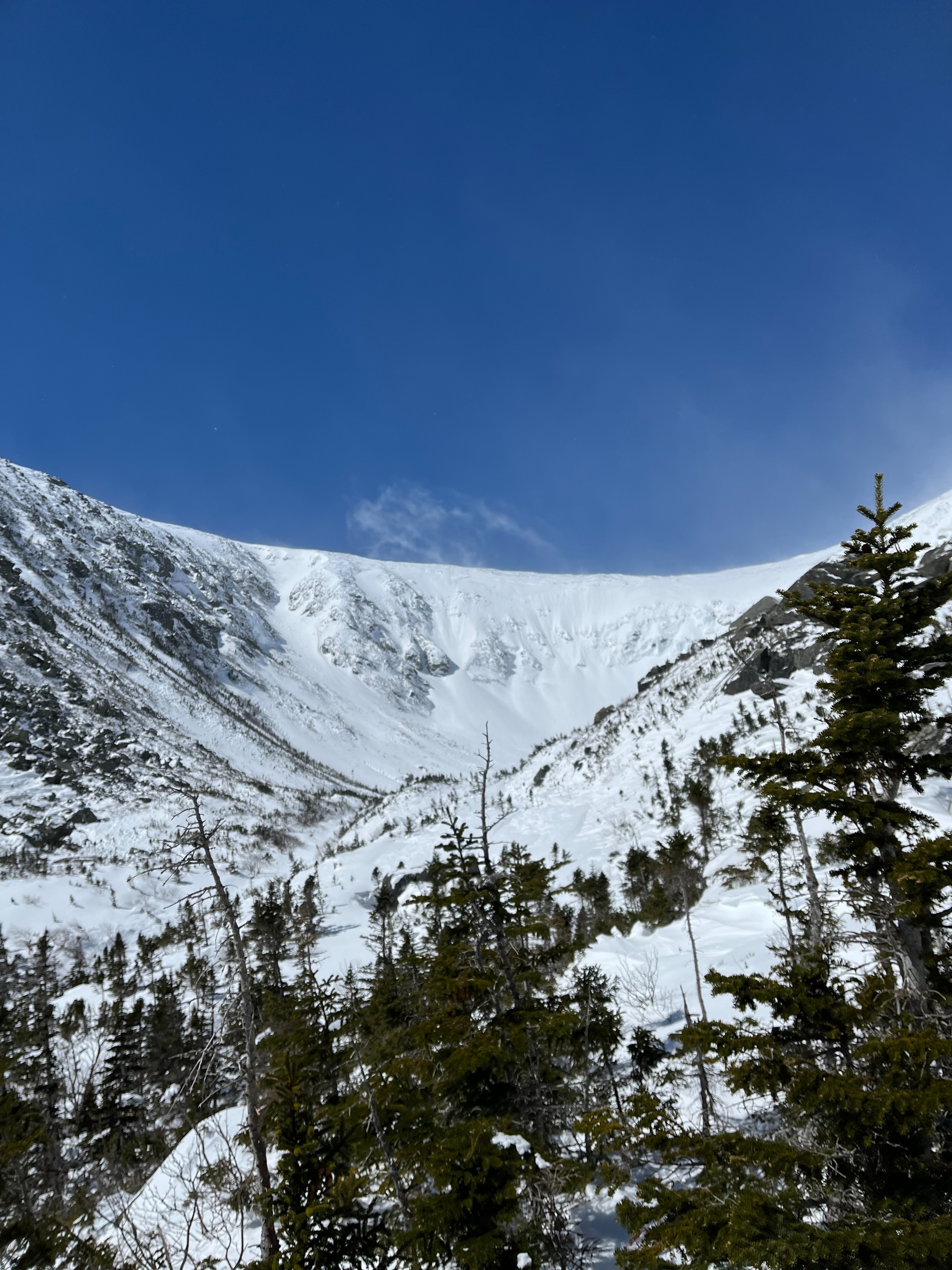
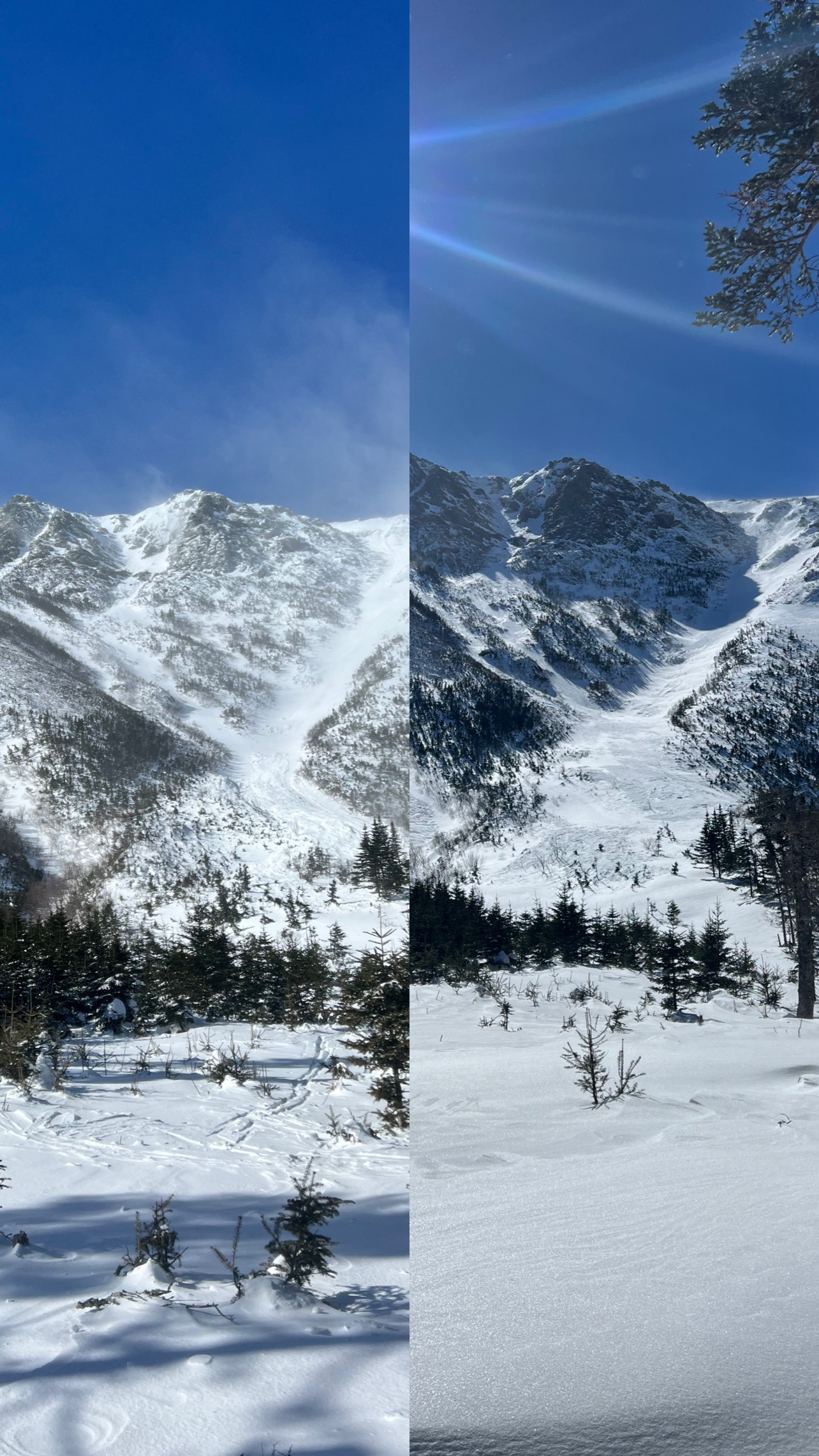
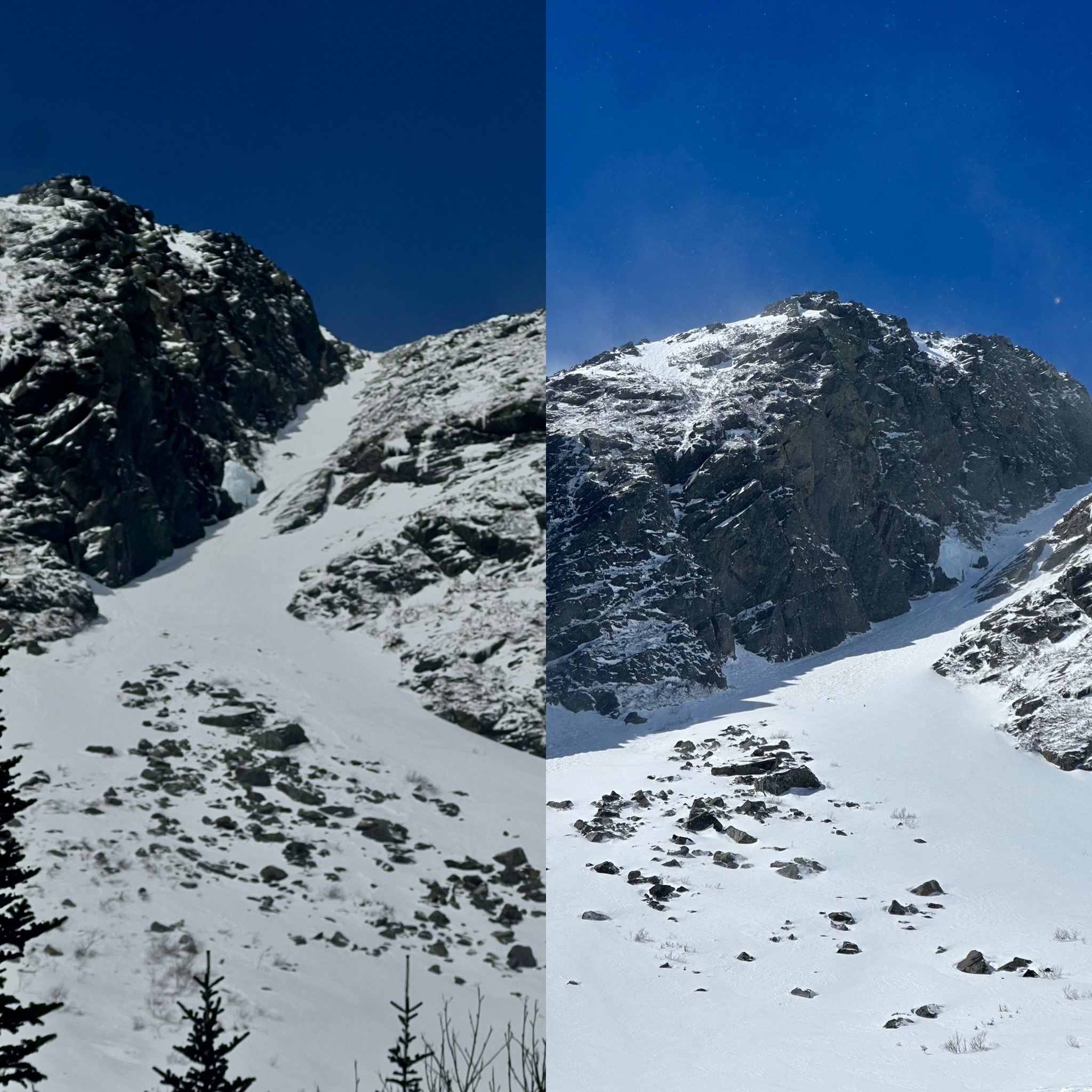
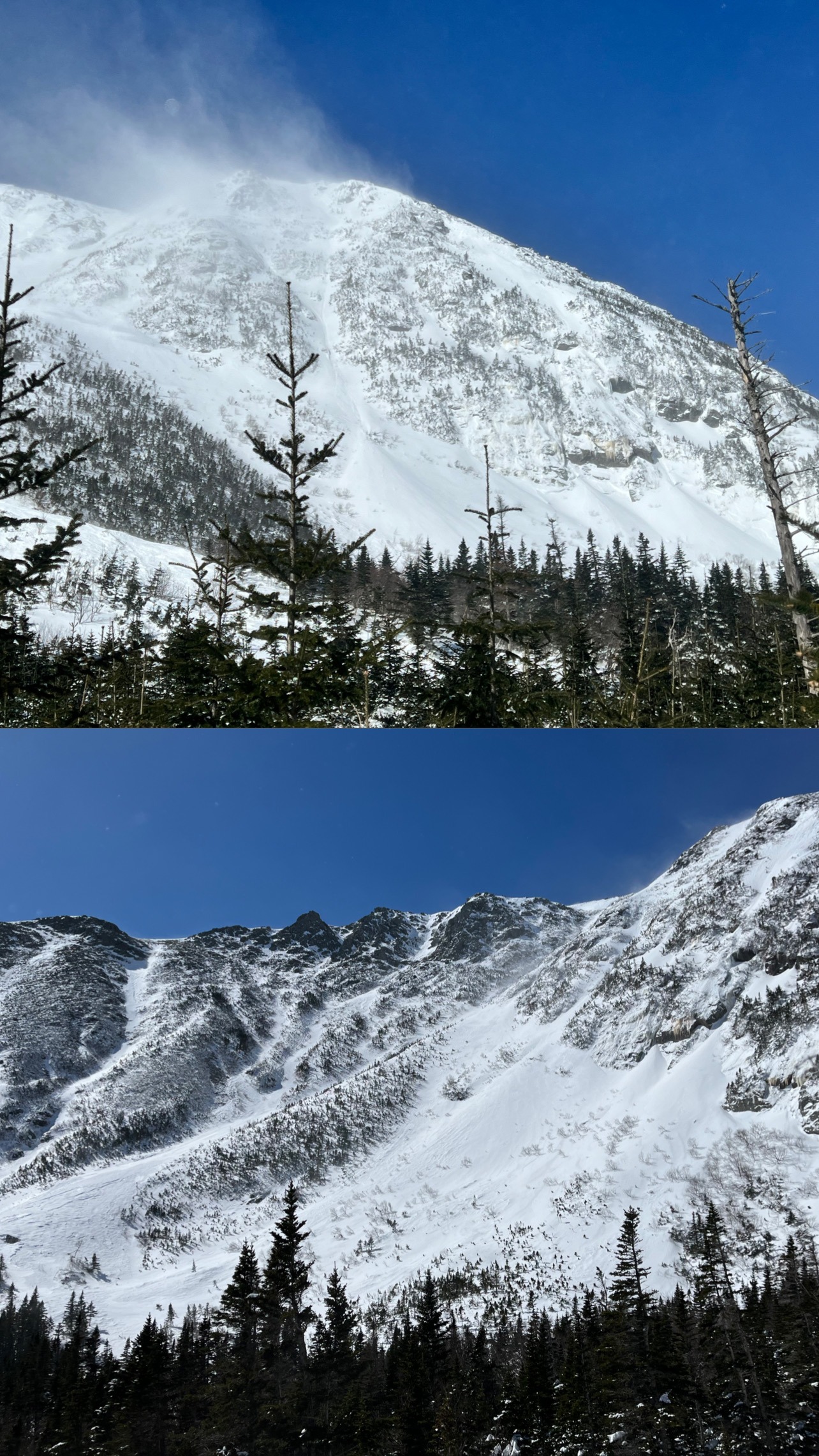
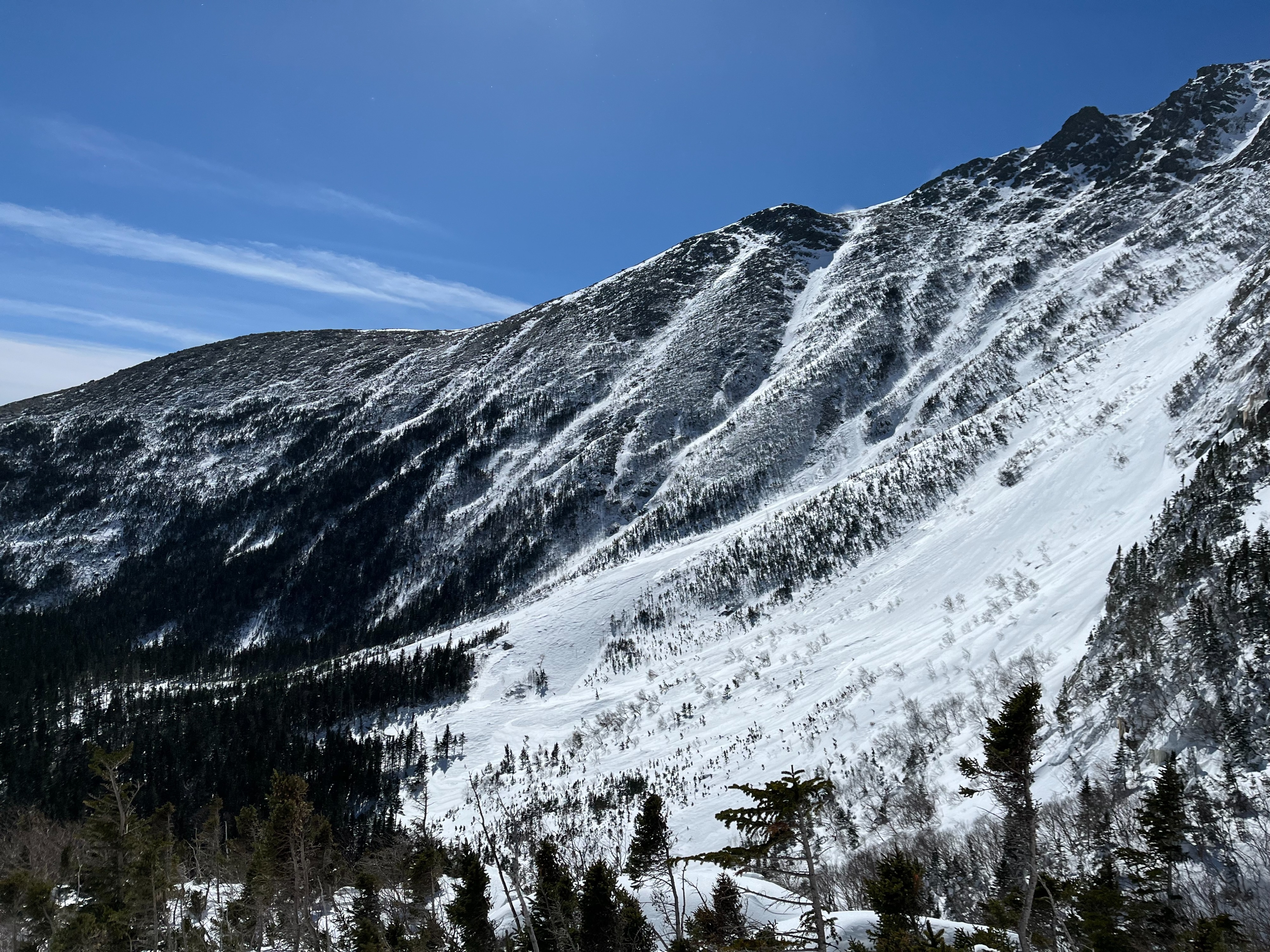
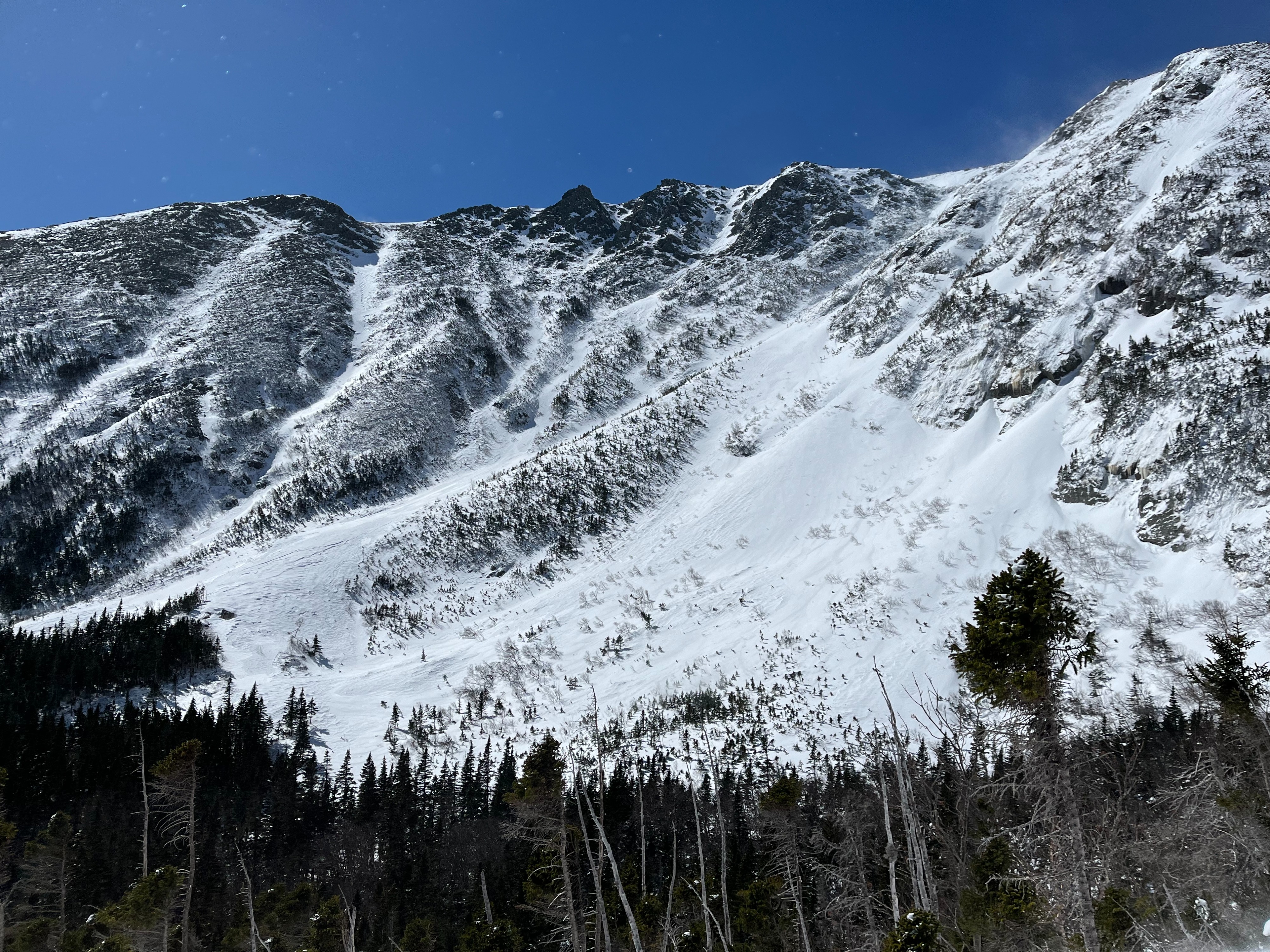
In Tuckerman Ravine noticed increased path size to Left Gully and large aprons of snow in Chute and across the Headwall as well as increased snow coverage. Hillman’s Highway ran into part of its historic runout. Dodges had increased debris at the bottom of its path and the top part was thinner and rockier. Duchess had the most destructive path with large trees broken.
Saw evidence of avalanche activity with increased path size, broken trees, and some debris. Cracking and collapsing was found in wind sheltered terrain at similar aspects and elevations. This happened within the same layer and was a hardness change within the slab, a thicker 1F wind slab atop a soft fist hard storm snow slab.Weather
- Air Temp
- 14
- Cloud Cover
- clear
- Wind Loading
- previous
- Recent Snowfall
- 55
- Snow Avail For Transport
- small smounts
Clear and sunny skies provided optimal conditions for viewing paths. Arriving at 8:30 AM in the parking lot, noticed some wind transport into Tuckerman Ravine, Huntington Ravine, and Gulf of Slides from the road. Around 10 AM saw small amounts of transport into Boot Spur Ridge, but did not see much, if any, snow moving into Tuckerman. Decreasing winds were also noticed throughout the day.
Snowpack
Along the Tuckerman Ravine Trail, above Hermit Lake, in sheltered terrain found an upside down snowpack with strong over weak characteristics. There was a 1F wind slab atop a super soft, structureless, fist hard, storm snow slab. In some places I dug down and found down and found the fist hard snow was atop a melt-freeze crust.
In sheltered areas where the snow was soft found shooting and propagating cracks that traveled ~50 feet. A small test slope got this slab to slide a bit (see in video). We also found collapsing of this layer in soft snow and slightly more wind affected snow.
As we traveled into the boulder field, snow that was more wind affected and less sheltered showed increased stability and bridging from the high winds. This snow was supportable and did not display cracks or collapsing. We discussed that since wind transport had stopped, these newly formed wind slabs were becoming more stubborn and that likely were past peak instability for naturals. I had expected to see more wind transport throughout the day and was expecting wind slabs to remain reactive, as they are most sensitive while they are being formed.
Overall found very spatially variable conditions which we typically see after extreme winds.
Avalanche
- Size
- D2
- Count
- 2
- Aspect
- E
- Trigger
- N
- Elevation
- 4800 ft
more defined path and runout likely overnight 3/23 or into early morning 3/24