
Quick report
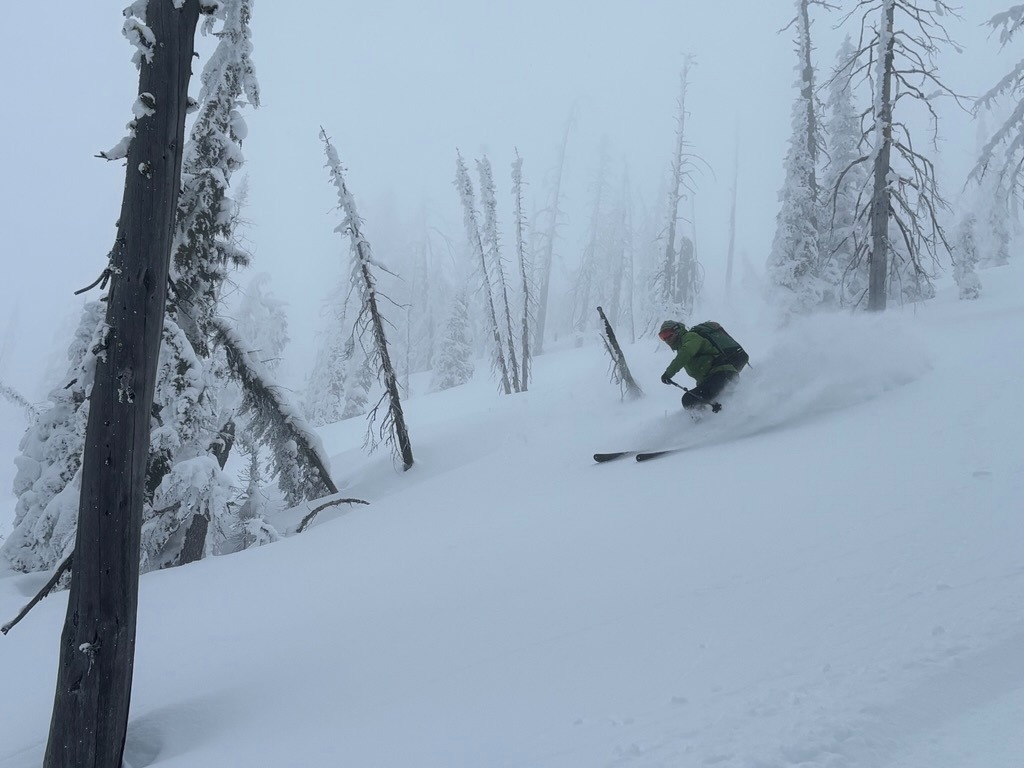
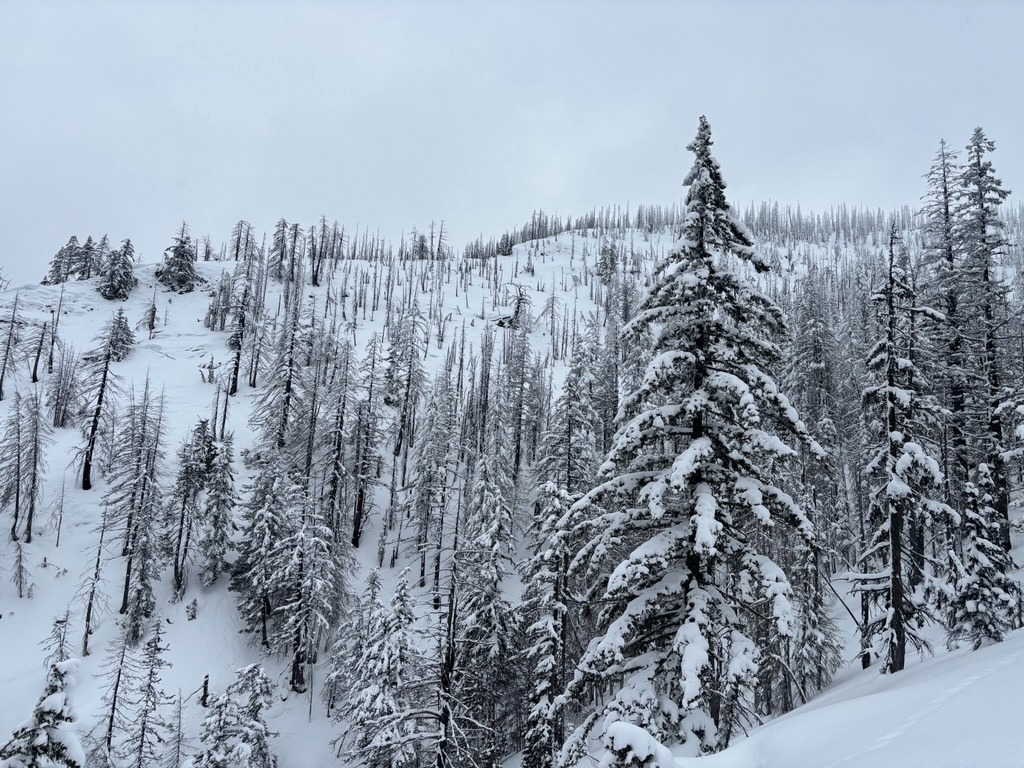
We went out to investigate the JDL in the western reaches of the East South zone where more recent snow rests over the weak, faceted crust layer in the upper snowpack. In general, we found great ski quality and 40-55 cm of low-density snow resting over the JDL around Gold Hill Ridge. Snowpack tests highlighted this layer's ability to propagate across a slope, especially on N/NE aspects where crust/facet layer is the weakest and the overlying slab is the thickest. We steered around open slopes greater than 30 degrees on W-N-E aspects and found great riding in more sheltered terrain.
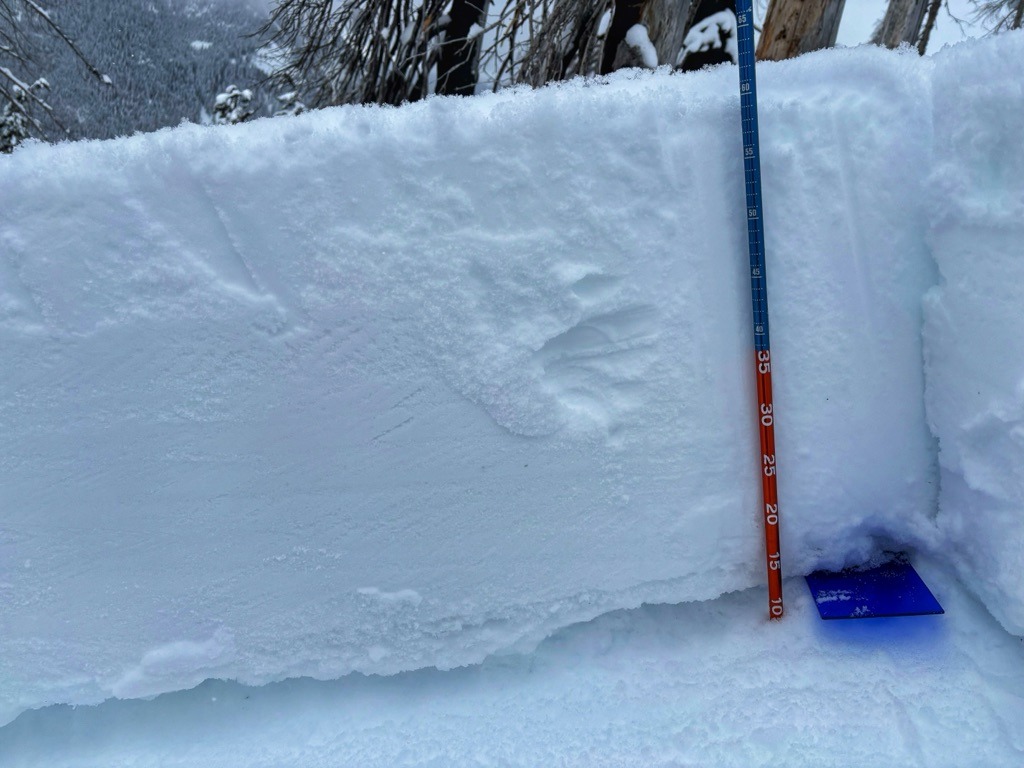
Steep solar aspects have a thin, sun crust from the previous day (2/6).
Weather
- Air Temp
- 20s
- Cloud Cover
- obscured
- Wind Loading
- light
- Rain Elevation
- 0
- Recent Snowfall
- 0
- Snow Avail For Transport
- moderate amounts
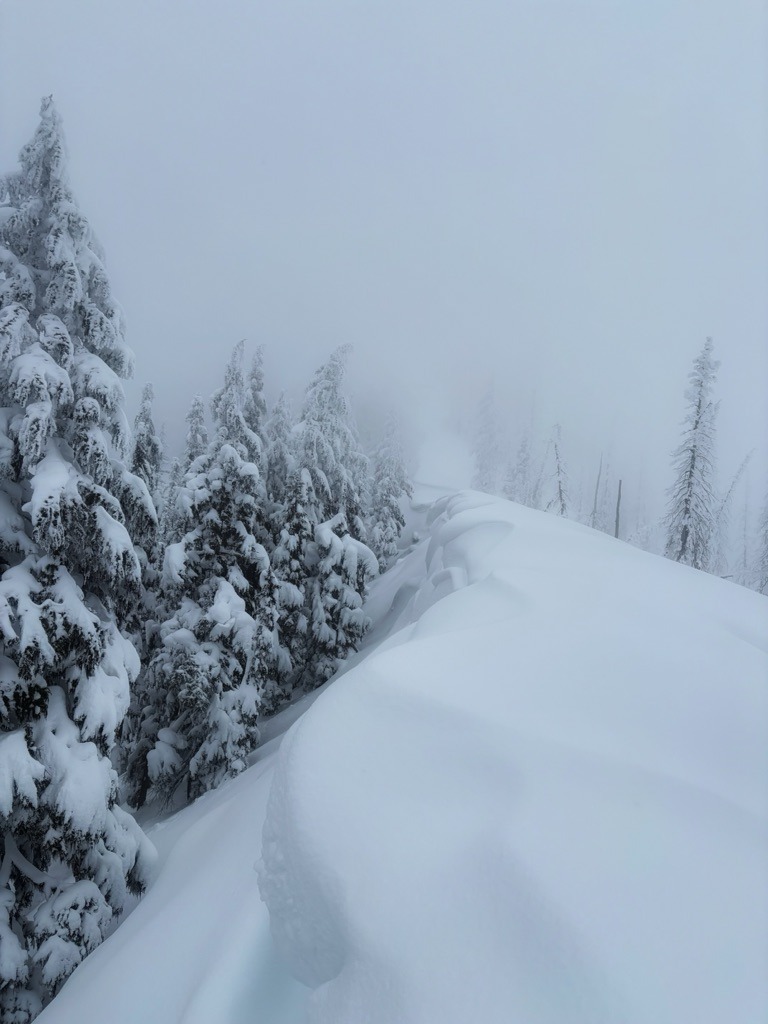
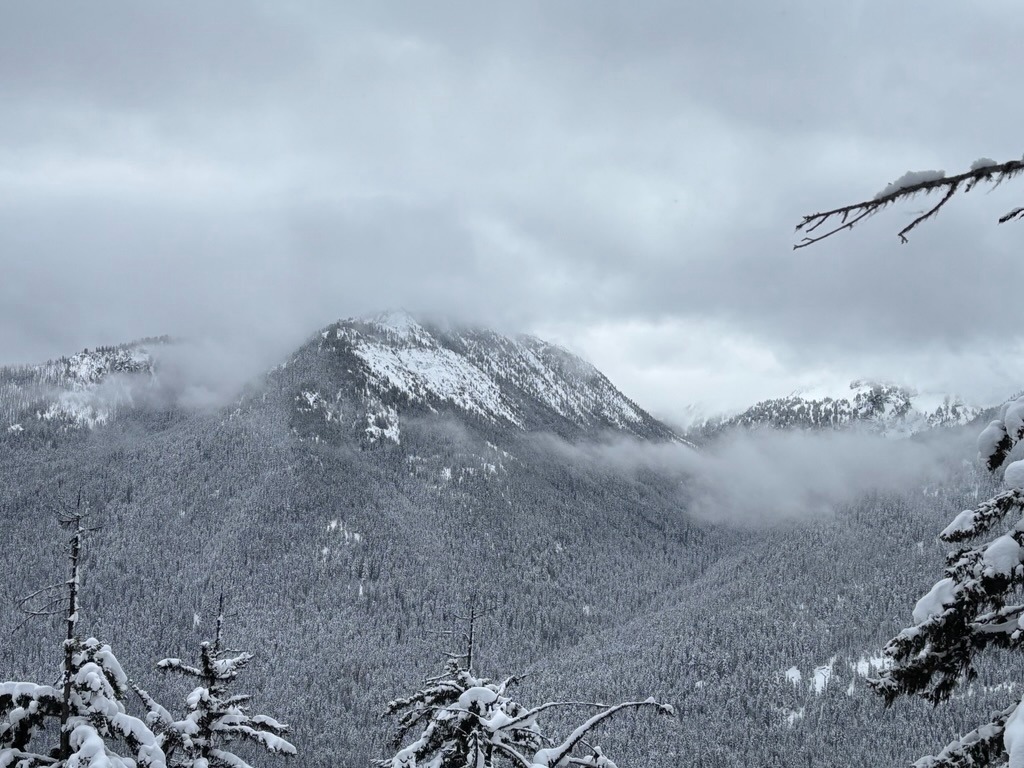
We encountered poor, foggy visibility at ridgetop.
Snowpack
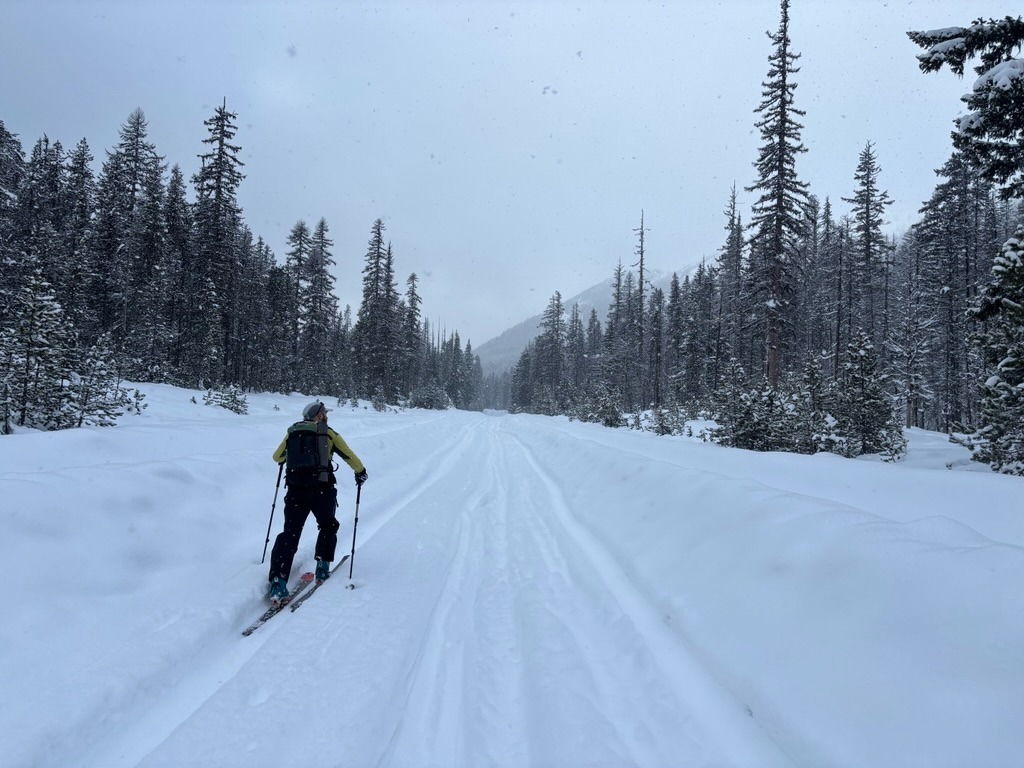
We launched from the Chinook Pass east side closure at the Lodgepole Campground. Here at 3600 ft, we found a HS of 140 cm. Throughout the day we traveled on S/SE/ N aspects to investigate the JDL and upper snowpack around this area.
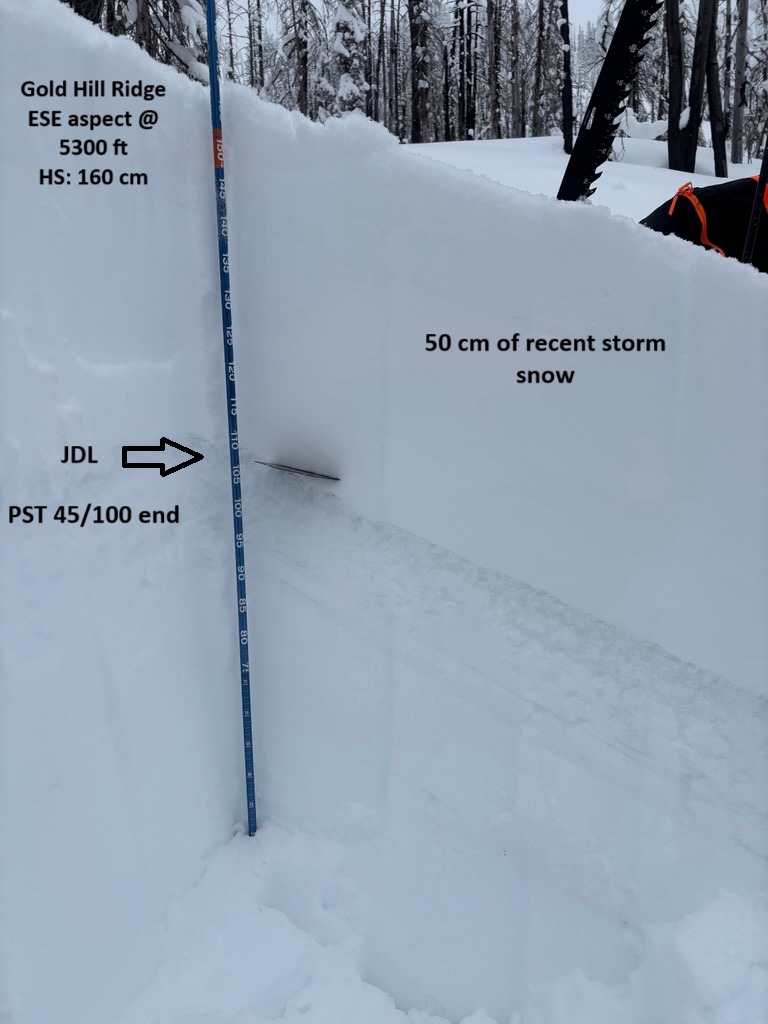
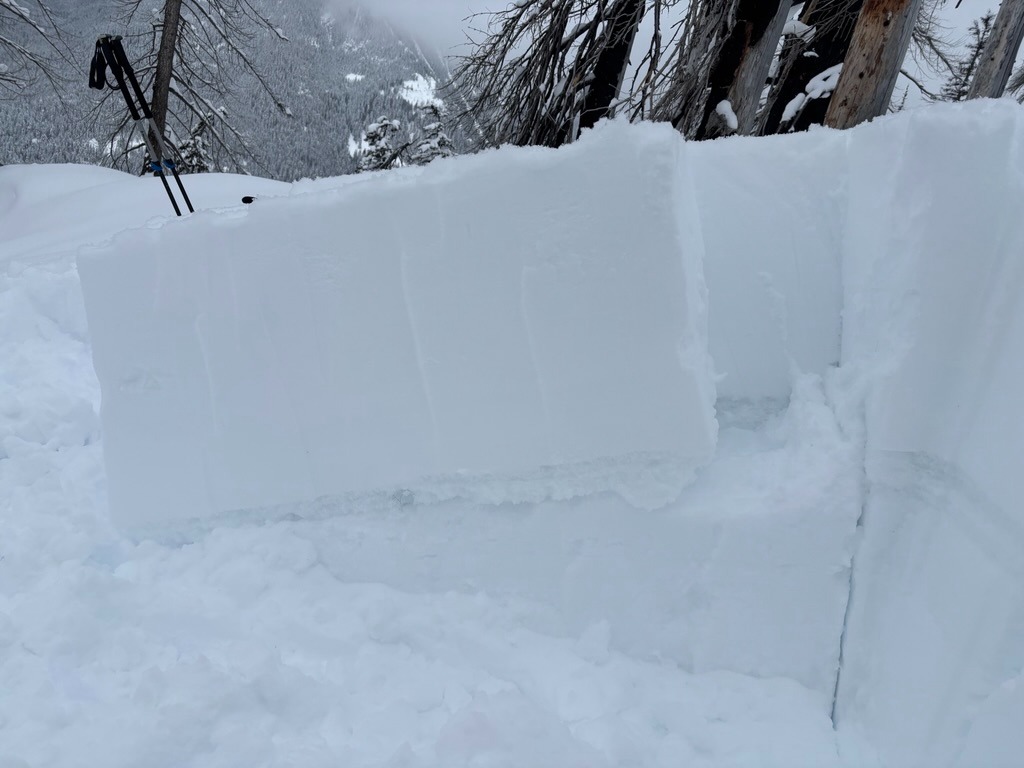
Solar aspects are still holding good ski/ride quality, however, steeper slope angles do hold a thin 1 cm thick sun crust from the clear day on 2/6. A test pit on a ESE aspect at 5300 ft revealed an HS of 160 cm. The JDL crust/facet complex in this location rested under 50 cm of F/4F recent new snow. This crust/facet interface harbors 1 mm facets that produced PST 40/100 end x 2. ECTs failed to propagate on it. Snowpack tests also highlighted some minor failures within the new storm snow.
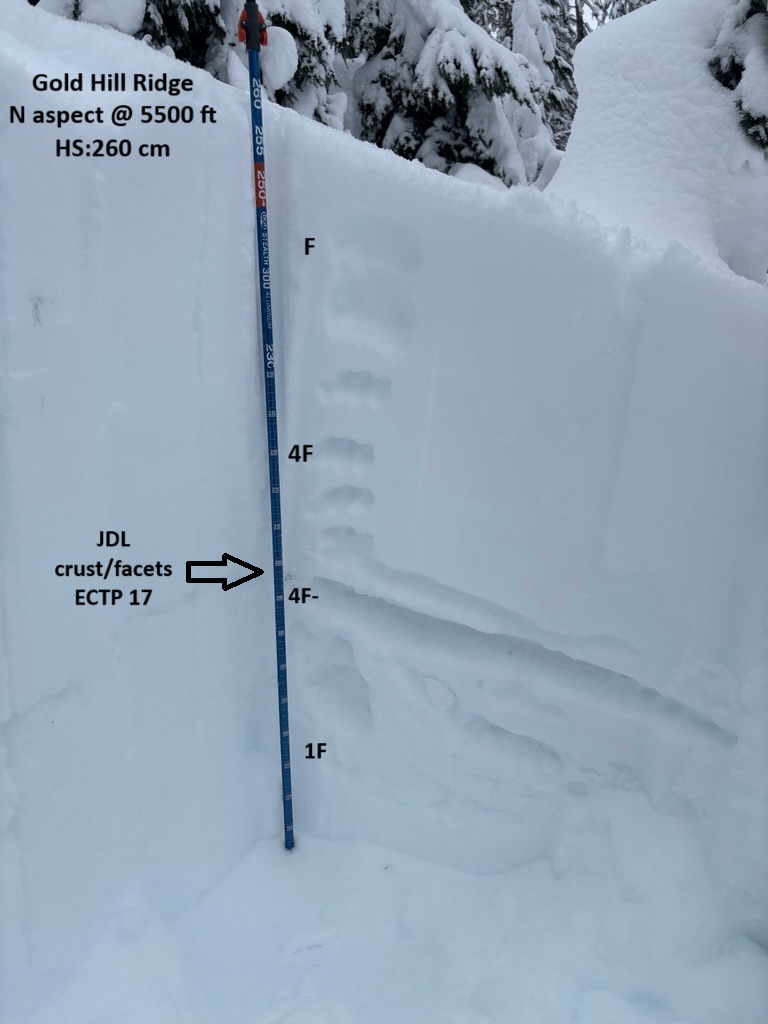
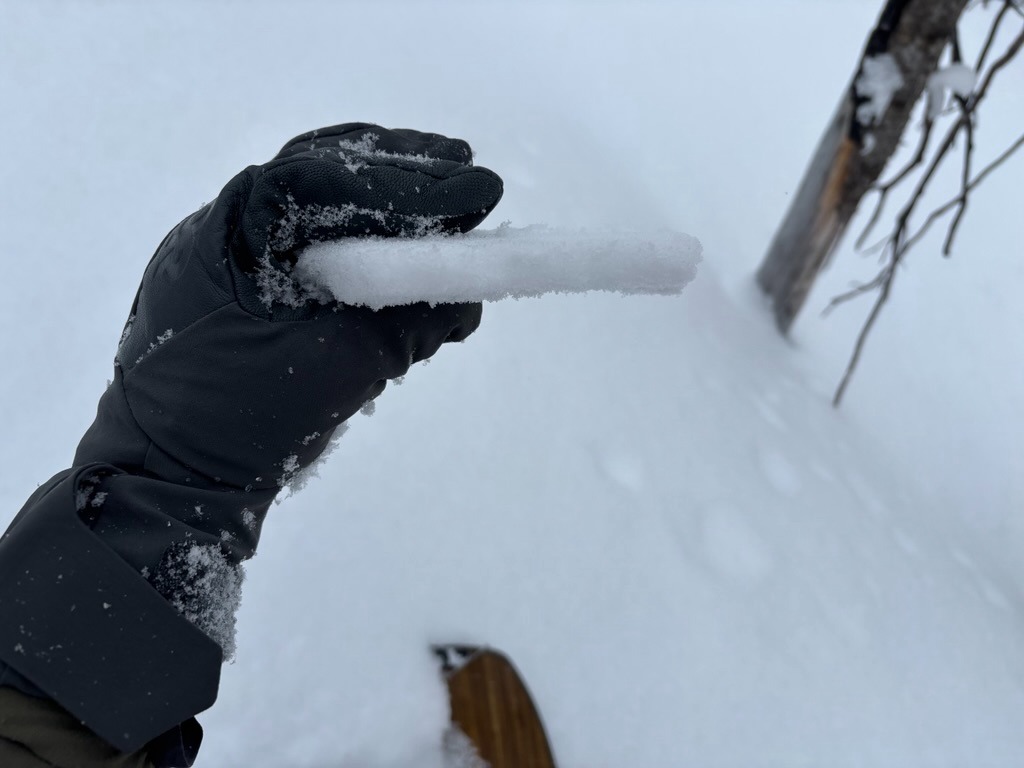
Moving over to N aspects we found great ski quality, but a weaker and more concerning upper snowpack structure. In a test profile on a N aspect @ 5500 ft, we found an HS of 260 cm and the JDL resting under 55 cm of low-density storm snow. Snowpack tests yielded ECTP 17 and easy failures on the JDL with tilt test. Check out the clip in the media for more info. In this spot, the JDL consisted of a weak, fragile crust with a thick (5-8 cm) layer of facets just beneath it.
Dry loose snow was abundant and easy to initiate on steeper, north facing features.