


Quick report
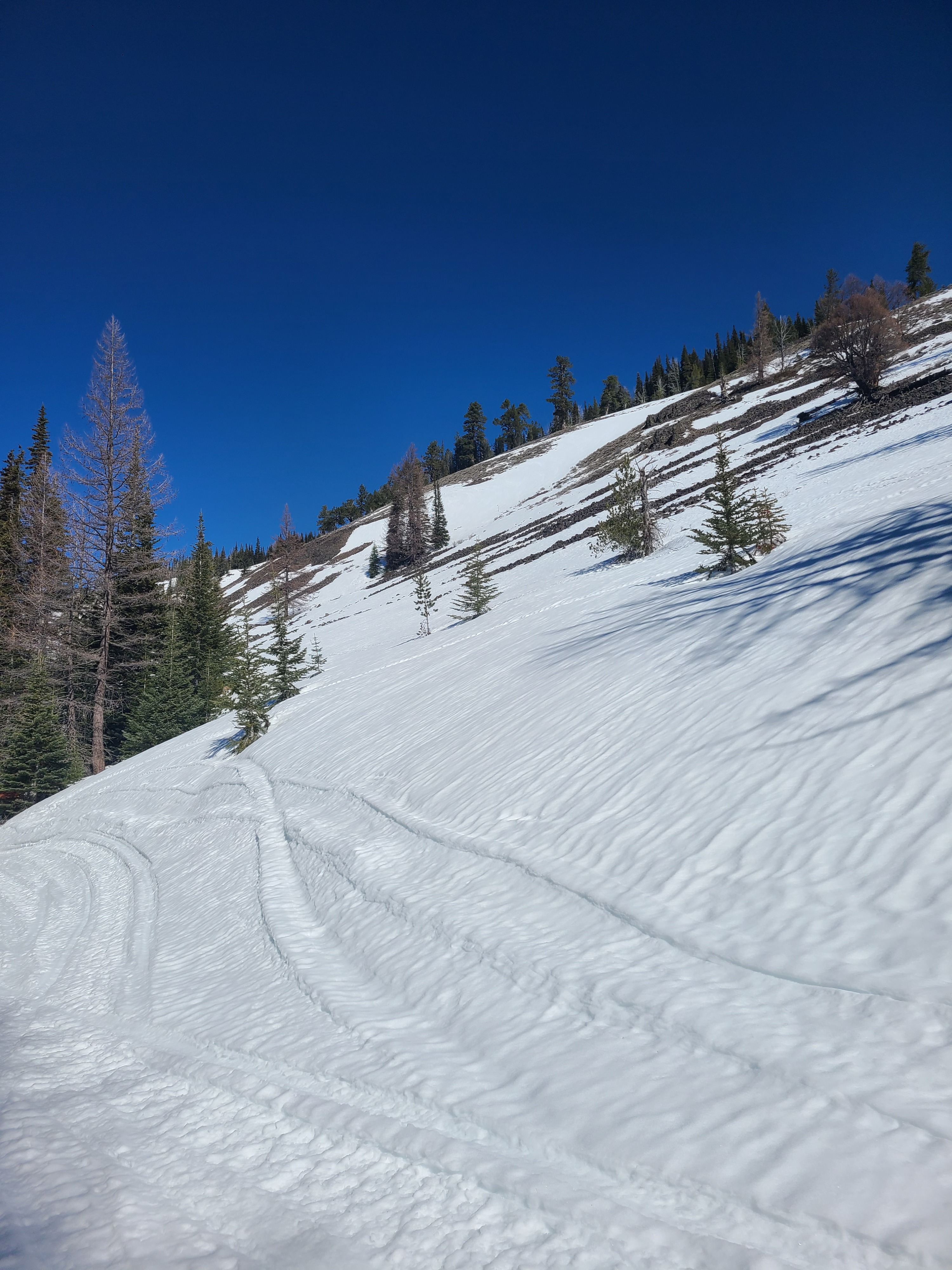
I headed out towards Darland Mountain in the Ahtanum to look at how the snowpack is evolving from the prolonged, sunny, warm weather. Low elevations are melting out quickly, but besides a few small bare spots just out of the SnoPark, the groomed trail is holding up nicely. Another surprise was the overall lack of wet snow avalanche activity despite the southern aspects cooking in the sun. Northern aspects hold a layered, cold winter snowpack, while southern aspects have undergone several melt-freeze cycles and have a spring-like snowpack.
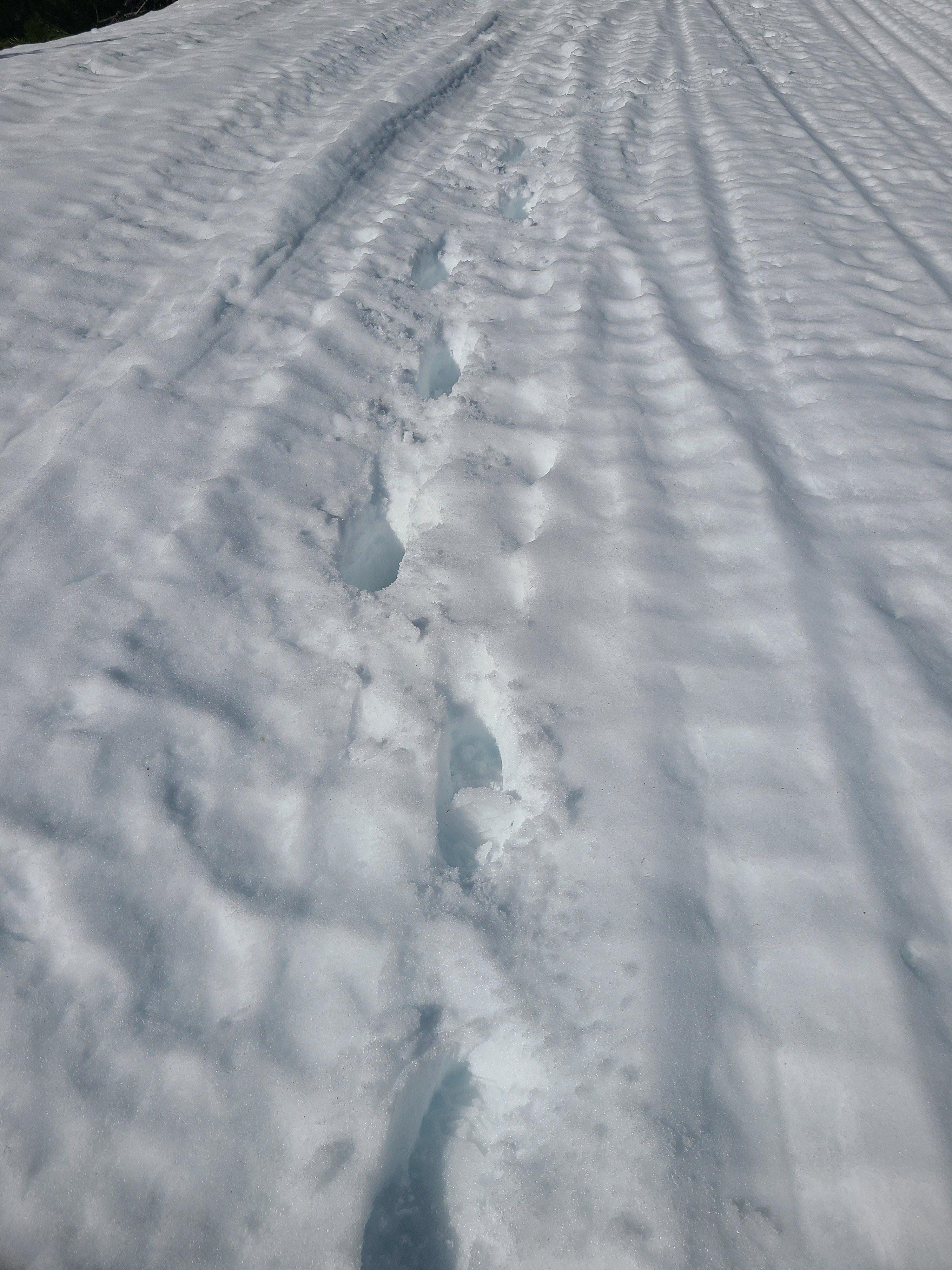
In sheltered sunny areas and eastern aspects, I would sink deeply into isothermic snow, even on the previously groomed trail. The snow was more supportable on shadier slopes, and I only sank in about calf deep. South aspects were surprisingly supportable to boots due to the diurnal melt-freeze cycles.
Weather
- Air Temp
- 55
- Cloud Cover
- clear
- Recent Snowfall
- 0
- Snow Avail For Transport
- none
It was a beautiful day that felt more like May than March. Skies were clear, west winds were light, and temperatures were in the mid-50F's.
Snowpack
I checked out the snowpack on both north and south aspects. The difference between these opposing aspects is drastic!
Average snow depths between 5500-6500ft in sheltered flat terrain are around 180-190cm, with the Early February Crust down 70-80cm.
N aspect, 6700ft
HS 295
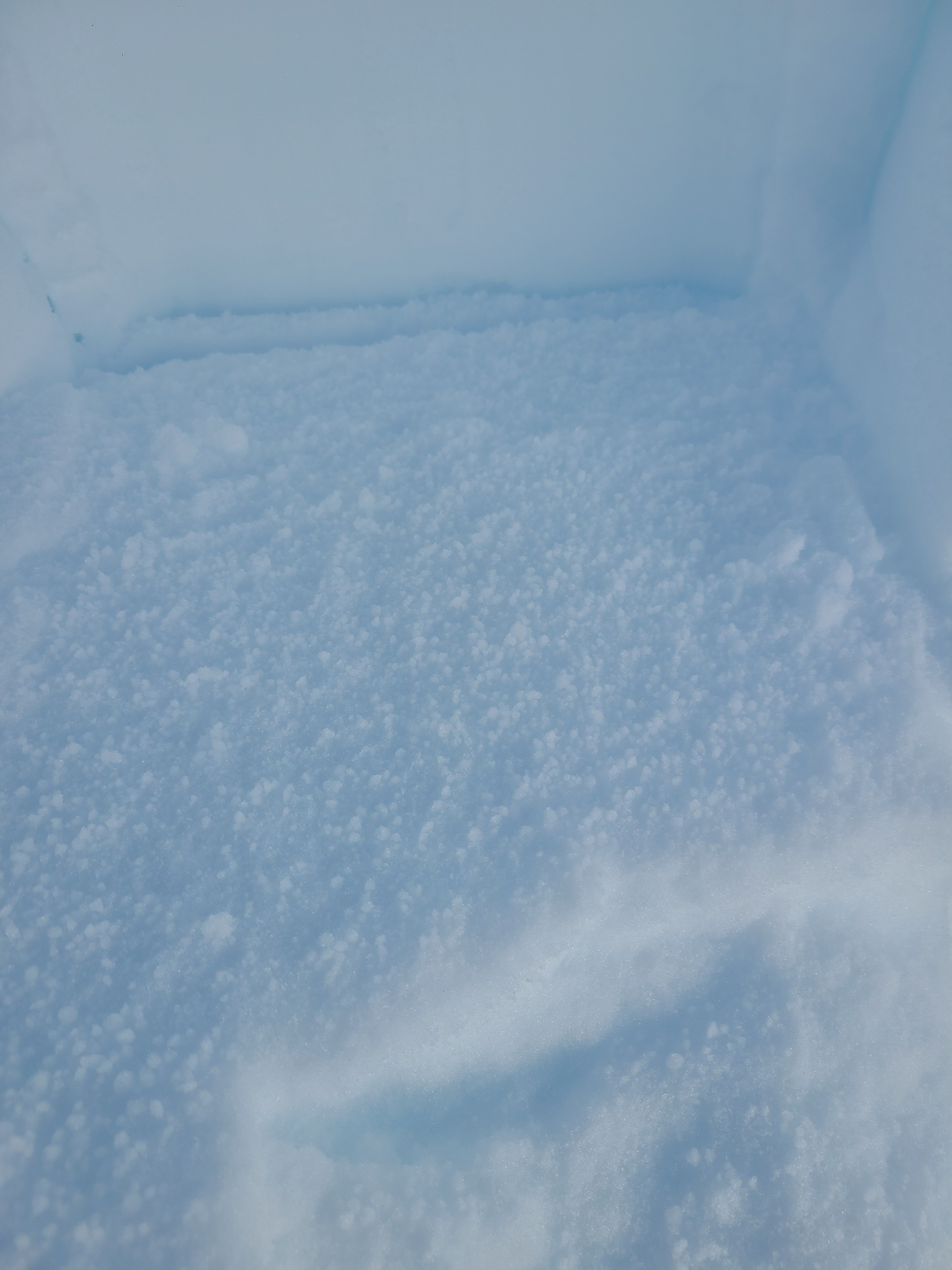
The snow surface has a thin breakable crust, and the upper 20-30cm consists of moist rounding grains. Below this, a thin ice lens has formed from meltwater. The snowpack below the ice lens is a dry, layered snowpack. There is a layer of rounded surface hoar down 112cm, and the well-documented rounding faceted grains over the Early February Crust are down 120cm. Propagation Saw Tests on the Surface Hoar and faceted grains produced no notable results.
S aspect, 6800ft
HS 140
South aspects have a much shallower snowpack that consists of moist to wet melt-forms. I observed liquid water pooling in a layer down 20-30cm.