
Quick report
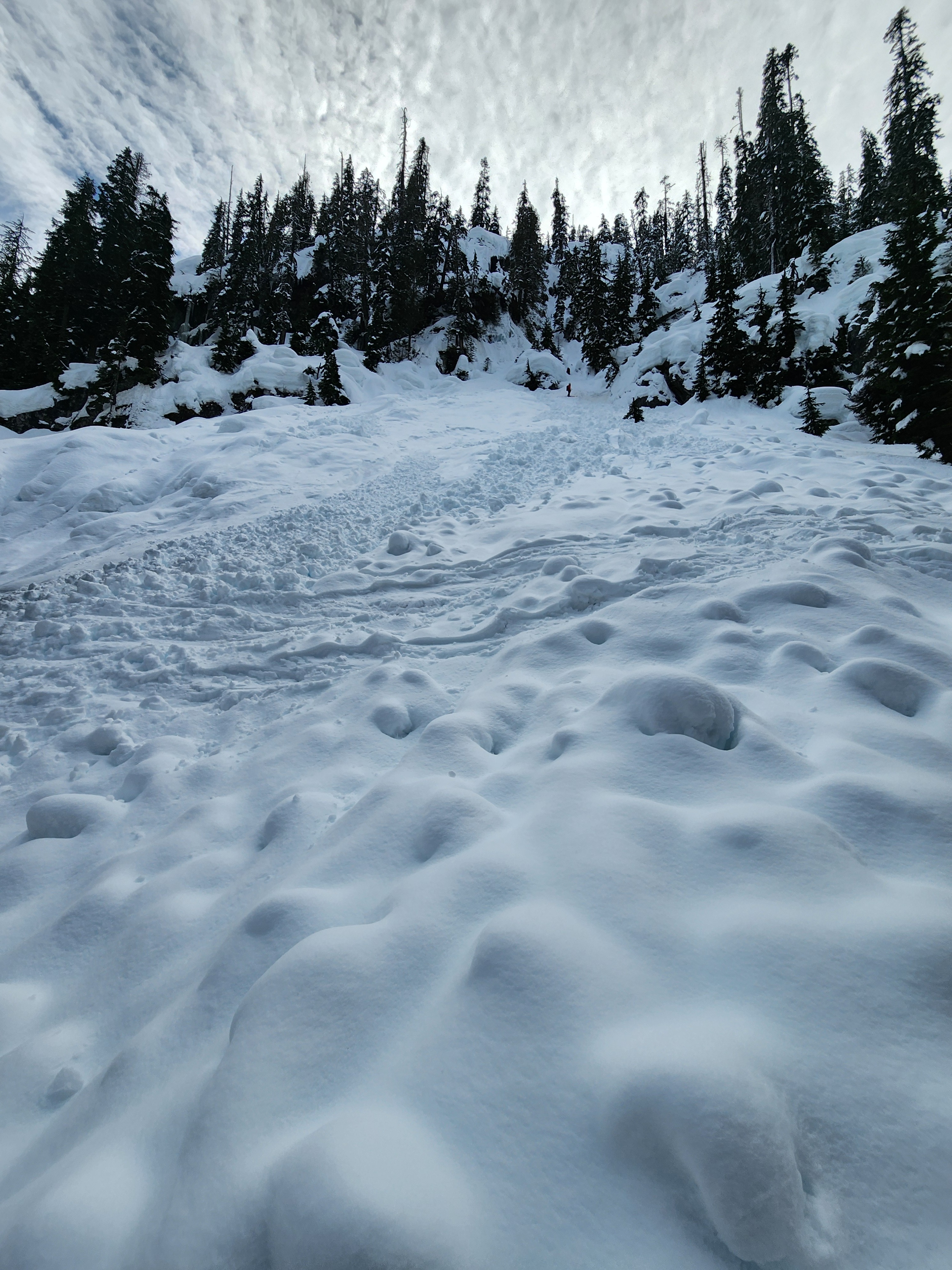
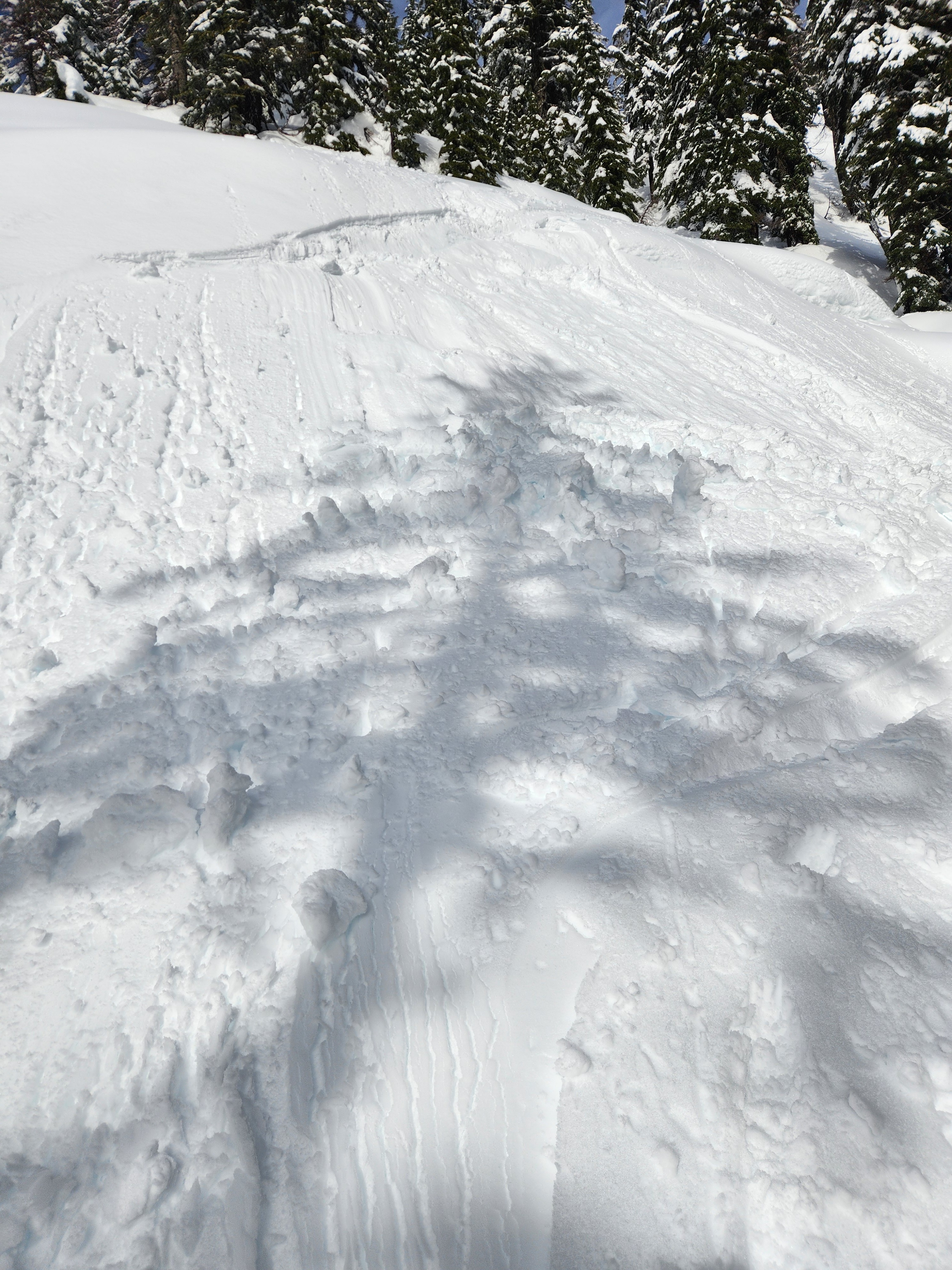
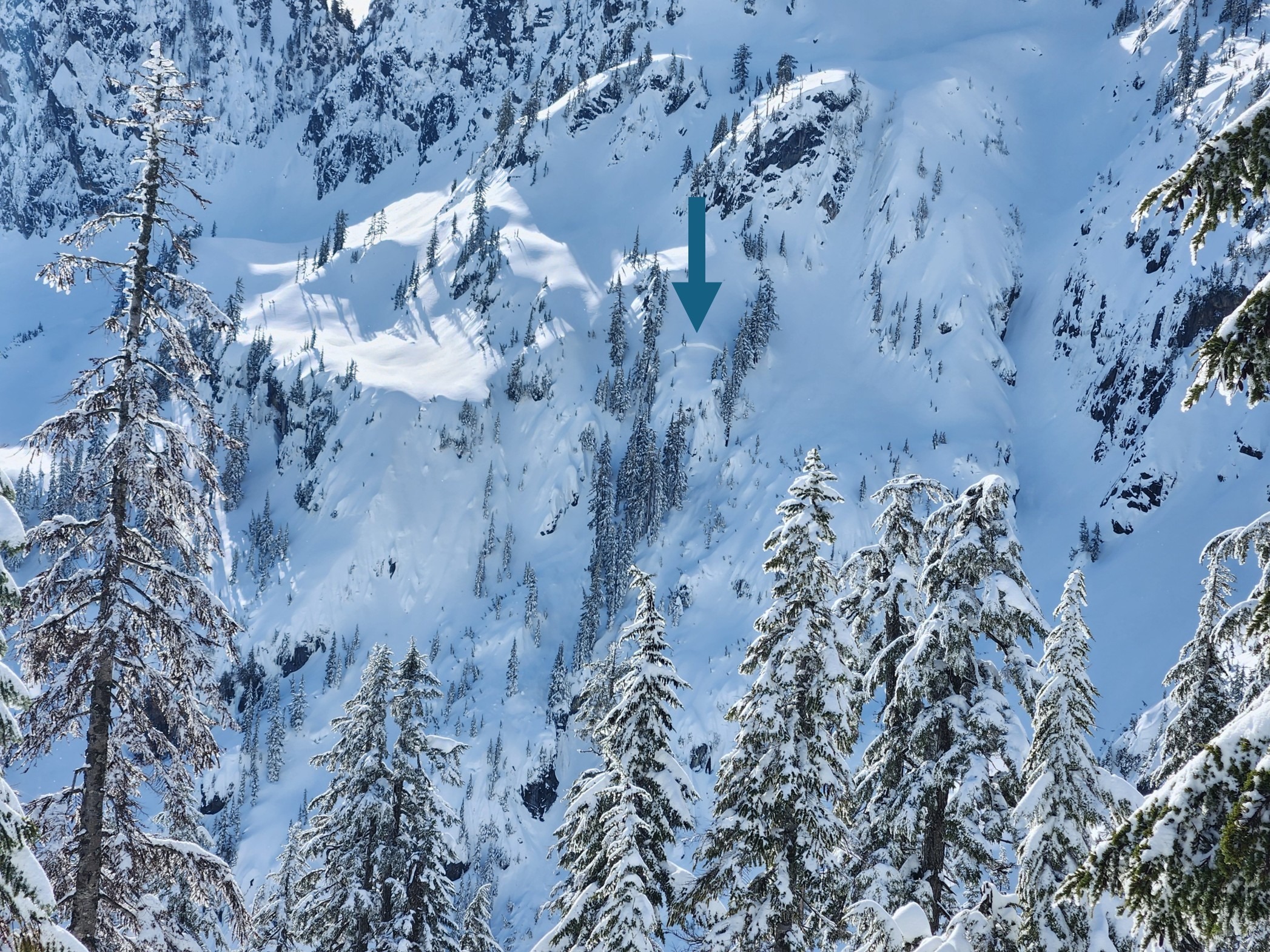
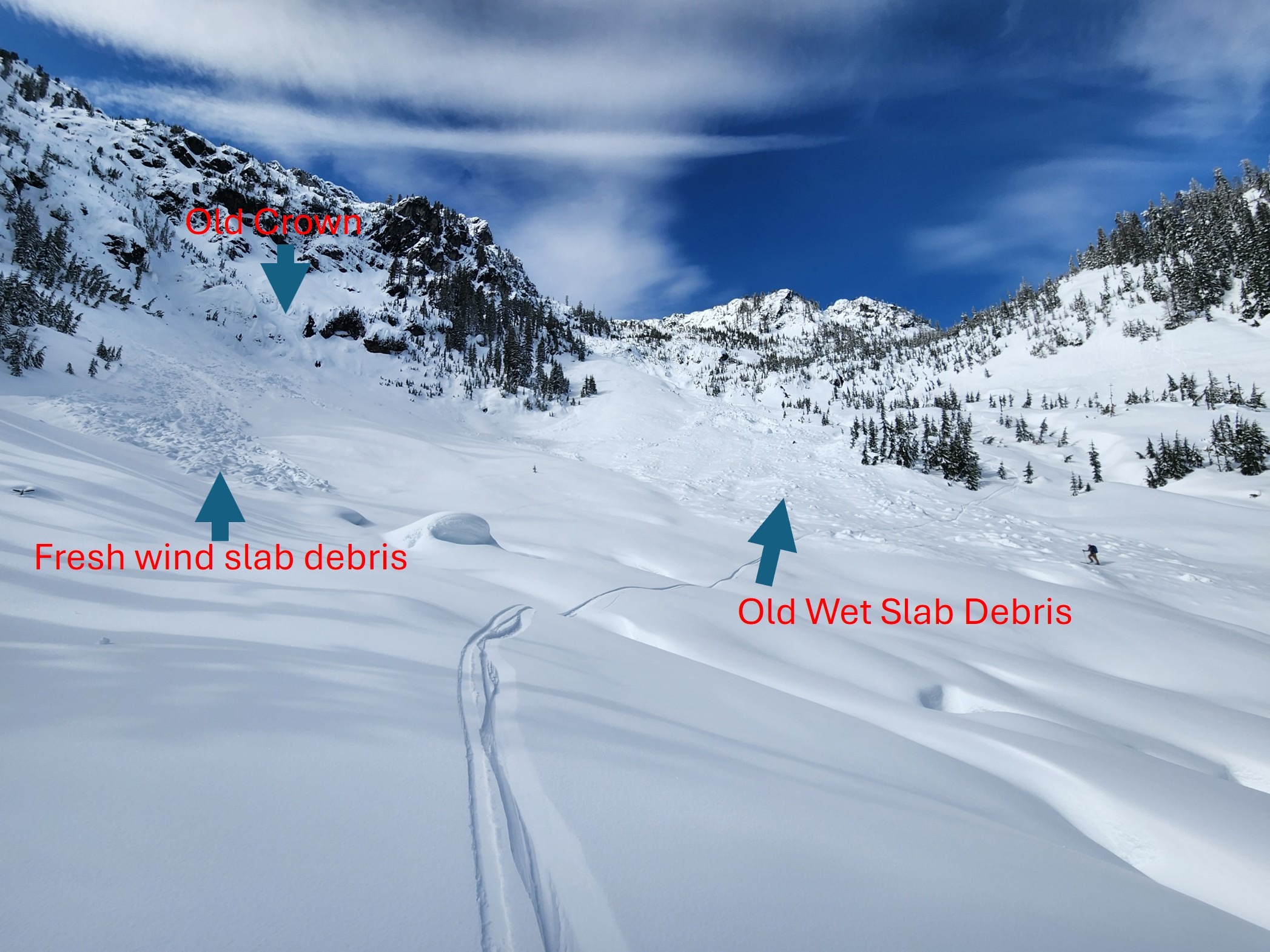
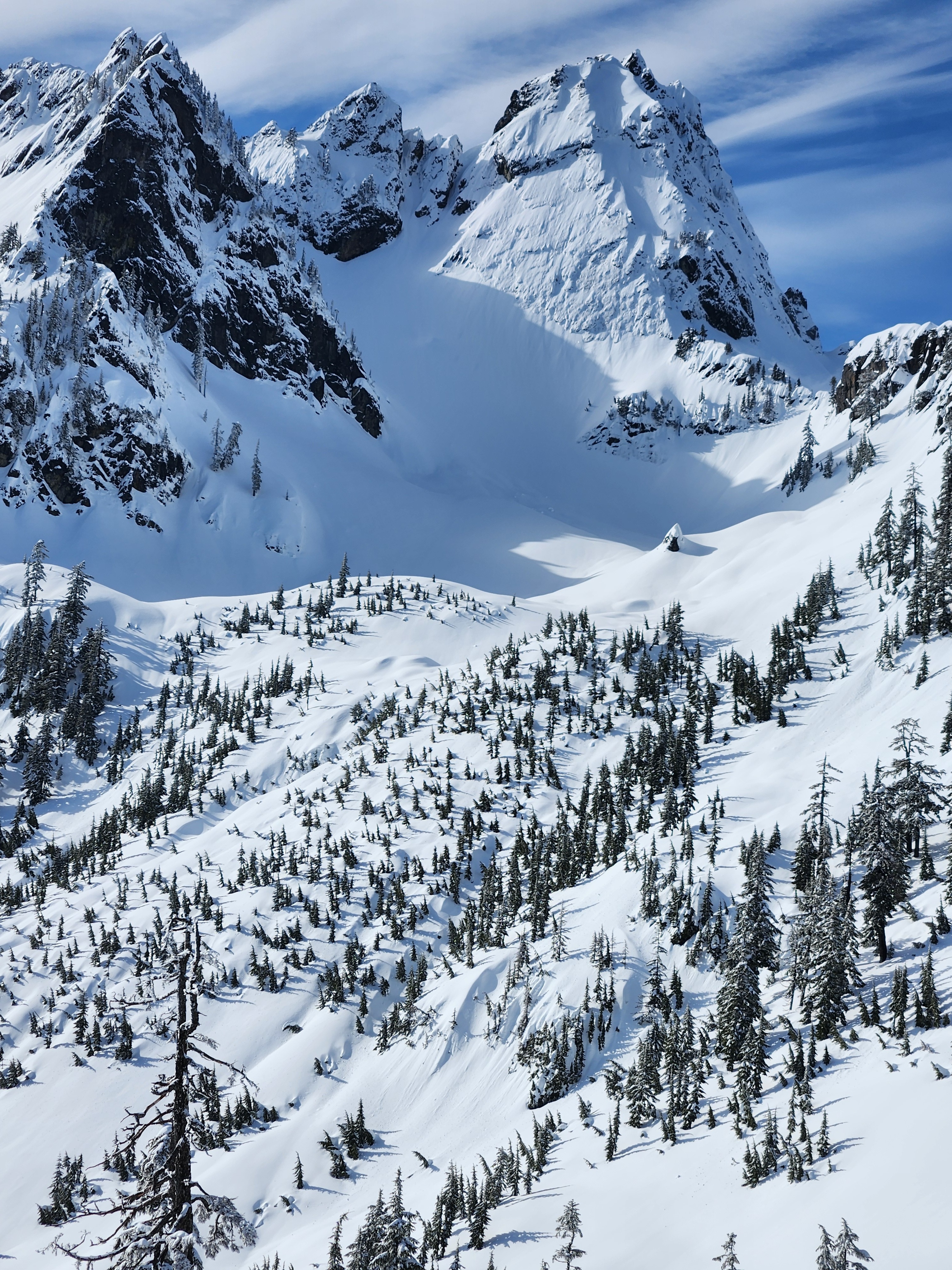
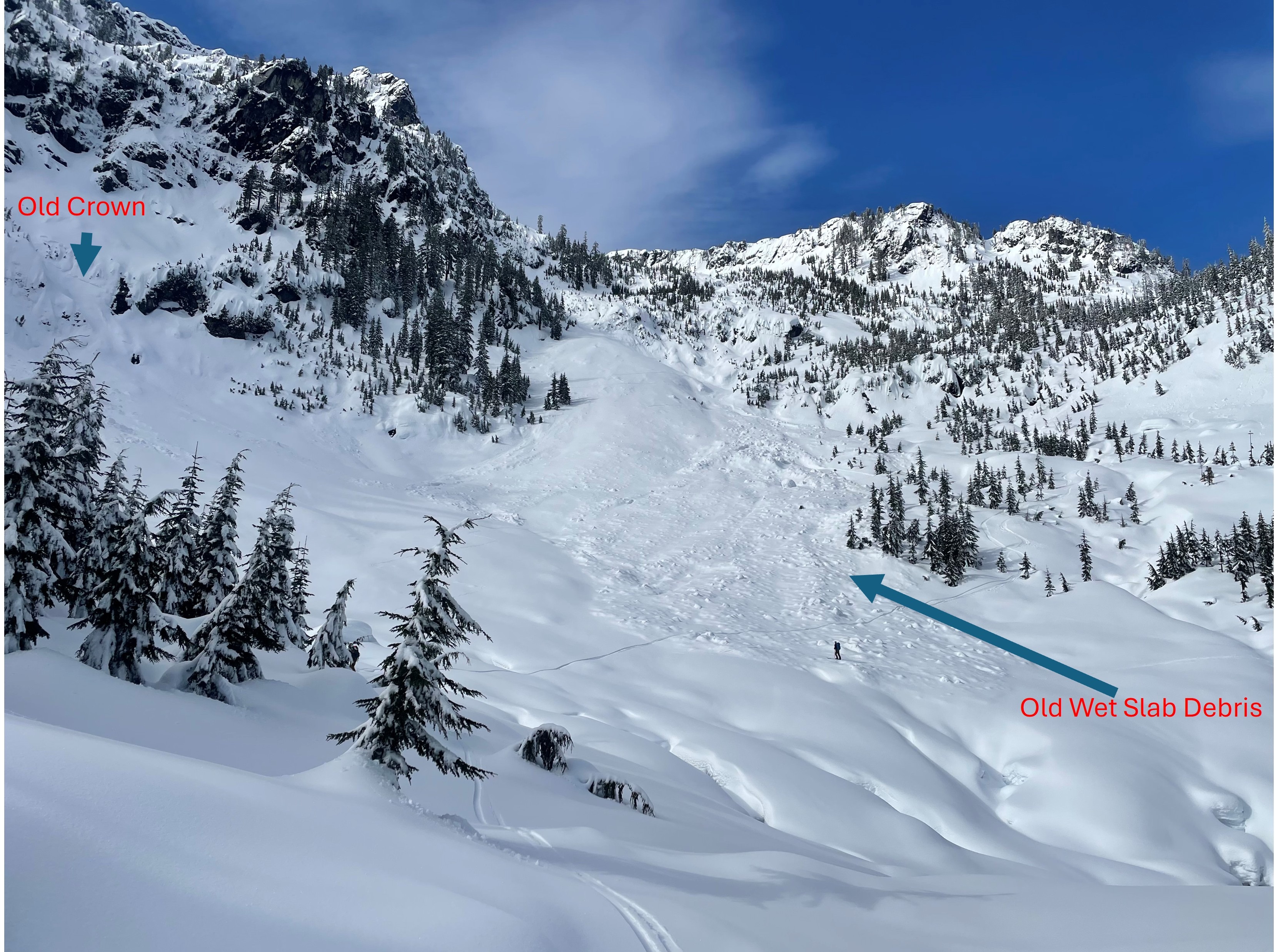
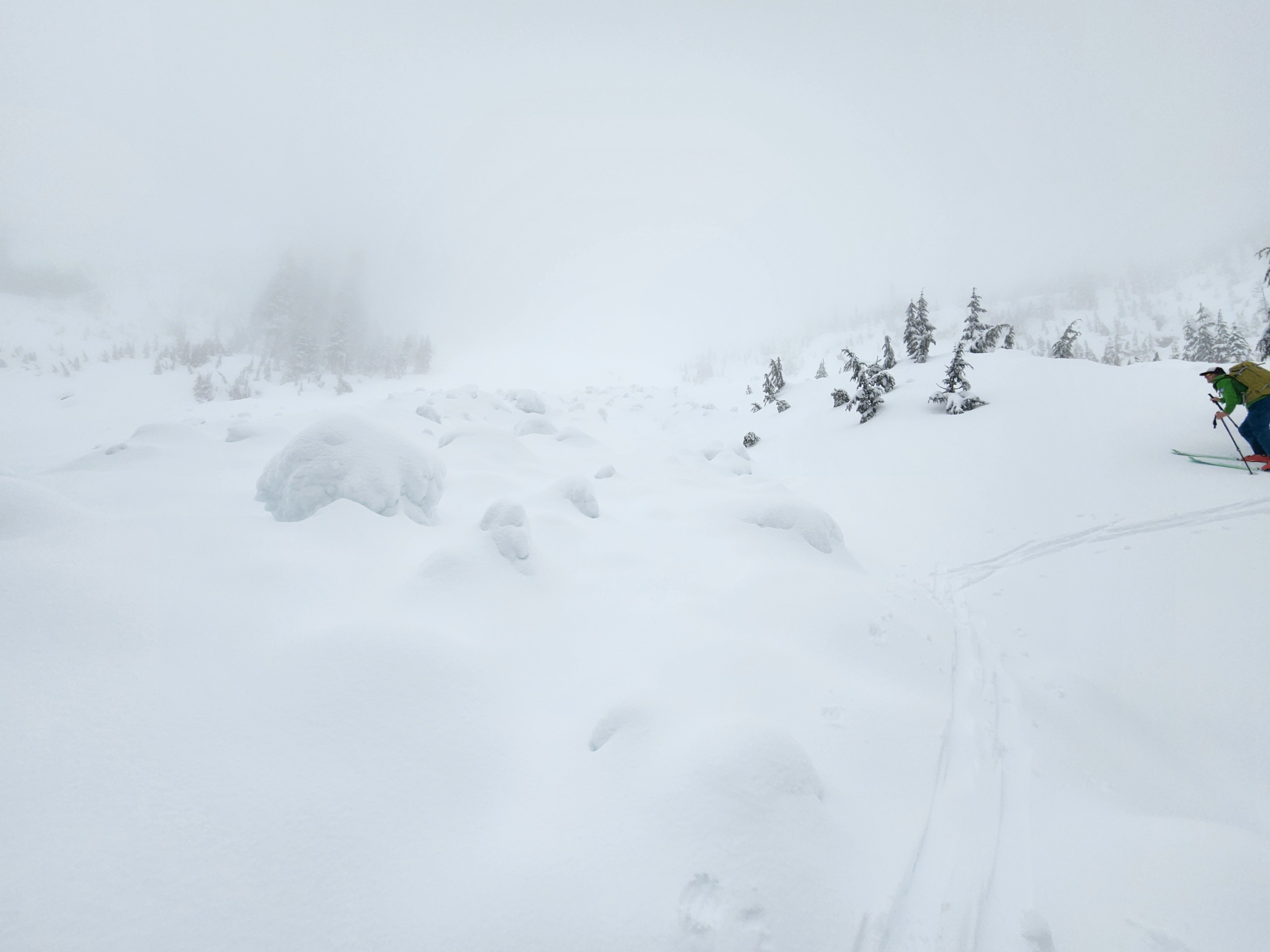
We went out today to document some slides from the atmospheric river (AR) over the weekend and the storm on Tuesday. It turned into a gorgeous day. Mild but not too hot, with cloud cover and breeze limiting the impact of the sun. Though we were in the ping pong ball early, we found significant debris on the fan above source lake in the form of fresh wind slab debris from Tuesday on one side and older wet slab debris from a large to very large avalanche that likely occurred during the AR on the other. That debris stopped just short of Source Lake and some chunks on the surface were over 5' tall. We also saw some small broken trees. Once up on Snow Lake Divide, the clouds lifted and we were able to look into the big terrain all around. Though we expected to see lots of fresh avalanches from the 20+ inches of snow and strong to extreme winds on Tuesday, we really didn't see much other than a single deep crown on the Great Wall. It's not to say there couldn't have been more slides elsewhere, but we were surprised how few we saw in the terrain from our vantage point. We saw a few old crowns from the AR, but these were also hard to spot, perhaps due to Tuesday's storm filling in the evidence.
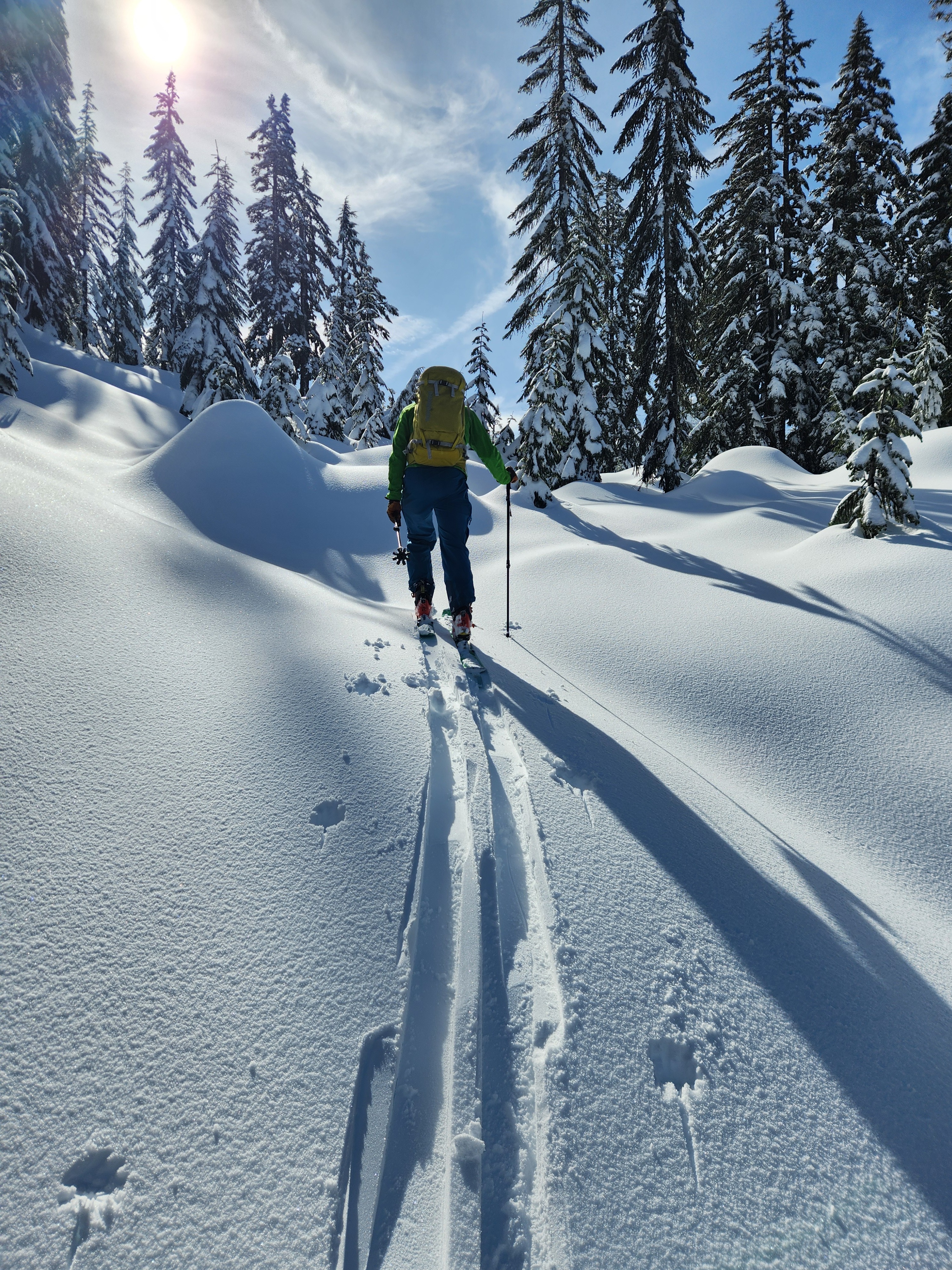
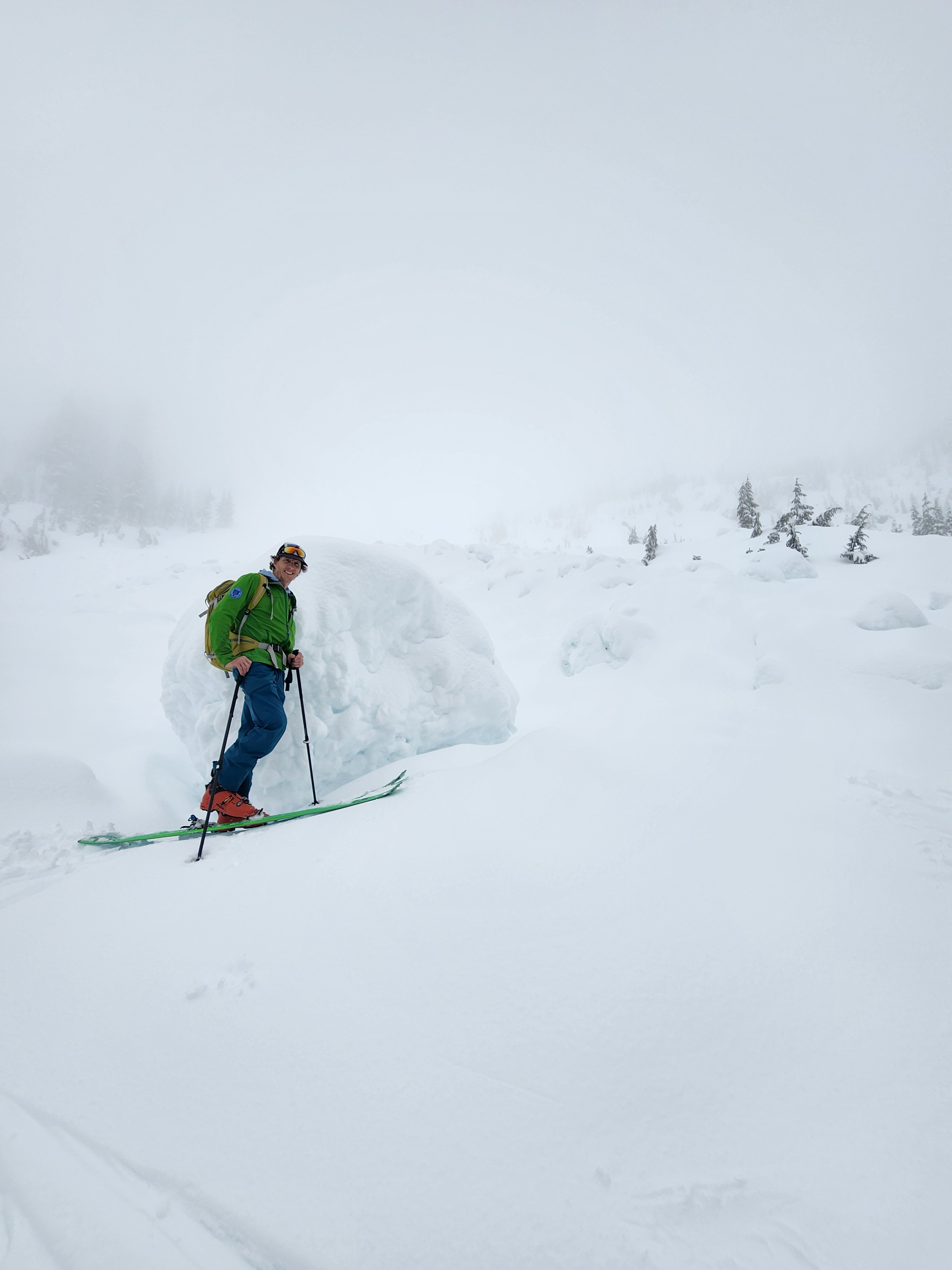
We found no obvious signs of dry slab instability, and test slopes were unreactive. The turns on the northern half of the compass were surfy and quite enjoyable, with only about 1-2" of ski penetration into the 16" of new snow we found at 4800ft. Hot pow on southerlies began to get a bit sticky in the early afternoon. We triggered some very small wet-loose pushalanches and rollerballs on steep sunlit slopes, but the cloud cover really shut off the wet loose train above about 4000ft. We suspect that true west-facing slopes may not have a crust on Thursday morning. Below 4000, the snowpack is a soppy soup and any triggered wet loose avalanches can entrain much more snow. On our way out the luge, a deeper wet loose had come down from above and we saw other similar wet loose on low-elevation steep slopes on the way in as well.
For recent dry slabs from Tuesday's storm, we saw one crown on the great wall and a small bit of fresh debris in Chair Peak Basin that may have come off the more north aspect, and perhaps a few dribs and drabs elsewhere. It was rather unimpressive. Nothing on Wright, Roosevelt, Bryant, Hemlock, Tooth, Pineapple etc. We observed small wet loose avalanches, but these were rather isolated. Just as they were getting going, the cloud cover came back in. The deepest we saw were at very low elevations on the way out above the luge.Weather
- Cloud Cover
- scattered
- Wind Loading
- previous
- Rain Elevation
- 3500
- Recent Snowfall
- 40
- Snow Avail For Transport
- small smounts
Early morning low clouds lifted and skies became partly cloudy to mostly sunny, if only for an hour! By early afternoon the high clouds rolled in. Temperatures warmed, but not too much. Winds were moderate at ridgeline.
Snowpack
Below 4000ft, just an inch or two on the surface over a breakable crust over sopping wet and mushy snow. Surface crust was gone above about 4200' and snow got deeper with elevation. About 14-16" of dense but dry snow at Snow Lake Divide, mostly right side up except for a little softer at the bottom of the storm snow. Snow was pasty and skied quite well. Ski penetration was only about 2-4 cm. The wet snow layer here was only about 20 cm thick. Layering within that 20 cm was variable, with some soft wet layers interspersed with harder layers that were starting to form a more stout crust, especially at the bottom of the layer. Below that point was dry. I did not dig down to find the 1/10, which I suspect would have been close to 150+ cm below the surface after the recent storm.
Avalanche
- Size
- D2
- Type
- HS
- Aspect
- NE
- Trigger
- N
- Elevation
- 4500 ft
Some additional small wet loose, and one deeper wet loose at low elevations on the way out.