
Quick report
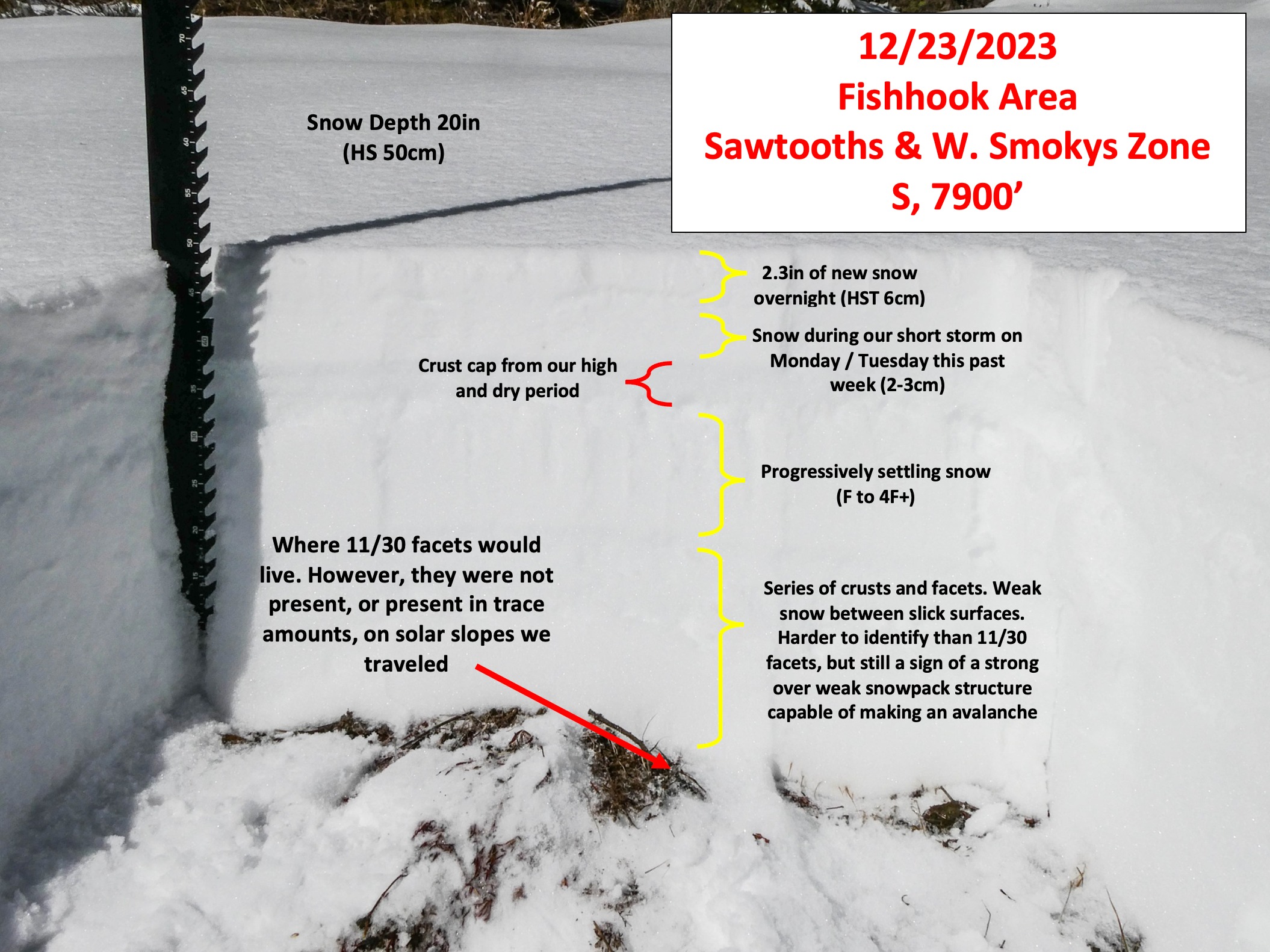
The weak snowpack structure that we are watching out for is harder to identify on solar slopes (SE-S-SW). While the 11/30 facets may not be present, be on the lookout for a combination of crusts stacked between weak, less obvious facets. This weak snow layer, below a stronger settling snow layer, can still produce large and destructive avalanches.
Weather
- Air Temp
- Single Digits
- Cloud Cover
- scattered
- Wind Loading
- light
- Rain Elevation
- Precip fell as snow all areas we travelled.
- Recent Snowfall
- 6cm
- Snow Avail For Transport
- small smounts
The morning started out with mid-elevation cloud cover that rose to clear throughout the day. Temperatures were a reminder of it actually being winter, with low teens F and single digit temps being the norm for the day. Notably colder than recent days, even in the sun.
Snowpack
Leaving the truck, we were pleased to find softer snow surfaces making travel less crusty/punchy and easier than our other walks into the Sawtooths in the past week. HN was between 4-7cm as we made our way up to the moraine in wind-sheltered areas. While the sun was out between the clouds, wintry temperatures kept the new snow surface cool and dry.
As we made our way back towards the crest, we dug a snow pit on a S-facing slope at 7900'. Underneath snow from our storms the night and week prior, we found a well-developed stack of crusts that have become a cohesive cap on the lower snowpack. Below that, well-settling progressively firm snow. Below this stronger snow, we found a stack of crust+facet combos that were weak and slick. Stability tests did not point towards a high likelihood for propagation on the interface between this weaker and stronger snow, however these crust+facet combos prove to have some reactivity to them (ECTN7 & ECTN12). This points towards this snow potentially being problematic with future loading events, and on slopes where there may be more weak snow preserved at higher elevations. While the 11/30 facets were mostly gone at the base of the snowpack, we still have a strong snow over weak snow structure. (See pit diagram photo)
Climbing higher, we decided to compare our solar aspect pit to a higher, colder aspect (E-NE-N) snowpack. On a ENE-facing slope at 8600' in a 1m deep snowpack, it was easy to identify our solid, strong slab over our weak, well-preserved 11/30 facet layer. While happy to finally be in a snowpack up to a meter deep, it was very sobering to see the size of the stiffening and strengthening slab (75cm) that could release if triggered on top of this weak, old snow. While stability tests produced only an ECTX during normal loading steps, the whole column propagated on the 11/30 facets with some additional loading steps. YIKES. What does this mean? While it might be getting hard to trigger a slide, you definitely still can — and likely with no warnings first, and severe consequences. Having a slab up to my chest fall on top of me in the snowpit was an experience I won't let filter out of my memory anytime soon when I'm choosing terrain to enter in the mountains.
There was only minimal wind effect present on snow surfaces as we climbed between the upper end of middle elevations to the lower end of upper elevations. While no evidence of significantly-sized wind slabs was present, small reactive pockets that could knock you off your feet in the wrong spot should still be a consideration.
Avalanche
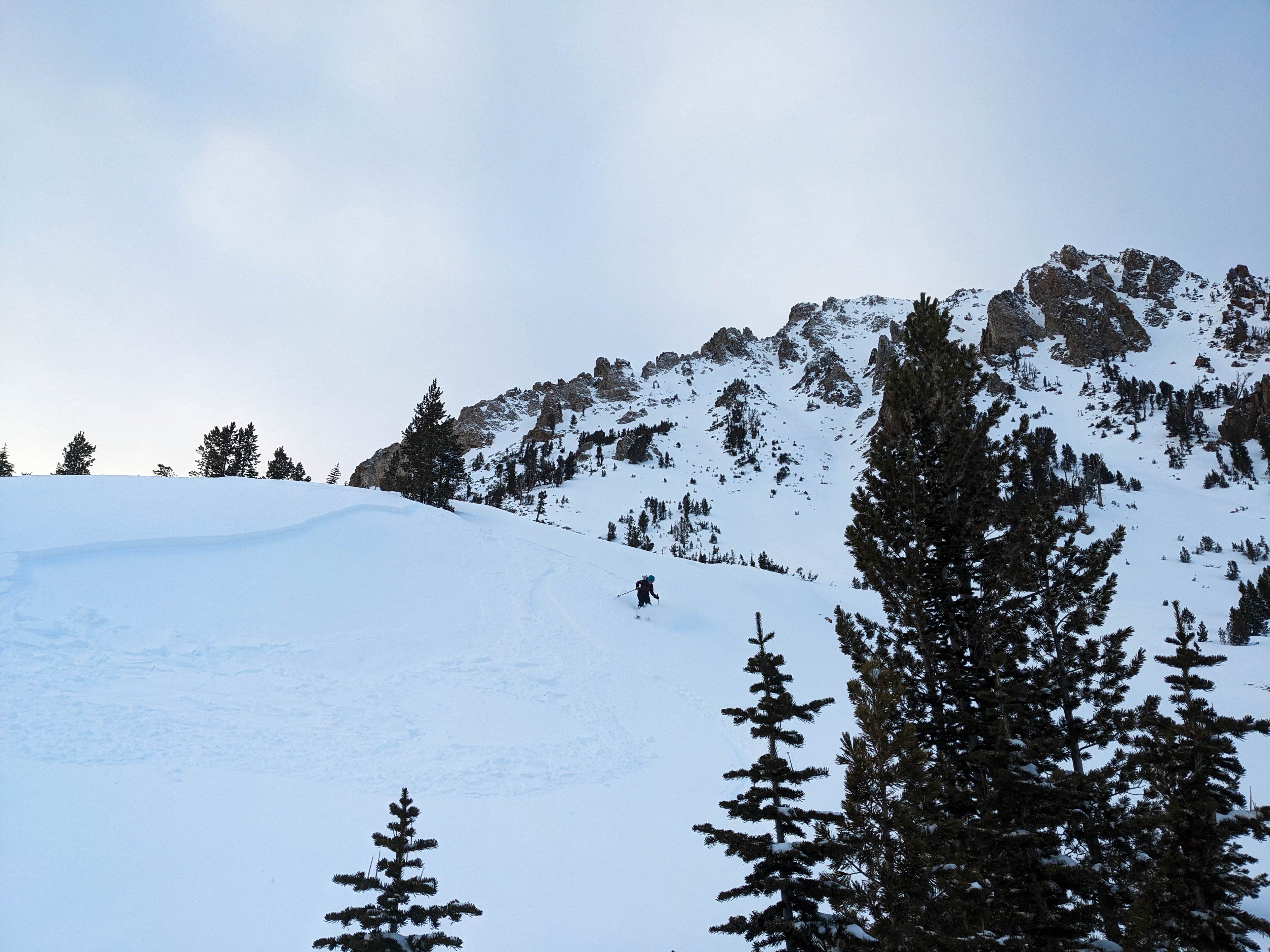
We were able to trigger a couple of small (D1) slides on predictable trigger points of isolated wind-loaded features. We did not see evidence of larger, more significant wind slabs that would warrant a problem on the forecast.