
Quick report
- Cracking
- isolated
Operationally we were interested in wind slab instability, snow distribution from the last storm and the accompanying wind event, and the extent of faceting in the bottom of the snowpack.
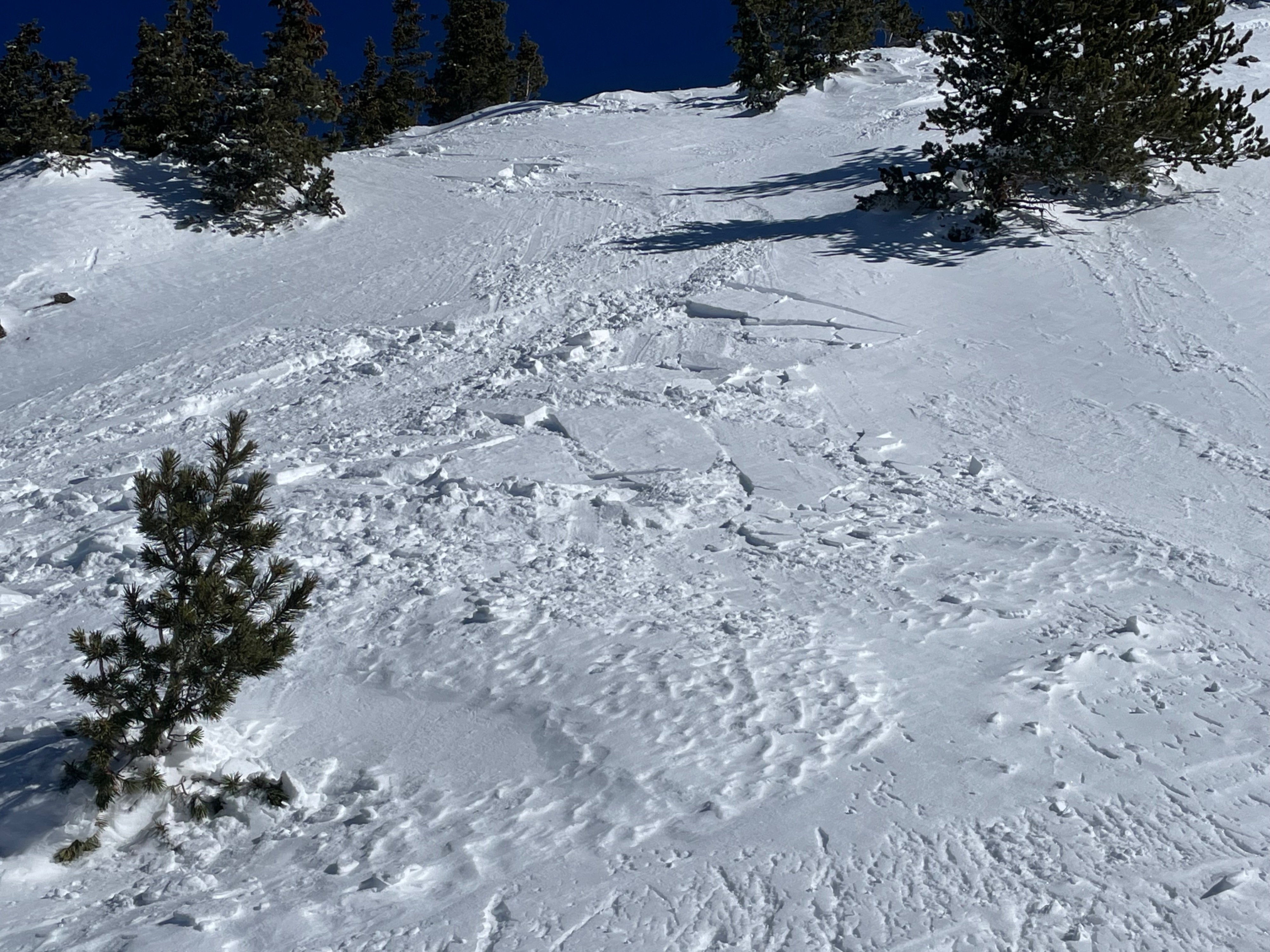
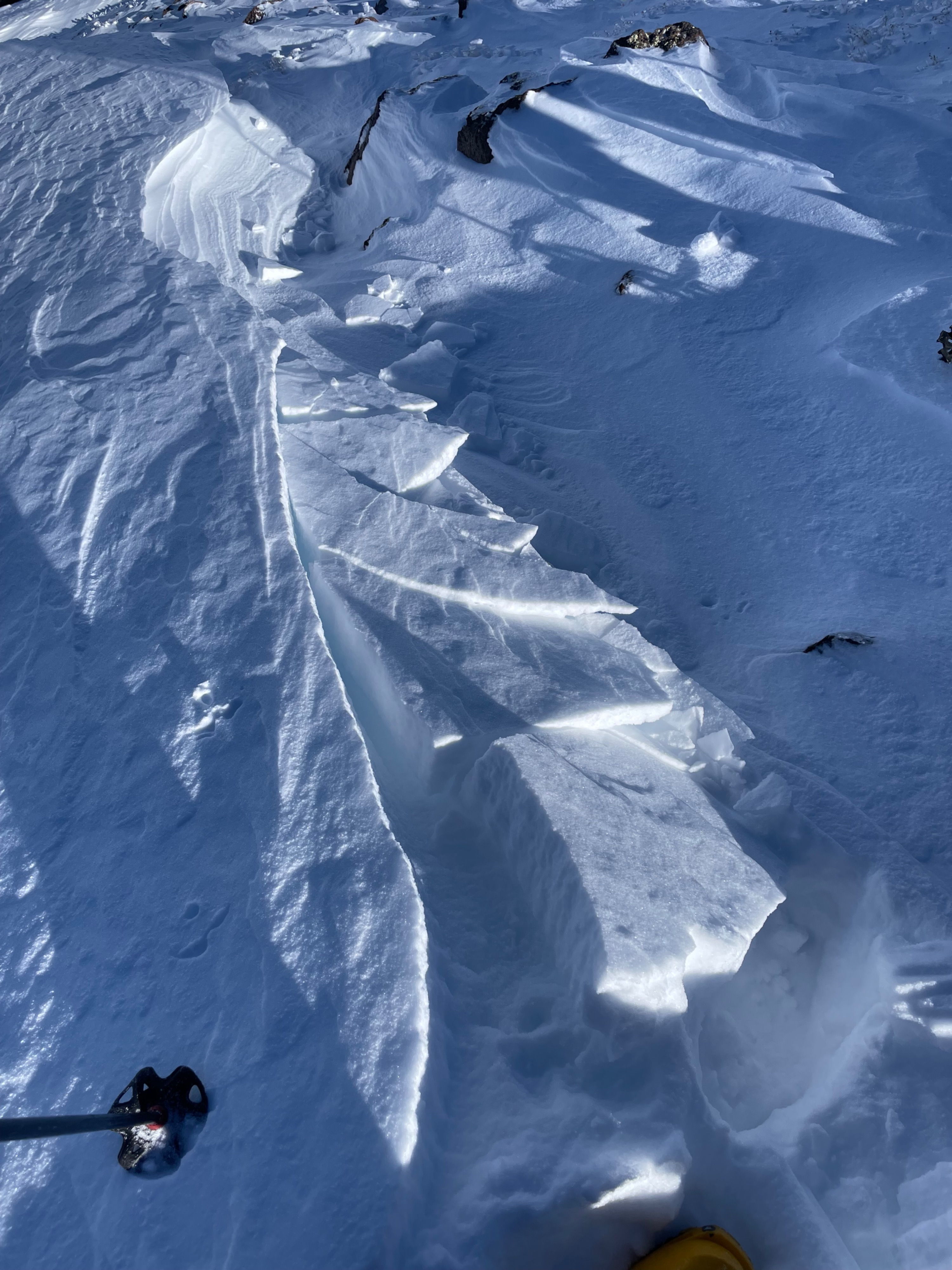
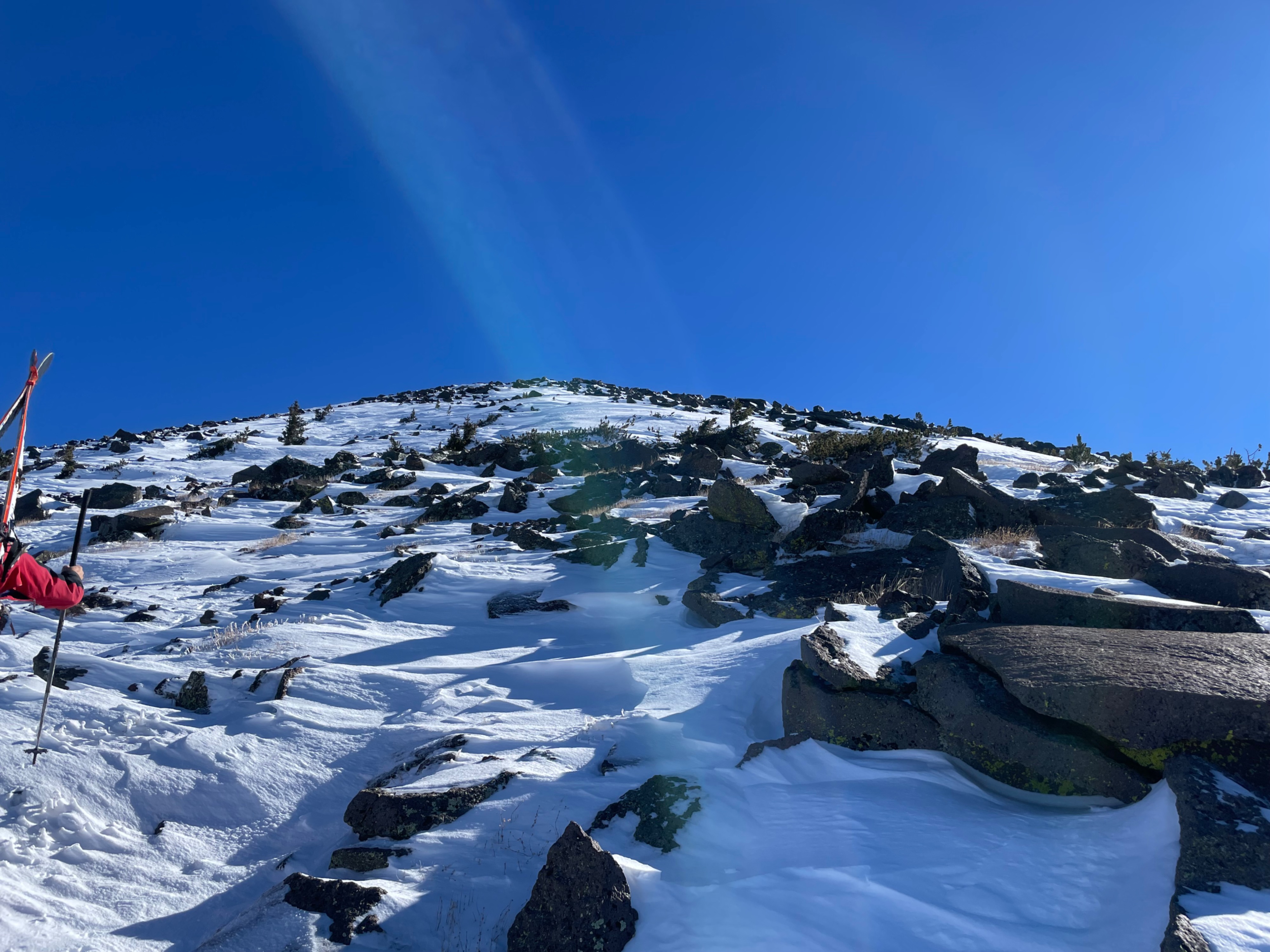
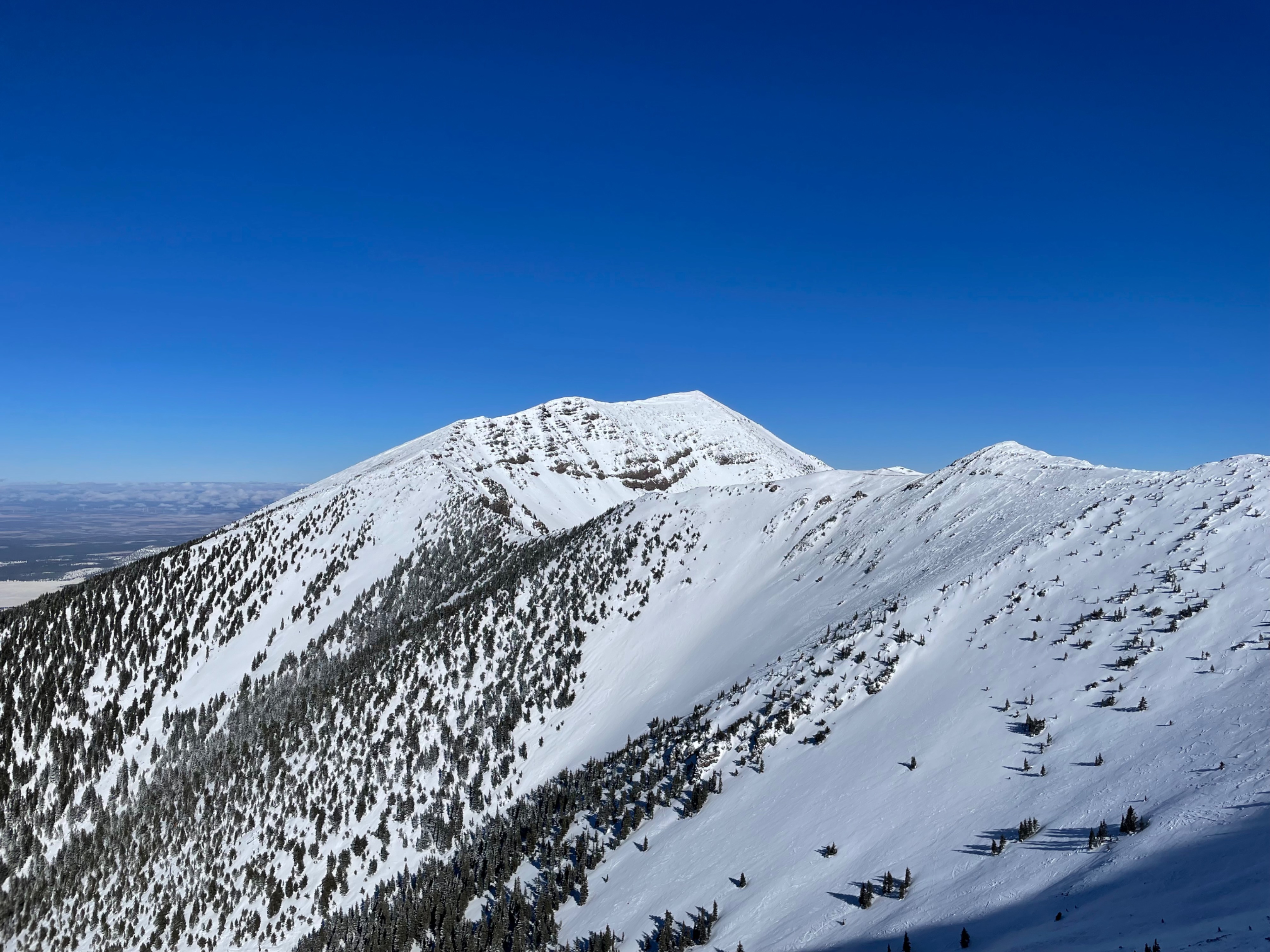
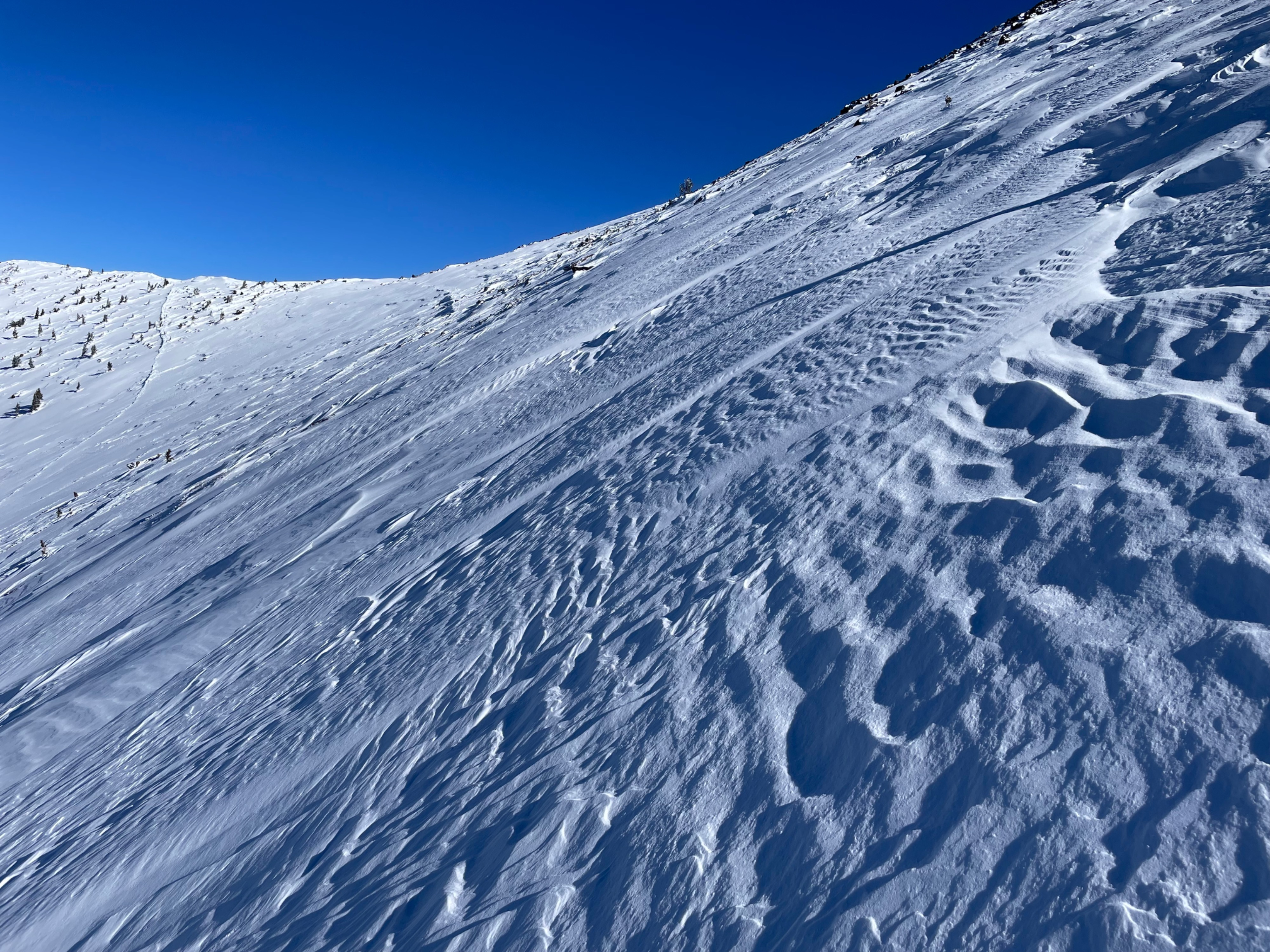
The snow from Wednesday's storm was significantly affected by wind. Winds from the north were moderate to strong and distributed snow across the mountain, including some sublimation into the atmosphere. Winds from the north typically cross-load gullies on east and west aspects and can make for instable wind slabs on the backsides of these ridgelines. We found scour zones interspersed with deposition zones across the mountain. Winds were strong enough to strip much of the snow in upper bowl, and create very hard wind slabs. Due to the high velocity of the wind, most of the deposition zones were too firm to be reactive, and these hardened slabs were characterized as non-reactive. Jumping on test slopes did not produce results and most of these slabs were pencil hard. Wind slabs in the shiprocks produced a slightly different story. In this case concerns for wind slab were confirmed. Some of these slabs were softer and ski cuts and jumps produced small slides with crowns of just 2-3" in size. There was not enough continuity for these wind slabs to produce D1 avalanches, but the scenario might be different in other wind loaded areas, such as in Alison Clay. Other parties in the backcountry on Thursday reported cracking in some wind slab areas. In summary, while we couldn't produce sizable slides on test slopes due to poor slab continuity and hardness of slab deposition, we did get very small releases on softer slabs in wind loaded cross-gully areas--different wind deposited areas, if they held softer slabs, would have been capable of producing larger slides.
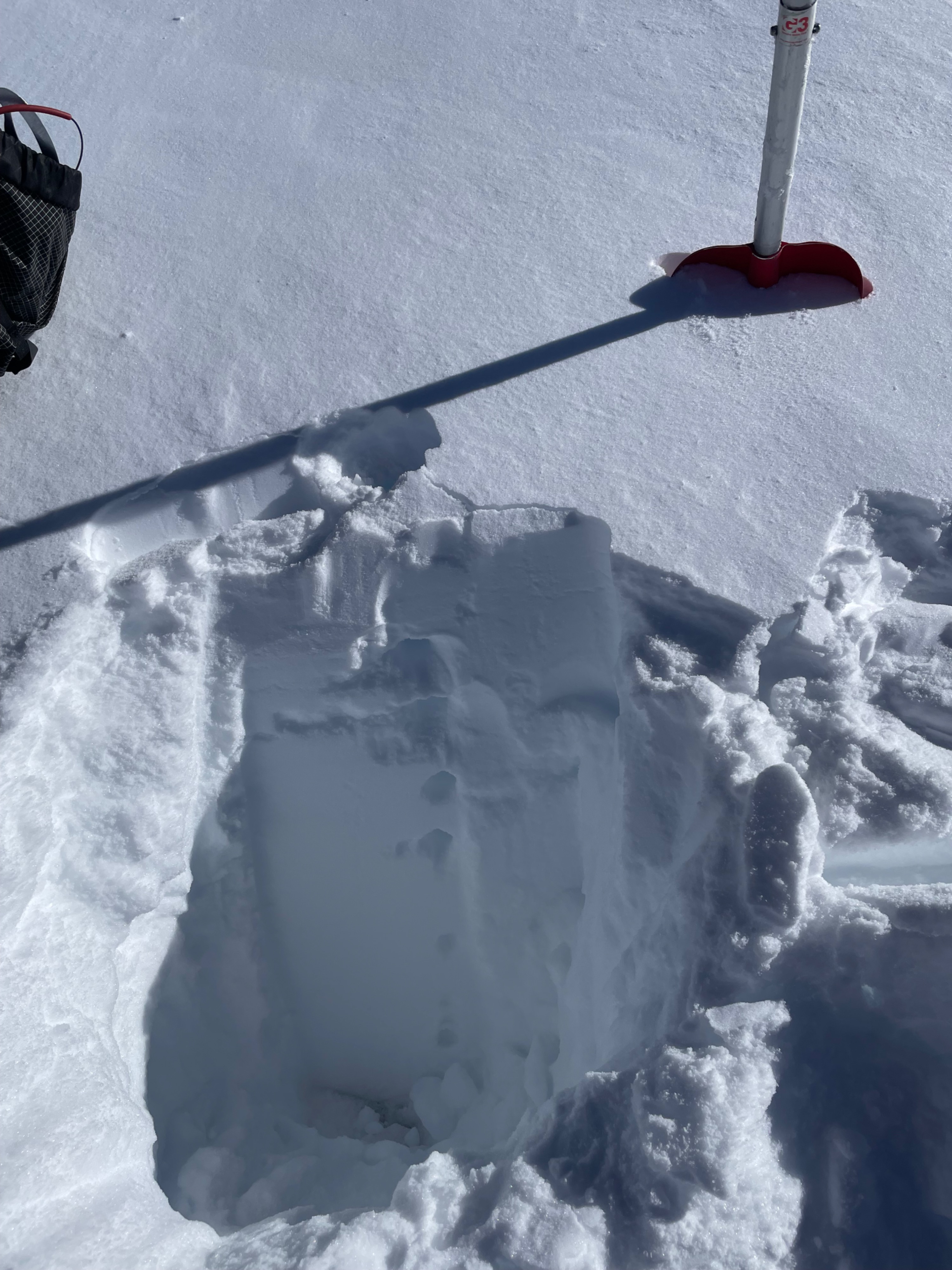
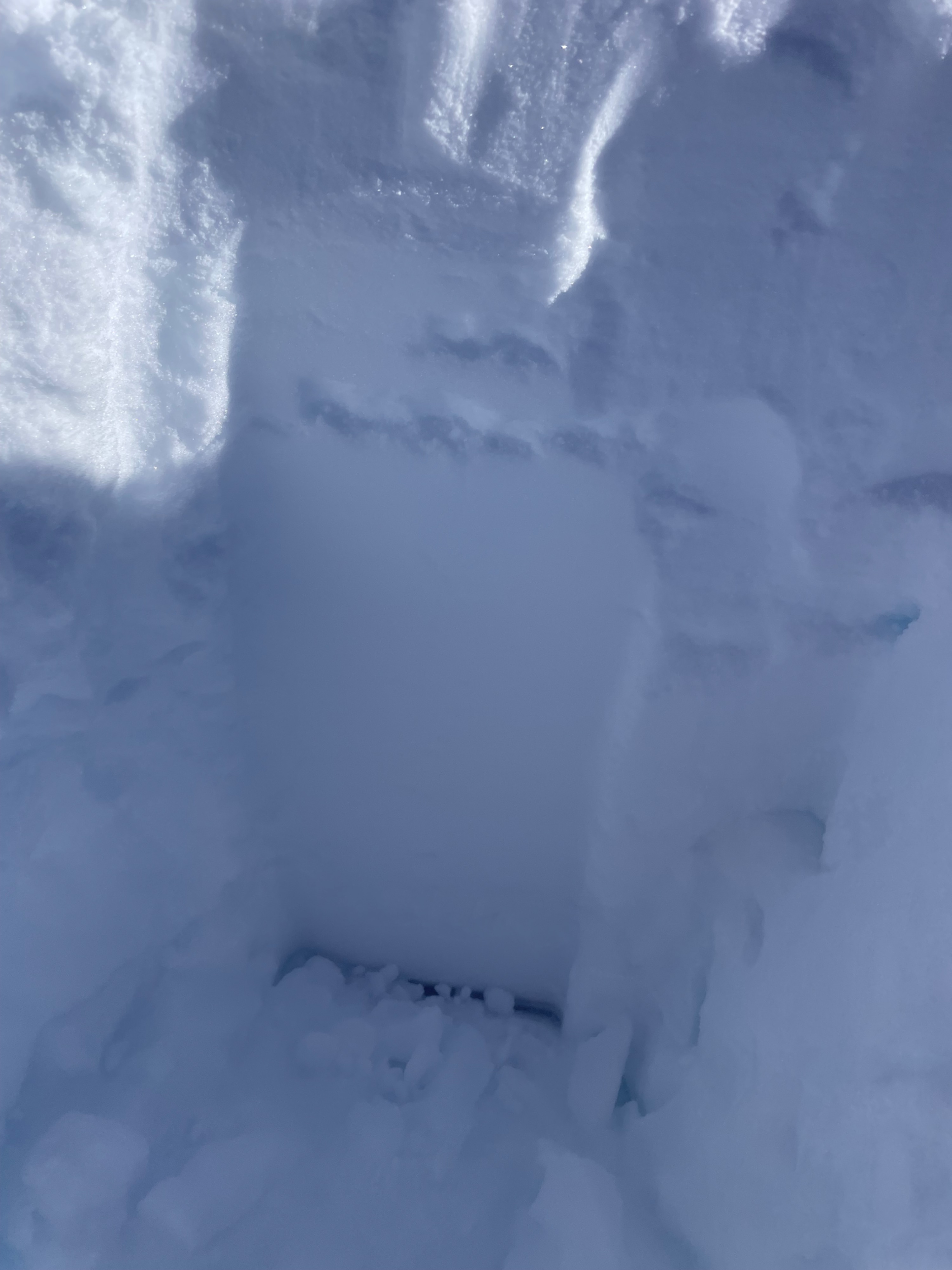
We dug a quick hand pit on a west facing slope at 11,700' to examine the extent of faceting and moisture content in the bottom of the snowpack. Surprisingly, in this pit location, there were only about 3cm of facets at the very bottom of the snowpack. These crystals were dry. Based on this singular pit there was not evidence of significant faceting occurring in the snowpack. That's good news for the timing being, but faceting can occur very rapidly, and if the snowpack remains thin and temperatures remain cold, we are expecting to see facet growth in the coming week. This will be a potential problem that needs continuous monitoring.
Any turns that occured were on fluff on wind board. Highly variable conditions.
If you happen to get out, take the time to dig a quick pit, submit an observation, and share what you're finding at the bottom of the snowpack.
Weather
- Air Temp
- 25
- Cloud Cover
- clear
- Wind Loading
- moderate
- Recent Snowfall
- 8-12
- Snow Avail For Transport
- small smounts